Ashli Babbitt was a U.S. Air Force veteran who was shot and killed inside the U.S. Capitol by then-Capitol Police Lt. Byrd on Jan. 6, 2021. Now, a lawsuit by her family is asking the government to be held accountable.
The lawsuit includes claims against the U.S. Government for wrongful death, assault and battery, and various negligence issues.
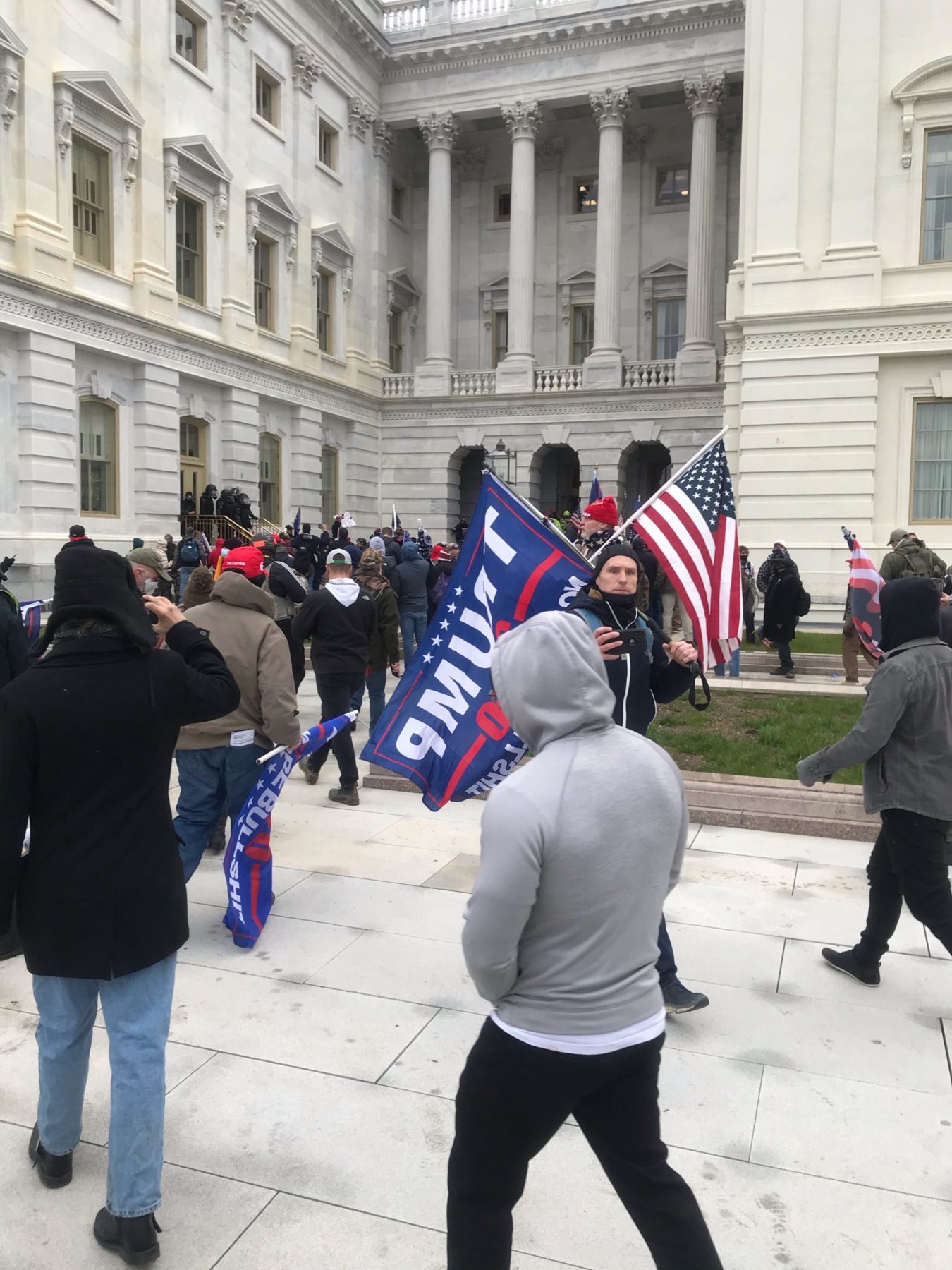
Babbitt, from San Diego, Calif., had traveled to Washington, D.C. to attend the Women for America First (aka Save America) rally on Jan. 6, 2021, at the Ellipse.
The lawsuit explains, “Ashli loved her country and wanted to show her support for President Trump’s America First policies and to see and hear the president speak live while he remained in office. Ashli did not go to Washington as part of a group or for any unlawful or nefarious purpose. She was there to exercise what she believed were her God-given, American liberties and freedoms.”
Babbitt had served 12 years in the Air Force, Air Force Reserves, and Air National Guard as a security forces controller. She was a member of the Libertarian Party and a supporter of President Trump.
Judicial Watch, whose CEO is Tom Fitton, said that after the rally, Babbitt walked to the Capitol peacefully.
“Two undercover Metropolitan Police Department officers followed close behind Ashli as she climbed the stairs to the West Terrace. Ashli entered the Capitol on the Senate side long after others had done so. Once inside, Ashli encountered a female Capitol Police officer, who directed her to walk south toward the House side. Ashli complied, walking alone through the Capitol and ultimately arriving at the hallway outside the main door to the House chamber, where demonstrators had gathered. From there, Ashli walked by herself east, along the hallway outside the House chamber, then turned south, reaching the hallway outside the Speaker’s Lobby at the southeast corner of the Capitol.”
The shooting of Babbitt occurred at the east entrance to the Speaker’s Lobby.
“After demonstrators filled the hallway outside the lobby, two individuals in the crowded, tightly packed hallway struck and dislodged the glass panels in the lobby doors and the right door sidelight. Lt. Byrd, who is a USCP commander and was the incident commander for the House on January 6, 2021, shot Ashli on sight as she raised herself up into the opening of the right door sidelight. Lt. Byrd later confessed that he shot Ashli before seeing her hands or assessing her intentions or even identifying her as female. Ashli was unarmed. Her hands were up in the air, empty, and in plain view of Lt. Byrd and other officers in the lobby.”
Lt. Byrd, who is a Capitol Police commander and the incident commander for the House on Jan. 6, 2021, shot Babbitt as she raised herself up into the opening of the right door sidelight, the lawsuit says.
“Not one member of Congress was in the lobby, which was guarded by multiple armed police officers. Additional armed police officers were in the hallway outside the lobby and/or on the adjoining stairway. Ashli could not have seen Lt. Byrd, who was positioned far to Ashli’s left and on the opposite side of the doors, near an opening to the Retiring Room, a distance of approximately 15 feet and an angle of approximately 160 degrees. Sgt. Timothy Lively, one of the armed officers guarding the lobby doors from the hallway, later told officials investigating the shooting, ‘I saw him . . . there was no way that woman would’ve seen that.'”
Further, the lawsuit contends, Lt. Byrd, who was not in uniform, did not identify himself as a police officer or otherwise make his presence known to Babbitt. He did not give her any warnings or commands before slaying her.
“Ashli remained conscious for minutes or longer after being shot by Lt. Byrd. Ashli experienced extreme pain, suffering, mental anguish, and intense fear before slipping into pre-terminal unconsciousness. The autopsy report identified the cause of death as a ‘gunshot wound to left anterior shoulder’ with an onset interval of ‘minutes.’ The fact that Ashli was alive and conscious in extreme pain and suffering is documented in videos of the shooting. Furthermore, nothing about the wound track described in the autopsy report would be expected to result in immediate death or instantaneous loss of consciousness, and Ashli’s lungs contained blood, further confirming that she was alive and breathing after being shot. Ashli was pronounced dead at Washington Hospital Center at 3:15 p.m. The medical examiner determined that the manner of death was homicide,” the lawsuit contends.
Lt. Byrd’s police powers had been revoked prior to this incident, “for failing to meet or complete semiannual firearms qualification requirements. In fact, Lt. Byrd had a reputation among peers for not being a good shot. Under USCP’s range management system, an officer who fails to meet firearm qualification requirements is given one week of remedial training. If the officer still fails to qualify after remedial training, police powers are then revoked until the officer qualifies.”
Lt. Byrd’s police powers also were revoked for a prior off-duty shooting into a stolen, moving vehicle in which the occupants were teenagers or juveniles. The stolen vehicle was Lt. Byrd’s own car. He fired multiple shots at the fleeing vehicle in a suburban area. Stray bullets from Lt. Byrd’s firearm struck the sides of homes nearby. An official investigation found that Lt. Byrd’s use of force was not justified, Judicial Watch says in the lawsuit. Therefore, Capitol Police should have known he was not suited for the assignment of being the incident commander.
Plaintiffs are seeking $30 million plus costs and interest. The lawsuit was filed in the U.S. District Court Southern District of California.
“We and our supporters are honored to represent Ashli’s steadfast widower Aaron Babbitt and her estate in this legal action. Ashli was shot in cold blood and the rule of law requires justice for her,” Fitton said in a statement.