
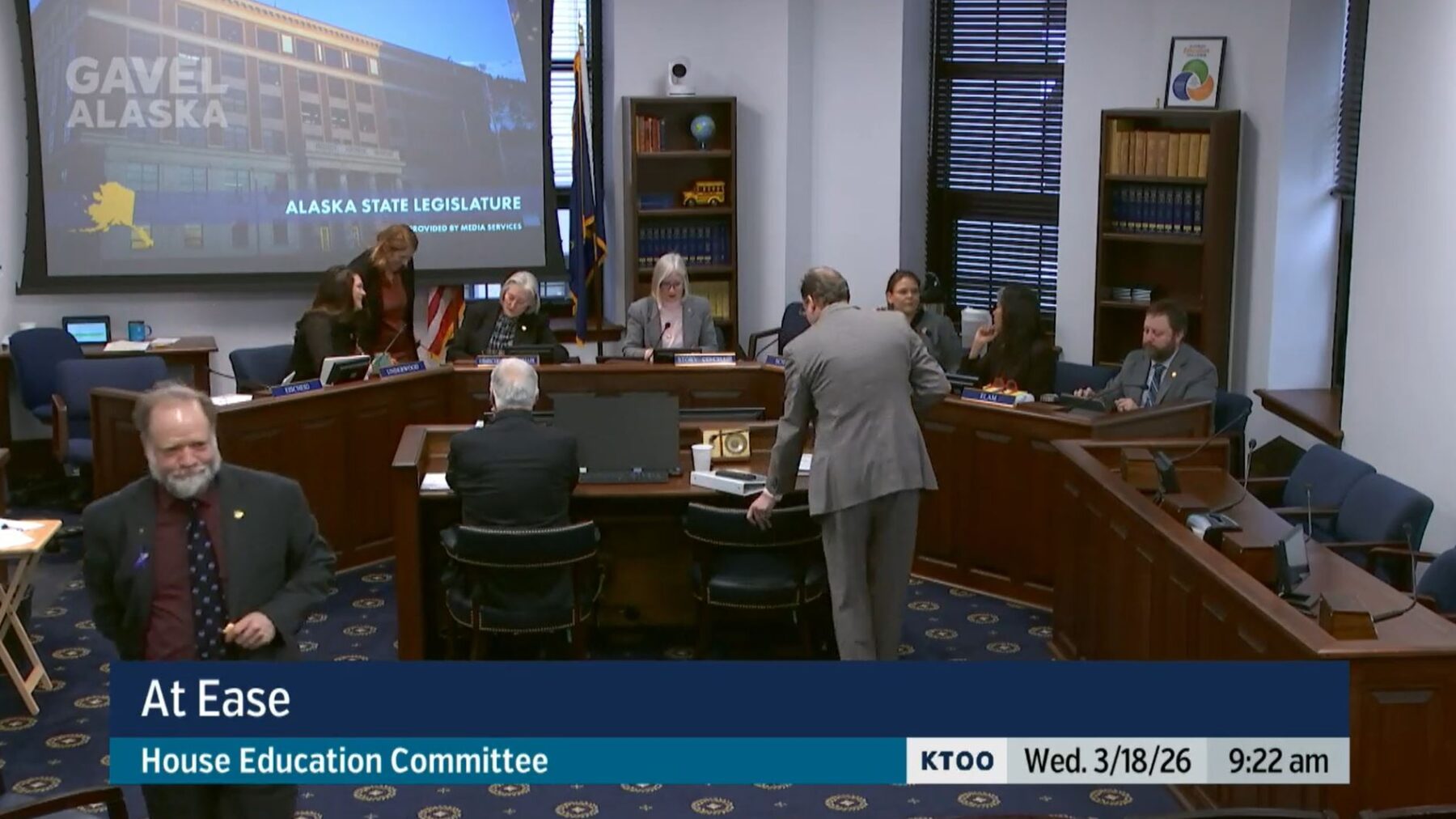
The House Education Committee opened its day with measured scrutiny of two gubernatorial reappointments to the Alaska Board of Education and Early Development before turning to SB 23, a proposal to require civics education for high school graduation. Testimony underscored the need for realistic goals, parental involvement, and restoring faith in American institutions through structured civic instruction—without imposing top-down curriculum or ballooning fiscal burdens on districts already strained by rising class sizes and special-education demands.
Pamela Dupras, an Aleut educator with 23 years of classroom experience currently at the Alaska Native Cultural Charter School, described her motivation for continued service as rooted in the Alaska Reads Act’s proven impact on foundational skills. She stressed listening across stakeholders—from rural families transitioning to urban charters to statewide networks reaching Utqiagvik, Kodiak, and Glennallen—while observing policy effects at the school level. On academic outcomes, Dupras advocated incremental progress “one student at a time” and shared accountability: teachers own student growth, principals oversee staff performance, and the broader system shares responsibility. When pressed on class sizes reaching 30–35 students, she highlighted effective classroom management and cooperative learning as practical mitigators, noting that relationship-building becomes harder at scale even with strong techniques. Dupras also detailed her Unangax language background and vocabulary gaps during transitions to Mount Edgecumbe High School and college, calling for Alaska to lead in supporting indigenous English learners.
Sally Stockhausen, special-education director for the Ketchikan Gateway Borough School District, expressed enthusiasm for Board initiatives including science-of-reading training and the apprenticeship program designed to “grow our own” Alaska teachers. She addressed the rising complexity of special-education services for correspondence students, where parents serve as primary instructors, and noted the challenges of delivering mandated therapies without additional funding. Stockhausen advocated sustained reading-science commitment, removing non-essential tasks from teachers’ plates, and university alignment to reduce district remediation loads. On Mount Edgecumbe oversight, she affirmed the commissioner’s evaluation role for the director and supported reinstating verbal reports plus advisory-council input at Board meetings. She urged converting ad-hoc committee recommendations into clear SMART goals for measurable progress.
The committee’s dialogue on Mount Edgecumbe highlighted governance tensions at a remote state-run boarding school. Members questioned attrition causes, facility conditions, and academic readiness, with Dupras noting recent student reading levels lagging at fourth- and fifth-grade equivalents. Both nominees supported an ad-hoc committee for fact-finding while stressing neutrality amid stakeholder letters calling for leadership review. The Board continues recruitment for the vacant Second Judicial District seat and receives public comments from local boards, maintaining open lines without new formal mechanisms.
Moving to SB 23, the committee examined a graduation requirement achievable through a semester civics course, passing a civics test, or completing a project. Sen. Gary Stevens (R-Kodiak) framed the measure as restoring civic understanding and faith in government, quoting George Washington: education in “the science of government” as a “primary object.” Staff clarified the bill directs the Board to provide a resource list rather than mandate curriculum, preserving district “may use” flexibility to avoid unfunded mandates. Fiscal-note concerns drew attention; earlier versions projected higher costs, but reliance on open-source materials like iCivics and existing district programs is expected to reduce the burden substantially.
Public testimony reinforced support. A Homer resident and longtime special-education teacher praised project-based options and urged careful special-education waiver language with accommodations first. Dr. Shawn Healy of iCivics testified that 37 states already require a standalone high-school civics course, positioning Alaska’s bill as the 38th, and cited NAEP data showing students with civics instruction perform about 10% better. He noted project-based assessments and civic seals in other states, emphasizing classroom dialogue across differences as a moderating force against polarization. A 24-year Alaska resident and citizenship instructor highlighted low democratic participation and expressed hope that SB 23 would encourage younger citizens to become engaged leaders.
The committee held SB 23 for a sectional analysis and updated DEED fiscal note at the next hearing, requesting alignment with newly adopted social-studies standards. Upcoming Friday agenda items include HB 231 on education reports and HB 261 on three-year student-count averaging for funding stability.
Throughout the hearing, members emphasized practical levers: high-quality in-state teacher training, professional autonomy under supervision, community-driven models without over-proliferating charters at neighborhood schools’ expense, and recess for social development. Fiscal prudence dominated discussions on multipliers, class sizes, and new requirements—reflecting conservative caution that additional expectations on educators must be matched by streamlined support rather than expanded bureaucracy.


