
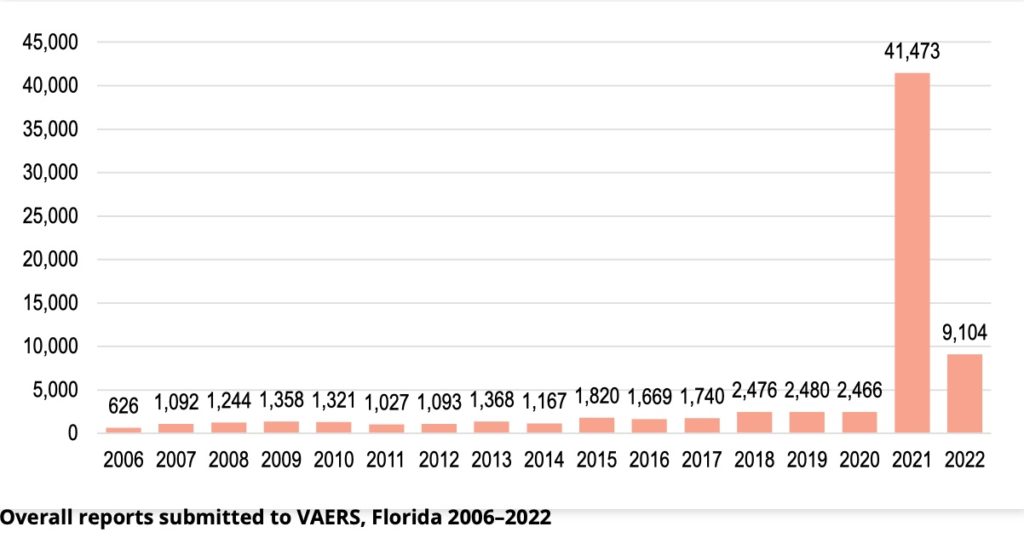
Florida’s surgeon general is advising the health care sector of a “substantial increase in Vaccine Adverse Event Reporting System (VAERS) reports from Florida after the COVID-19 vaccine rollout.”
Doctors and patients, or guardians of patients, can report adverse reactions from vaccines to the VAERS website. The primary objectives of VAERS data collection, which is co-sponsored by the Centers for Disease Control and Prevention and the Food and Drug Administration are to:
- Detect new, unusual, or rare vaccine adverse events;
- Monitor increases in known adverse events;
- Identify potential patient risk factors for particular types of adverse events;
- Assess the safety of newly licensed vaccines;
- Determine and address possible reporting clusters (e.g., suspected localized [temporally or geographically] or product-/batch-/lot-specific adverse event reporting);
- Recognize persistent safe-use problems and administration errors;
- Provide a national safety monitoring system that extends to the entire general population
In Florida, one of the first states to roll out the vaccine program for its older-than-average population, the spike in adverse events is up 1,700%.
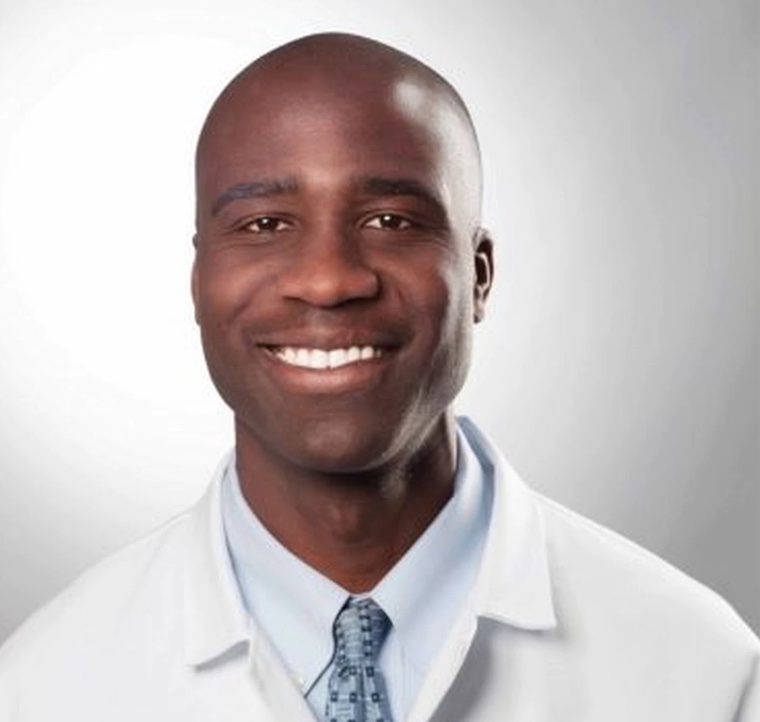
Florida’s Surgeon General Dr. Joseph A. Ladapo issued commentary about the exponential increase in reports of adverse events:
“In Florida alone, there was a 1,700% increase in VAERS reports after the release of the COVID-19 vaccine, compared to an increase of 400% in overall vaccine administration for the same time period.
“The reporting of life-threatening conditions increased over 4,400%. This is a novel increase and was not seen during the 2009 H1N1 vaccination campaign. There is a need for additional unbiased research to better understand the COVID-19 vaccines’ short- and long-term effects.
“The findings in Florida are consistent with various studies that continue to uncover such risks. To further evaluate this, the Surgeon General wrote a letterto the U.S. Food and Drug Administration (FDA) and the Centers for Disease Control and Prevention (CDC) illustrating the risk factors associated with the mRNA COVID-19 vaccines and emphasizing the need for additional transparency.
“According to a study, Fraiman J et al, Vaccine. 2022, mRNA COVID-19 vaccines were associated with an excess risk of serious adverse events, including coagulation disorders, acute cardiac injuries, Bell’s palsy, and encephalitis. This risk was 1 in 550 individuals, which is much higher than other vaccines.
“A second study, Sun CLF et al, Sci Rep. 2022, found increased acute cardiac arrests and other acute cardiac events following mRNA COVID-19 vaccination.
“Additionally, Dag Berild J et al, JAMA Netw Open. 2022, assessed the risk of thromboembolic and thrombocytopenic events related to COVID-19 vaccines and found preliminary evidence of increased risk of both coronary disease and cardiovascular disease.
“While the CDC has identified safety signals for stroke among individuals 65 and older following the bivalent booster administration, there is a need for additional assessments and research regarding safety of all mRNA COVID-19 vaccines.
“To support transparency, the State of Florida reminds health care providers to accurately communicate the risks and benefits of all clinical interventions to their patients, including those associated with the COVID-19 vaccine as additional risks continue to be identified and disclosed to the public.
“The State of Florida remains dedicated to protecting communities from the risks of COVID-19 and other public health concerns, specifically by promoting the importance of treatment and promoting prevention through healthy habits. We encourage our health care partners and providers to do the same.”
Lapado was appointed as Florida Surgeon General in 2021 by Gov. Ron DeSantis. Dr. Ladapo graduated from Wake Forest University and received his medical degree from Harvard and PhD in Health Policy from Harvard Graduate School of Arts and Sciences. He completed his clinical training in internal medicine at the Beth Israel Deaconess Medical Center, where he received the Harvard Medical School Class of 2012 Resident Teaching Award and the Daniel E. Ford Award in Health Services and Outcomes Research from John Hopkins University.


