
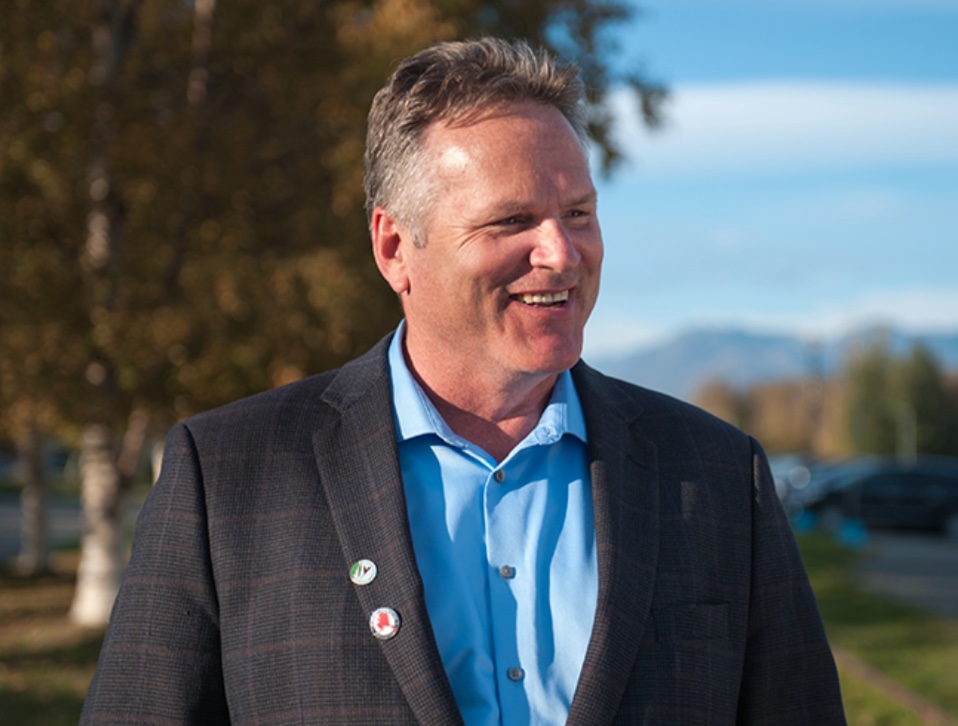
“Alaska and Japan have a trade partnership going back over fifty years to the first LNG export from Nikiski to Japan,” said Gov. Mike Dunleavy, upon his return from a trade mission to Japan on Friday.
“The natural gas of the Cook Inlet literally turned the lights on in cities across Japan and powered the economic engine that lifted that nation’s postwar society into a critically powerful western ally,” he said. “There appears to be, due to the shift across the world away from older fuel sources, and the simultaneous need for supplies that are not risked due to political instability, a role that Alaska natural gas could play. Alaska can supply Japan with another fifty of natural gas and clean hydrogen for decades to come.”
Dunleavy returned after meeting with Japanese companies, utilities, and government ministries about procuring Alaska’s natural gas while also assessing the state’s potential to export various new sources of fuel. The Japanese are keen on doing business with stable entities, and with much political instability to the nation’s east, in China, Russia, and Eastern Europe, the nation may be interested in locking down longterm contracts.
The meeting comes at a time that Japan is pivoting towards an energy transition that Alaska can supply in the coming decades, including blue and green hydrogen, at a time of great geopolitical instability around the world.
Dunleavy’s trip followed the first-ever governor’s Alaska Sustainable Energy Conference, which showcased the many ways Alaska can produce various sources of fuel for both the state and the world. The governor, First Lady Rose Dunleavy, and members of the Alaska Gasline Development Corporation, made the trip, which was Dunleavy’s second trip to Japan.
For four days, Governor Dunleavy and the Alaska delegation held meeting with representatives of the Japan Energy Resource Agency (JERA), the Japanese Ministry of Economy, Trade, and Industry (METI), the Japan Oil, Gas and Metals National Corporation (JOGMEC), the Japan Bank for International Cooperation (JBIC), along with Tokyo Gas and TOYO Engineering. Meetings were also held with the Mitsubishi Corporation, the Chiyoda Corporation, well as INPEX and O.S.K. Lines.


