
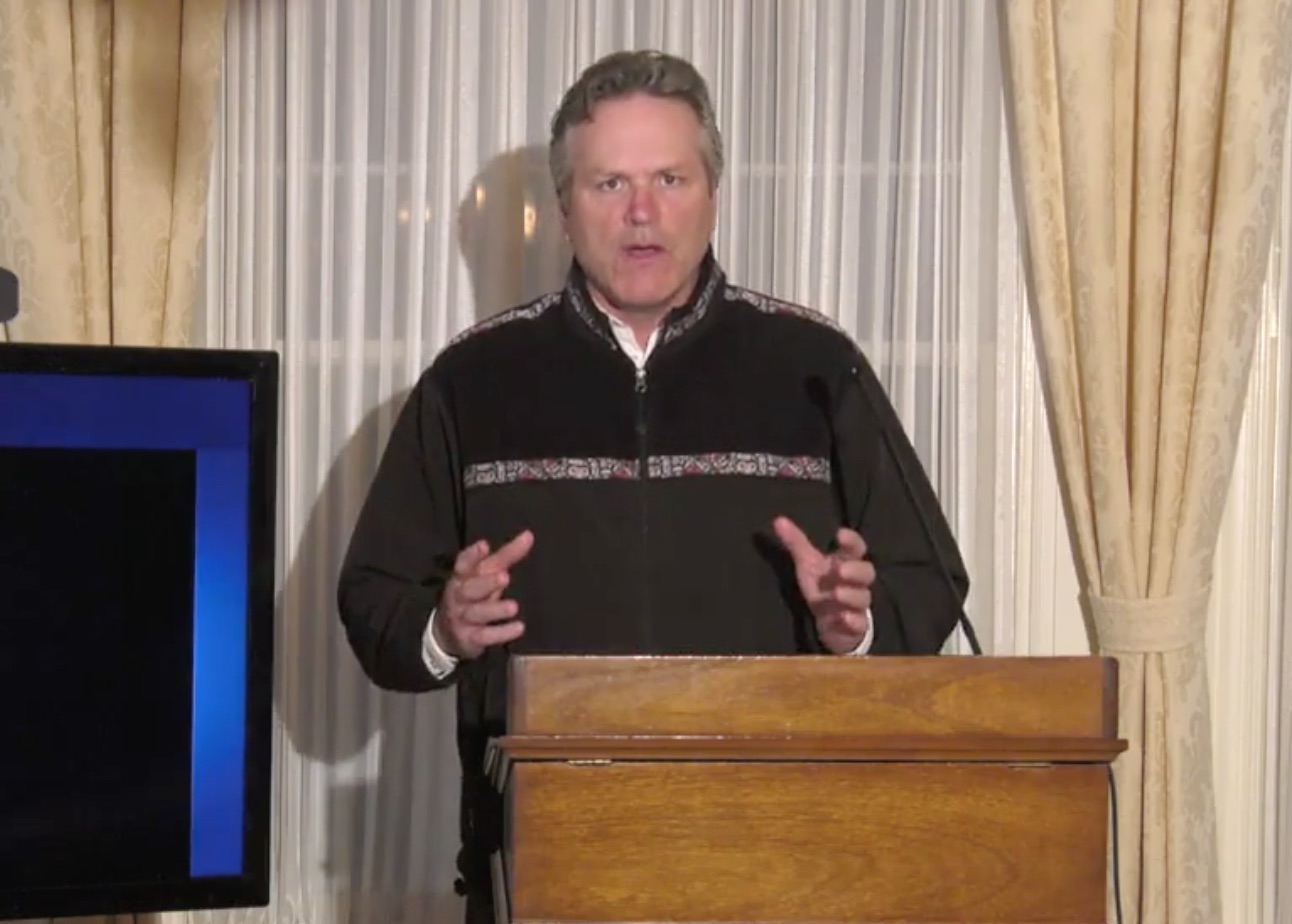
Gov. Dunleavy made a passionate plea to Alaskans to help stop the spread of misinformation about the COVID-19 virus.
In a press conference broadcast on Facebook, said he has never contemplated martial law, and there will be no forced vaccinations under his watch.
Dunleavy’s emergency declaration runs out on Sunday night and the House of Representatives is unorganized, so the Legislature cannot extend it with SB 56, the governor’s proposed emergency declaration extension. But he also seems reluctant to declare a new disaster.
He said that Alaska is a state that represents freedom and that the spirit of the people is what has made the state successful so far in combatting the coronavirus.
It was a direct blow to messages being relayed by Sen. Lora Reinbold, who suggested in her Senate Judiciary Committee that the governor might declare martial law.
Dunleavy also said that without an extension of the emergency declaration, the State would not have all the tools it now has to mitigate the spread of the virus, but that he anticipated everyone would continue to work to get the virus “behind us sooner rather than later.”
But he also said the virus will be with Alaska for many years, and that the state will need to deal with it as it has other problems in the past.
The State, he said, will lose some tools on Feb. 15, when the emergency declaration expires at midnight.
About 200 regulations that were eased to make decision making more responsive will be back in place. Many of these deal with how health care can be managed. It likely means the Alaska Airlines Center at the University of Alaska Anchorage campus will not be available as hospital overflow. Curbside pickup of beverages, pop-up vaccination sites, and even regulations eased for commercial fishing will go back to the way it was before.
Finally, the governor called upon Anchorage and Juneau to open their economies back up. Looking at the camera, he said the State has based its decisions on data, and first-class cities need to also look at the data, and open their businesses and schools back up.


