
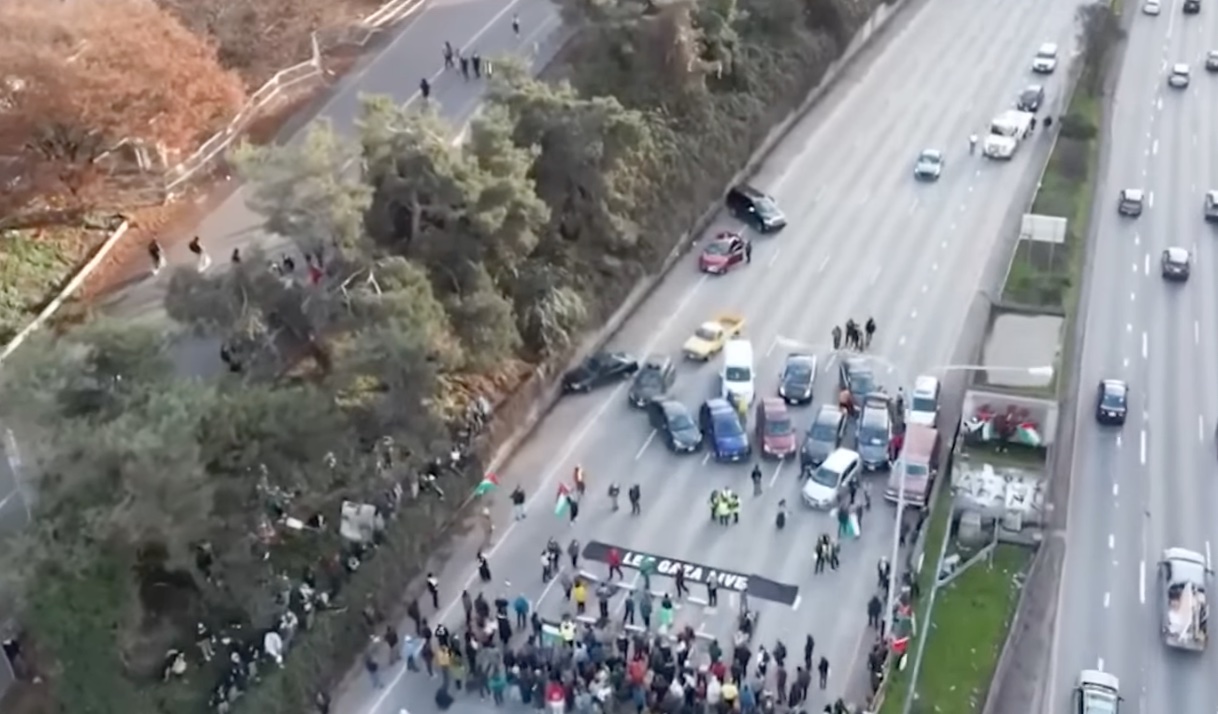
On Fireweed Lane in Anchorage this week, a group of anti-Israel protesters took over the street and blocked traffic, repeating a pattern seen in cities across the country these days. Seattle has endured multiple protest takeovers of freeways over environment and the war in Gaza, causing nightmares for drivers who can’t get to their destinations.
Climate activists have blocked runways by gluing their hands to the runways. A few years ago, kayakers protested Shell by blocking a the St. John’s River, so an icebreaker could not leave. It is happening increasingly in Alaska, as radical environmental activists learn from earth other.
On Wednesday, Alaska Gov. Mike Dunleavy introduced legislation that addresses the trend of protesters obstructing access to public places, and puts penalties on organizations that organize the protesters or conspire with them.
The legislation seeks to enhance public safety by imposing penalties for obstructing highways, navigable waterways, airport runways, and other public places specifically in situations where there is a significant risk of physical harm or interference with emergency response efforts.
HB 386 [SB 255] addresses civil liability of persons and organizations that conspire with or encourage anyone who engages in public obstruction.
“This legislation ensures that our public spaces remain safe and accessible for all Alaskans,” Dunleavy said. “It is important to distinguish between peaceful expression of rights and actions that pose risks to public safety and emergency response efforts.”
Key provisions of the bill include:
- – Increased penalties for obstructing highways and navigable waterways.
- – Criminal liability for obstructing airport runways.
- – Establishment of a new crime of obstruction in public places
- – Creation of a new civil cause of action for individuals obstructed in public places, with provisions for damages in addition to compensatory and other damages.
- – Extension of liability to persons and organizations that conspire with or encourage obstruction in public places.


