
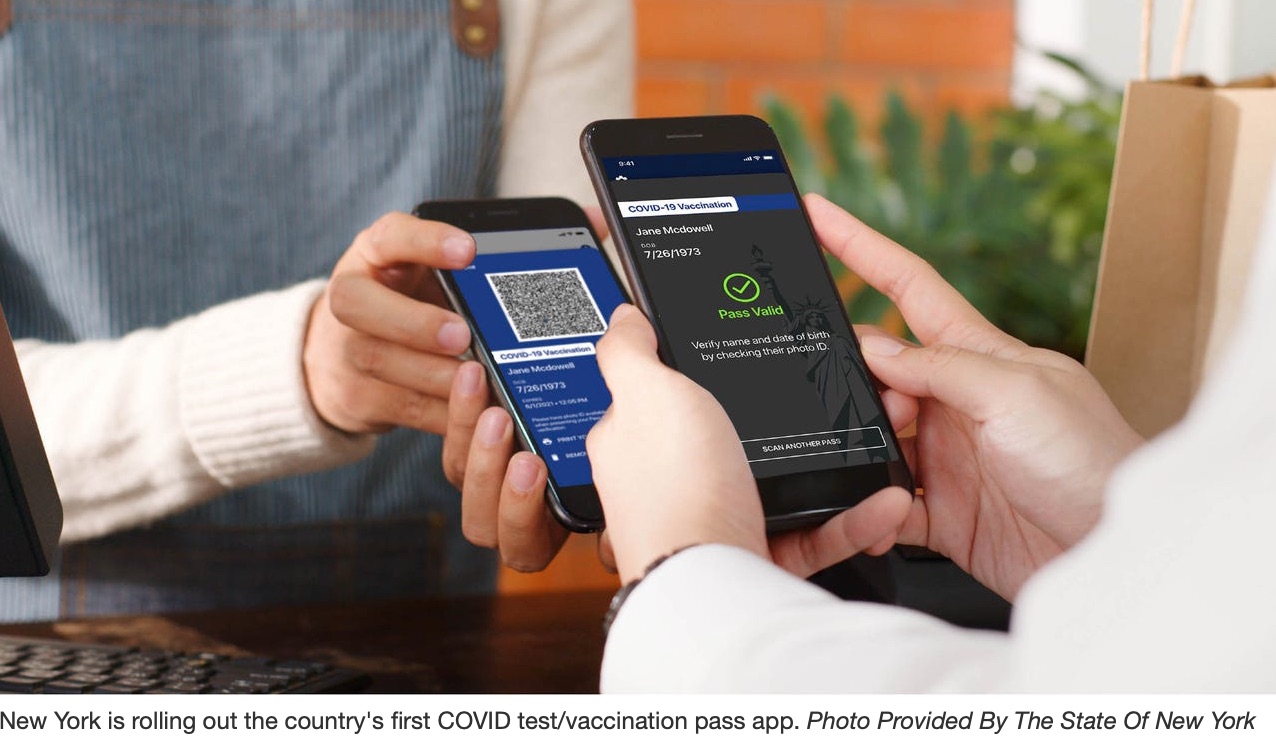
Congressman Don Young on Tuesday voted in favor of House Resolution 550, a complicated piece of legislation that creates, among other things, a national Covid-19 vaccine database.
Read the entire bill at this link.
Also known as the Immunization and Infrastructure, H.R. 550 was sponsored by Rep. Ann Kuster, a New Hampshire Democrat, in January.
According to the bill, the government would spend $400 million on an “immunization system data modernization and expansion,” a system it says is “a confidential, population-based, computerized database that records immunization doses administered by any health care provider to persons within the geographic area covered by that database.”
The database would allow the government to notify people about when their booster shot are due. Although the system is described as confidential, confidential in this case means confidential from the public, until of course records are indiscriminately released like has happened with the IRS, Department of Defense, Veterans Administration, or any number of high-profile government leaks and hacks.
Eighty Republicans crossed over to help move the bill to the Senate, including Young, who is famous for being a bipartisan lawmaker. It passed 294-130.
Young’s office explained that the bill is not a vaccine passport bill:
“The Congressman opposes a broad federal vaccine mandate and vaccine passports. In fact, the Congressman has cosponsored H.J.Res 65, which would overturn OSHA’s vaccine mandate. Contrary to what critics say, the Immunization Infrastructure Modernization Act (H.R. 550) actually protects patients’ privacy by keeping the federal government from accessing Immunization Information Systems (IIS) databases in an attempt to carry out the Biden agenda. The primary issue is that in Biden’s multi-trillion dollar American Rescue Plan, funding to modernize IIS databases was included, but there was no explicit legal mechanism to put guardrails on what “modernization” meant. H.R. 550 limits what Biden can do, in turn protecting states’ rights.
“The Immunization Infrastructure Modernization Act (H.R. 550) isn’t at all related to a federal vaccine database or vaccine passport. In fact, the bill actually increases security, bolsters cyber defense, and helps better protect Americans’ health privacy. The state-level IIS databases already exist and have been in use for decades. All this bill does is beef up their security. In fact, the bill goes a step farther to reign in the Biden Administration by ensuring federal money cannot go toward repurposing an IIS to enforce vaccine mandates.
“Again, this bill does not create new IIS databases. Immunization information (whether it’s immunization against COVID-19, Hepatitis A, or chicken pox) already exists in state-level databases. The information contained within them is decentralized, anonymous, and contains no personally identifiable information. H.R. 550 ensures existing systems are kept private and hardened against potential cyber-attacks. Alaska’s patients are already rightfully concerned about digital health privacy following the DHSS cyber-attack which exposed health information.“
According to Breitbart News, some conservative members of the House are deeply unhappy with the bill, including Rep. Mary Miller, R-Ill, who views the legislation darkly.
“These systems are designed to allow for the sharing of crucial information and maintenance of records. Do we really trust the government to protect our medical records?” Miller told Breitbart. “The bill’s author even bragged in her press release that these systems will help the government remind patients when they are due for a recommended vaccine and identify areas with low vaccination rates to ensure equitable distribution of vaccines. This was clearly a legislative tool to enforce vaccine mandates and force their Orwellian rules onto those who do not comply.”
Rep. Byron Donalds (R-FL) cautioned Breitbart readers that H.R. 550 is “Democrats’ habitual pattern of reckless and wasteful spending” that expands the power of the federal government in trampling individual rights.
“This legislation would unnecessarily appropriate millions of taxpayer funds intended to expand bureaucracy in Washington. A database solely created to record and collect confidential vaccination information of Americans explicitly encroaches upon individuals’ fundamental right to medical privacy,” Donalds said. “As a fiscal conservative, I cannot in good faith support legislation that contributes to the Democrats’ habitual pattern of reckless and wasteful spending and the intrusive heavy hand of government.”
The bill’s main sponsor, Democrat Rep. Ann Kuster (D-NH), explained that the system will be used to “remind patients when they are due for a recommended vaccine” and identify areas with low vaccination rates to “ensure equitable distribution of vaccines.”
Critics say the bill will allow the federal government to track unvaccinated Americans, who could be targeted, segregated, and forced to comply with vaccination mandates.
The bill has passed to the Senate and was referred to the Senate, read twice, and referred to the Committee on Health, Education, Labor, and Pensions.


