
The Anchorage School District’s new “Equity and Compliance Office” has posted a reading list online that contains books with partisan anti-Republican rhetoric, as the district moves closer to embracing the controversial pedagogy of “critical race theory.”
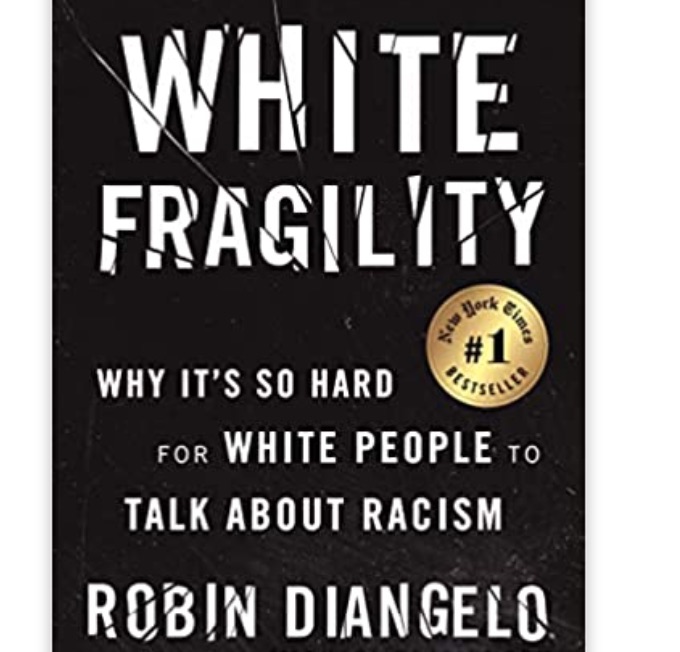
Among the books on the list is “White Fragility” by Robin DiAngelo, a controversial book that centers on the unrecognized racism of the well-educated liberal elite, a class of Americans that is said to perpetuate racism, while maintaining an anti-racist exterior.
DiAngelo has made a lucrative career out of promoting the idea that whites are only interested in protecting their “white dominance” and that the more you deny you are a racist, the more racist you actually are. Some critics say she is an intellectual fraud.
Also on the list is “Antiracist Baby,” for parents of newborns to three-year-olds. The book is a guide to indoctrinating your baby in critical race theory and molding your child into a political activist.
“Beleaguered White racists who can’t imagine their lives not being the focus of any movement respond
to ‘Black Lives Matter’ with “’All Lives Matter.’ Embattled police officers who can’t imagine losing
their right to racially profile and brutalize respond with ‘Blue Lives Matter,'” wrote Ibram X. Kendi in “How to Be an Antiracist.”
Indeed, “antiracist” has become big business in the world of teaching and business coaching. There are now literally dozens of books with “antiracist” in the title, including coloring books for children and adults.
The booklist from the Anchorage School District includes:
- Antiracist Baby by Dr. Ibram X. Kendi
- How to be an Antiracist by Dr. Ibram X. Kendi
- Stamped from The Beginning by Dr. Ibram X. Kendi
- The New Jim Crow by Michele Alexander
- An Indigenous Peoples’ History of the United States by Roxanne Dunbar Ortiz
- White Fragility by Dr. Robin DiAngelo
- So You Want to Talk About Race by Ijeoma Oluo
In “White Fragility,” we learn that, “When I say only whites can be racist, I mean that in the United states, only whites have the collective social and institutional power and privilege over people of color.”
We learn on Page 27 that “Whites also produce and reinforce the dominant narratives of society – such as individualism and meritocracy – and use these narratives to explain the positions of other racial groups.”
On Page 63, we find the nuclear family is also racist as a concept: “The romanticized ‘traditional’ family values of the past are also racially problematic.”
We learn that President Trump is racist on Page 93: “We see it in the president of the United States positioning the avowed white supremacist neo-Nazis marching openly in the streets – including one man who drove a car into a crowd of protesters – as equal in character to the people protesting them.”
And finally, capitalism and democracy itself are racist, according to the author: “Examples of ideology in the United States include individualism, the superiority of capitalism as an economic system and democracy as a political system, consumerism as a desirable lifestyle, and meritocracy (anyone can succeed if he or she works hard).”
Meritocracy is a thread that runs through several of the books as an especially egregious form of racism.
The theories expounded on in the books have their critics, although it’s a contrarian point of view, and one that will brand you as a “racist.”
In The Atlantic Monthly, African-American writer John McWhorter, a professor at Columbia University, wrote that “White Fragility” is “dehumanizing condescension” that “talks down to Black people.”
“DiAngelo is an education professor and—most prominently today—a diversity consultant who argues that whites in America must face the racist bias implanted in them by a racist society. Their resistance to acknowledging this, she maintains, constitutes a “white fragility” that they must overcome in order for meaningful progress on both interpersonal and societal racism to happen,” McWhorter wrote.
“DiAngelo has convinced university administrators, corporate human-resources offices, and no small part of the reading public that white Americans must embark on a self-critical project of looking inward to examine and work against racist biases that many have barely known they had,” he wrote.
“I am not convinced. Rather, I have learned that one of America’s favorite advice books of the moment is actually a racist tract. Despite the sincere intentions of its author, the book diminishes Black people in the name of dignifying us. This is unintentional, of course, like the racism DiAngelo sees in all whites. Still, the book is pernicious because of the authority that its author has been granted over the way innocent readers think,” McWhorter continued.
“She operates from the now-familiar concern with white privilege, aware of the unintentional racism ever lurking inside of her that was inculcated from birth by the white supremacy on which America was founded. To atone for this original sin, she is devoted to endlessly exploring, acknowledging, and seeking to undo whites’ ‘complicity with and investment in’ racism. To DiAngelo, any failure to do this “work,” as adherents of this paradigm often put it, renders one racist,” McWhorter wrote.
Then McWhorter went for the throat of DiAngelo, saying her claims are wrong or disconnected from reality. When white women cry after being called racist, DiAngelo writes, it reminds black people of white women crying as they lied about being raped by Black men.
“But how would she know? Where is the evidence for this presumptive claim?” McWhorter asked.
McWhorter also pointed to a passage where DiAngelo proclaimed that students can go all the way through graduate school without ever discussing racism.
“I am mystified that DiAngelo thinks this laughably antique depiction reflects any period after roughly 1985. For example, an education-school curriculum neglecting racism in our times would be about as common as a home unwired for electricity,” he wrote.
“But if you are white, make no mistake: You will never succeed in the ‘work’ she demands of you. It is lifelong, and you will die a racist just as you will die a sinner,” he concluded.
Years earlier, McWhorter himself wrote a book about black self-sabatoge.
In “Losing the Race: Self-Sabotage in Black America,” McWhorter, who teaches linguistic studies, explored the disease of defeatism that has infected Black America through victim mentality, separatism, and anti-intellectualism.
But McWhorter’s book did not make the Anchorage School District Equity and Compliance Office reading list, and it does not fit the narrative of critical race theory, or the soft bigotry of low expectations.
Notably, in the past week, the Anchorage School District has put as asterisk by the above reading list and a note that says it does not endorse the books or the authors.
Learn more about the Anchorage School District’s Equity Office goals and aspirations at this link.


