By ALEXANDER DOLITSKY
In the late 1960s through 1970s, in Kiev, Ukraine, one of the unique attractions was a green and shiny 1968 Ford Mustang Fastback.
Then, it was the only Ford in the capitol of Ukraine, a city with a population of nearly 2 million residents. Occasionally, people would witness this car passing by on the streets of Kiev, resembling a shooting star on a clear summer night.
The owner of this car was a young aspirant (Ph.D. candidate) of the Kiev Polytechnic Institute (institute of technology and engineering). The rumors were that he was writing a Ph.D. thesis on the Ford Mustang model, and in order to enhance his research had sent a letter to the Ford company in Detroit, requesting some essential information on this model.
Two-three months later, he received a notice from the Ukrainian Board of Customs to report at a certain location with a payment of 200 rubbles (a reasonable monthly salary in the former Soviet Union in the 1960s—equal to about US$50.00 on the black market for foreign currency exchange) in order to claim a large crate from the United States. The graduate student was furious, “I asked these bloody capitalists to send me some research material, and instead now I have to pay nearly equal amount of my father’s monthly wages,” he complaint to the authorities.
So, he refused to accept the crate; but notices from the Board of Customs kept coming to his attention, alerting him with high fines for storing this large crate. Finally, he reported to the customs and was unexpectedly surprised that Ford Company sent him a brand-new 1968 Ford Mustang Fastback, accompanied with some essential spare parts and a load of research material on this product. I only envision that the aspirant yelled in an excitement, “Spasibo (thank you) Ford! America, what a country!”
Indeed, it was a generous gift. Rumors of the young man’s fortune spread quickly around town, motivating some “clever students,” or those who pretended to be a “student,” to emulate similar requests to the American automobile companies, but, apparently, with no success. True, only “the early bird gets the worm.”
In fact, products made in the United States and in other Western countries were in a great demand in the Soviet Union and could be obtained/purchased mostly on the black market at a very high price. Ownership of American–made clothes (e.g., blue jeans, shirts, coats, neck ties and almost anything else) was a sign of social prestige, high class and wealth. American–made products were especially in great demand and of interest to the Soviet youth in the 1960s and 1970s, including American entertainment (i.e., Hollywood films, popular music and dance, Walt Disney cartoons, etc.).
Soviet authorities, however, prohibited “Voice of America” and “BBC” radio broadcasting in the country. Nevertheless, these broadcasts were listened to by many bold Soviets privately and secretly at a great personal risk.
Igor Tsepenyuk was my old and close friend since elementary school. His parents worked at the U.S.S.R. Embassy in Washington D.C. To my recollection, his father was a trade representative and mother a cultural attaché at the Embassy in the United States. So, they could bring some small items from the United States, including various beverages that were unavailable at that time in the Soviet Union (e.g., whiskey, Coca Cola, Pepsi Cola, etc.).
On one occasion, a small group of my close friends gathered in the Leipzig Restaurant—a popular German–cousin establishment in town. We all were excited that our friend, Igor, managed to sneak into his parents private bar/safe and smuggle two small cans of Coca Cola. None of us, except Igor, had ever experienced this American drink; and we all were anxious to taste it—to taste a tiny piece of America.
So, in the restaurant a waiter brought crystal shots and served everyone, including himself, this mysterious Yankees drink. We cheered “Na Zdorovye” (for good health), “Pey do dna” (bottom up)—and everyone emptied the shots of Coca Cola at once. It was just a plain non-alcoholic beverage, but how exciting it was to catch a glimpse of America for few seconds! “America, what a country!” I whispered to Igor.
In the summer of 1990, I conducted an archeological investigation of the Denisov Cave in Altay Mountains in Russia, north of Mongolia. By then, I had already lived in America for 12 years and had become a naturalized U.S. citizen. In my way to Novosibirsk, I stopped in Moscow for few days, visiting my colleagues at the Institute of Archaeology of the U.S.S.R. Academy of Sciences and my dear cousin, Vladimir Lundin, a well–known violinist, and his family.
One day, in browsing on the streets of Moscow, I noticed a long zigzag–shaped line on Pushkinskaya Square in the center of Moscow. Long lines for various commercial products and food items were common in the former Soviet Union, but not that long.
So, I asked a stranger in the line, “What is this line for?” The stranger replied, “There is an American McDonald’s Restaurant around the corner, the first one in the country; just opened up not long ago.”
I smiled friendly and suggested to a stranger, “You know, it is just a fast food restaurant, serving mostly burgers and fries similar to the Russian cutlets wrapped in bread and fried potatoes.” “Yes, I know,” responded a stranger, “but I have never been in America, and here it is.” “Indeed, America, what a country!” I confirmed.
Looking back to the U.S.S.R. from the 1960s through 1970s, I believe that it was American economic, cultural and ideological influence around the world that shook the Soviet totalitarian regime and paved the road for opening the “Iron Curtain” and, therefore, allowing millions of Soviet citizens to escape a brutal socialist socio–economic system and immigrate to the free world—United States of America.
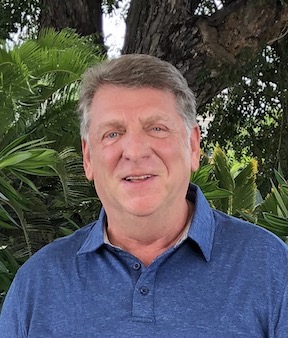
Alexander B. Dolitsky was born and raised in Kiev in the former Soviet Union. He received an M.A. in history from Kiev Pedagogical Institute, Ukraine, in 1976; an M.A. in anthropology and archaeology from Brown University in 1983; and was enroled in the Ph.D. program in Anthropology at Bryn Mawr College from 1983 to 1985, where he was also a lecturer in the Russian Center. In the U.S.S.R., he was a social studies teacher for three years, and an archaeologist for five years for the Ukranian Academy of Sciences. In 1978, he settled in the United States. Dolitsky visited Alaska for the first time in 1981, while conducting field research for graduate school at Brown. He lived first in Sitka in 1985 and then settled in Juneau in 1986. From 1985 to 1987, he was a U.S. Forest Service archaeologist and social scientist. He was an Adjunct Assistant Professor of Russian Studies at the University of Alaska Southeast from 1985 to 1999; Social Studies Instructor at the Alyeska Central School, Alaska Department of Education from 1988 to 2006; and has been the Director of the Alaska-Siberia Research Center (see www.aksrc.homestead.com) from 1990 to present. He has conducted about 30 field studies in various areas of the former Soviet Union (including Siberia), Central Asia, South America, Eastern Europe and the United States (including Alaska). Dolitsky has been a lecturer on the World Discoverer, Spirit of Oceanus, andClipper Odyssey vessels in the Arctic and sub-Arctic regions. He was the Project Manager for the WWII Alaska-Siberia Lend Lease Memorial, which was erected in Fairbanks in 2006. He has published extensively in the fields of anthropology, history, archaeology, and ethnography. His more recent publications include Fairy Tales and Myths of the Bering Strait Chukchi, Ancient Tales of Kamchatka; Tales and Legends of the Yupik Eskimos of Siberia; Old Russia in Modern America: Russian Old Believers in Alaska; Allies in Wartime: The Alaska-Siberia Airway During WWII; Spirit of the Siberian Tiger: Folktales of the Russian Far East; Living Wisdom of the Far North: Tales and Legends from Chukotka and Alaska; Pipeline to Russia; The Alaska-Siberia Air Route in WWII; and Old Russia in Modern America: Living Traditions of the Russian Old Believers; Ancient Tales of Chukotka, and Ancient Tales of Kamchatka.
A few of Dolitsky’s past MRAK columns:
Read: Neo-Marxism and utopian Socialism in America
Read: Old believers preserving faith in the New World
Read: Duke Ellington and the effects of Cold War in Soviet Union on intellectual curiosity
Read: United we stand, divided we fall with race, ethnicity in America
Read: For American schools to succeed, they need this ingredient
Read: Nationalism in America, Alaska, around the world
Read: The case of the ‘delicious salad’
Read: White privilege is a troubling perspective
Read: Beware of activists who manipulate history for their own agenda
Read: Alaska Day remembrance of Russian transfer