During a hearing in which Arctic Alaska Natives pleaded for the right to produce oil and gas, which funds their very existence in the harshest climate of the world, Rep. Mary Peltola took the middle path, neither advocating strongly for Alaska’s economy, nor declaring herself on the side of the environmentalists who want to crush it. She played it safe, unwilling to say anything that might offend her base.
Wednesday’s hearing on the Alaska’s Right to Produce Act, which would roll back Biden’s ban on exploration and development of the National Petroleum Reserve-Alaska, brought out the likes of New York Democrat Rep;. Alexandria Ocasio-Cortez, a leader of The Squad, who argued on behalf of the Gwich’in people.
Although the Right to Produce bill is supported by all three members of Alaska’s congressional delegation, Peltola took the approach of appeasement to environmentalists, who are backing her campaign:
“And I do want to say that I have not been 100 percent pleased with all interactions with administration. But I think that this administration has shown Alaskans in deference with, in terms of Willow, the largest oil project that our state or nation has seen in decades. This is — we felt like this was a step in the right direction. And I think it’s unfortunate that people of the North Slope were not invited to have a discussion or no responses were given when overtures were made. But in order to get back on track, I think that it would be good to hear some constructive thoughts. I’d love to hear from each of you on how we can do a better job as Alaskans, making sure that industry, Native people and environmental folks can collaborate and work together, and that’s the only way we’re going to get anywhere,” she said, taking no stand that might offend her Democrat base.

Peltola continued to defend the Biden Administration and speak in veiled terms about climate change: “No one is coming to save us. And we do have a lot of concerns. And Alaska really does see firsthand concerning environmental issues and it’s warming, but it’s also marine debris, marine traffic. I mean, we are really seeing a new level of encroachment that we haven’t felt this firsthand before in any generation in Alaska.”
But Charles Lampe, president of Kaktovik Inupiat Corp., argued on behalf of Native Alaskans: “My community unapologetically supports the leasing program. Many people try to steer the debate to caribou. For Kaktovik, it’s about our people and having an economy to survive.”
Congress needs to fulfill its promises made to Alaska over 40 years ago, Lampe said. “We will not succumb to eco-colonialism and become conservation refugees on our own land. The people have every right to pursue economic, social and cultural self-determination. The laws of the U.S. should support indigenous populations, not interfere with these basic human and political rights.”
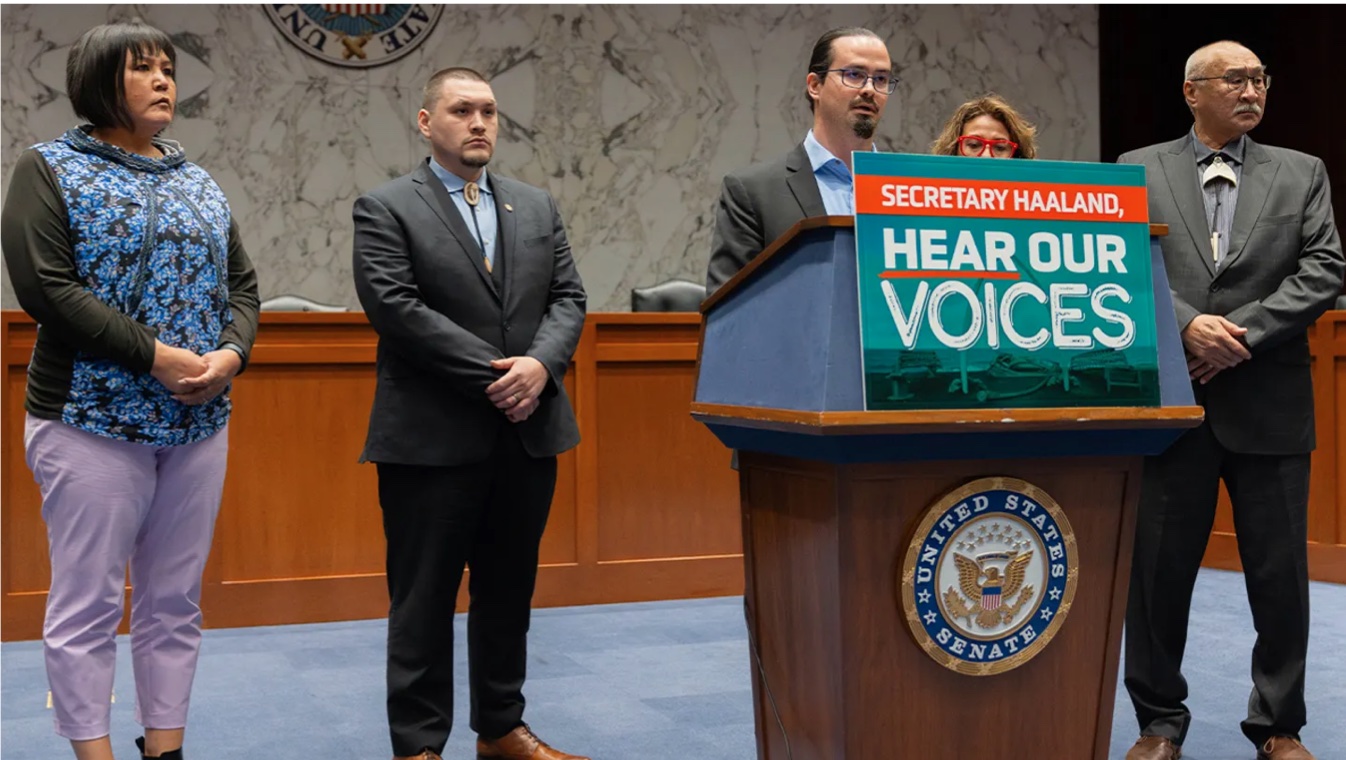
Others attending the House hearing to advocate for an Arctic economy were Nagruk Harcharek, the president of Voice of the Arctic Iñupiat; Josiah Patkotak, mayor of the North Slope Borough; Morrie Lemen, the executive director of the Iñupiat Community of the Arctic Slope; and Nathan Gordon Jr., vice president of the Native Village of Kaktovik, Arctic Slope Director of Natural Resources Doreen Leavitt, and Anaktuvuk Pass Mayor Lilian Stone, all who support a responsible oil and gas industry.
These are some of the same Alaska Native leaders who have repeatedly tried to get a meeting with Sec. of Interior Deb Haaland, but have been rebuffed, as Haaland pursues the Biden agenda of “no more oil,” except in her home state of New Mexico, which under Biden is now second in production after Texas.
At the end of the hearing in the Subcommittee on Energy and Mineral Resources subcommittee Chairman Pete Stauber (R-Minn.) spoke to the “terrible repercussions” of the Biden Administration on Alaska:
“Alaska has been blessed with vast deposits of oil and natural gas that can unleash economic prosperity in Alaska and help restore American energy dominance,” he said. “The Biden Administration’s decision to take these resources offline without consulting with the Alaska Native communities most impacted by this decision has had terrible repercussions for the state of Alaska and the entire United States, including a loss in jobs and higher energy costs. President Biden’s ‘anywhere but America, any worker but American’ energy agenda must come to an end, which is why I was proud to introduce the Alaska’s Right to Produce Act. By reversing Biden’s harmful actions on Alaska’s North Slope, this legislation will empower Alaska Native communities and energy workers to responsibly develop these resources rather than continue our unstable reliance on hostile foreign adversaries. I am grateful to the witnesses who testified on the need for this legislation during today’s subcommittee hearing, and I promise to continue fighting until this crucial legislation is enacted.”
Alaska’s Rep. Peltola, however, focused her efforts on another piece of legislation, which would reintroduce buffalo to reservation land in other states.
“I’m proud to join a group of bipartisan legislators to reintroduce the Indian Buffalo Management Act–a bipartisan bill my predecessor supported–to restore Indigenous conservation and protection of buffalo,” Peltola said online, referring to the late Congressman Don Young, while ignoring the visit of Alaska Native leaders to the U.S. Capitol.