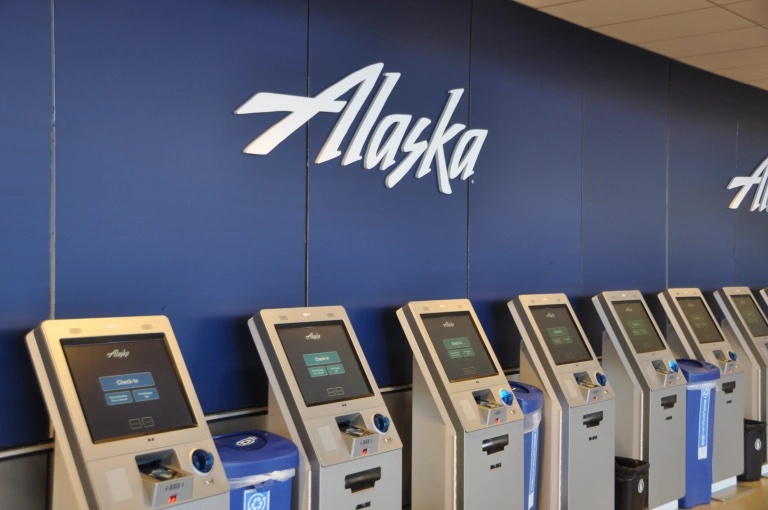
The kiosks that heralded convenience and modern travel are being phased out by Alaska Airlines, because, well, they are old-fashioned.
The removal of the kiosks are part of a $2.5 billion plan to upgrade passenger technology in airport lobbies, starting with the larger airports. Alaska Airlines is nudging everyone to use the company’s app on smart phones, and speed up the check-in process at the airport.
The airline has a goal of getting passengers from the lobby to security in five minutes or less. To achieve this, Alaska Airlines encourages passengers to check-in and secure their boarding passes digitally before arriving at the airport using the Alaska Airlines app or other online methods, rather than printing out tickets. Many passengers are already doing this and kiosks may be more of a relic as the years go on.
“We realized the majority of our guests were doing most of the kiosk actions on their own phones and we could reduce the congestion in our airports. Alaska was the first airline to introduce kiosks more than 20 years ago, and we’ll be the first airline to remove them,” said Charu Jain, Alaska Airlines Senior Vice President of Innovation and Merchandising.
The check-in kiosks will be replaced with iPad stations, where passengers can pay for checked bags and print bag tags. The airline later intends to transition to a fully self-service experience for baggage drop-off. By the end of 2023, most of Alaska’s airports will have the new bag tag stations in place, the airline said.
By spring of 2024, the airline plans to introduce self-service bag drop-off stations, where passengers can scan their face, identification, and bags before placing their bags on a conveyor belt to be loaded onto the aircraft. Alaska Airlines will continue to have customer service associates available at the airports for assistance.
Alaska Airlines is also experimenting with electronic bag tags through a partnership with Amsterdam-based startup Bagtag.
Bagtag allows travelers to purchase reusable electronic tags and attach them at home, using their phone to connect them with the airline’s baggage system.