
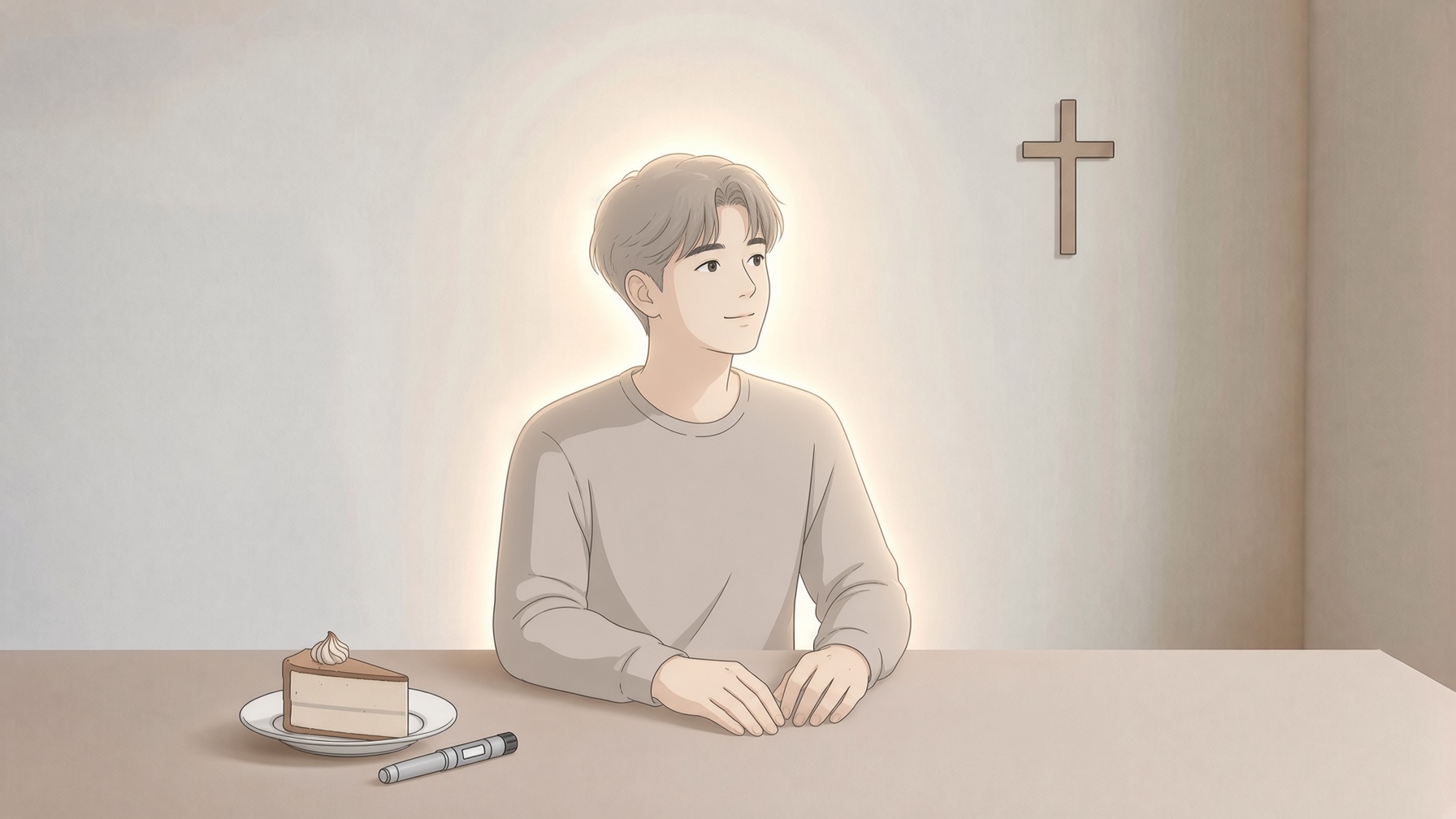
In the article called “To Do or Not Do: Christian Virtue Trains Desire and Intellect toward Right Action,” I gave an example of the person who wanted to avoid insulin injections by controlling their diet. That individual stands before a piece of cake. The sensory appetite presents the cake as an immediate good—sweet, comforting, socially affirming, a small pleasure in an otherwise disciplined day.
However, the intellect, if it is awake, presents a higher good: bodily health preserved through self-denial, freedom from the medical regimen that would otherwise become permanent, and the long-term capacity to live with vigor rather than with managed decline. In that single moment the will must choose. If the higher faculties are engaged the act strengthens the habit of temperance. If the will yields to the passion, the habit of self-indulgence is reinforced, and the path toward insulin injections becomes more inevitable.
This concrete conflict is not merely a modern health anecdote; it is a precise illustration of the human condition as St. Thomas Aquinas describes it. Man is a composite of soul and body, endowed with intellect ordered to know truth and will ordered to choose the good as the intellect presents it.

The “good” presented by the intellect can only be recognized and chosen as the greater good when the intellect itself has been properly formed. The greater good will always lead toward God and beatitude while the lesser good will lead us away from God.
Passions are the sensory appetites for pleasure, ease, honor, or the avoidance of pain. Passions belong to the sensitive appetite and are not evil in themselves. They become disordered when they move the will without the governance of reason. Original sin has left the lower appetites rebellious, so that the person continually experiences the tension between the lesser good that is immediate and the greater good that requires denial, delay, or suffering for the sake of lasting well-being and ultimate beatitude.
Metanoia means a radical change of mind and heart in which a person deliberately reorients his or her will toward the true hierarchy of goods. For Aquinas, metanoia is not a fleeting emotion or a temporary resolution. It is the act by which the intellect, enlightened by reason and faith working together through grace, presents the greater good with clarity, and the will, under that light, consents to it even against the pull of passion.
Repeatedly discerning and choosing the greater good forms virtue. Virtue is stable dispositions that make the good choice easier and more delightful over time. Vice is formed by the opposite habit of repeated surrender to the immediate passion, which dulls the intellect and weakens the will. Let that sink in. Freedom is not the power to follow whatever desire arises; it is the power to order desire according to truth. Without that ordering, freedom collapses into slavery to appetite.
In her next article, Dr. Cindy will discuss the challenges modernity has posed in ordering the will toward the good, and how we may rediscover the freedom of metanoia, that is the freedom of ordering human will in accordance with reason toward the ultimate good, which is God.


