Climate change and disinformation emerged as big threats to the world in the latest Global Risks Perception Survey by the World Economic Forum.
Ahead of next week’s elite gathering in Davos, Switzerland, the World Economic Forum released results of a survey Wednesday that shows that world opinion leaders think extreme weather, misinformation, and disinformation are severe global risks over the coming two years and beyond.
The survey is sure to inform the discussions of the various breakout sessions of world leaders and influential global players who gather yearly to get on the same page.
“Amid increasing division and uncertainty that continue to destabilize the world, the World Economic Forum Annual Meeting 2024 is set to bring together more than 2,800 leaders across geographies and industries to advance dialogue, strengthen cooperation and deepen partnerships on critical global challenges,” the organization wrote.
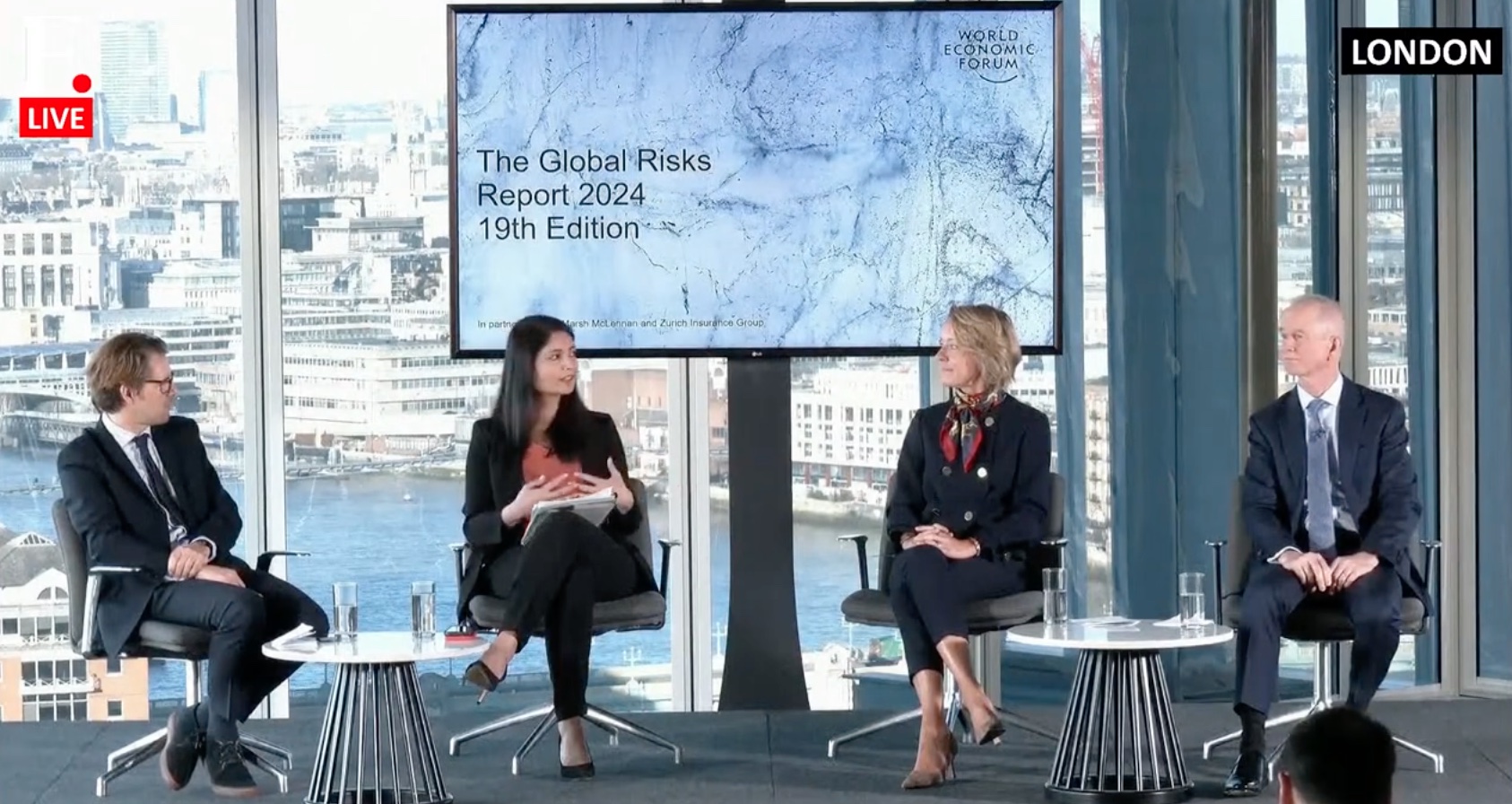
“As we enter 2024, a fairly pessimistic outlook,” said Saadia Zahidi, managing director of the WEF. She said in terms of the overall outlook, about half the experts who were surveyed said in that within two years the world is on the precipice of fairly severe risks, and another 30% said the risks were fairly catastrophic. Within 10 years time, two-thirds of the people surveyed think the risks will be extreme.

The report, published Jan. 10, said “disruptive capabilities of manipulated information are rapidly accelerating, as open access to increasingly sophisticated technologies proliferates and trust in information and institutions deteriorates.”
Such manipulation of information may “radically disrupt electoral processes in several economies over the next two years,” which was paired with the 2024 busy election cycle across many nations, including the United States, India, and Mexico.
“In the next two years, a wide set of actors will capitalize on the boom in synthetic content, amplifying societal divisions, ideological violence and political repression – ramifications that will persist far beyond the short term,” the report said.
The potential for misinformation and disinformation is linked to the expansion of artificial intelligence, especially when it gets “in the hands of bad actors, to flood global information systems with false narratives.”
Governments are beginning to regulate and punish creators of online disinformation, and are developing rules around artificial intelligence, the report said.
“Generally however, the speed and effectiveness of regulation is unlikely to match the pace of development. Synthetic content will manipulate individuals, damage economies and fracture societies in numerous ways over the next two years. Falsified information could be deployed in pursuit of diverse goals, from climate activism to conflict escalation,” the report said.
“The widespread use of misinformation and disinformation, and tools to disseminate it, may undermine the legitimacy of newly elected governments,” the report said, concerning the upcoming election cycle.
“Resulting unrest could range from violent protests and hate crimes to civil confrontation and terrorism,” the report said.
Governments are not the only ones who will be censoring in 2024. Google announced it will censor election-related material that is artificial intelligence bots don’t approve of leading up to the 2024 presidential and other elections. Meta, which owns Facebook, announced that it will restrict some content in the coming election cycle. In the past, tech companies have largely targeted conservatives and anti-authoritarian content.
Zurich Insurance Group and Marsh McLennan conducted the survey of world opinion leaders and shaped the results ahead of next week’s annual World Economic Forum meeting.
The Global Risks Perception Survey is the WEF’s way of “harnessing the expertise of the Forum’s extensive network of academic, business, government, civil society and thought leaders.”