
WILL MAYOR’S EMERGENCY POWERS BE EXTENDED?
The experts agreed: After Thanksgiving and Christmas-New Year, a huge spike in COVID-19 cases would swarm across the land, similar to the rises of the known cases that occurred after Memorial Day and July 4. Hospitals would be overwhelmed and deaths would soar.
In Alaska, that didn’t happen.
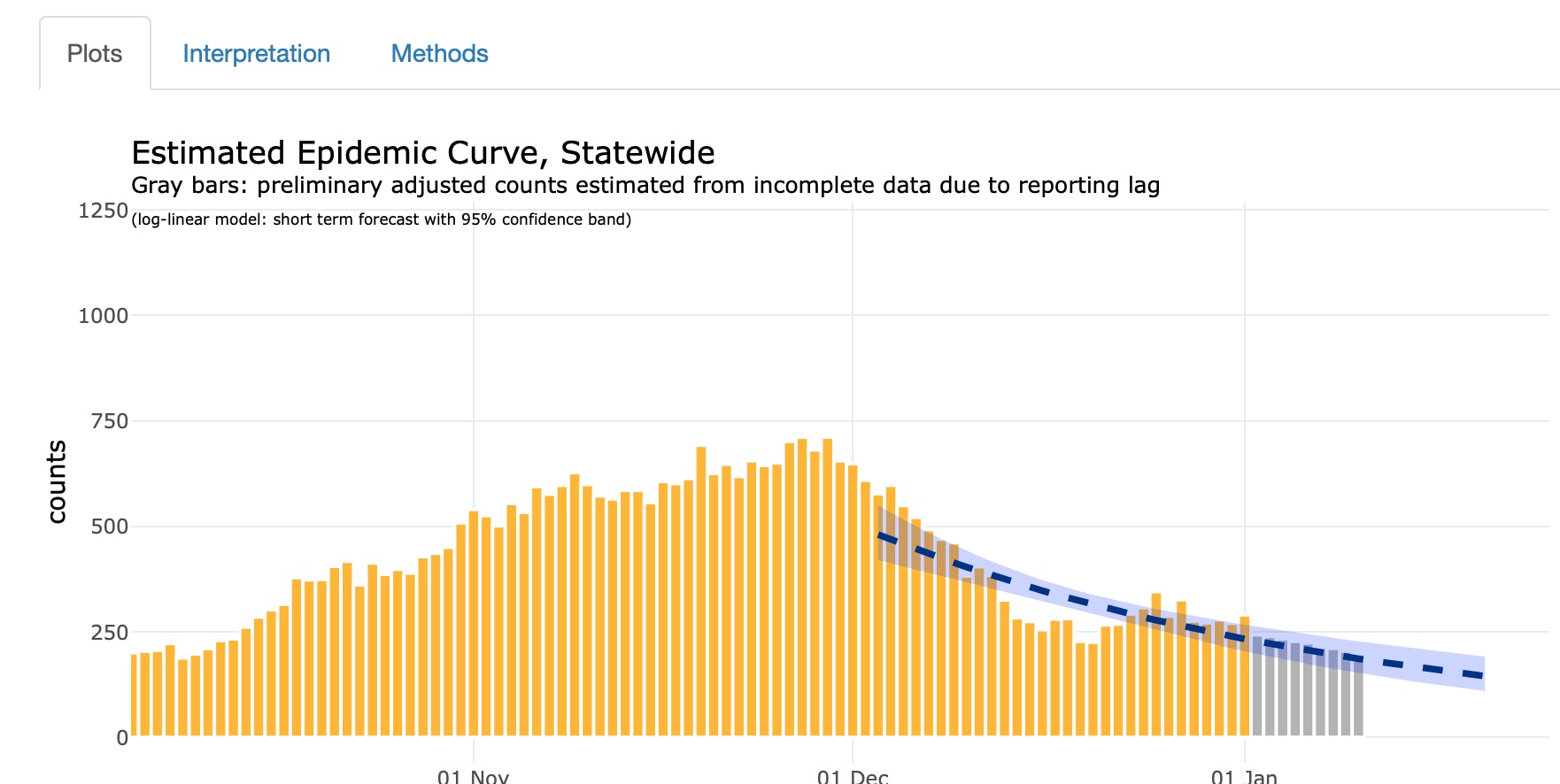
The virus count was indeed highest from about Nov. 9-30 in Alaska. Thanksgiving was on Nov. 26, the day when many gather and dine together in close quarters. Another spike between two and five days after Thanksgiving was all but certain. The public was warned repeatedly that Thanksgiving was a super-spreader event and the best plan was to shelter in place.
Dr. Anthony Fauci, America’s top infectious disease expert, warned in November that the nation could see a “surge upon a surge” of COVID-19 in the weeks after Thanksgiving.
Behaviors did change, to a degree.
But then Americans stopped fretting, and wanted to see their families. Airports over the Thanksgiving holiday experienced their busiest times since March, 2020, with an average of 900,000 people traveling every day for seven consecutive days around Thanksgiving Day, according to the Transportation Security Administration.
The TSA airport travel comparisons are at this link.
In some places, such as California, that hasn’t worked out so well. Cases are surging.
But in Alaska, the cases kept going down in Alaska, and by Inauguration Day, Jan. 20, 2021, the prediction chart above has Alaska’s viral case numbers back down to where they were in September, about 145 cases a day.
That doesn’t take into account the hundreds of vaccines being administered in Alaska every day. Every person who is vaccinated is also protecting the pod of people around them, including those more vulnerable to serious effects of COVID, such as elders and those with weak underlying health conditions.
The effect can be quite rapid, if the vaccine gets into the right arms. Already, over 29,000 Alaskans, many of them older than 65, have had their first vaccination dose, and another 49,000 have had a bout with the virus, and are protected to varying degrees because of their antibodies.
Experts might attribute the drop in cases to draconian Anchorage policies that shut down some local businesses during the holiday season, but the State of Alaska’s own data shows that the downward trend had already begun by the time those job-crushing closures in Anchorage took place, an order made by Acting Mayor Austin Quinn-Davidson.
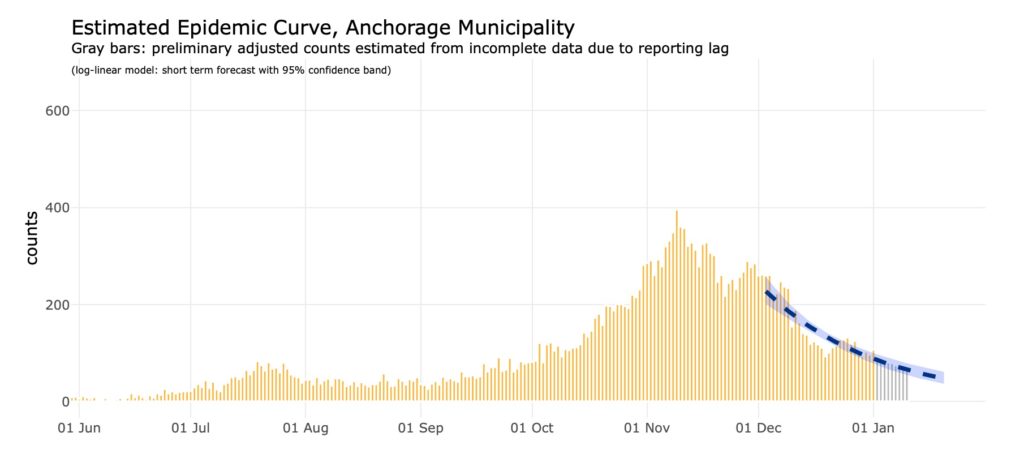
At Tuesday’s Anchorage Assembly meeting, the Assembly will consider a resolution to end the mayor’s emergency powers and return businesses to full capacity. It will also consider another opposing resolution to extend them until April. The liberal Assembly is likely to support the extension of the mayor’s powers until after the municipal election on April 6.
The meeting starts at 5 pm at the Loussac Library at about 5 pm. The agenda and details are at this link.


