
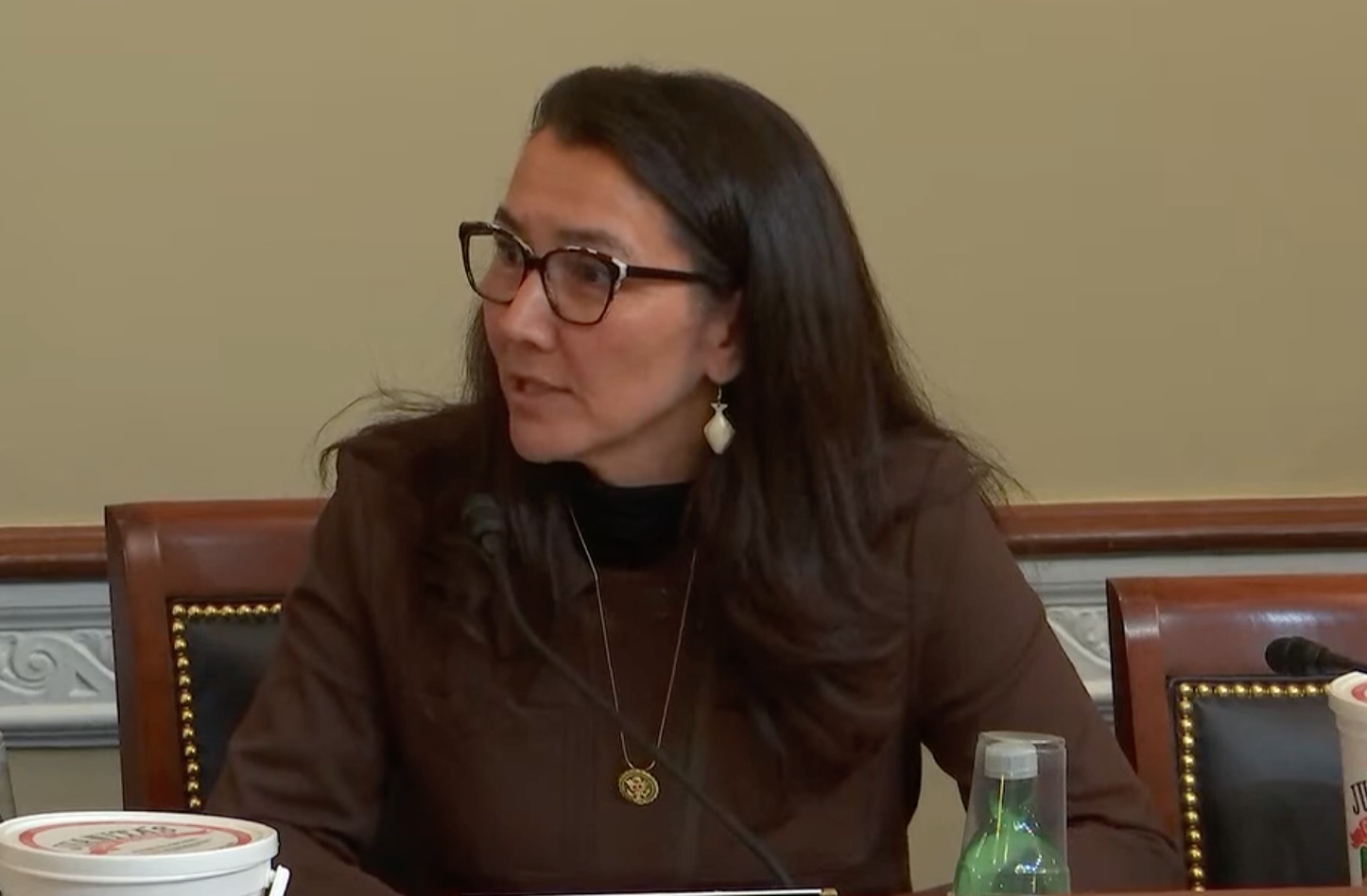
Rep. Mary Peltola likes her coffee hot and unionized. She also likes her Twitter feed to be all about unions — most of the activity there is to retweet and repeat union messages, Very little is about “fish, family, and freedom.”
This week, she stepped into the Starbucks union wars and retweeted a rainbow-adorned message from a national union working to organize Starbucks coffee shop employees, one store at a time.
It’s going to cost Starbucks shoppers. Drink prices at Starbucks already run about $4.98 for 16 ounces of macchiato, which is about 30 cents an ounce — or 15 cents a sip.
If you paid that much to gas up your Subaru, it would amount to about $40 a gallon. But if you just make a latte at home, it costs you about 30 cents, not counting the paper cup.
While Peltola’s campaign staff was not unionized, the short-lived campaign for Senate by Al Gross in 2020 made history in Alaska when he announced his staff would unionize. Alaskans can expect that this time around, Peltola’s campaign will indeed unionize, since her campaign manager and chief of staff is a union organizer.
Prices for coffee at Starbucks continue creep up year after year, and unionization always drives costs up — costs that are passed along to consumers.

According to a 2014 study by the U.S. Bureau of Labor Statistics, non-unionized private companies paid workers $29.83 per hour in wages and benefits, while union worker averaged $46.50 per hour. This represents a 55% increase in wages for union workers.
In 2023, Starbucks pays a minimum wage of $15 per hour, while baristas make about $23 an hour at stores in Seattle. Anchorage Starbucks pays between $16-18 for baristas, so they’re going to need roommates to help with the rent in Anchorage.
Indeed.com says Starbucks pays about $27,000 a year for a barista in Ketchikan, where a two-bedroom apartment can run you $1,900 a month.
While it does not include the average of $1 per hour in tips, clearly, being a barista not a career job, although with unionization, it might become one.
Union dues vary by region, according to the Starbucks Workers United group that is leading unionization.
“As an example, in the Buffalo region of New York the union dues for full time workers are $10.84 per week,” the group says. For an average worker, that means about one half hour of every week will go to paying the union. It’s $43.50 a month and over $530 a year.
“Dues are used for helping other workers organize, legal support, staff support, education training sessions for stewards, communications, lost time pay for stewards and negotiating committee members, etc.,” the union reports.
Unionization leads to automation
As wages rise, companies turn to machines to do the work, and it’s likely that barista jobs will not grow, as companies look for alternatives to troublesome and costly organized labor.
“Most in the coffee industry agree that increased automation at all stages of the supply chain is undeniable. Indeed, according to a recent UCC Coffee report, the global automation market is forecast to grow by as much as 30% by 2025,” writes Jess Palmer writes at New Ground Magazine.
“Humans are often the weakest part of making coffee,” explained the 2018 World Barista champion, Agnieszka Rojewska to the publication. “There is a lot of staff rotation in cafés and baristas are not always properly trained. I think fully automatic machines will grow in popularity because while they can replace the hand of the barista in some cases,” she said. The barista would spend more time interacting with customers, while the machines do the work.
But, as with McDonalds, automation could come fast at entry-level workers. In 2022, the fast-food chain, which serves a decent cup of black coffee for half of a Starbucks equivalent, unveiled its first nearly fully automated franchise in Texas, where machines take orders, deliver the order, and even prepare much of the order.
“When you step inside the test restaurant concept, you’ll notice it’s considerably smaller than a traditional McDonald’s restaurant in the U.S.,” McDonald’s said in December. “Why? The features—inside and outside—are geared toward customers who are planning to dine at home or on the go.”
McDonalds has slashed its workforce by 50% from 2013 to 2018, and this year is cutting many administrative jobs. As unionization has taken hold, the move toward artificial intelligence and machine service is filling in rapidly at all levels, including payroll, ordering, and finance.
“It should be noted that McDonald’s’s reduction in staff began in 2014, the same year the Affordable Care Act went into effect. This was no coincidence. Nor was the installation of digital kiosks, which reportedly were installed as part of a $2.4 billion expansion effort. That’s a lot of money. But those costs have two important benefits: they are one-and-done, and they are predictable. Unlike the cost of labor, McDonald’s doesn’t have to worry about these prices doubling on the whim of politicians,” writes the Foundation for Economic Freedom.


