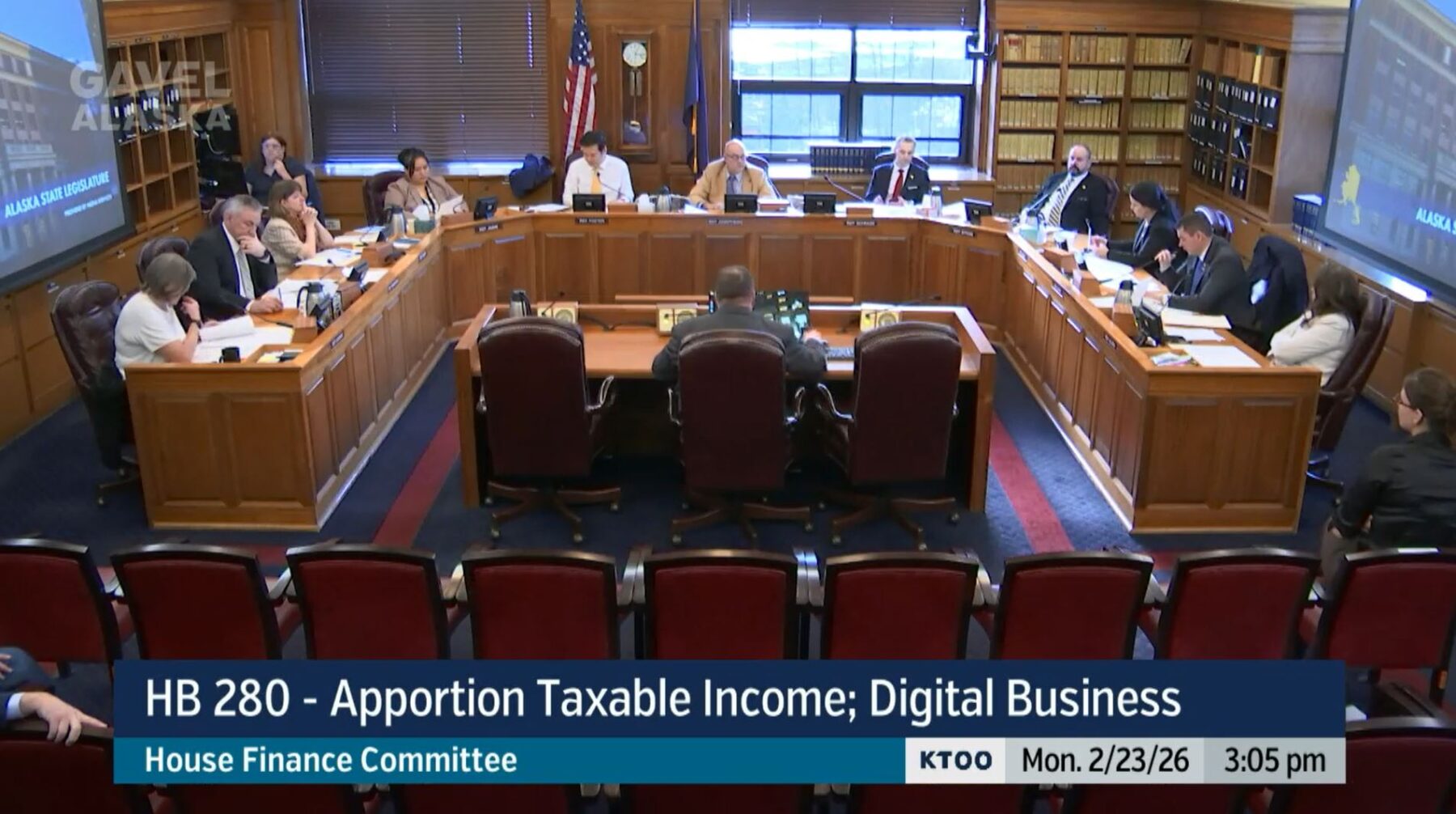
The House Finance committee turned to House Bill 280, the “highly digitized tax” measure, which amends the Multistate Tax Compact to adopt market-based sourcing and shifts highly digitized businesses to single-factor apportionment for corporate taxes. Staffer Brody Anderson recapped: the bill targets online firms selling to Alaskans without physical presence, with a retroactive clause to January 1, 2026. Recent testimony from industries like motion pictures, banking, and telecom prompted amendment suggestions mirroring a vetoed prior bill.
Anderson walked through the fiscal note: $321,700 initial operating costs, dropping to $313,700 annually, funding two new auditors (Tax Auditor IV and II) for enforcement. While no revenue shown upfront, internal estimates project $25-65 million yearly gains, midpoint $30 million. Department of Revenue (DOR) officials Brandon Spanos and Michael Williams fielded queries remotely from Anchorage.
Implementation timing sparked questions. A member inquired on notifying taxpayers for 2026 filings due in 2027; Spanos affirmed hiring post-enactment in FY 2027, with outreach via existing staff. On vacancies, he reported none in corporate tax but some in other groups, noting a 30% division shrinkage over a decade from legislative and executive cuts.

Rep. Will Stapp (R – Fairbanks) followed up: “You said you had a big downsizing in auditor positions. Was there a specific reason for that?” Spanos attributed it to defunding, including four positions cut last year by the Senate Finance Subcommittee.
Rep. Jeremy Bynum (R – Ketchikan) explored shifting the effective date to January 1, 2027, to avoid retroactivity. Spanos clarified no system overhaul needed, as factors are built-in, confirming “no fiscal impact by moving the effective date.” Co-Chair Andy Josephson (D – Anchorage) requested formal documentation on auditor cuts, recalling a veto override on oil/gas auditors; Spanos committed to emailing details, citing Walker-era executive cuts and recent legislative ones.
No further questions arose; the bill was set aside for DOR analysis of industry amendments at the next meeting. Decisions: March 2 amendment deadline, with submissions to staff. Action items: DOR’s amendment review, auditor history email, and taxpayer outreach plan. Unresolved: retroactivity policy, amendment scopes, and precise cut attributions.
The bill echoes a 2025 vetoed measure expanding taxes on digitized firms to fund education, amid ongoing fiscal debates. Supporters see revenue potential; critics eye administrative burdens.