
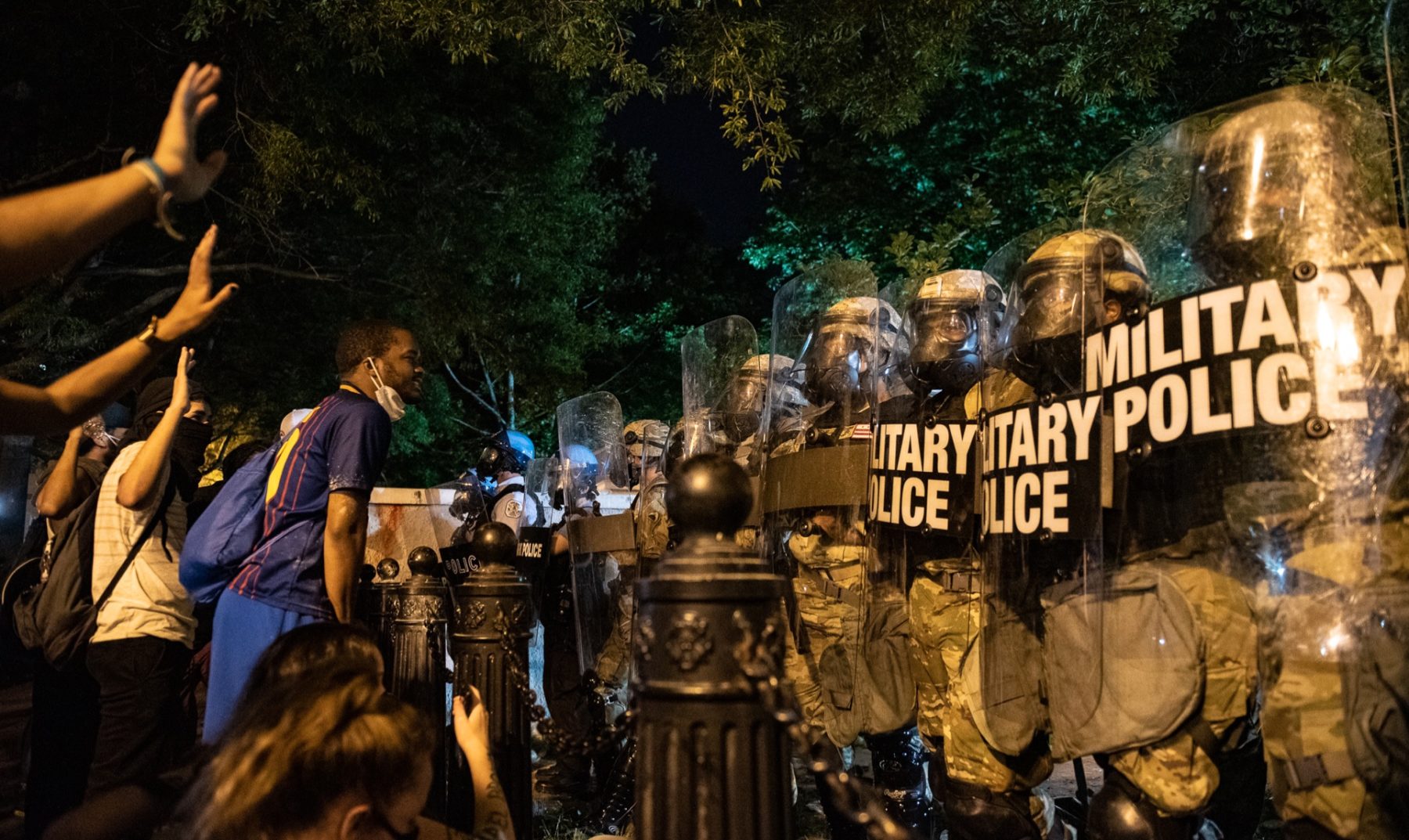
In the face of surging crime and protests across U.S. cities in 2025, the National Guard Quick Reaction Force (NGQRF) has proven essential for swift intervention, directly responding to worries voiced by Alaska State Rep. Andrew Gray (D-Anchorage) about its implementation in states like his own.
In a November 14 X post, Rep. Gray highlighted concerns over an October 31 memo mandating Alaska to ready a 350-member NGQRF equipped with non-lethal tools such as batons, tasers, and pepper spray for riot control. He questioned its necessity in riot-free Alaska, transparency in training and supplies, deployment triggers, and risks of misuse on U.S. streets. The memo clarifies the NGQRF focuses on civil disturbance operations with graduated response protocols, monthly readiness reports, and deployment only upon federal or gubernatorial requests, ensuring accountability and preventing overreach. While Alaska lacks precedents, the force enables interstate support for national crises, fostering preparedness without local mandates.
Real-world examples from 2025 illustrate its critical role. In Washington, D.C., a declared crime emergency led to a specialized NG unit for public safety, hiring extra personnel and establishing a nationwide quick reaction capability to curb violence.
Portland’s prolonged ICE facility protests turned chaotic, with federalized troops from California and Oregon quelling unrest despite gubernatorial objections and brief judicial blocks, preventing further escalation.
In Memphis, National Guard assisted in thousands of arrests and anti-crime operations since October, though a judge halted deployment, underscoring how delays can prolong dangers to communities.
Chicago’s immigration-related demonstrations garnered the authorization of 300 troops to assist when called upon to maintain order at ICE sites.
In each of these cities, the protests included groups like Antifa, Democratic Socialist of America, or the Party for Socialism and Liberation. These groups have active chapters in Alaska. Although these chapters are not quite as big as in the other cities, they have the same potential to organize and create a situation where a quick reaction force would be necessary for public safety.
President Donald Trump defended the initiative stating they are needed to suppress civil unrest, support immigration enforcement and fight crime. Without such reaction forces, unrest intensifies, endangering lives and property, making the NGQRF vital even for low-risk states.


