
President Donald Trump on Wednesday signed an executive order outlining a new federal framework to support local crackdowns on public encampments, open drug use, and vagrancy. “Ending Crime and Disorder on America’s Streets” prioritizes federal support for cities that adopt stricter enforcement measures and civil commitment programs for the mentally ill and addicted.
The executive order directly targets urban camping and street disorder, calling for an alignment of federal and local efforts to reduce crime and vagrancy in public spaces. In particular, it encourages civil commitment for individuals with severe mental illness or substance use disorders who pose a risk to themselves or others, a measure that would mandate treatment rather than relying on voluntary services.
Federal grant funding under the new policy will now prioritize jurisdictions that enforce bans on public camping, restrict drug use in public areas, and actively address what the order describes as “urban disorder.” The White House said the policy reflects a “common-sense” approach to restoring safety in American communities and addressing root causes of the homelessness crisis, including untreated mental illness and drug addiction.
While the executive order does not specify funding levels or implementation deadlines, it puts the onus on federal agencies to coordinate with cities and states in developing enforcement strategies and programmatic support.
The announcement comes as Anchorage, Alaska’s largest city, continues to grapple with a growing vagrancy crisis.
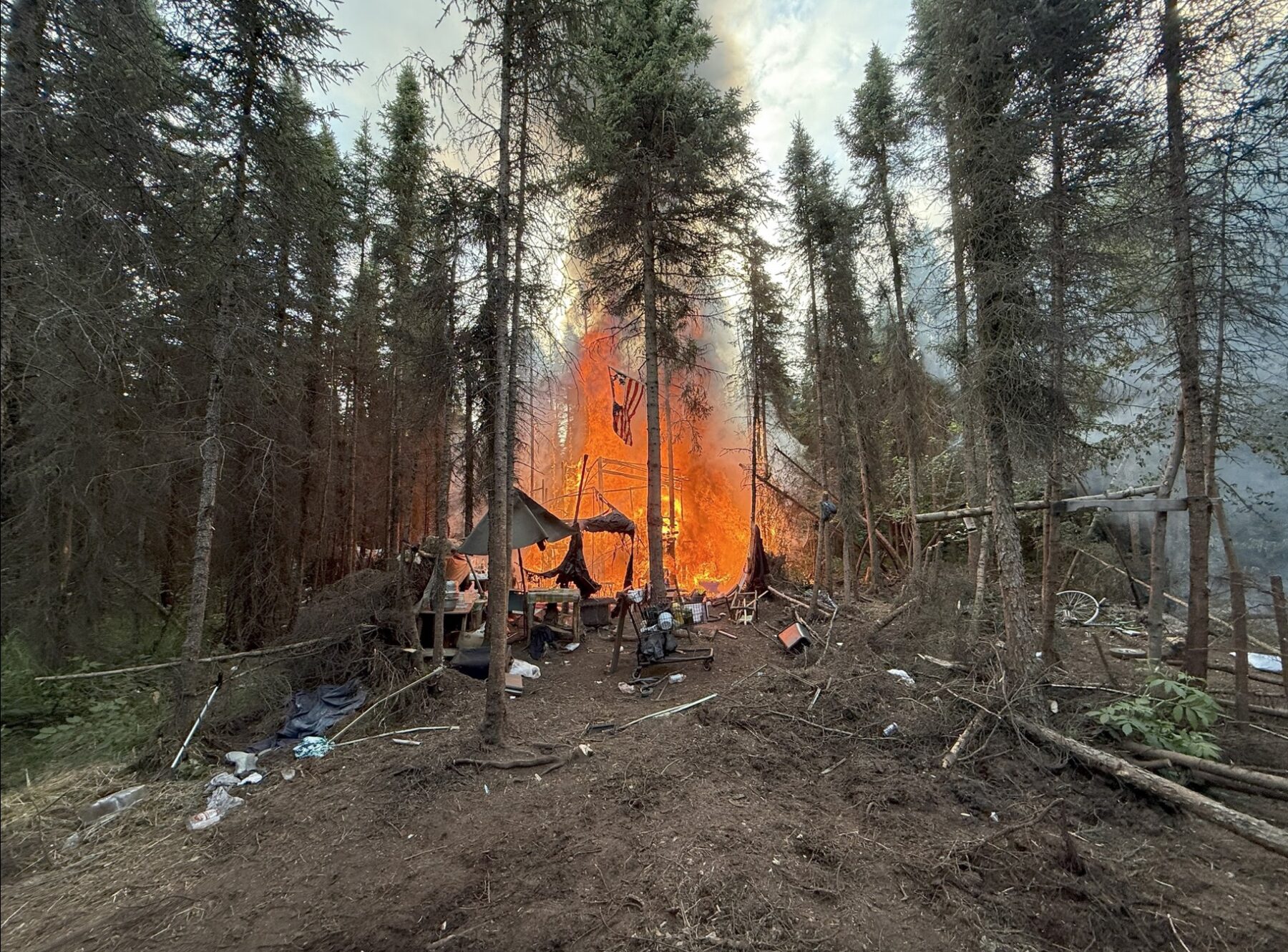
Despite increased shelter capacity and tens of millions of dollars in taxpayer funding, large encampments persist across public spaces, and the fire department has linked several recent wildfires to vagrant camps in wooded areas. Earlier this month, Anchorage police responded to gunfire at an encampment near Mulcahy Stadium, raising further concerns about escalating risks.
Anchorage’s own new anti-camping ordinance, which prohibits overnight camping on public property when shelter space is available, aligns with the federal priorities outlined in the executive order. However, enforcement remains inconsistent.
The Trump administration’s policy signals stronger federal backing for cities that move aggressively to enforce such ordinances. The initiative may also pressure municipalities such as Seattle and Portland that have resisted such measures to revisit their approach or risk losing federal support. Most certainly, these cities will file lawsuits. Already, the attorney general of Washington State has filed 29 lawsuits against Trump.
The administration has argued that mandatory treatment is a necessary tool when voluntary outreach fails and communities face ongoing threats from encampment-related violence, fires, and health crises.
While the long-term impact of the executive order is uncertain, its immediate effect is to place federal influence and taxpayer funding squarely behind cities that pursue aggressive policies to clear public spaces and address homelessness through enforcement and treatment.
The order does not override existing state laws but signals a shift in federal posture that may influence future legislation, funding priorities, and public policy debates across the country.


