
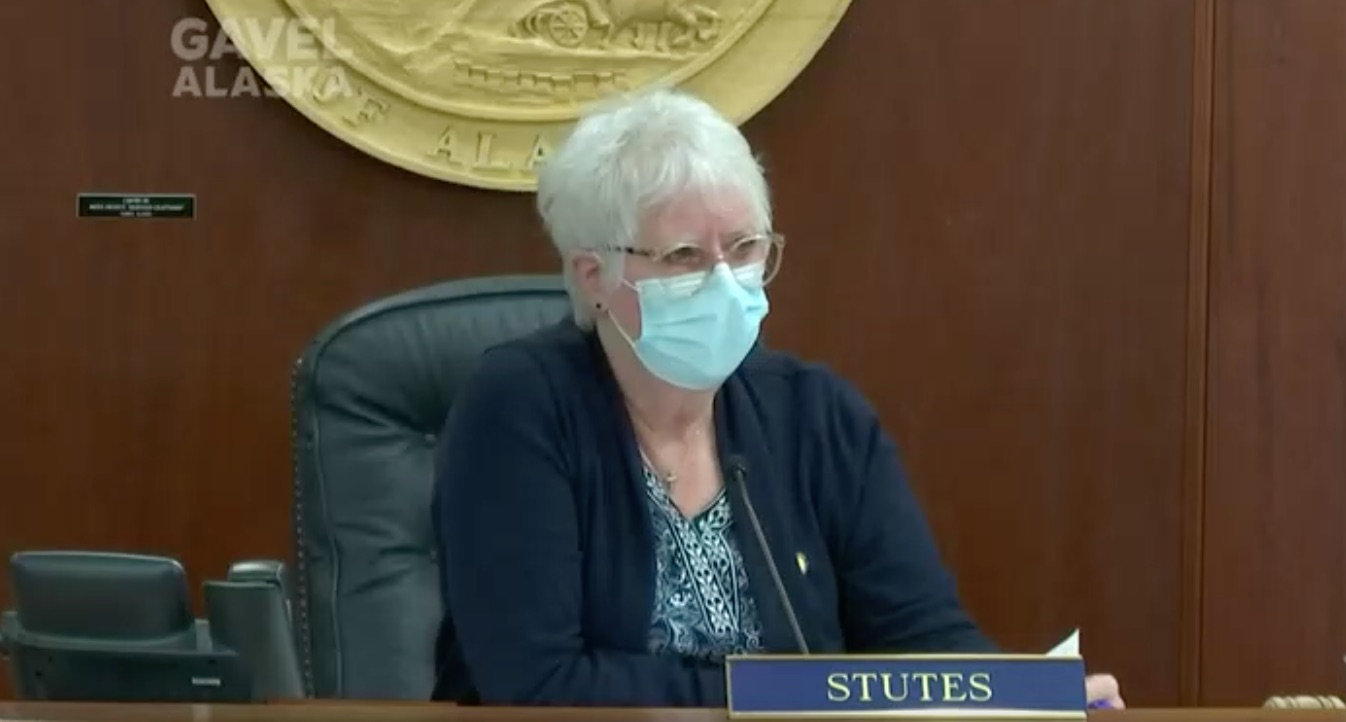
The clock is ticking on the Alaska House of Representatives, led by a fragile Democrat-led coalition and topped by Speaker Louise Stutes. The House has a long list of appropriation items it has not deliberated and passed.
Although it blew by its 90 day deadline, there appears to be no urgency in the House. Even Saturday’s House Finance Committee meeting was cancelled, in spite of the fact that HB 69 and HB 71 — the Operating budget and the Mental Health budget — were on the schedule.
As the Legislature closes in on 100 days this week, the only truly major legislation that has passed the House is HB 76, the disaster declaration continuation, and HB 169, an education bill that was passed only because the legislative body has not been able to finish the Operating Budget.
Much remains to be done in the next 24 days: The Operating Budget and reverse sweep (including $1 billion for Power Cost Equalization and the American Recovery Act funds), the Supplemental Budget, the Capital Budget, the Mental Health Budget, and the Permanent Fund dividend. The House hasn’t passed the HJR 6, the governor’s spending limit bill, nor his efforts to put the Permanent Fund dividend formula into the Alaska Constitution..
Part of the slowdown was due to the creation of a special committee that Rep. Ivy Spohnholz could chair: The Ways and Means Committee. HB 141, HB 165, HJR 1, and HJR 6 were all referred to this committee.
Another part of the slowdown is because the Legislature is waiting for federal guidance on the American Recovery Plan (ARP) dollars, guidance that is not expected until May 10.
Meanwhile, House members are raking in per diem for every day they are in Juneau. Legislators earn a $50,400 annual salary, and also $302 daily per-diem, or $36,542 if they stay in Juneau the entire 121 days allowed by the Alaska Constitution. The total recompense is just under $87,000 for all but the three legislators who live in Juneau, who are not entitled to the per diem portion.
There are deadlines approaching of consequence: On April 30, the SNAP deadline (Supplemental Nutrition Assistance Program) passes, and if the Legislature doesn’t act, Alaska will lose over $8.5 million in additional benefits that go to low-income Alaskans for their basic food needs. This is a disaster that could be avoided if the House could get its work done.
Other deadlines include the 121-day constitutional deadline, after which the Legislature could call itself into special session.
And then there’s the end of the fiscal year, which is just eight weeks away. Without action on appropriations, the government shuts down July 1.


