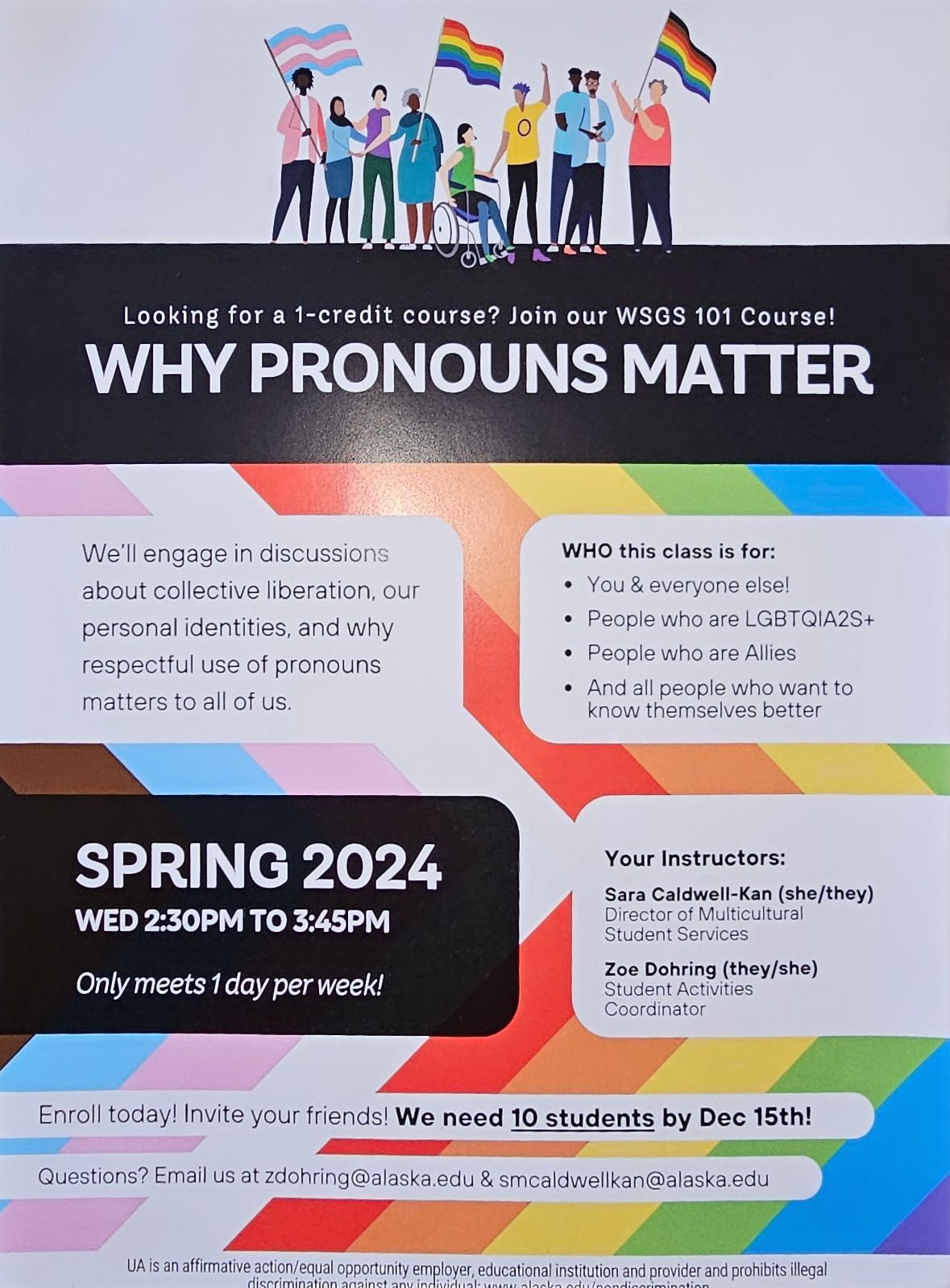
A one-credit course titled “Why Pronouns Matter” is seeking students for spring semester in Anchorage. The flyer from University of Alaska Anchorage says that the class “Only meets 1 day per week!” and is for people who are “LGBTQIA2S+” or their allies, or for all “who want to know themselves better.”
According to the campus publication “Green and Gold News,” the cutoff for enrollment is Dec. 15, and the instructors need 10 students or they can’t offer the class.
“We need you, this class needs you, and this movement needs you,” the campus publication says. “A 1-credit course also sometimes helps students get over minimum credit requirements, such as needing 9-credits to live in on-campus housing or being full-time at 12-credits to receive full financial aid opportunities.”
In the “Why Pronouns Matter” class the focus “will be on exploring and deepening our understandings of why respectful language matters, which will indeed include discussions of pronoun use, but that is the mere surface level of where we endeavor to go. Through this focal point on identity exploration, we’ll come to better understand our own positionality in the cycle of oppression, and come away with tangible ways we all can be more present in the cultivation of collective liberation. While this course is only 1-credit, it will be a substantial contribution to your personal and professional development. You’ll gain knowledge and skills that employers need on their teams, but you’ll also feel better at connecting with others and more grounded in your own truths.”

Gendered pronouns include she and he, her and him, hers and his, and herself and himself. “Personal preference gender pronouns” (or PGPs) are words that people ask others to use in reference to themselves. Typically, they butcher the English language in the process, and may be plural gender-neutral pronouns such as they, them, their(s), referring to a single human.
Without 10 students in the course, the instructors can’t get paid for cultivating the “movement” of “collective liberation” and “positionality.”
University of Alaska is a publicly funded university with open-access enrollment, meaning that anyone may attend, regardless of academic ability. The university system often promotes a narrative that state budget cuts lead to reduction in essential academic programs.