
Mayor Ethan Berkowitz declared a civil emergency in Anchorage because the State of Alaska was withdrawing its funding for various programs in the city, expecting the city to step up and take care of its own drug-addled campers. The State of Alaska, as most Alaskans know by now, is out of cash.
That was back on July 24. The Anchorage Assembly later allowed an extension of the civil emergency until Sept. 24, even though funds were restored for key programs he was worried about.
“Whereas, the impact of these cuts within the Municipality of Anchorage will include the loss of more than 700 jobs, decimation of services critical to the wellbeing of the m most vulnerable members of the Anchorage community, and a predicted increase of almost 800 individuals in the Anchorage homeless population…” the mayor’s proclamation wrote.
Berkowitz went on to say that cuts to Medicaid, senior benefits, early childhood education, legal services, domestic violence case management and support, and behavior health, would lead to “drastically increase the number of individuals experiencing a dangerous level of poverty…” and he described it as a “manmade calamity.”
Yes, you read that right: He said that cuts to early childhood education would cause an increase in dangerous levels of poverty.
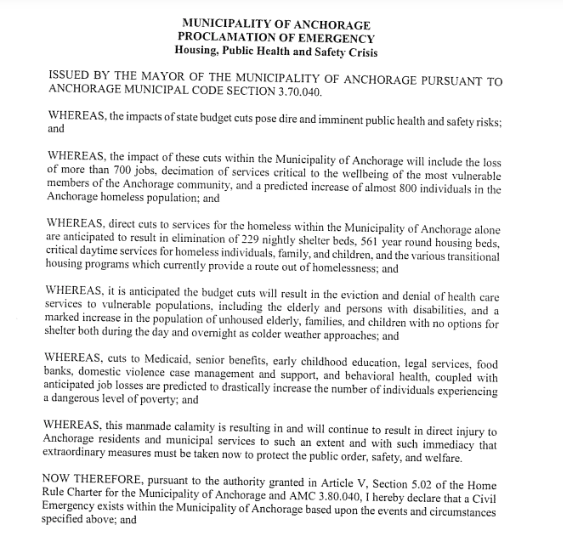
But wait, there was more to be done to protect the “public order, safety, and welfare.”
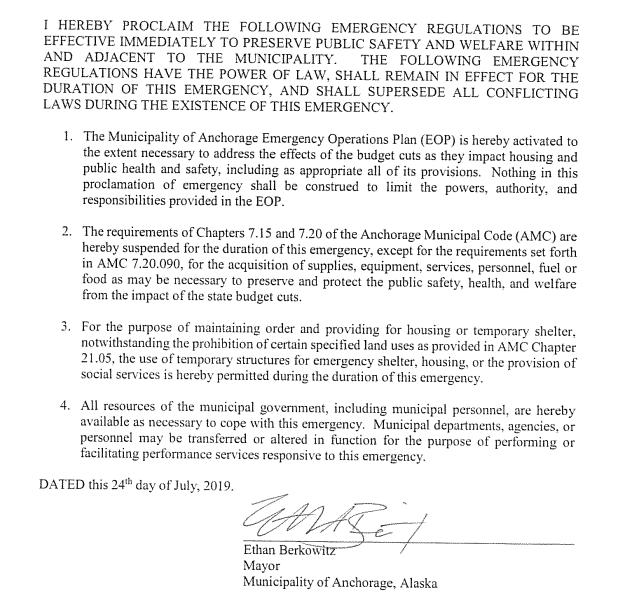
In the meantime, the city moved money around to help keep shelters going, taking responsibility to pay for things the city had never had to pay for before. The homeless population seems stable, although data is scant.
What else happened during the civil emergency?
Nordstrom closed. JC Penney furniture warehouse closed.
The mayor went on a junket to Japan.
The plastic bag ban ordinance took effect, and people started having to pay 10 cents even for a paper bag handed to them out of the take-out window at McDonalds.
BP sold its entire operation in Alaska to Hilcorp.
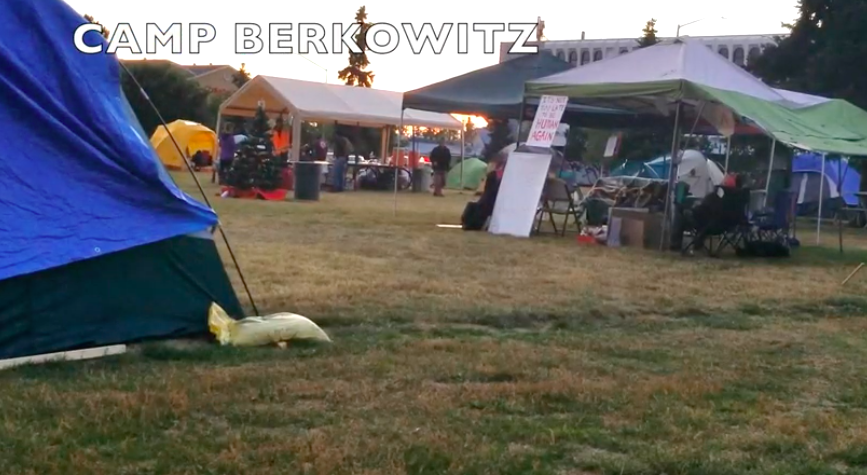
Tent cities sprang up, with out-of-state activists brought in to keep them organized and the protesters fed. The Anchorage Daily News made the case that “Because of the chaos that was created by the budget dynamics, they had an influx of people coming down for food, so they needed more bathroom facilities,” according to Ona Brause, Berkowitz’ chief of staff.
The city began the Camp Berkowitz abatements, with 10-day notices, keeping protesters and drug addicts on the move.
Mayor Berkowitz told the University Board of Regents to ignore the stepped-down funding agreement signed by the President of the University and Chair of the Regents.
But mostly the mayor was absent, missing in action.
On Sept. 19, Berkowitz attended the Assembly meeting and told the members, “at this point there’s nothing that would cause the administration to seek an extension beyond the proposed termination date of Sept. 24,” and then he went on at length to talk about his trip to Japan.
Was the civil emergency real? Was it just kabuki theater? With a mayor like Berkowitz, for whom politics is a blood sport, theater is always a solid bet.


