
By Michael Tavoliero
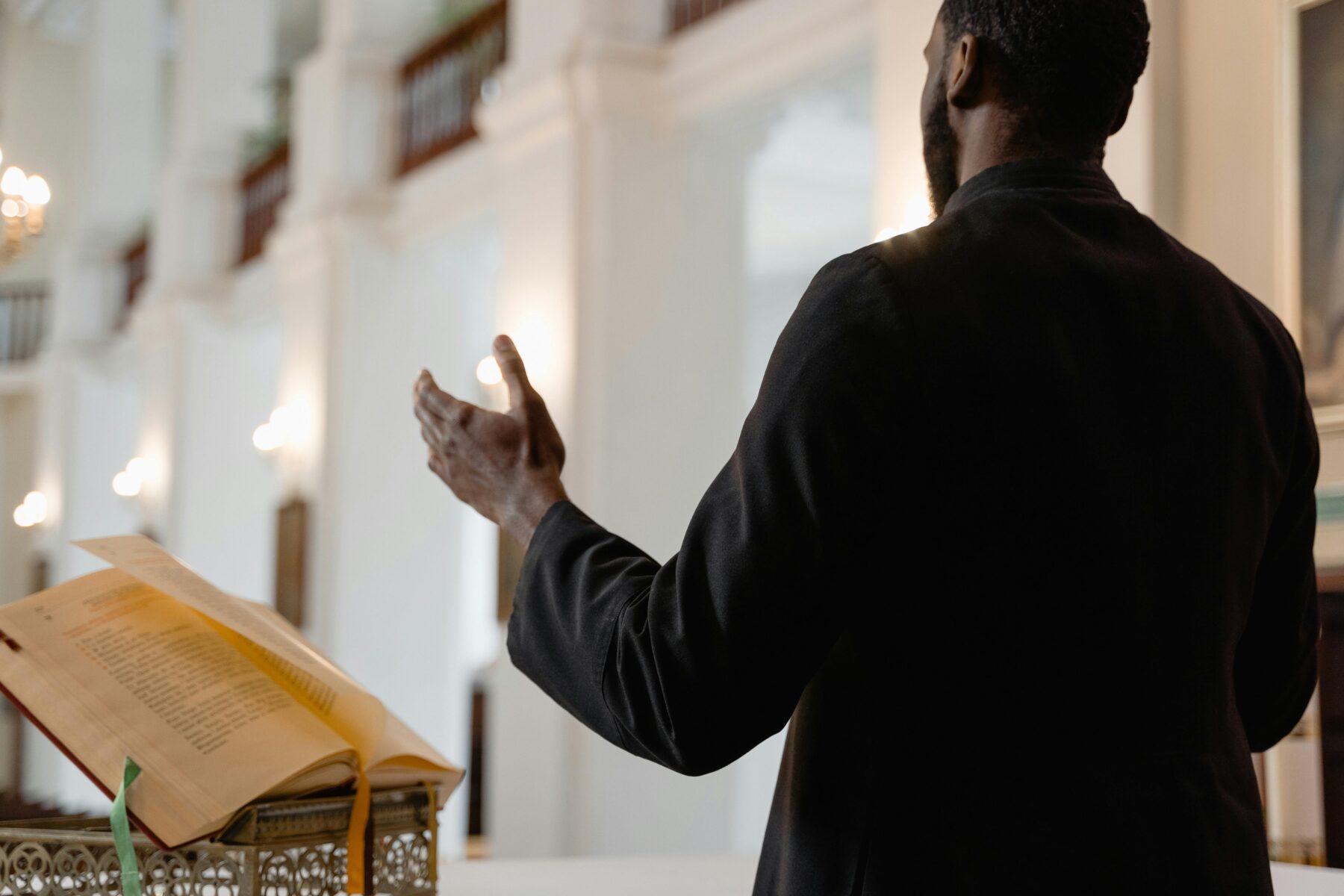
Kevin McCabe, in his essay “Pastors, We Need You. Where Is Today’s Black-Robed Regiment?” in the Alaska Watchman, calls the colonial New England theologians “the civic architects of liberty.” Those pastors shaped how ordinary people thought about God, government, law, and resistance. They did not simply offer comfort to individuals; they provided a moral and intellectual framework necessary to American self-government. Today, most pastors in Alaska serve as cautious chaplains to a fragmented culture rather than as public teachers of a coherent vision of ordered liberty.
The preachers of the founding era did not skirt the political questions. They named concrete public sins: slavery, tyranny, corruption, cowardice. They applied Scripture to taxation, sovereignty, the authority of the king, just-war criteria, and the conditions under which resistance was justified. Their sermons were not vague; they were specific, local, and costly. They knew that speaking this way could cost them social standing, financial security, and even personal safety, yet they believed that a God who rules nations must also speak to how nations are ruled.
Alice M. Baldwin, in The New England Clergy and the American Revolution, chronicles this in colonial New England. In Chapter X, “The Making of Constitutions,” New Englanders were “nourished from their youth on the election sermons” and “thoroughly enlightened by their pastors in theoretical and practical politics.” Ministers guided ideas about government.
These “election sermons” (annual messages preached on election day) explained how government is ordered and judged through Scripture and natural law. They also taught farmers, tradesmen, and merchants about authority, liberty, and civic duty in explicitly theological and political categories. Many laypeople lacked formal schooling. Their pastors, often the most educated men in their communities, articulated these ideas clearly. Clergy, in other words, were not spectators to constitutional development; they drove it.
In today’s Alaska, many pastors have retreated from the public square. Why do they no longer connect biblical teaching to civil structures?
The majority of pastors today can be roughly grouped into four types:
- The quiet shepherds who emphasize personal conversion, family life, and internal church issues, and while they often hold strong pro-life convictions, they refuse to address the prevailing culture of death publicly;
- The issue-selective activists who speak readily about homelessness, addiction, poverty, or environmental concerns, but soften or ignore topics like abortion, sexuality, and family breakdown conflicting with prevailing social taboos and legal regimes;
- The explicitly pro-life pastors who preach against abortion, support pregnancy centers, promote adoption and foster care, and urge legislative engagement;
- The pluralist chaplains who see their main function as keeping civic peace, offering generic spirituality, and blessing whatever broad consensus currently exists.
Furthermore, few pastors today can articulate a biblically informed structure of civil government. Young people are rarely taught principled civics. Rather, they are indoctrinated by social media, entertainment, and bureaucratic slogans. They pick up fragments, “democracy,” “rights,” “equity,” “freedom”, but not the deeper questions of who grants authority, what justice is, and what limits should be placed on state power.
When someone tries to recover a biblical framework for public life, especially noting how deeply it once shaped America, many secular critics react with reflexive suspicion. Instead of engaging claims about limited government, rule of law, human dignity, and moral accountability, they dismiss the whole project as “theocracy” or “Christian nationalism,” treating any use of Scripture in politics as an attempt to impose a state church or force private piety into law.
This superficial disdain is reinforced by a distorted understanding of “separation of church and state.” That principle, in its healthier form, means no state church and no coercion of conscience. In today’s discourse, however, it is often taken to mean that religious convictions may never shape political arguments. Secular moral frameworks, expressive individualism, and equity politics are all treated as neutral and permissible in public reasoning, even though they function as rival worldviews.
Explicit biblical reasoning, by contrast, is shunned. Critics then attack motives rather than ideas. Anyone who invokes Scripture is simply nostalgic for old hierarchies or seeking to protect their group’s status. That move sidesteps the real questions: Is government answerable to a higher standard than majority will? Should moral law limit state power? Are citizens allowed to bring their deepest convictions, religious or not, into debates about justice and the common good?
This helps explain why pastors are no longer the civic architects of liberty they once were. In colonial New England, clergy preached election sermons that shaped the political imagination of an entire people; they named public sins, applied Scripture to questions of power, and accepted real risk for doing so.
Today, clergy have widely accepted a narrow role: caring for individuals’ inner lives while avoiding the contested terrain of public life or speaking only on issues that do not threaten the reigning secular orthodoxies. Meanwhile, cultural gatekeepers treat biblical frameworks for civil order as suspect. The result: politics is noisy, but pulpits are muted; the state’s reach grows while the church buries its head.
As a result, youth are shaped almost entirely by secular conditioning. Through schools, digital media, and administrative systems, they are taught that government is the ultimate referee, and personal autonomy is the ultimate good. They learn skills, but not wisdom; slogans about “democracy,” but not the moral foundations that give liberty meaning and limits.
If the church refuses to recover its older, harder task of teaching a biblically grounded vision of law, authority, and freedom, then the next generation will simply inherit what the culture already believes: faith has nothing to say about how we order public life. To recover pastors as civic architects of liberty is not to ask them to run the state. It is to ask them to form minds and consciences capable of judging governments and policies by biblical standards, and to teach that true freedom requires more than mere tolerance.


