
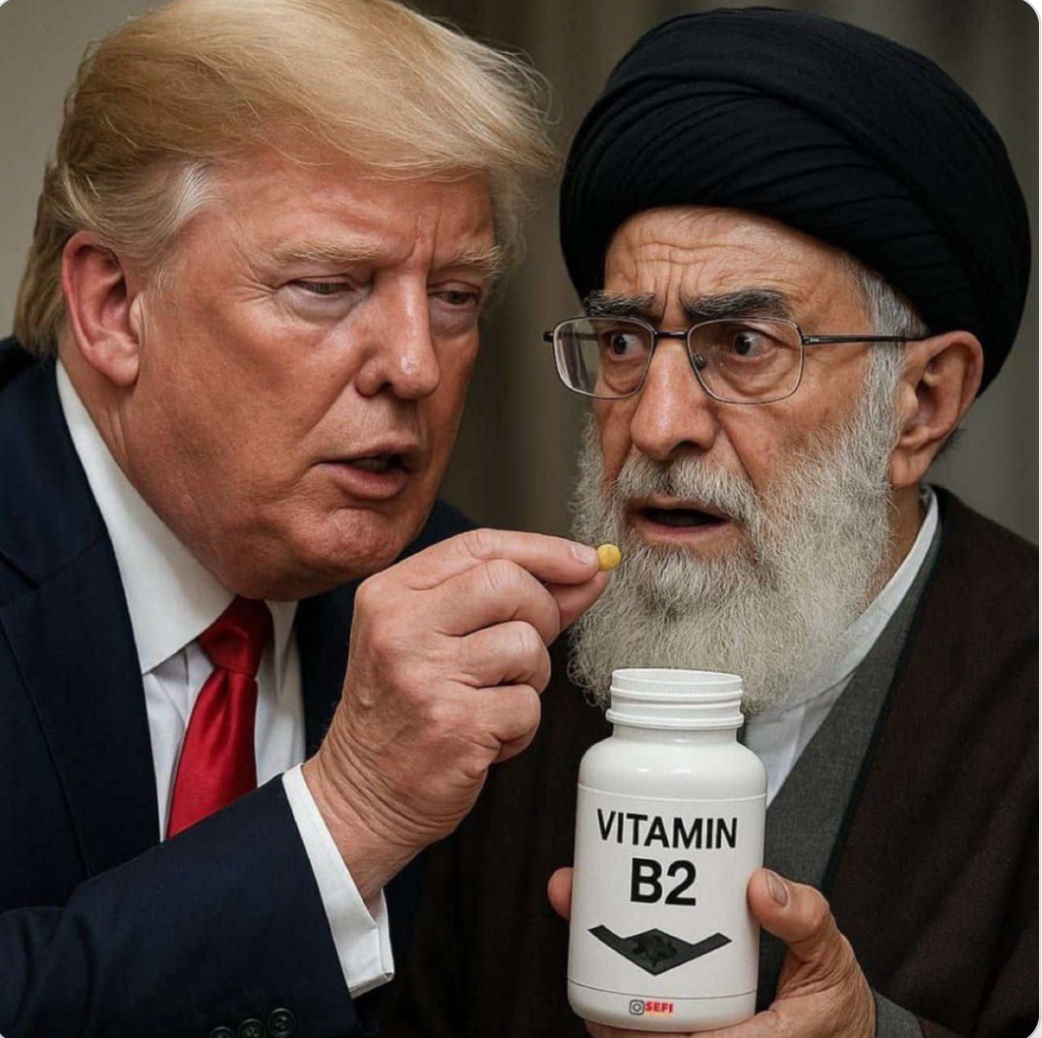
President Donald Trump’s announcement Saturday that US forces carried out airstrikes on three Iranian nuclear sites — Fordow, Natanz, and Esfahan — has sparked debate over the scope of presidential war powers and the legal frameworks, both domestic and international, that govern the use of force.
Trump has defended the attacks as necessary to prevent Iran from acquiring nuclear weapons. Some in Congress, such as Rep.Thomas Massie, have called it unconstitutional, while Alaska’s entire congressional delegation — including Trump foe Sen. Lisa Murkowski — called the action appropriate to the danger Iran poses to the world.
Under Article II of the U.S. Constitution, the president, as Commander-in-Chief, has broad powers to use military force to defend the country and advance significant national interests. As John B. Bellinger III, a former National Security Council legal adviser and senior fellow at the Council on Foreign Relations, testified before the Senate Foreign Relations Committee in 2017 that these powers include initiating force to protect the United States and its citizens from actual or anticipated attacks.
This long-held interpretation has allowed presidents from both parties to undertake military action in numerous circumstances without seeking formal declarations of war from Congress. For instance, President Barack Obama authorized over 26,000 airstrikes during his tenure, particularly in Iraq and Syria, without new congressional authorizations, relying on existing legal frameworks and his Article II powers.
These powers are not limitless. Article I of the Constitution reserves to Congress the authority to “declare War.”
While this has never been interpreted to mean that Congress must authorize every military action, the Department of Justice’s Office of Legal Counsel has said that this authority places limits on the president’s power to commit forces to situations that rise to the level of war. Whether a particular military operation meets that threshold depends on a “fact-specific assessment” of the scope, nature, and duration of the action. If a strike is likely to provoke a sustained military conflict or exposes US personnel to serious risk, then congressional authorization is typically required as a matter of constitutional practice. Even Sen. Murkowski did not make that argument.
On the international legal side, it’s complicated. Under the United Nations Charter and customary international law, the use of force against another state is prohibited except in cases of self-defense, collective self-defense, or when authorized by the UN Security Council. While the US has historically interpreted the right to self-defense broadly, especially in counterterrorism contexts, Bellinger and others have noted that bombing Iran’s nuclear sites may not qualify as self-defense against an imminent armed attack, in the UN’s view. The Trump administration might claim the strikes were an act of collective self-defense on behalf of Israel and the rest of the non-terrorist world.
Your thoughts? Add them to the comment section below.


