In a 5-4 decision on June 29, 2026, the U.S. Supreme Court held that federal law does not prevent states from counting absentee ballots that are postmarked on or before Election Day but arrive up to five business days later. The ruling in Michael Watson, Mississippi Secretary of State v. Republican National Committee et al. (No. 24-1260) reversed a Fifth Circuit decision and upheld Mississippi’s practice, clarifying that the federal election-day statutes set the day for voting but do not impose a nationwide deadline for ballot receipt.
Writing for the Court, Justice Amy Coney Barrett, joined by Chief Justice John Roberts and Justices Sonia Sotomayor, Elena Kagan, and Ketanji Brown Jackson, concluded that “nothing in the federal election-day statutes requires ballots to be received by election day.”
Justice Samuel Alito wrote a dissenting opinion. Justices Clarence Thomas and Neil Gorsuch joined it fully, and Justice Brett Kavanaugh joined most of it, but not Parts II–C–2 and III.

The case centered on Mississippi’s absentee voting rules. The state permits certain residents, including college students away from home and senior citizens, to vote absentee in federal elections. Ballots must be “postmarked on or before the date of the election and received by the registrar no more than five (5) business days after the election.” Mississippi is one of roughly 30 states that count at least some absentee ballots mailed by Election Day but received afterward.
In 2024, the Republican National Committee, the Mississippi Republican Party, and individual plaintiffs sued Mississippi election officials. They argued that federal statutes—3 U.S.C. §1 and 2 U.S.C. §§1 and 7—preempt Mississippi’s law. These statutes set the day for electing Representatives, Senators, and the President as “the Tuesday next after the first Monday in November.” Plaintiffs contended that the word “election” encompasses both the casting of ballots and their receipt by officials, so the federal deadline for the “election” also bars counting ballots received after Election Day. The Libertarian Party of Mississippi filed a parallel suit and the cases were consolidated.
The majority emphasized that the defining element of an “election” has always been the electorate’s choice of candidate. Drawing on contemporary dictionary definitions and precedent such as United States v. Classic (1941), the Court explained that an election is “the expression by qualified electors of their choice of candidates.” According to the Court’s opinion, the choice occurs when voting is complete, not when ballots physically arrive. A recent amendment to the presidential election-day statute reinforces this by defining “election day” with reference to the period of “voting,” including modified periods during certain emergencies.
The Court also pointed to the Uniformed and Overseas Citizens Absentee Voting Act (UOCAVA). That statute requires states to allow absent military and overseas voters to cast absentee ballots and creates a federal backup system. UOCAVA repeatedly treats ballot receipt deadlines as a matter of state law. If the federal election-day statutes created a uniform national receipt deadline, references to varying state deadlines would make little sense.
The Constitution’s Electors Clause requires that the day on which electors “shall give their Votes” be uniform nationwide but says nothing about when votes must be received. This structure, the majority observed, envisions receipt occurring after the uniform voting day.
The Court rejected the plaintiffs’ reliance on 19th-century historical practice, in which many states required receipt on Election Day. While such practices existed, plaintiffs could not tie them directly to the text of the federal statutes. State legislatures may have adopted Election Day receipt rules for independent policy reasons, such as concerns about fraud. The Court reiterated that statutes do not “trap in amber” every contemporary practice on the same subject (United States v. Rahimi, 2024). It also found the plaintiffs’ reading of Foster v. Love (1997) unpersuasive, noting that Foster addressed only whether an election may be consummated before federal Election Day and did not speak to ballot receipt.
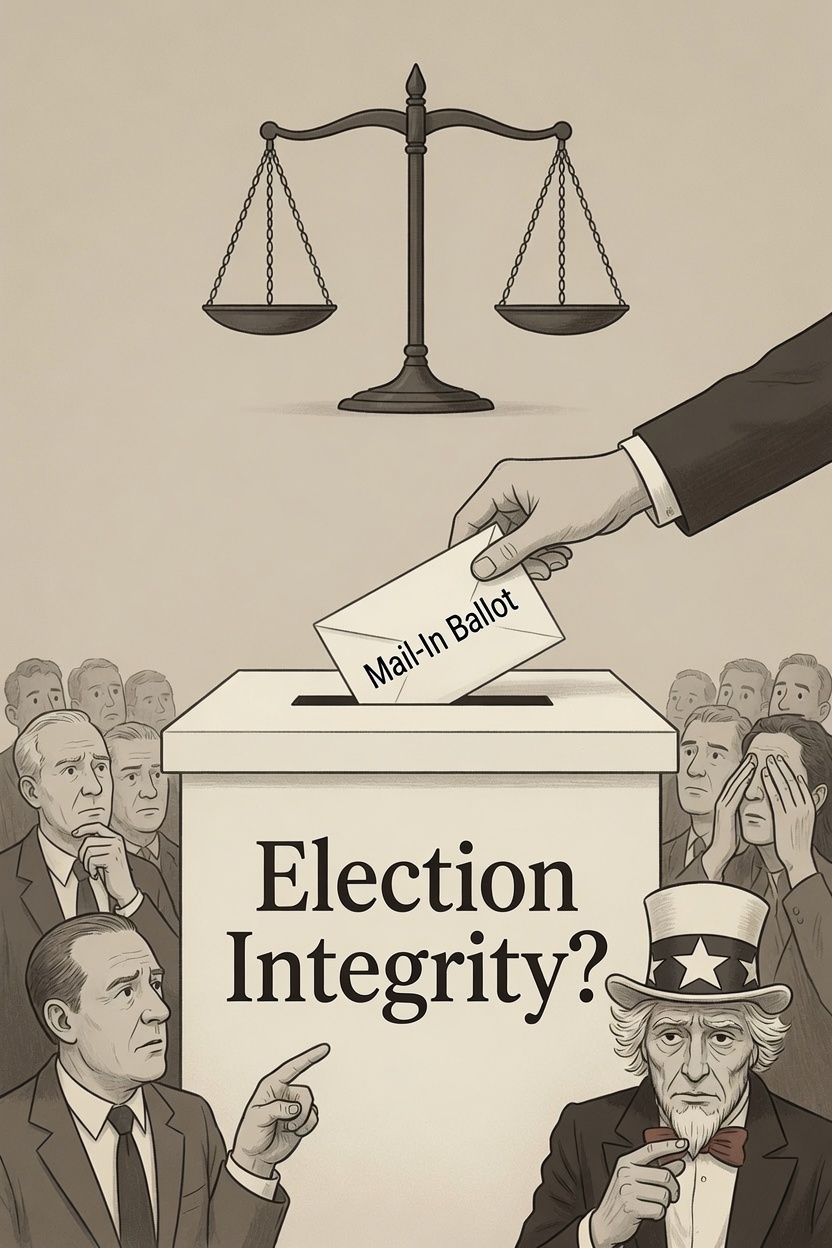
Policy arguments about election integrity and public confidence, the majority stated, are properly directed to legislatures rather than courts interpreting existing statutes.
The dissent argued that the majority’s decision removes a traditional safeguard against voter fraud. It noted that concerns about fraud were a leading reason for enacting the federal election-day statutes in the first place. A prohibition on counting late-arriving ballots, the dissent contended, would provide an additional hurdle for bad actors seeking to stuff ballot boxes once early results suggest a tight race.
Justice Alito cited the 1948 Texas Senate runoff as a real-world illustration of the risks. Late-arriving votes— reportedly 202 ballots added several days after polls closed, 200 of them for Lyndon Johnson— flipped the outcome in a race Johnson ultimately won by just 87 votes. While the full facts remain disputed, the incident underscores the potential for late ballots to alter close contests.
The dissent maintained that today’s ruling is inconsistent with the text of the election-day statutes, two centuries of historical practice, contemporary election-law principles, and relevant case law. It warned that the decision opens unresolved questions for state officials and courts and risks further undermining public confidence in elections and self-government.
The Supreme Court’s narrow holding leaves many aspects of election administration untouched. Plaintiffs did not challenge the general practice of absentee voting, the use of mail or common carriers, early voting, or the counting and certification of votes after Election Day. The Court also did not address the broader scope of Congress’s power to regulate federal elections.
By clarifying that federal law sets the day for casting votes but does not dictate when states must receive ballots, the decision preserves state flexibility in this area while leaving policy debates about deadlines, verification, and fraud prevention to elected branches of government.