
By KATE ANDERSON | DAILY CALLER NEWS FOUNDATION
Nearly half of Generation Z does not identify as religious, according to a new study, and religious leaders that spoke to the Daily Caller News Foundation said the trend is not surprising because they have substituted church for “a new religion.”
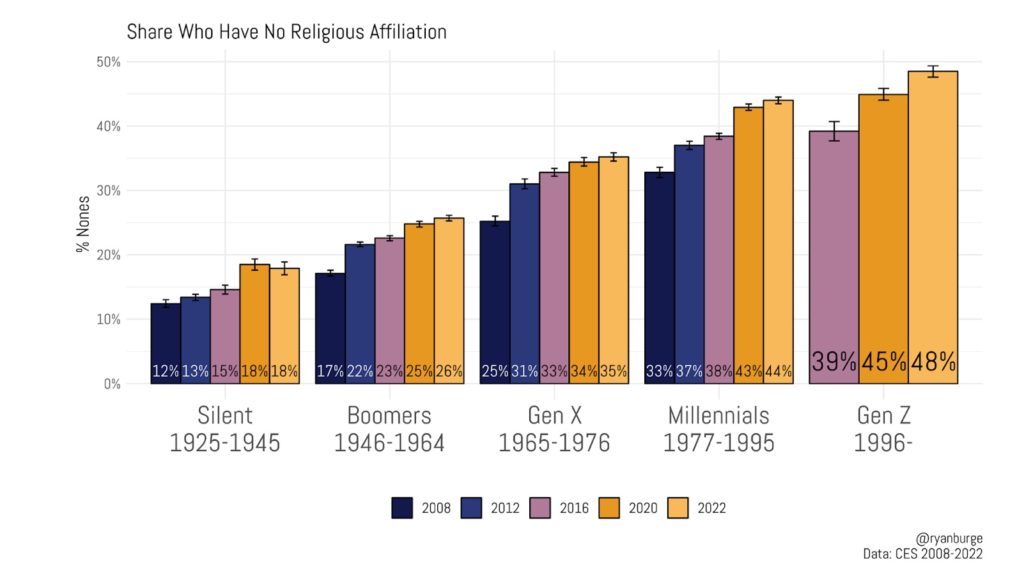
Data published last week by the Cooperative Election Study found that 48.5% of Gen Z identifies as either agnostic, atheist or nonreligious, a 3% increase from the previous year and another study from last month found that only 31% believe religion is “very important.”
While the data did not delve into what has caused the rift between young people and religion, several experts that spoke with the DCNF had similar ideas about what is behind the split. (RELATED: Nearly A Third Of Americans Rank Evangelicals As The Most Unfavorable Religion: POLL)
“[I]t’s not that Gen Z isn’t religious, it’s that they picked a new religion,” Joshua Mercer, co-founder of the CatholicVote, told the DCNF. “They have fervent beliefs and rituals, they have their symbols and sacraments, and they definitely purge their ranks of ‘blasphemers’ or anyone insufficiently dedicated to their faith. Look at how every corporation rushes to embrace the rainbow flag every June and look at how people adorn their social media platforms with symbols to show solidarity with Black Lives Matter, Covid vaccination, Ukraine, or climate change. They are definitely evangelizing, [i]t’s just not Christianity.”
As faith has declined for Gen Z, so has mental health. Recent studies found that Gen Z reports the highest level of mental illness and suicidal ideation compared to other generations.
In 2022, a study revealed that 42% of Gen Z reported being diagnosed with a mental illness and 70% said that their mental health has gotten worse since the start of the Covid-19 pandemic.
Read the rest of this story at The Daily Caller. Photo credit: Gunnar Klack, MIT Chapel
Read more about this topic at Religion in Public blog.



