
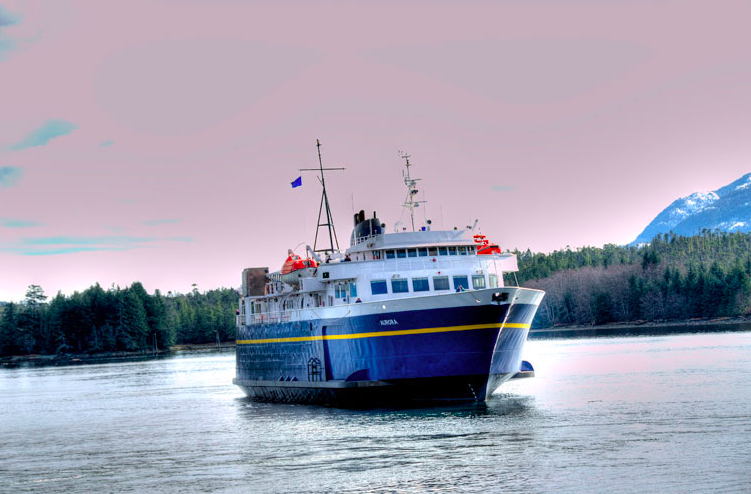
STATE TYING UP BOATS, REFUNDING TICKETS
Talks are now at an impasse between the State of Alaska and the Inlandboatmen’s Union of the Pacific (IBU), one of three unions that represent Alaska Marine Highway System state workers. IBU has rejected contract offers made by the State.
The IBU has announced it will strike as early as Wednesday.
IBU represents approximately 430 unlicensed crewmembers on state ferries who perform the unlicensed work on vessels, including the deck, engine and hospitality side of ferry operations. The other two unions have agreed to contracts, and IBU is a holdout.
“Contract negotiations have been ongoing since December 2016 and, every offer – including concessions on pay increases, lump sum payments, and benefit enhancements – has been turned down by the IBU,” said Commissioner Kelly Tshibaka.
“Over the course of two-and-a-half years, the State met with the IBU 38 times, only a few of them with the Dunleavy administration, and participated in mediated sessions to address its requests in good faith. It is our goal to agree to a contract that is fair and equitable to both IBU employees and the State. We bumped up our last offer 25% because we do not want to disrupt coastal operations in the height of Alaska’s tourism season,” she said.
The Department of Administration is responsible for negotiating state worker union contracts.
One of the existing contract terms the union seeks to eliminate is the current cost of living differential, which ensures equity by preventing employees who live out-of-state from receiving a higher salary than their counterparts who live in-state.
The IBU wants all out-of-state employees to get the same salary as Alaskan employees. The IBU further requests uncommon wage increases – increases most other unionized state employees have not received – and that the State continue covering health care costs with no contribution from IBU employees.
During the latest negotiations, the State sought to keep the existing cost of living differential, to offer wages that are fiscally responsible and fair to employees, and to require employees make health care cost contributions of $60/month for individual coverage and $160/month for family coverage.
The State offered a one-time lump sum payment of $1,500 to offset employee health care costs that would be included with employees’ first paycheck in January 2020.
Under the previous administration, the State offered IBU employees a 5% pay increase over 3 years, but IBU rejected that offer as well.
The IBU wants a 9 percent pay increase over the next three years, free coffee and water for employees on the ships, and giving workers the power to choose which ships they work on.
If agreed upon, this would effectively take away the State’s ability to manage the ferries and its employees in the most efficient, safe and cost effective manner possible.
“We are disappointed that the Inlandboatmen’s Union is considering an economic strike against the Marine Highway System. Our offer, in context with other labor contracts, is fair on economic terms,” said John MacKinnon, Commissioner of the Alaska Department of Transportation.
“This is the busiest time of year for the Alaska Marine Highways and a shutdown of the ferry system will impact residents, visitors and commerce,” he said.
“At this time, we will focus on the safety of the passengers, crew and vessels. We plan to return ships to safe harbor with adequate shore side support and contact ticketed passengers to work with them to continue their journey, reschedule or offer refunds,” MacKinnon said.
“Our leadership team at the DOA has made every effort to address the IBU’s requests without further compounding our State’s ballooning deficit. It would be a dereliction of our duty, both to the IBU and to all Alaskans, for us to enter into a Bargaining Agreement that would benefit the IBU in the short-term but would further imperil the health, well-being, and future of all Alaskans in the long-term,” Commissioner Tshibaka said.


