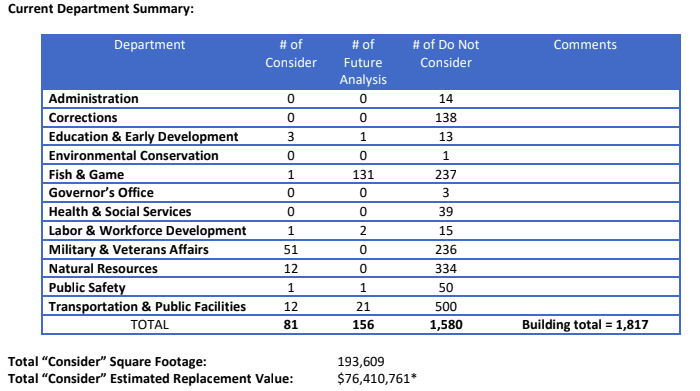
Gov. Mike Dunleavy asked department heads in February to investigate options for selling some State-owned properties to help the State save money. In June, a final list was compiled of possible properties that may be surplused, if the State chooses to divest.
The report, finished in June, identifies over $76 million in buildings, and 193,609 square feet. The buildings include Trooper housing in Northway, an Armory building in Fort Yukon, and Telephone Hill in Juneau, a pocket neighborhood adjacent to the State Office Building.
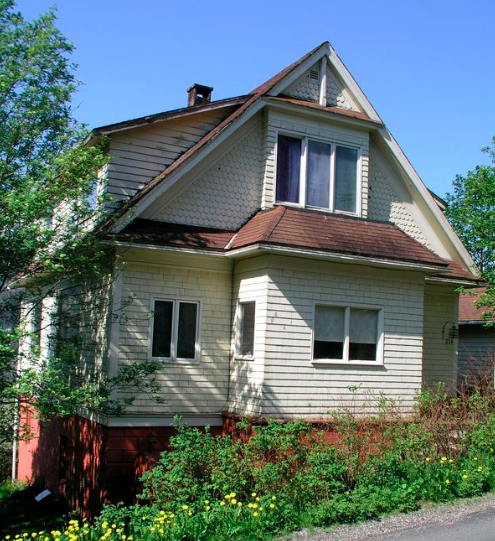
The Telephone Hill property is one that may have a lot of potential value, but no value is listed in the description, although there is a caution that lawsuits might be filed if the State tries to sell it.
In 1971, the Alaska State Legislature authorized the purchase of the cluster of historic houses. In the 1980s, the City and Borough of Juneau entered into a cooperative agreement to acquire the properties to build a new Capitol building, which never was built.
Then, the Department of Transportation acquired seven of the properties for $4.6 million, and the state has the responsibility for managing the rental housing in the Dixon Street neighborhood, including the home pictured above, which was constructed by Willam Bosch, owner of the Old Stand Saloon on Front Street and was owned by Verna Carrigan, granddaughter of Edward Webster, founder of Juneau and Douglas Telephone Company, according to the city’s website, which lists the building as historical, dating back to Territorial days.
“This was intended to be an interim arrangement but has become very long term,” the report states.
A building owned by the State in Kodiak is also a candidate for surplus. The Kodiak Regional building is only 56 percent occupied by the Departments of Health and Social Services, Corrections, and Labor.
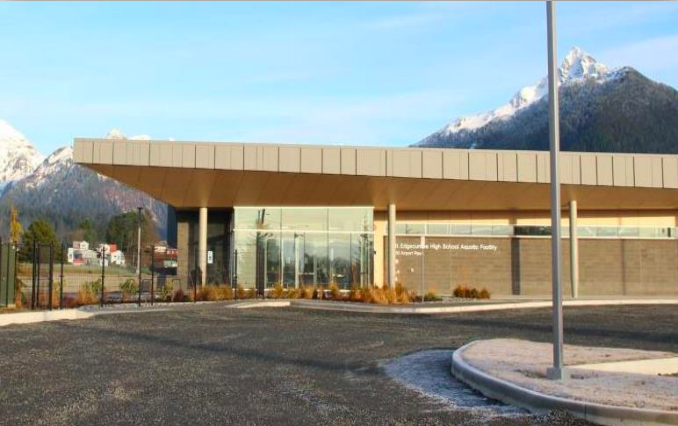
The Mount Edgecumbe Aquatic Center in Sitka, owned by the State Department of Education and Early Development, is a high-value property the Dunleavy Administration may sell. The brand new pool has been open for two semesters and is scheduled to be permanently closed at the end of December.
The pool was funded in 2010 by voters in a statewide bond package. Annual operating costs are expected to be $650,000, but with budget cuts, funds from the State are now gone and the Dunleavy Administration wants to sell the pool.
Numerous armories are listed; these are structures that the State has already actively tried to unload for some time.