
Six years ago, the incoming administration of Mayor Ethan Berkowitz published an ambitious document detailing the mayor’s plans for public safety, homelessness, and the economy.
Read the Berkowitz Transition Report at this link:
Homelessness was such a priority of the Berkowitz Administration but his promises were unfulfilled. As Dave Bronson becomes mayor, the Berkowitz transition report is an informative read. Bronson will be sworn in on July 1 and has begun his transition team process.
The first priority of the Berkowitz homelessness plan was to improve transportation and access for the homeless. The deliverables were a complete needs assessment, free and reduced bus passes, lower prices for youth, and to focus on the safety and comfortability of transportation.
The second priority was to hire a homeless coordinator. That person came from the transition team itself — Nancy Burke — who was hired in August of 2015. After coordinating homeless programs for six years, Burke moved on in March, and is now special assistant to the president and CEO at United Way for housing and Covid-19 response. But while working for Berkowitz, she reported directly to the mayor. Her duties included looking at the money that is being spent on homelessness, including costs of police, hospital, jail, and coordinating with existing programs to ensure that affordable housing is safe and comfortable.
“We can make better use of our resources by coordinating our response to homelessness,” Berkowitz said at the time, while criticizing former Mayor Dan Sullivan for eliminating the homeless coordinator position in 2012, when the budget was tight. “Those are what I’d consider penny-wise and pound foolish cuts,” he told reporters.
The mayor also said in 2015 that if the State of Alaska didn’t expand Medicaid, Anchorage would do so on a local level. Gov. Bill Walker expanded Medicaid to cover more people that year, relieving Berkowitz of that battle.
A third priority was housing. The deliverable was to create a committee from Planning and Zoning to make recommendations for zoning changes. The rest of the deliverables were overflowing with bureaucratese that is not easily quantifiable:
• Coordinate reports and groups that are working on this issue, continue work with transition teams
• Affordable housing – mechanisms for subsidies, non-cash assets
• Minimize co-location of low-income projects in low income neighborhoods
• Creative solutions to encourage landlords to have affordable housing
A fourth priority was to train all municipal employees on Green Dot Bystander intervention techniques, which was a 90-minute training for all staff.
Berkowitz’ fifth priority was to keep “safe harbor” buildings in use. The deliverables were to leverage money to support the program, advocate increase public awareness about the importance of the program and work with RuralCAP.
Read about safe harbor buildings at this link.
By six months into his administration, Mayor Berkowitz promised he would have a job training program up and running to address homelessness. In his transition report, he said he’d have youth doing the watering of municipal gardens, and develop public/private partnerships to provide job trainings. He promised he would have micro loans and investments in small businesses of people who are homeless. He promised to “support development of meaningful use of time programs,” and “find create end to backlog of public assistance programs.
Also at six months, Berkowitz said his administration would address the “societal perspective on homelessness.” He would work on public awareness and “increase humanity toward people experiencing homelessness.”
He would also “maximize existing potential detox and substance abuse treatment,” and fund existing vacant beds.
By the six-month mark, Berkowitz said he would have found the resources to devote to homelessness programs, reduce taxes or give tax credits to landlords who rent to people with housing vouchers, increase the supply of land and buildings for permanent supported housing.
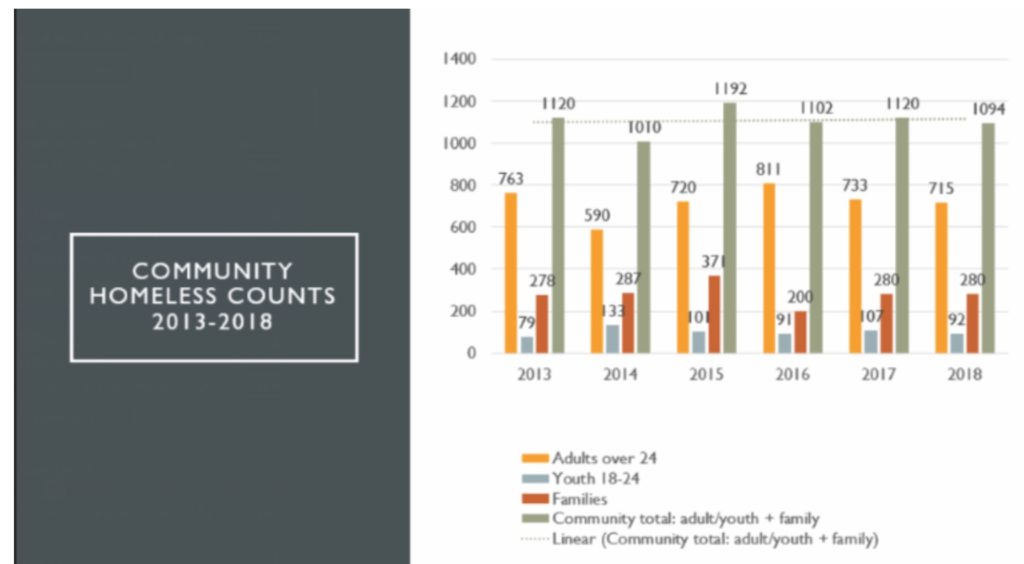
By 2019, Year Four of the Berkowitz era, there were an estimated 1,100 people who were known to be homeless in Anchorage, and the city was spending tens of millions of dollars every year on the problem. The number had not really budged in his years at the helm, even with the help of the homeless coordinator.
Berkowitz’ term in office ended abruptly on Oct. 23 2020, after a salacious episode with a local reporter became the news.
But before he left office, he had worked to space people out in homeless shelters to prevent the spread of Covid-19, and in doing so had commandeered the Sullivan, Ben Boeke and Dempsey-Anderson Arenas. The Sullivan is still a shelter for about 400 people, and those people now become Mayor-Elect Dave Bronson’s concern as he and his team enter the transition process and try to figure out the right path to deal with Anchorage’s toughest nut to crack: Homelessness.


