
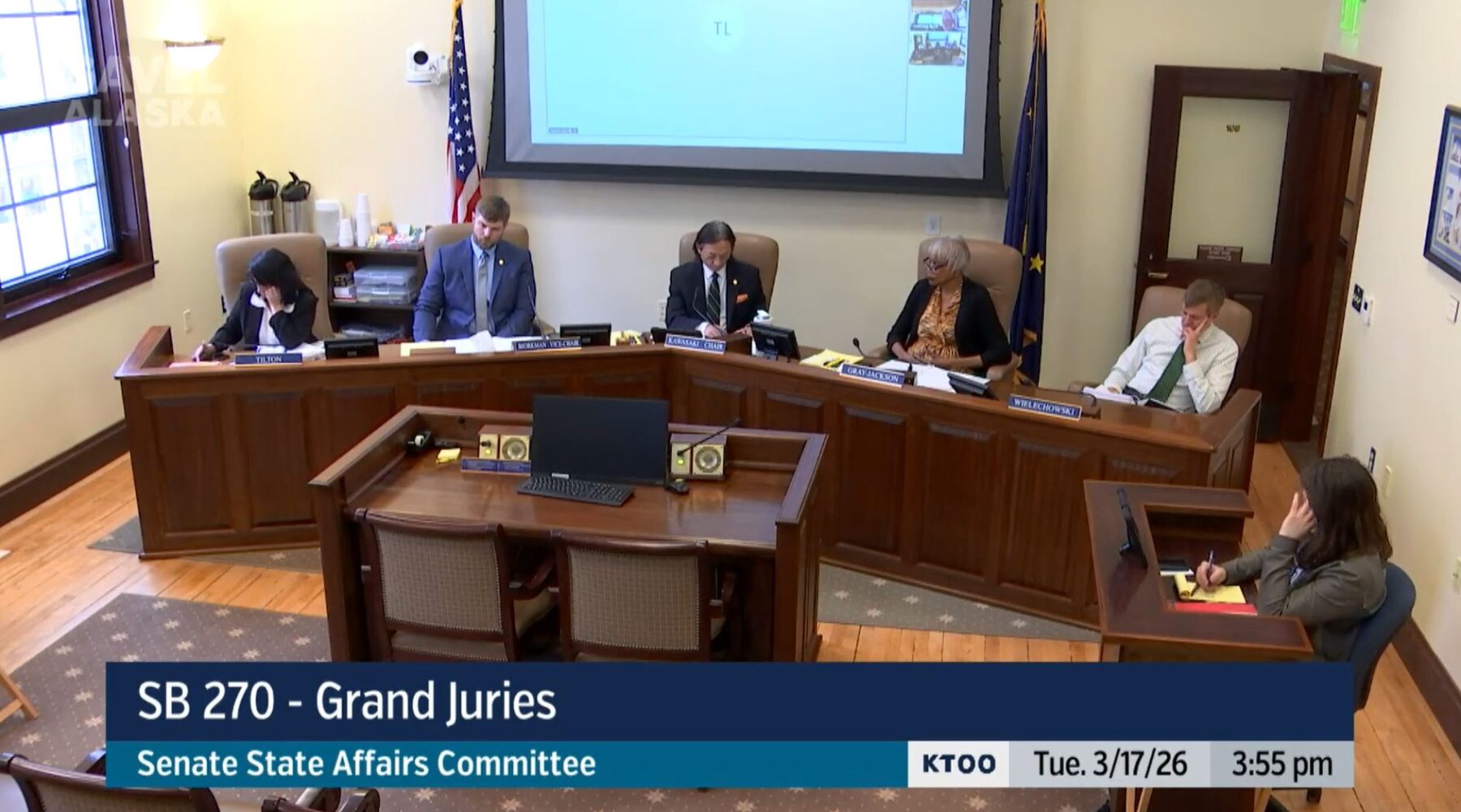
The Senate State Affairs Committee convened a substantive first hearing on SB 270, legislation aimed at clarifying and strengthening the role of Alaska’s investigative grand juries. The session underscored ongoing concerns about the balance of power between the legislative branch, the courts, and the people’s constitutional right to independent inquiry into matters of public welfare and safety. With testimony spanning historical precedent, personal accounts of perceived systemic failures, and calls for procedural clarity, the committee advanced the bill for further consideration.
Sen. Jesse Bjorkman (R-Nikiski) opened by framing SB 270 as a necessary codification of grand jury authority already rooted in Alaska’s Constitution. “The bill before you strengthens and codifies the role of Alaska’s investigative grand juries in statute and prescribes a process by which investigative grand juries can operate,” he stated. Bjorkman noted that while the grand jury’s investigative function is constitutionally protected, the legislature had never previously established detailed statutory procedures. The measure responds to constituent advocacy for grand juries to actively examine issues of public welfare, including potential government misconduct. He acknowledged parallel court rule changes under consideration by the Alaska Supreme Court, raising jurisdictional questions about whether such procedures should rest with the legislature or the judiciary.
Staff member Matthew Churchill provided a detailed sectional analysis of the eighteen provisions in Version A. Key elements include requiring alternate jurors on grand jury panels, mandating written instructions for impaneled juries, and explicitly affirming the grand jury’s authority to initiate investigations and issue indictments without limitation. New sections establish procedures for juror-proposed investigations requiring majority consent, clarify disclosure duties when a juror learns of a crime, and empower grand juries to direct prosecutors to prepare indictments. The bill also creates the crime of obstructing a grand jury as a class A misdemeanor and addresses prosecutorial misconduct by requiring appointment of a neutral attorney. Evidentiary rules are refined: indictments must rely on trial-admissible evidence, while investigative grand juries may consider all information, including hearsay, with appropriate prosecutorial clarification. Mechanisms for handling tainted indictments allow transfer to a replacement grand jury, and related amendments to Criminal Rules 5 and 6 align procedures, subject to a two-thirds legislative vote for rule changes.
Chair Sen. Scott Kawasaki (D-Fairbanks) referenced Article I, Section 8 of the Alaska Constitution, which states the grand jury’s power “shall never be suspended.” He inquired how current processes operate and what changes SB 270 would introduce. Bjorkman explained the evolving landscape: under recent court iterations, grand juries could issue indictments but lacked mechanisms to compel prosecution. The proposed court rule changes introduce a two-tiered system—an investigative grand jury handling hearsay and a separate panel for admissible evidence—prompting debate over legislative versus judicial authority.
Public testimony, opened after sponsor remarks, revealed broad support tempered by calls for stronger safeguards. David Haeg argued that the Alaska Supreme Court is unlawfully diminishing grand jury indictment powers, citing constitutional convention delegates who declared such authority “shall never be suspended.” He urged complete elimination of Criminal Rule 6.1 to restore independence.
David Ignell, a forensic journalist and former lawyer, recounted being blocked from presenting evidence of a wrongful conviction to a grand jury. He invoked founding delegates—Yule Kilcher called the grand jury “the only safeguard a citizen occasionally has,” and John Hellenthal stated “a grand jury can investigate anything”—to argue recent court actions have enabled unchecked corruption. Support came from a resident from Homer, who stressed restoring “honesty, integrity, and a sense of right and wrong” to the grand jury process. A resident from Anchorage, shared a personal story of alleged mistaken-identity prosecution and opposed the bill as written, advocating full repeal of Criminal Rule 6.1 in favor of the stricter original rule.
A resident from Kasilof endorsed the legislation to restore direct citizen appeals and independent investigations into government misconduct. A resident from Anchorage proposed specific textual changes, replacing “may” with “shall” in key sections to mandate actions. Residents from Anchorage and Palmer echoed concerns over subverted constitutional roles. A resident from Soldotna called for releasing the sealed Kenai report and establishing an independent judicial corruption commission. A resident from Juneau, supported the bill with amendments to ensure people-focused language. A resident from Soldotna criticized the draft for retaining a perceived Attorney General gatekeeper role and urged rewording for direct public access.
A resident from Kenai argued the Supreme Court’s actions violated constitutional rights and suggested articles of impeachment for involved justices. A resident from Nikiski accused bar association members, the Department of Law, and courts of preventing grand jurors from fulfilling statutory duties. He asserted Criminal Rule 6.1 is unconstitutional and should be repealed. A resident from Kenai supported the bill with modifications, particularly eliminating Rule 6.1, and recounted the former Attorney General’s refusal to review evidence of corruption.
Sen. Bjorkman closed by thanking testifiers and acknowledging widespread concern. He contextualized SB 270 alongside pending court rule changes, noting different reform paths. The sponsor stressed that many citizens object to any filtering of their accounts before reaching a grand jury, underscoring the need for direct access mechanisms. The bill was set aside for further consideration, with written submissions from testifiers to be reviewed. The Department of Law is scheduled to testify at the next meeting on March 19.
The hearing reflected restoring constitutional balance, protecting citizens from perceived government overreach, and ensuring transparent accountability without undermining due process. By clarifying grand jury procedures and affirming investigative powers, SB 270 seeks to empower Alaskans while respecting the rule of law. Committee members will weigh proposed amendments, including mandatory language and citizen-access protocols, as deliberations continue.


