
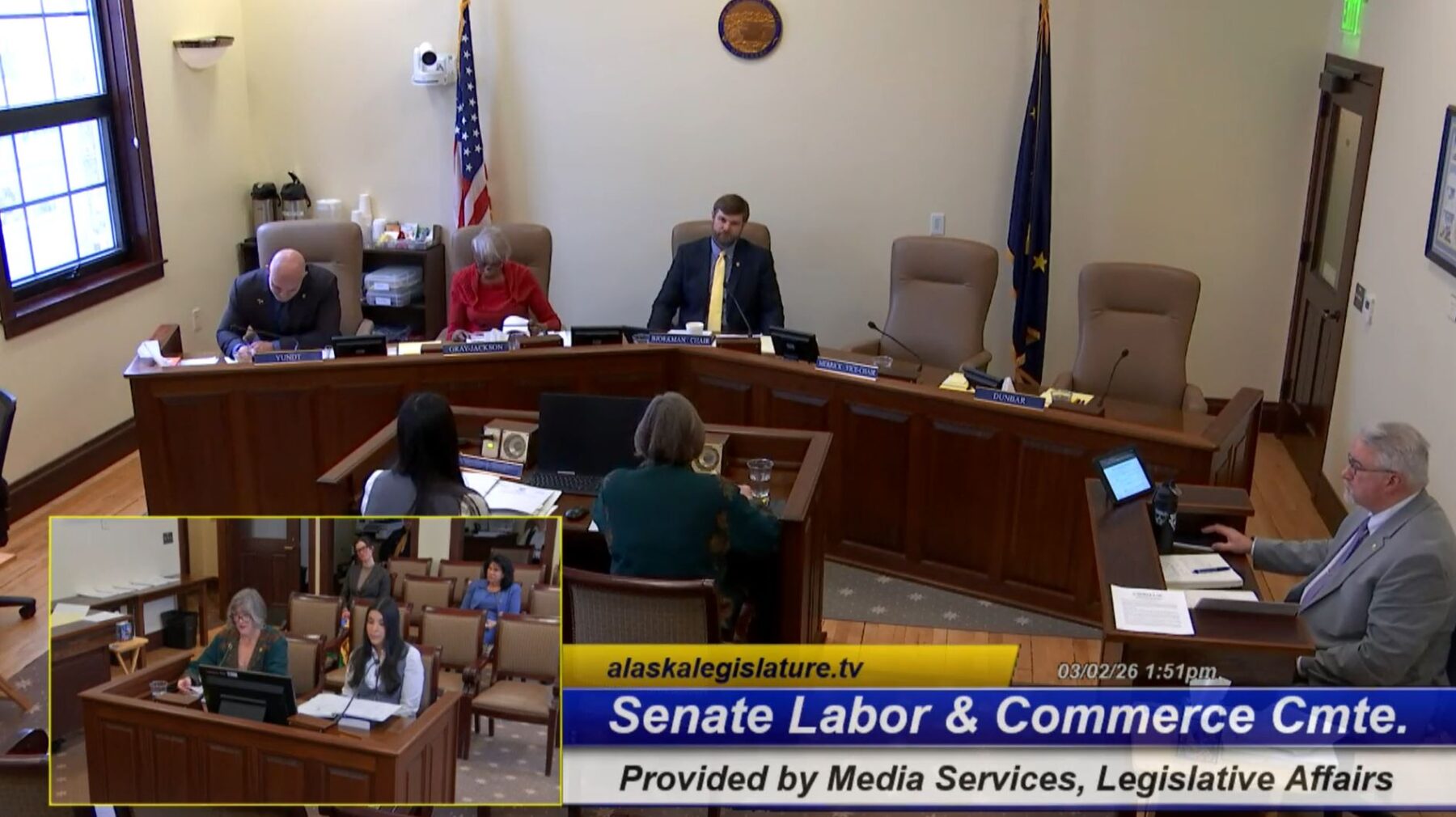
The Alaska Senate Labor and Commerce Committee convened Monday in Juneau to advance four measures addressing tax efficiency, public safety, community fundraising, and emerging financial technology protections. Chair Senator Jesse Bjorkman (R – Nikiski) guided the session through recaps, testimony, and procedural votes, signaling bipartisan support for practical reforms amid Alaska’s evolving economic landscape.
SB 164 – Eliminating Tax Discounts to Generate New Revenue
The committee’s second hearing on SB 164 focused on removing outdated tax discounts to boost state revenue. Sponsor Senator Kelly Merrick (R – Eagle River) explained the bill targets four specific credits and deductions: motor fuel tax timely filing, tobacco products tax timely filing, cigarette stamp cap tax, and tire fee timely filing.
“The Department of Revenue estimates SB 164 could raise nearly $500,000 a year for the state,” Merrick stated, “and this is revenue that could be put toward capital projects, public safety, and more.”
A conceptual amendment adjusted the effective date to July 1, 2026, and the bill advanced unanimously with individual recommendations
SB 233 – Transferring Controlled Substances Advisory Committee to DCCED
SB 233, also in its second hearing, proposes moving the Controlled Substances Advisory Commission (CSAC) from the Department of Law to the Department of Commerce, Community and Economic Development (DCCED). Sponsor Senator Matt Claman (D – Anchorage) argued the Criminal Division lacks capacity to prioritize the committee’s public safety mission.
“This committee offers an important public safety service and should be assigned to a department that is better equipped to effectively staff it,” Claman said.
Director Hannah Lager from DCCED explained the $13,500 fiscal note covers annual in-person travel to ensure productive meetings. Senator Gray-Jackson (D – Anchorage) questioned absorbing costs internally as the Department of Law had done, but Lager noted limited repurposable funds in the commissioner’s office. The bill advanced without objection, with members noting its “housekeeping” nature could ease passage despite the modest fiscal note.
HB 50 – Expanding Snow Classics for Charitable Fundraising
HB 50, in its first Senate hearing, would broaden eligibility for “snow classics”—charitable gaming events where participants guess snow depth on a specific date. Sponsor Representative Sara Hannan (D – Juneau) described the bill as a narrow but impactful change.
“It would simply broaden the definition of who could conduct a snow classic,” Hannan stated, emphasizing no changes to existing gaming rules or parameters.
The inspiration came from the Juneau Nordic Ski Club, whose executive director Tristan Knutson-Lombardo testified: “Our parent group said, ‘Gosh, it’d be cool if we could do a snow guessing contest.’ And to their surprise… we found it was actually pretty well constricted who could do that.”
The bill was held for future hearing, with Chair Bjorkman expressing support for its alignment with recent charitable gaming work in Title 5. Members appreciated the bill’s simplicity and community-driven origin.
SB 249 – Regulating Virtual Currency Kiosks to Combat Elder Fraud
The final item, SB 249—dubbed the “Don’t Mess with Grandma” bill by sponsor Senator Kathy Tilton (R – Wasilla)—targets unregulated cryptocurrency kiosks increasingly used in scams. Tilton shared her mother’s experience with AI-generated voice fraud leading to cash deposits at a kiosk.
“When she heard my voice on the phone, she lost her mind, and she probably would have done just about anything to help me,” Tilton recounted.
Staff Heath Hilyard detailed the bill’s provisions: $1,000 daily and $10,000 monthly transaction limits, 3% fee caps, mandatory refunds for fraud victims filing police reports within 90 days, ID verification, and blockchain analytics. Director Tracy Reno from the Division of Banking and Securities confirmed six licensed operators run approximately 76 kiosks statewide, noting funds “bounce around the world” once deposited.
Chair Bjorkman questioned legitimacy: “I cannot think of hardly any legitimate reasons why these things should exist.” The bill was set aside for further review, with Tilton committing to address collusion concerns in upcoming stakeholder meetings.
The next meeting on March 4 will cover delivery network companies, peace officer disability, and LNG import facilities. The committee’s work reflects ongoing efforts to modernize regulations while protecting vulnerable Alaskans and generating sustainable revenue.


