The U.S. Navy is in the midst of a shipbuilding crisis that will leave the United States outmatched in an increasingly dangerous world if it is not addressed soon, says Alaska’s U.S. Sen. Dan Sullivan.
“This week, the Senate Armed Services Committee is negotiating the details of the National Defense Authorization Act, legislation that has passed every year since its inception. It is critical that the committee, of which I am a member, address the shipbuilding crisis in this legislation. My colleagues on both sides of the aisle and I have a number of amendments to the NDAA addressing this crisis. Congress must intervene because it has been abundantly clear that President Joe Biden and his secretary of the Navy will not,” Sullivan wrote in the Washington Examiner on Tuesday.
Recently, Sullivan led a Senate delegation to the Indo-Pacific, a place where the U.S. Navy is key to America’s security as well as the security of her allies in Asia, including Taiwan. Freshly back from the trip, Sullivan articulated some key concerns in his column that focused on Navy preparedness.

“The concern over declining American shipbuilding power was front and center. As I spoke with the newly elected Taiwanese president, the Chinese People’s Liberation Army’s ships were encircling the island democracy,” Sullivan said.
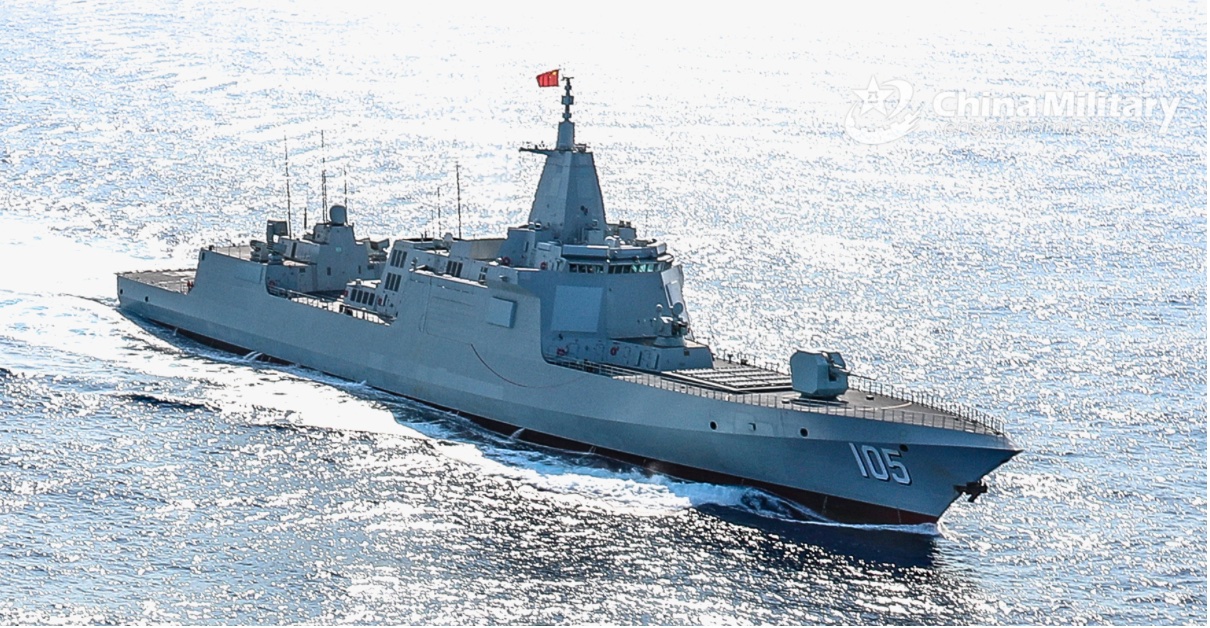
China’s navy is expanding rapidly, Sullivan said, and is on pace to have more than 400 warships by 2027 — just three years from now. That’s the same year that China’s President Xi Jinping has directed his forces to be ready to invade Taiwan.
“Meanwhile, under Biden, the U.S. Navy has shrunk to just 293 ships and is on pace to shrink to 280 in 2027 — what could amount to a dangerous 120-ship deficit compared to the Chinese navy,” he said.
“After years of pressure from Congress, Biden’s Navy Secretary Carlos Del Toro recently completed a review of the devastating state of the Navy’s shipbuilding programs. The results of that review were abysmal: five of the Navy’s major shipbuilding programs — the Columbia-class submarine, the Constellation-class frigate, the Ford-class aircraft carriers, and the Block IV and Block V Virginia-class submarines — are all delayed between one and three years,” Sullivan said.
Instead of doing his job, the Navy secretary has focused on climate change and the so-called “climate crisis,” and his report to Congress did not mention shipbuilding, lethality, or warfighting.
“Likewise, in his strategic guidance that he issued to the Navy and Marine Corps, an important document that lays out the secretary’s vision for our naval force, he mentioned climate change nine times but didn’t once address increasing the size of the U.S. fleet during these dangerous times,” Sullivan said.
“In my 30 years of public service, I’ve never seen U.S. Navy readiness at such a low point. And it’s not just me. This is a widespread, bipartisan concern. Numerous experts have also warned how ill-prepared our Navy is to meet global challenges and to keep us safe, particularly in the vital Indo-Pacific region, which includes my home state, Alaska. Recently, experts from the Congressional Research Service told me that ‘the U.S. Navy is in its worst state for designing, building, maintaining, and crewing ships in over 40 years,'” Sullivan wrote.
Sullivan has made amendments to the National Defense Authorization Act to address this crisis by requiring the Navy to be more predictable with procurement profiles so industry can respond with capital investments and workforce development, increasing the tenure of the admiral in charge of ship design and procurement, and working toward increasing our country’s shipbuilding capacity by identifying viable locations for two additional shipyards west of the Panama Canal. He also has called upon the Navy to turn its attention to fighting readiness, rather than climate change.
Because the Navy secretary is failing in his responsibilities, Congress must step in to fulfill its Article I constitutional responsibility “to provide and maintain a Navy,” wrote Sullivan, who serves on the Senate Armed Services Committee.