
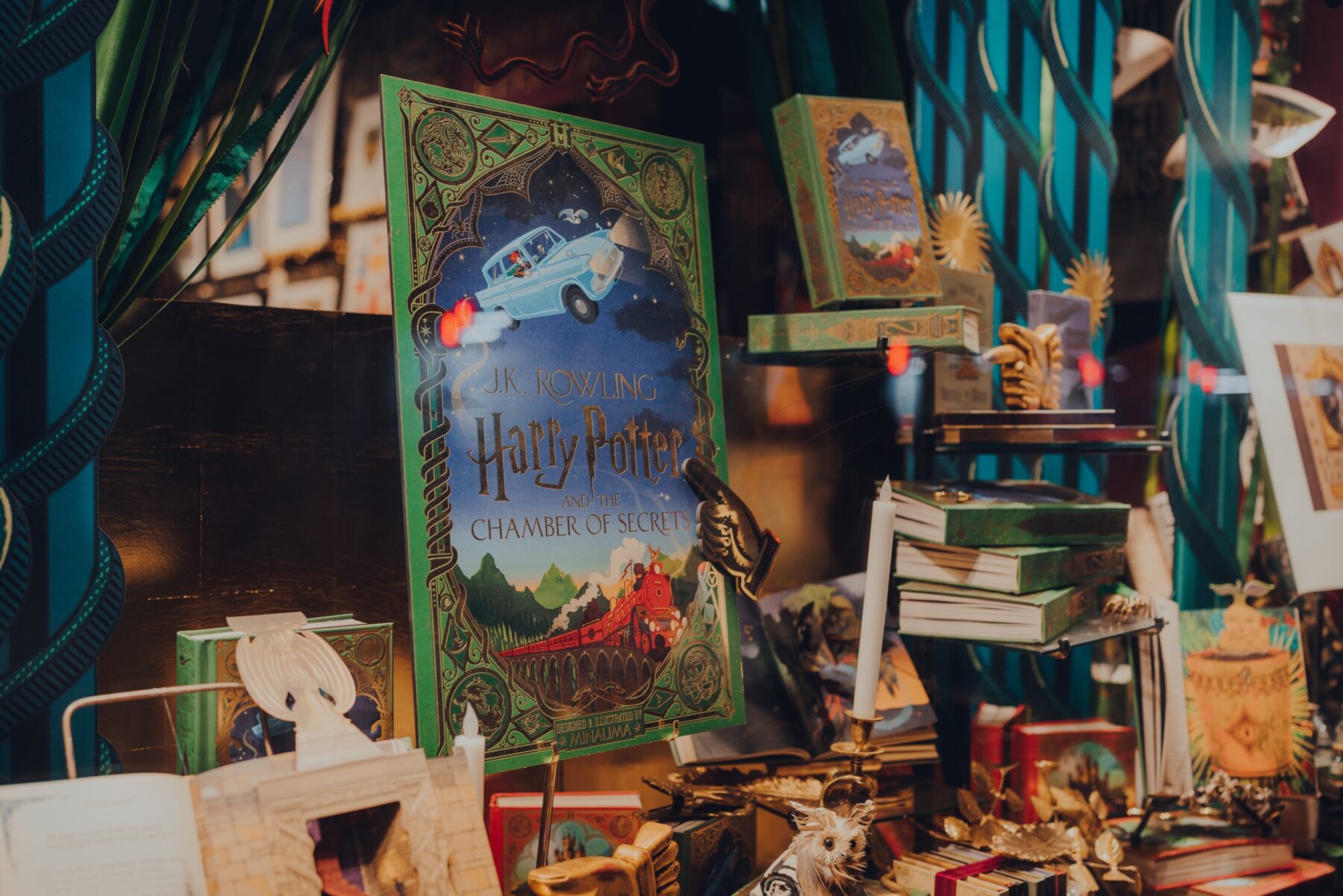
The Museum of Pop Culture in Seattle announced this spring that it will remove all traces of Harry Potter author J.K. Rowling from its Harry Potter collections.
In a blog post announcing this change, the museum writes that “there’s a certain cold, heartless, joy-sucking entity in the world of Harry Potter and, this time, it is not actually a Dementor,” comparing Rowling to one of most horrible of the evil creatures from her wizard-themed books.
The museum now refers to Rowling as “She-Who-Must-Not-Be-Named,” in the same way Voldemort is so feared in the fantasy world of wizardry world that it is considered dangerous to speak his name.
“Her transphobic viewpoints are front and center these days, but we can’t forget all the other ways that she’s problematic: the support of antisemitic creators, the racial stereotypes that she used while creating characters, the incredibly white wizarding world, the fat shaming, the lack of LGBTQIA+ representation, the super-chill outlook on the bigotry and othering of those that don’t fit into the standard wizarding world, and so much more. We’re going to be focusing on You-Know-Who’s transphobic views in this blog post because she’s really doubled down on them lately,” the museum writes.

The writer, who refers to him/herself as transgender continues in that vein for several more paragraphs.
“While the Harry Potter series is a major player in the pop culture sphere, we wanted to give credit to the work of the actors, prop makers, and costume designers in our Fantasy gallery. We learned that You-Know-Who was a problem, which is why you’ll see the artifacts without any mention or image of the author. After all, Daniel Radcliffe, Emma Watson, and Rupert Grint are all incredibly vocal allies. Should we forget their work now that the original author is terrible? I’m not even talking about “separating art from artist” but giving credit where it’s due. I’ll never be able to purely enjoy Hagrid or Stephen Fry again because of their support of the author, but I’ll always be a wreck when Dumbledore… y’know. No spoilers. Besides, there’s plenty about Dumbledore that I’ll be a wreck about,” the museum wrote.
The inductees into the museum are chosen by public voting, the museum said.
“You-Know-Who was inducted into the Hall of Fame in 2018 before she became the face of trans-exclusionary radical feminism (TERF). If you keep looking in there, you’ll see other figures with questionable if not downright disturbing pasts. But what does that mean? Are MoPOP’s hands tied on something that is in our building? Again, it’s complicated. For the time being, the Curators decided to remove any of her artifacts from this gallery to reduce her impact,” the museum said. Read the entire statement here.
Rowling came up with the idea for the Harry Potter series while working as a researcher and bilingual secretary for Amnesty International in 1990. By 1997, she had published the first novel in the series, “Harry Potter and the Philosopher’s Stone.” After six sequels, movie rights, and worldwide fame, she became the highest-paid author in the world.
In 2018, Rowling started expressing her views about the transgender movement and its cultural norm of harassing, threatening and doxing all women who stand for women’s rights. She was a target of trans attack when she stood up for a woman who lost her job due to her support for actual women.
“For people who don’t know: last December I tweeted my support for Maya Forstater, a tax specialist who’d lost her job for what were deemed ‘transphobic’ tweets. She took her case to an employment tribunal, asking the judge to rule on whether a philosophical belief that sex is determined by biology is protected in law. Judge Tayler ruled that it wasn’t,” Rowling wrote on her website in 2020.
“My interest in trans issues pre-dated Maya’s case by almost two years, during which I followed the debate around the concept of gender identity closely. I’ve met trans people, and read sundry books, blogs and articles by trans people, gender specialists, intersex people, psychologists, safeguarding experts, social workers and doctors, and followed the discourse online and in traditional media. On one level, my interest in this issue has been professional, because I’m writing a crime series, set in the present day, and my fictional female detective is of an age to be interested in, and affected by, these issues herself, but on another, it’s intensely personal, as I’m about to explain,” Rowling wrote.
“All the time I’ve been researching and learning, accusations and threats from trans activists have been bubbling in my Twitter timeline. This was initially triggered by a ‘like’. When I started taking an interest in gender identity and transgender matters, I began screenshotting comments that interested me, as a way of reminding myself what I might want to research later. On one occasion, I absent-mindedly ‘liked’ instead of screenshotting. That single ‘like’ was deemed evidence of wrongthink, and a persistent low level of harassment began,” Rowling wrote.
“Months later, I compounded my accidental ‘like’ crime by following Magdalen Berns on Twitter. Magdalen was an immensely brave young feminist and lesbian who was dying of an aggressive brain tumour. I followed her because I wanted to contact her directly, which I succeeded in doing. However, as Magdalen was a great believer in the importance of biological sex, and didn’t believe lesbians should be called bigots for not dating trans women with penises, dots were joined in the heads of twitter trans activists, and the level of social media abuse increased,” she wrote.
“I mention all this only to explain that I knew perfectly well what was going to happen when I supported Maya. I must have been on my fourth or fifth cancellation by then. I expected the threats of violence, to be told I was literally killing trans people with my hate, to be called cunt and bitch and, of course, for my books to be burned, although one particularly abusive man told me he’d composted them,” she wrote.
“What I didn’t expect in the aftermath of my cancellation was the avalanche of emails and letters that came showering down upon me, the overwhelming majority of which were positive, grateful and supportive. They came from a cross-section of kind, empathetic and intelligent people, some of them working in fields dealing with gender dysphoria and trans people, who’re all deeply concerned about the way a socio-political concept is influencing politics, medical practice and safeguarding. They’re worried about the dangers to young people, gay people and about the erosion of women’s and girl’s rights. Above all, they’re worried about a climate of fear that serves nobody – least of all trans youth – well.
“I’d stepped back from Twitter for many months both before and after tweeting support for Maya, because I knew it was doing nothing good for my mental health. I only returned because I wanted to share a free children’s book during the pandemic. Immediately, activists who clearly believe themselves to be good, kind and progressive people swarmed back into my timeline, assuming a right to police my speech, accuse me of hatred, call me misogynistic slurs and, above all – as every woman involved in this debate will know – TERF,” Rowling wrote.
“TERF” is an acronym coined by trans activists that stands for Trans-Exclusionary Radical Feminist.
Read Rowling’s statement from 2020 at this link.
MoPOP is funded by corporate, government and foundations. In the 2021 annual report, major corporations and foundations and taxpayers were listed as funders, including The Boeing Company, Seattle Seahawks, the State of Washington, and Walt Disney:




