
By SCOTT OGAN
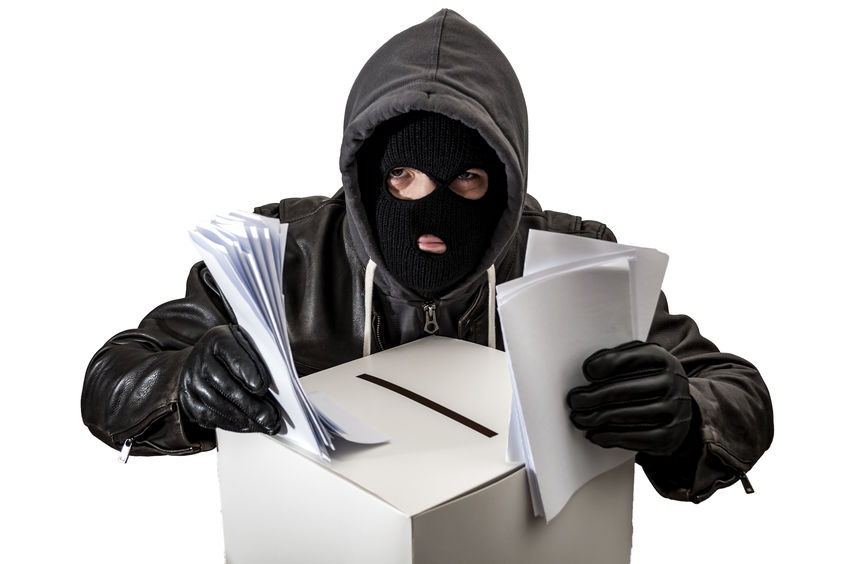
For our republic to survive, it must be sustained by free and fair elections. This means our elections must be transparent and verifiable—auditable by the loser. The voters must have confidence in our election system, or they give up and don’t vote.
Unlike despotic regimes that hold onto power through sham elections and imprisonment of their adversaries, Americans do not have to take up arms to force a change in leadership. How lucky we are to live in a democracy. But sadly, the USA is quickly sliding farther down this slippery slope than I’ve ever imagined we could.
Thomas Jefferson said, “The tree of liberty must be refreshed from time to time with the blood of patriots and tyrants.” While he lived in different times, the foundation of liberty in a free republic is the right to elect our representatives freely and fairly. An open and transparent election system is the only way we can guarantee a change in leadership without chaos or anarchy.

The invasion of the southern border is tearing our country apart, but it’s not a battle over immigration–it’s about “stuffing the ballot box.” It’s not about race, or privilege or moral duty to comfort the hungry. These are media memes. It’s all about power and winning elections by stacking the deck.
The Democrats clearly favor having 20 million illegal aliens voting in our country. Their strategy is to loosen voting laws to the point where anyone can register the same day to vote, without an ID, with no proof of residency or even citizenship. If their party cannot win the hearts and minds of Americans with their policies, then their plan is to qualify strangers to vote.
Democrats call voter ID requirements “racist” and “voter suppression” but in truth these safeguards secure the opposite result. Why? Because preserving democracy and freedom puts an end to these evils, while free flowing borders do not. Laws that strengthen election integrity secure the rights of every person, regardless of race–provided they are a U.S. citizen. The Democrat’s objectives of loosening voter ID laws and promoting same-day registration thus undermine true democracy.
In this legislative session, watch what Democrats do, not what they say. They will have pre-drafted amendments ready to attach in “Christmas tree” fashion on any moving election legislation. Astute legislators must be alert to “poison pills” or intent-altering language that is slipped into bills outside the public view. Such tactics allow Democrats to proclaim: “I voted for election reform” when in fact they voted to kill it.
What will ultimately save us from these shenanigans is to restore integrity to our election laws, which will increase voter confidence that their vote counts. Artificial Intelligence (AI) is a looming threat that few can fully comprehend. It would be an interesting question to ask AI: “How can I cheat utilizing Alaska election laws?” I think I know at least some of the answers.
What safeguards exist to authenticate a voter’s ID before electronic absentee voting? Answer: the same compromised security identifiers that are now in the possession of hackers. Why do hackers want to steal election security identifiers?
The only plausible answer: to steal an election. What is an election worth to certain political elites? Answer: As much as their power can yield.
Former Rep. Gabrielle LeDoux’s delayed trial accusations are child’s play compared to potentially thousands of inactive voters having their ballots stolen. Meanwhile, the Division of Elections’ response has been lackluster.
Voter rolls contain confidential personal data for most Alaskans, including security identifiers which are used by the Division of Elections to confirm that a voter is who they claim to be. On Dec 3, 2020, one month after the November election, Lt. Gov. Meyer disclosed that the Division’s voter data had been hacked a month before the prior election. Rank choice voting was polling “neck to neck” a month before the election. Inexplicably, he withheld disclosing it until one month after the election.
Concurrently, the Department of Administration wrote a white paper with 18 recommendations for improving our elections system. To-date, the only copy publicly available of this document has redacted all 18 recommendations. Why? The report may have pointed out that a bad actor, armed with the hacked voter security identifiers, could have easily applied on-line for absentee ballots using the identity of inactive voters. The public deserves to see this report.
We know from tight races in our state that voter fraud, applied strategically, can change the outcome of an election—and the balance of power in the Legislature, or with a ballot initiative. The risk of being discovered is low, and the potential reward is great; thus, the incentive to cheat is high. With unlimited dark money underwriting many Alaska issues, do you think we might have a problem? One could plausibly contract with a foreign firm to aid in such efforts, keeping prosecution out of reach.
Here are Ogan’s Election Integrity Recommendations, based on the principle of, “making it easy to vote, but hard to cheat.” The lieutenant governor can implement these changes administratively but to-date has not, leaving the ball squarely in the Legislature’s court.
- – Employ best practices to clean up voter rolls and to purge inactive voters to the greatest extent allowed by federal law.
- – Create a separate voter roll for US citizens entitled to vote in a presidential election but are no longer eligible to vote in local elections. Currently all are on one list.
- – Tighten the weak domicile provision that allows too many non- residents to vote illegally and to remain on the rolls indefinitely.
- – Adopt ballot chain of custody protocols. Account for every ballot that goes out to make sure all ballots come back.
- – Utilize a water mark or unique identifier to eliminate counterfeit ballots.
- – Set up a cross-check system of intra and interstate databases.
- – Follow the Public Interest Legal Foundation’s best practice election security protocol recommendations.
- – Scrap the compromised Division of Elections security identifier system and replace it with a modern Multi-Factor Authentication system. Virtually every business uses MFA and many citizens utilize it.
- – Utilize non-proprietary open-source voting hardware and software. Proprietary systems like Dominion prevent a full forensic audit. They undermine voter confidence, and at worst, hide digital manipulation.
- – Maintain redundant electronic and paper ballots to cross-check electronic tabulators. Do not go to “paper only” ballots.
Statutory Changes Requiring Legislative Action:
- – Absentee ballots are the preferred tool of the fraudster (One reason they have increased). Limit absentee voting in state elections to only cases of valid hardship.
- – Disallow party affiliation on the outside of absentee ballot envelopes.
- – Strengthen the worthless verification signature on absentee ballots. Copy the signature verification process for PFDs by requiring a known, verifiable second signature, with criminal penalties for violations.
- – When applying for a PFD, change the automatic voter registration to opt-in, rather than opt-out.
- – Require a positive government ID for every voter.
- – Eliminate weak ID provisions like presenting a utility bill, or “someone known to an election worker.”
- – Tighten ballot harvesting rules. Two dangers of ballot harvesting are counterfeit ballots and disposal of ballots.
- – Incorporate electronic ballot tracking and minor error correction as an opt-in. If we can track your pizza or your Amazon package, why not ballots? This reduces fraud and uncounted ballots.
- – Say no to signature verification. It’s expensive and unreliable. Instead, implement Multi Factor Verification. 100% accurate.
- – Create an election fraud unit within the Department of Law, with fraud detection and prevention investigators. Possible via executive order.
- – Avoid mail-out ballots at all cost. They openly invite fraud.
My synopsis of election bills:
HB 37 (Schrage) – A bad bill that reflects the Democrats’ insistence on same day voter registration—a “sound bite” argument used by Democrats as a poison pill because they really don’t want reform. This bill also codifies a very time consuming, inaccurate, expensive voter signature verification process but ignores Multi Factor Authentication (MFA) as a 100% effective verification system.
HB 129 (House Judiciary, Vance) – A good bill that requires the Alaska DOE to improve voter rolls, and to verify voter identity and registration, pursuant to a third-party complaint or tip that a person may not be eligible to vote.
HB 130 (House Judiciary, Vance) – A great bill that creates a felony charge for “election fraud” applying to anyone attempting to alter the outcome of an election by interfering with the results. Anyone caught hacking electronic equipment or opening an absentee ballot without approval would be prosecuted.
HB 131 (House Judiciary, Vance) –A good bill that will restore confidence in our elections by utilizing open-sourced, nonproprietary election tabulation equipment. Say “Goodbye” to Dominion.
HB 132 (House Judiciary, Vance) –A good bill that should gather bi-partisan support for its ballot curing provisions, which will allow voters to fix technical errors so their vote is not arbitrarily disqualified, and it implements electronic tracking.
HB 210 (Eastman) – A well-intended but unnecessary bill mandating that voting machines must be USA built. The solution of open-source tabulators and computers makes this moot, but if proprietary closed-source voting machines continue, it’s a good precaution.
SB 1 (Shower) – A great bill because it requires the Division of Elections to incorporate best practice chain of custody protocols and codifies ballot tracking and curing. It also creates a voter fraud hotline so citizens can immediately report suspected irregularities.
SB 5 (Shower) – A great bill because it requires the Division of Elections to canvass registered voters to see if they still want to be registered and increases voter roll maintenance protocols.
SB 6 (Shower) – A great bill because it scraps Dominion voting machines in favor of non-proprietary open-source vote tabulator systems.
SB 7 (Shower) – A great bill because it increases penalties for unauthorized tampering with voting machines or ballots.
SB 138 (Senate State Affairs, Kawasaki) – A bad bill that attempts to accomplish too many things, so consequently it’s easy to hide last minute changes and “poison pills.” It merges many of Senator Shower’s common-sense proposals with troubling provisions like drop boxes, same day voter registration, loose residency confirming provisions, no tightening of voter ID provisions, and promotes expensive and inaccurate signature verification.
Scott Ogan served in the Alaska State House of Representatives and Senate and was a senior policy advisor for Sen. Mike Shower.



