
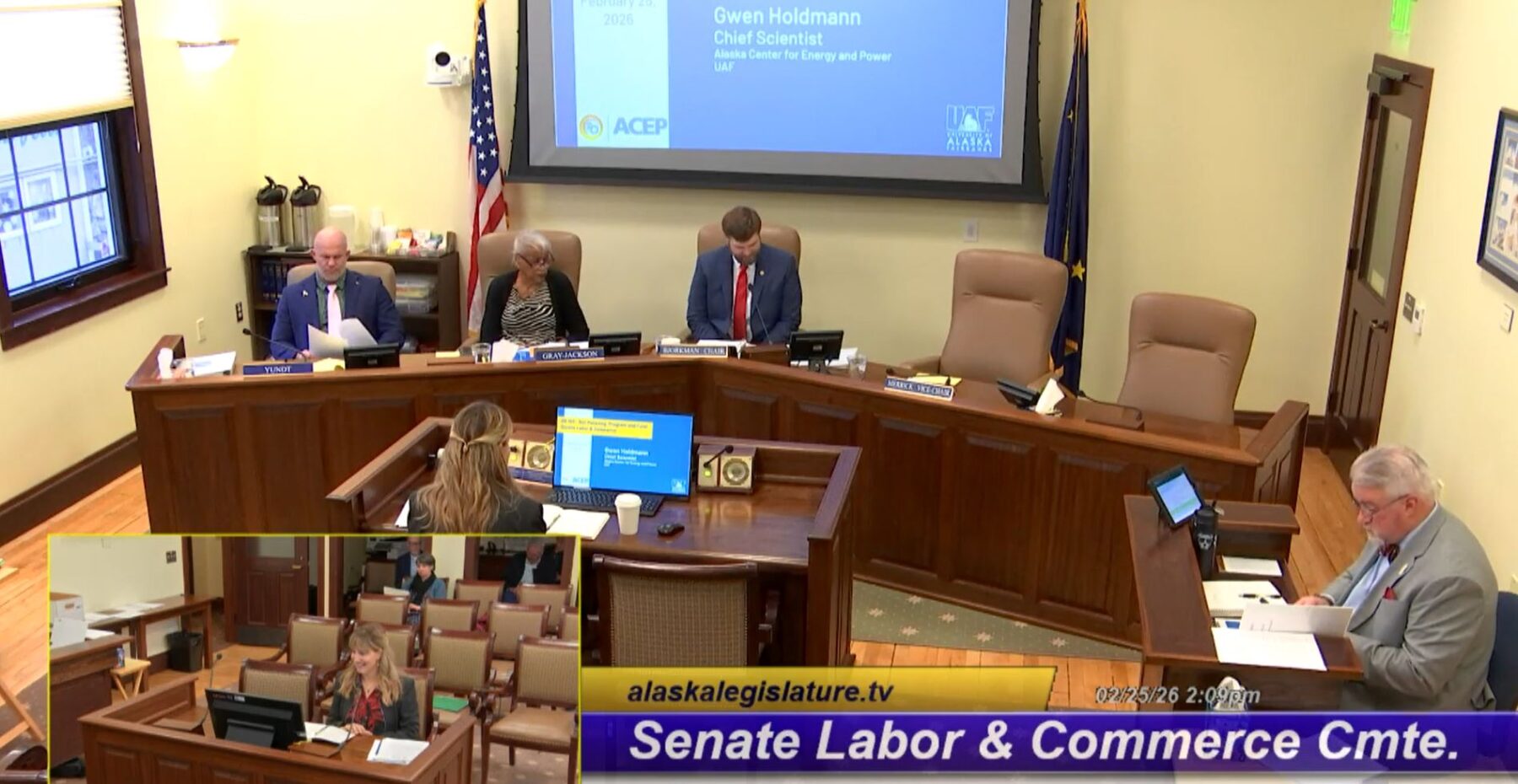
The Alaska Senate Labor and Commerce Committee held its second hearing on Senate Bill 150, a measure aimed at establishing a standardized net metering program to boost renewable energy generation across the state. The meeting focused on recapping the bill’s provisions, analyzing potential pitfalls from other states’ experiences, and discussing a draft committee substitute. While no formal action was taken, the discussion highlighted tensions between incentivizing solar adoption and ensuring equitable costs for all utility customers.
SB 150 seeks to allow consumer-generators—typically homeowners with solar panels—to receive full retail credits for excess energy fed back into the grid. Curtis Thayer from the Alaska Energy Authority (AEA) provided a recap, explaining that credits would accrue monthly and expire annually on March 31, promoting renewable investments by matching the rate consumers pay for purchased energy. A key feature is a reimbursement fund administered by AEA to mitigate utility revenue shortfalls, potentially preventing rate hikes for non-solar customers.
Gwen Holdmann, Chief Scientist at the Alaska Center for Energy and Power (ACEP), delivered an analysis, drawing lessons from states like Hawaii and California, where initial net metering policies have been reformed due to unintended consequences. She categorized issues into equity and cost-shifting, grid value of distributed solar, system caps, and battery storage promotion. On equity, Holdmann warned that paying full retail for excess power shifts fixed grid costs—such as maintenance—to non-solar users, potentially increasing their bills. “This cost shift still occurs. It’s just that we’re socializing it in a different way more at the state level,” Holdmann said, noting the fund’s uniqueness but lack of automatic funding mechanism.
Senator Rob Yundt (R – Wasilla) voiced concerns about disproportionate impacts: “It seems like it would disproportionately hurt those that don’t have solar.” Holdmann affirmed this, suggesting alternatives like utility-determined caps or innovative rate structures, such as monthly system charges for solar users to cover grid services. She also recommended trimming the bill’s list of qualifying technologies, excluding unlikely small-scale options like geothermal or ocean thermal energy.
Questions arose about the Regulatory Commission of Alaska’s (RCA) authority. Holdmann expressed doubt whether current statutes allow utilities to voluntarily implement full retail net metering without legislative changes, citing equity restrictions within rate classes. RCA’s Julie Vogler clarified that SB 150 amends discrimination statutes to exclude net metering, and existing regulations (3 AAC 5 900-949) would need updates. Thayer emphasized the need for legislative guidance, as utilities lack a unified plan and seek parameters for fair implementation.
Chair Bjorkman (R – Nikiski) noted a draft committee substitute incorporating some of Holdmann’s concepts, distributed for review but not formally adopted. “It merely is a draft for this iterative process to continue,” he said, aiming for a system that’s “fair and equitable as well as encourage people to build out additional electricity generation.”
The bill aligns with broader efforts to expand solar access, potentially making installations more economical by allowing annual credit rollovers to offset winter shortfalls. Advocates like Cook Inletkeeper argue it could incentivize larger systems, reducing reliance on gas amid shortages. However, critics worry about uncapping net metering without safeguards, as seen in other states where saturation strained grids.
SB 150 was set aside, with potential amendments addressing funding, caps, and equity.


