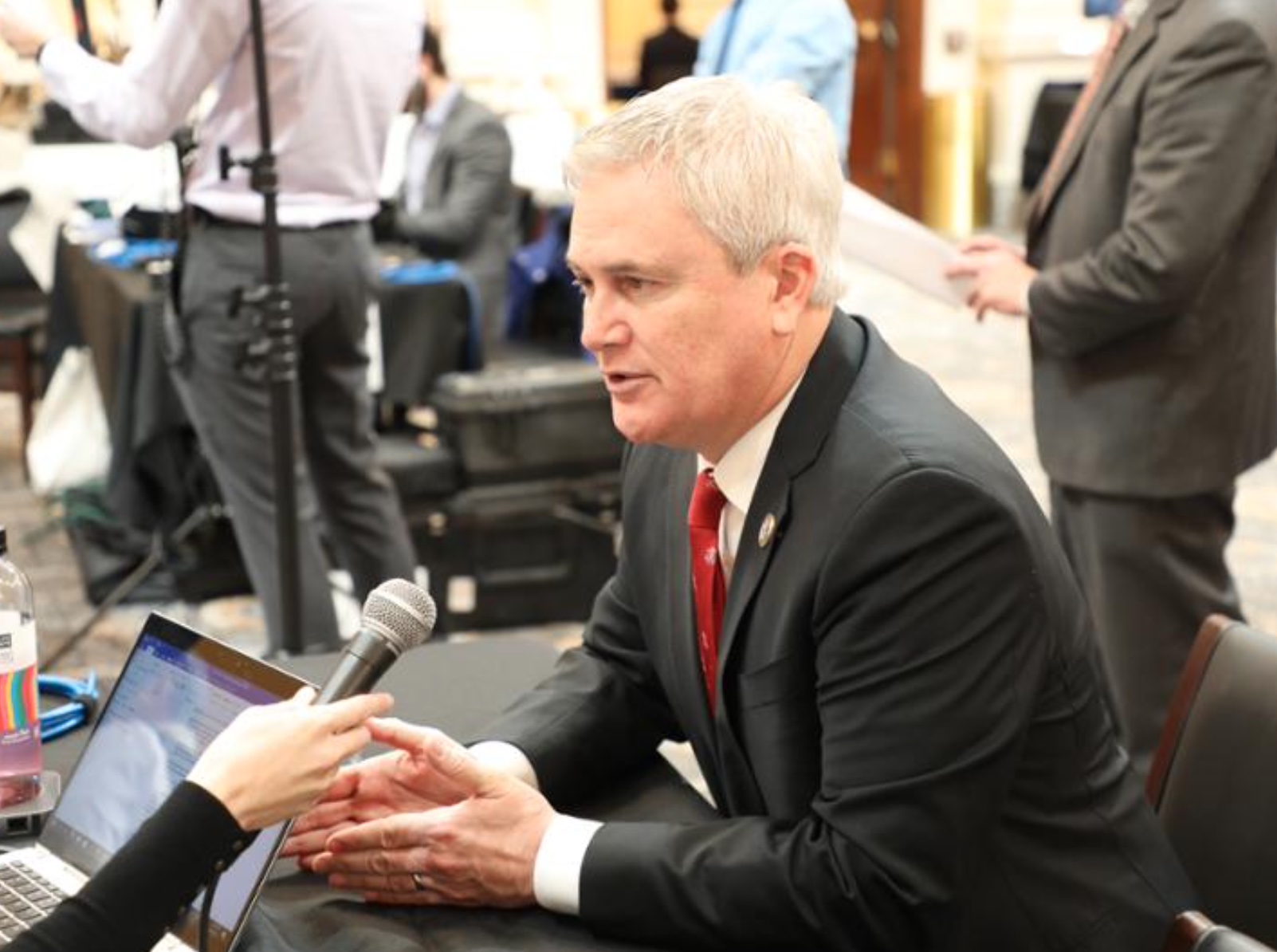
The House Committee on Oversight and Accountability, led by Chairman James Comer (R-Ky.), released a scathing report late last week that reveals the consumer cost of the Biden Administration’s Green New Deal energy policies.
The report, titled “The Biden Administration’s Green New Deal: Paying More for a Dimmer Future,” asserts that these policies have resulted in higher gas prices, increased electricity costs, market confusion, and a host of regulatory challenges that collectively burden American consumers and businesses.
The Kobeissi Letter, a financial newsletter, confirms the claim that since Biden took office, prices have skyrocketed.
Chairman Comer did not mince words: “The Biden Administration weaponized the power of the executive branch to wage a war against American-made energy production and cement in place radical, far-left energy policies that jeopardize domestic energy development, overload America’s power grid, and raise costs on all American consumers and businesses,” he stated. “From day one, the House Oversight Committee has worked to expose the Biden Administration’s radical climate agenda. The Committee will continue to fulfill its responsibility to hold this Administration accountable for its detrimental Green New Deal policies that are impacting Americans across the country.”

Key Findings of the Report
Surging Gas Prices: The report highlights a sharp increase in gas prices since President Biden took office. On January 20, 2021, the day after Biden’s inauguration, gas prices averaged $2.39 per gallon. By February 25, 2022, the day following Russia’s invasion of Ukraine, prices had already climbed to $3.57 per gallon, suggesting that domestic factors, not just international events, were driving the increase. By June 14, 2022, the average national gas price had reached a record high of $5.016 per gallon.
Regulatory Burden: According to the report, the Biden Administration’s aggressive regulatory agenda has imposed over $1 trillion in additional costs on American businesses and consumers. This “whole-of-government” approach has resulted in millions of hours of new annual paperwork demands, stifling economic growth and innovation.
Electricity Prices: The report notes that electricity prices have surged faster than inflation over the past year, exacerbated by the administration’s push for electrification, including the promotion of electric vehicles (EVs) and expansion of data centers. The Bureau of Labor Statistics reported that electricity prices have risen more than any other commodity.
EPA Emissions Rule: The Environmental Protection Agency’s (EPA) new emissions rule for fossil fuel-fired power plants has been criticized for being neither feasible nor cost-effective. The report claims the EPA disregarded scientific and policy recommendations, as well as stakeholder feedback, which could jeopardize the stability of America’s power grid and elevate long-term energy costs.
Inflation Reduction Act (IRA) Costs: Federal subsidies under the Democrats’ Inflation Reduction Act are projected to distort markets and potentially cost taxpayers up to $3 trillion by 2050. Testimony from an expert witness during a recent subcommittee hearing highlighted these concerns, suggesting that the IRA’s production tax credits will have significant financial implications.
The release of this report underscores the deep partisan divide over the nation’s energy policies. While Democrats argue that the transition to green energy is essential for combating climate change and ensuring long-term sustainability, Republicans contend that the current approach is economically damaging and overly burdensome.
The findings in the report are likely to fuel ongoing debates about the future of American energy policy, particularly as the country grapples with balancing environmental goals against economic realities. With electricity prices and regulatory costs continuing to rise, the impact of these policies on the average American consumer remains a critical point of contention.
As the 2024 elections approach, energy policy is poised to remain a pivotal issue, with both parties seeking to sway voters by presenting their vision for the nation’s energy future. The House Committee on Oversight and Accountability’s report serves as a potent reminder of the significant economic stakes involved in this debate.