
By DAN FAGAN
In 2006, Republican Gov. Frank Murkowski signed a law ending the state’s generous pension based retirement plans for state employees.
The law instead shifted state workers to a 401(k)-type retirement mirroring plans offered to the vast majority of employees in the private sector. These are often referred to as defined contribution benefits.
The Murkowski-signed legislation passed with the help of Senate President Ben Stevens and House Speaker John Harris. At the time, conservatives described the legislation as a rare fiscally common sense moment for Alaska politicians.
The cost of pension-based retirements are not only more expensive, they are also considerably more risky to the state. If there were to be a downturn in the stock market or other investments, the state of Alaska would be on the hook to make up the difference for retired state employees. With 401(k) plans, the retiree takes more of the risk and benefit amounts are not guaranteed.
Even though the state shifted to a 401(k) retirement plan in 2006, Alaska is still $7 billion behind in funding the remaining pension obligations. This, despite contributing billions already to the pension fund and the market having done quite well since 2006.
If Frank Murkowski had not ended the pension plan that year, the state’s $7 billion debt would be considerably higher today.
The Reason Foundation, a libertarian think tank, estimates the state returning to a pension plan will grow that $7 billion debt by at least another $11 billion over the next 10 years. That number could be much higher if there is a downturn in the stock market or politicians don’t have the political will to fund the pension obligation account.
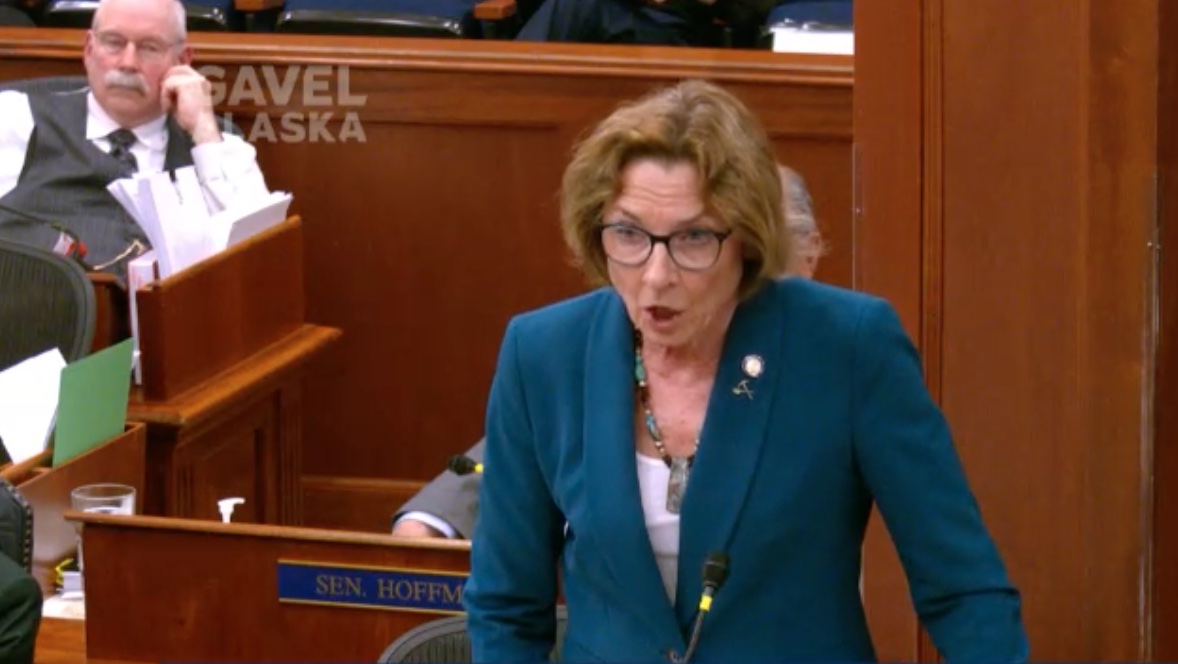
Republican Sen. Cathy Giessel and Rep. Chuck Kopp are pushing hard for Alaska to bring back pensions for state employees. They claim the generous, expensive and risky plan is necessary to help retain state employees.
But the data doesn’t back that up.
Mariana Trujillo, a policy analyst with the Reason Foundation says Alaska does not have a retention problem for state employees.
“Official turnover data does not show Alaska has ever encountered a unique retention crisis,” writes Trujillo. “Alaska’s public employee turnover is actually quite typical, lower than that of many states offering pensions today, which is surprising given Alaska’s reputation as a state with high employee turnover in the private sector.”
Alaska’s turnover rate for state employees is less than 18%. That’s lower than Utah at 28%, and Texas and Kansas at 23%. These three states all offer state employees pension retirement plans.
Alaska’s lower-than-average turnover rate for state employees is extraordinary considering the state’s overall turnover rate for all workers. Alaska has the highest overall workforce turnover rate in the nation, in part due to our cyclical private sector of fisheries, oil, and mining.
“In contrast to Alaska’s public employee turnover rate of 17.5% in 2022, Alaska’s total statewide workforce turnover, which includes both private and public sector employment, was 78%,” reports Trujillo.
Alaska leads the nation with a 60% higher turnover rate for private sector workers compared to state government employees.
Compare that to Kansas with only a 21% higher turnover rate for private sector workers compared to state employees.
“If public sector jobs in Alaska were highly unattractive, one would expect a smaller difference or even a higher public employee turnover rate relative to the general workforce and to other states,” writes Trujillo.
National data from exit interviews of state employees show retirement plans are not a top priority for job applicants. Why? Today’s workforce is more mobile and less likely to stick around long enough to become vested in a pension plan.
“It’s not pensions driving decisions, but rather salary, work-life balance, and workplace conditions that are the main factors influencing job decisions,” writes Trujillo.
It’s curious that public employee union bosses and their puppet legislators like Giessel and Kopp are pushing for the return of a highly risky and costly pension retirement plan for state employees. This is especially curious in light of Giessel claiming recently that the state’s financial troubles are so dire we need an income tax. She’s also worried if the state doesn’t get more money it could lead to people killing themselves.
“Alaska’s public employee turnover data does not indicate a crisis,” said Trujillo. “In fact, the state’s public sector remains one of the most stable employment sectors in Alaska, with turnover rates that are significantly lower than both statewide and national private-sector averages and lower than most other states offering pension plans across the country. In context, Alaska’s public employee turnover rate might be among the best.”
Even though bringing back pensions for state employees could end in economic disaster for Alaska, sources say there are currently enough votes in the Democrat controlled Legislature to pass the legislation.
Gov. Michael Dunleavy is expected to veto it, but public employee union bosses are a powerful bunch in Juneau and will pressure uncooperative legislators to join in on an override veto vote.
Dan Fagan hosts a morning drive radio talk show weekdays on KVNT found at 1020AM 92.5FM and 104.5FM. The broadcast is also streamed on 1020KVNT.com.


