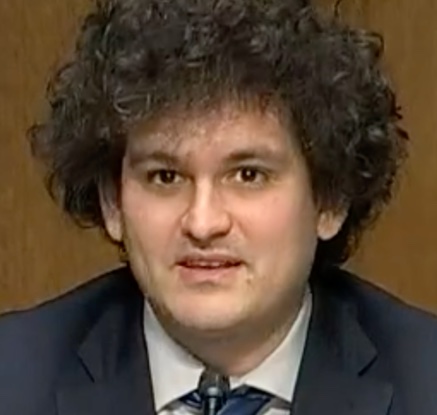
Sam Bankman-Fried gave $40 million to Democrats and their political campaign committees. Hundreds of thousands of dollars was given to a political entities run by D.C. insiders and former staffers of Congressman Don Young. Those funds were used to fight Alaska Republicans candidates so that Democrat Mary Peltola could become Alaska’s U.S. Representatives. Nearly $10,000 went to the Alaska Democratic Party. It worked.
It was a massive election campaign fraud involving ripping off investors and giving the money to Democrats, but one of just many perpetuated by Bankman-Fried and the Democrats.
Now, the Securities and Exchange Commission has charged Samuel Bankman-Fried with orchestrating a scheme to defraud equity investors of his FTX Trading Ltd. (FTX), the cryptocurrency trading platform of which he was the CEO and co-founder.

In an indictment unsealed Tuesday, Bankman-Fried is charged on eight counts, including conspiracy to commit wire fraud on customer and lenders, wire fraud on customers and lenders, conspiracy to commit commodities fraud, securities fraud, and money laundering.
But wait, there’s more: Documents show that Bankman-Fried is being charged with conspiracy to violate campaign finance laws, as he “willfully and knowingly did combine, conspire, confederate, and agree together and with each other to commit offenses against the United States by engaging in violations of federal law involving the making, receiving, and reporting of a contribution, donation, or expenditure, in violation of Title 52, United States Code, Sections 30109(d) (1) (A) & (0).”
The federal changes say Bankman-Fried “did defraud the United States, and an agency thereof, by impairing, obstructing, and defeating the lawful functions of a department and agency of the United States through deceitful and dishonest means, to wit, the Federal Election Commission’s function to administer federal law concerning source and amount restrictions in federal elections.
Bankman-Fried had been under criminal investigation by federal and Bahamian authorities after his FTX house of cards collapsed in November. The company filed for bankruptcy on Nov. 11, just after the Nov. 8 election, a year in which Bankman-Fried had donated tens of millions to mostly Democrat causes and campaigns.
According to the SEC’s complaint, since at least May 2019, FTX, based in The Bahamas, raised more than $1.8 billion from equity investors, including approximately $1.1 billion from approximately 90 U.S.-based investors.
Bankman-Fried promoted FTX as a safe, responsible crypto asset trading platform, specifically touting FTX’s sophisticated, automated risk measures to protect customer assets.
The complaint alleges that, in reality, Bankman-Fried orchestrated a years-long fraud to conceal from FTX’s investors:
- the undisclosed diversion of FTX customers’ funds to Alameda Research LLC, his privately-held crypto hedge fund;
- the undisclosed special treatment afforded to Alameda on the FTX platform, including providing Alameda with a virtually unlimited “line of credit” funded by the platform’s customers and exempting Alameda from certain key FTX risk mitigation measures; and
- undisclosed risk stemming from FTX’s exposure to Alameda’s significant holdings of overvalued, illiquid assets such as FTX-affiliated tokens.
- the commingling of FTX customers’ funds at Alameda to make undisclosed venture investments, lavish real estate purchases, and large political donations.
Read the SEC complaint against Bankman-Fried here:
“We allege that Sam Bankman-Fried built a house of cards on a foundation of deception while telling investors that it was one of the safest buildings in crypto,” said SEC Chair Gary Gensler. “The alleged fraud committed by Mr. Bankman-Fried is a clarion call to crypto platforms that they need to come into compliance with our laws. Compliance protects both those who invest on and those who invest in crypto platforms with time-tested safeguards, such as properly protecting customer funds and separating conflicting lines of business. It also shines a light into trading platform conduct for both investors through disclosure and regulators through examination authority. To those platforms that don’t comply with our securities laws, the SEC’s Enforcement Division is ready to take action.”
“FTX operated behind a veneer of legitimacy Mr. Bankman-Fried created by, among other things, touting its best-in-class controls, including a proprietary ‘risk engine,’ and FTX’s adherence to specific investor protection principles and detailed terms of service. But as we allege in our complaint, that veneer wasn’t just thin, it was fraudulent,” said Gurbir S. Grewal, Director of the SEC’s Division of Enforcement. “FTX’s collapse highlights the very real risks that unregistered crypto asset trading platforms can pose for investors and customers alike. While we continue to investigate FTX and other entities and individuals for potential violations of the federal securities laws, as alleged in our complaint, today we are holding Mr. Bankman-Fried responsible for fraudulently raising billions of dollars from investors in FTX and misusing funds belonging to FTX’s trading customers.”
The SEC’s complaint charges Bankman-Fried with violating the anti-fraud provisions of the Securities Act of 1933 and the Securities Exchange Act of 1934. The SEC’s complaint seeks injunctions against future securities law violations; an injunction that prohibits Bankman-Fried from participating in the issuance, purchase, offer, or sale of any securities, except for his own personal account; disgorgement of his ill-gotten gains; a civil penalty; and an officer and director bar.
In parallel actions, the U.S. Attorney’s Office for the Southern District of New York and the Commodity Futures Trading Commission today announced charges against Bankman-Fried.