
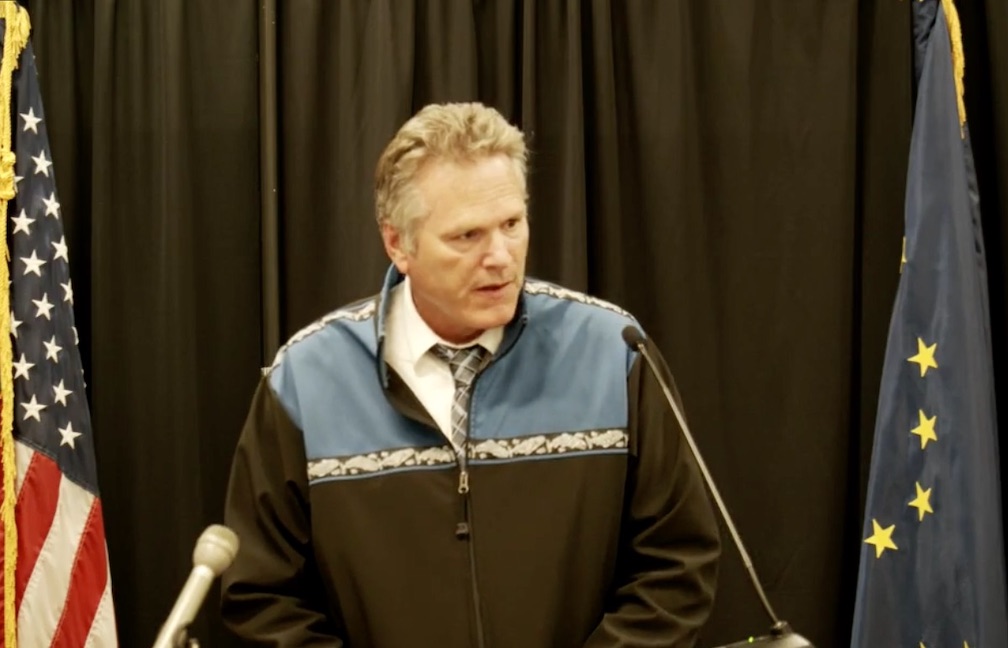
Governor Mike Dunleavy urged Alaskans to take immediate action on their own to combat the Covid-19 virus as the state remains in the “red zone,” at the highest alert level. The current statewide alert is over 450 cases per 100,000 people.
The Delta variant of Covid-19 is more contagious and spreading widely throughout the nation, including in Alaska. Dr. Anne Zink, the state’s chief medical officer, said 127 people are in the hospital with Covid-19, with 16 of them on ventilators. 13 percent of hospital stays are for Covid cases, she said.
She said the Delta virus moves quickly. One person can easily spread it to five people.
Because of this, it is highly likely that nearly everyone will be exposed to the virus, the Alaska Department of Health and Social Services said on Thursday.
“We all have to choose if we want to be exposed to the virus with the protection of a vaccination or without – and we know the chance of getting infected and becoming severely ill, needing hospitalization or dying are significantly reduced for those who choose vaccination,” the department told Must Read Alaska.

The Dunleavy Administration is urging people get get vaccinated. 60 percent of Alaskans are already vaccinated.
According to the Kaiser Family Foundation, the number of people who are set against getting a Covid-19 vaccine has remained relatively steady.
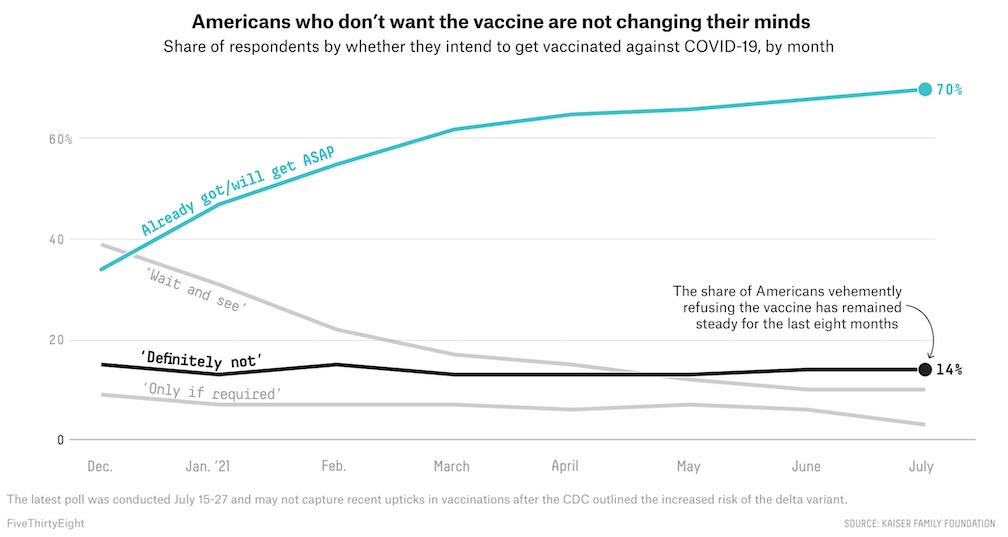
Governor Dunleavy directed the Department of Health and Social Services, Department of Military and Veterans Affairs and Department of Commerce, Community and Economic Development, and the Department of Law to work with the hospitals to address the hospital capacity constraints.
These efforts include:
- DCCED is expediting the process for licensed healthcare providers to work in licensed facilities. At the same time, DHSS is implementing an expedited background check process and waiver for licensed providers who are seeking to work in certain licensed facilities in Alaska, such as hospitals. This will aid in decreasing the time it takes to get new health care employees working in our communities.
- This may mean that nurses and aides from overseas, particularly the Philippines, may be brought into the state to help staff hospitals, Must Read Alaska has learned. They would need to have their licensing fast-tracked. Other workers may be previously retired health care workers.
- DHSS and DCCED are assessing General Services Administration staffing contracts to temporarily support hospitals. This will aid in increasing staffing levels in our hospitals to care for all patients.
- DHSS and the Department of Law are evaluating the authorities in the public health order and seeking amendments as needed to support hospitals, including working with them on CMS 1135 waivers that allow for certain Emergency Medical Treatment and Labor Act (EMTALA) flexibilities to expedite additional staffing at Alaska’s health care facilities. This would allow alternative care sites, urgent care sites and other areas of healthcare delivery to be more efficiently used to relieve pressure on the hospitals while still providing care.
- DHSS is procuring medical supplies to support hospitals that are unable to purchase items due to supply chain constraints. The state can bulk purchase and share the resources with the hospitals as well as support movement of supplies and medications around the state as needed.
The state is also hearing about drug shortages, according to state officials, who are working on solutions, including bulk drug purchases.
“Hospitalizations are reaching critical levels of capacity and I have directed my administration to immediately address those needs,” said Governor Dunleavy. “To stop the surge of COVID-19 and to ensure the safety of our friends and families, I’m asking the entire state to work together to protect Alaska and Alaskans.”



