
Sergei Vasilievich Rachmaninoff was perhaps the last of the great pianist-composers whose line stretched back to Mozart and Beethoven. The kind of musician whose craft demanded instruments of commensurate quality, the world’s finest pianos: Steinway & Sons. Rachmaninoff called them “perfect in every way.” Part of that perfection was owed to the uniquely excellent acoustic qualities of the Sitka spruce used to build the soundboards.
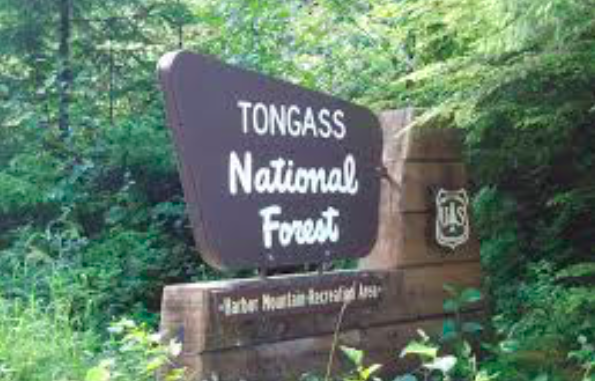
But not just any tree will do. To achieve its trademark warm, rich tone, Steinway requires spruce sourced from Alaska’s Tongass National Forest, which is today supplied exclusively by Viking Lumber. Located on Prince of Wales Island, it is one of the last sawmills standing in the state and the only one in the U.S. capable of meeting Steinway’s needs.
Now, Viking is threatened with extinction by the caprice of the U.S. Forest and Wildlife Service. In a complaint filed in the U.S. District Court for the District of Alaska, the sawmill’s attorneys stated that “decades of federal overreach, broken promises, and dereliction of statutorily mandated duties by executive branch agencies have slowly decimated this once thriving industry—jobs continue to evaporate, and many livelihoods have been lost.”
Filed on March 6, the lawsuit against the Forest Service also names the Alaska Forest Association and Alcan Timber as plaintiffs. They are being represented pro bono by Pacific Legal Foundation.
Viking employs 46 people year-round in a small, isolated community, but the ripples of its influence and operations reach much further than that. Everything from helicopter blades to garage doors and the wind tunnels used by our nation’s space agency is made with the lumber it sources in Southeast Alaska. There are hundreds of people—contractors, union workers, storefront businesses—across the country who depend on the sawmill.
In 2016, the US Department of Agriculture enacted a management policy to transition from sales of old- to young-growth timber while promising the availability of a certain amount of old-growth timber from the Tongass on a fixed, annual schedule. The plan was to gradually shift to young-growth timber without inadvertently wiping out an entire industry in Southeast Alaska.
But the Forest Service never kept its promise. According to the complaint, the federal government “ended the harvest of old-growth timber promised in the plan unilaterally—through guidance—without going through proper rulemaking channels.”
“The USDA and the Forest Service have not fulfilled their obligations under either the TTRA” or the 2016 management plan, the complaint states.
The Alaskan timber industry has been the product of compromise for decades. The Forest Service manages the Tongass under rules established by Congress in the Tongass Timber Reform Act. Passed in 1990, it sought to balance meeting market demand for timber with protecting the forest. Notably, the March complaint also states that old-growth timber has “not been offered to a degree” that would meet either the 2016 management plan schedule or the TTRA’s market demand requirement. As a result, the industry has slowly been whittled away.
In 1991, approximately 3,500 people were employed by the Alaskan timber industry. Today, that number has plummeted by 90%.
Viking came to Alaska on a gamble. “I moved my family, sight unseen, in June of ’94,” Kirk Dahlstrom, the general manager of the sawmill’s operations, told Must Read Alaska.
Originally operating in Washington, he made the jump north when the government’s efforts to protect wildlife squeezed the family timber business. Dahlstrom saw a bankrupt sawmill in Alaska and rolled the dice.
Their initial Sitka spruce harvests went primarily to Kawai Musical Instruments in Japan, which, like Steinway & Sons, produces some of the finest pianos in the world. Viking almost immediately struck gold. The gamble paid off.
“In 2016, we became the sole supplier for Steinway,” Dahlstrom said.
That was, of course, the same year the Department of Agriculture decided to enact the new management policy that it never honored. Dahlstrom believes that the agency has been captured over the years by people who go too far in the direction of conservation. Only a fraction of the Tongass is made available for timber management, and Viking harvests a small portion of that each year. The industry that employs Alaskans is at far greater risk than the forest it relies upon.
Fortunately, Viking also entered into negotiations with the Alaska Mental Health Trust in 2016. The Trust Land Office negotiated a 100-million board-foot timber sale with the company, which has helped Viking weather the storm.
But the contract will be completed this year. When that happens, it will put the Dahlstrom family business and all the people employed by it on the brink of disaster.
“We are getting awfully low,” Dahlstrom said.
He praised the state for trying to provide a measure of relief by putting together a “rich timber program.” It will buy them another year at most.
“And then, we’ll be out.”
Dahlstrom is holding out hope that the Forest Service will start producing sales before it is too late. It is another gamble he is being forced to make.
What Dahlstrom and other Alaskans are asking for is for the Forest Service to honor its end of the bargain and not circumvent Congress. All it would take is a change of tune from the new administration.


