Wednesday, June 17, 2026
Home Blog Page 987

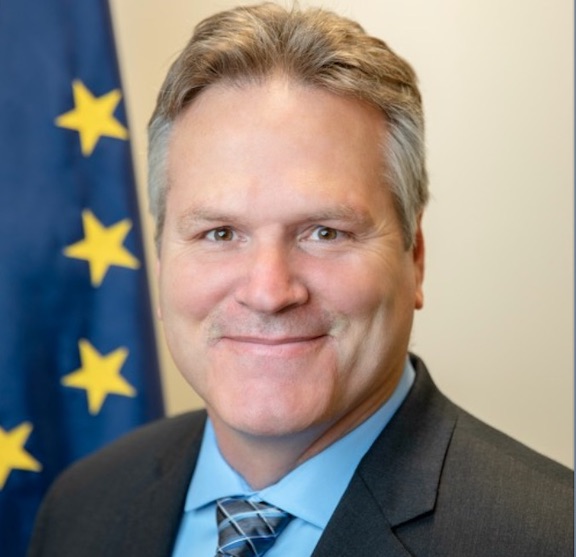
Gov. Dunleavy: Delivering on our public safety responsibilities to Alaskans

By GOV. MIKE DUNLEAVY

On Dec. 15 my administration fulfilled both our legal responsibility to present a balanced budget for the next fiscal year, as well as our moral responsibility to present a budget that meets the needs of Alaskans.

As it has been since I took office, the No. 1 priority reflected in this budget is public safety. 

We are asking the Legislature for additional funds for 15 more State Troopers and 10 Village Public Safety Officers. We are also asking the Legislature for additional funds to implement the People First Initiative that my administration introduced on Dec. 14 alongside the stakeholders who helped create it and will be our partners to implement it.

We’ll seek a total of $24 million in funding above the current fiscal year to execute our public safety goals along with the tools law enforcement needs such as body cameras, fleet maintenance and replacement, and court system funds to resume jury trials suspended by the pandemic.

This budget demonstrates that we can both constrain government spending while focusing resources on its core responsibilities. Compared to the budget deficit of $1.6 billion that I inherited on Day One, this budget is not only balanced but is 7 percent lower than fiscal year 2019. This is the fourth consecutive budget with lower state spending than the previous administration. 

We will not propose taxes. We will not spend from our savings accounts. We will not exceed the statutory limit on the draw from the Permanent Fund Earnings Reserve.

We are doing all of this while proposing a 2022 Permanent Fund Dividend in line with my 50/50 plan that would total about $2,564 per eligible Alaskan, as well as the balance of the 2021 PFD according to the same formula that would provide an additional $1,250.

My goal has always been to put the biggest share possible of Alaska’s resource wealth in our citizens’ pockets, and to put the government on a diet.

This budget does both by limiting the government share of the Permanent Fund earnings to no more than half of the annual draw. 

We can propose this from a position of strengthening fiscals and budget restraint. Among the 50 states, only Alaska and Oklahoma have been able to reduce state spending since the 2018 elections. 

Thanks to better-than-forecast oil prices and production, we are on track to finish with a budget surplus for the first time since the 2012 fiscal year.

Alaskans expect their government to live within its means and live up to its responsibilities, and those are expectations I take seriously.

I also take seriously the rights of our state and Alaskans as individuals.

That’s why we’ve been on offense against federal overreach that attempts to restrict our ability to develop our resources or encroaches on our fundamental individual rights as Alaskans and Americans.

And we’re winning. Alaska joined a dozen other states to force the Biden administration to resume federal lease sales, and the Alaska Industrial Development and Export Authority is now suing to enforce the legal leases we acquired at ANWR this past January.

But nowhere have we been more successful than our coalition with states around the nation to shut down President Biden’s unconstitutional vaccine mandates.

Alaska and fellow liberty-minded states have won injunctions stopping the implementation of vaccine mandates on employers, on health care workers, and on federal contractors. 

Some have asked me to mandate masks or vaccines; others have asked me to ban mask or vaccine mandates. Under our state constitution I have no authority to do either thing, and no Alaskan should want any governor to have that kind of power.

What I do have is the power to defend every Alaskan’s rights to make their own choices and exercise their God-given rights that are laid out in our state and federal constitutions.

An old saw is that budgets reflect values. As the Declaration of Independence states, governments are formed to secure the rights of Life, Liberty, and the Pursuit of Happiness.

I can think of no greater honor than to present a budget that reflects those values and protects those rights for every Alaskan.  

As we speak today, the State of Alaska is in good shape. Oil prices and production are up, the pension gap that was recently billions of dollars has been closed, the Permanent Fund is worth more than $83 billion, and state spending is lower than it was four years ago.

These have been a difficult past few years with a recession, a 7.1 magnitude earthquake, destructive wildfires, and a pandemic, but we still have much to be thankful for because we live in the greatest state in the greatest country on the planet.

To all Alaskans, I want to wish you a Merry Christmas, a happy holiday season and a prosperous New Year.

Mike Dunleavy is the 12th governor of Alaska.
Commissioner of Commerce Anderson to retire in January

2

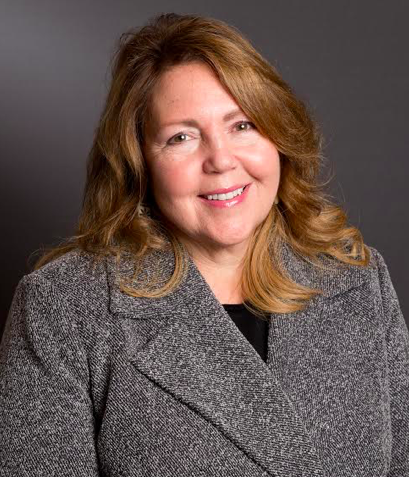
Gov. Mike Dunleavy on Friday announced the retirement of Department of Commerce, Community, and Economic Development Commissioner Julie Anderson. Her retirement will be effective Jan. 14, 2022.

“Commissioner Anderson’s unwavering belief and vision for Alaska’s future has been an asset in my cabinet,” Dunleavy said. “I am thankful for the hard work and passion she brought to her role and congratulate her on a well-earned retirement.”

“I want to thank Governor Dunleavy for the opportunity to serve in this position. It has been a privilege to work with this Administration in furtherance of strong, resilient communities and economic stability and growth to benefit Alaskans,” Anderson said in a statement.

Under Anderson, the Department of Commerce successfully distributed hundreds of millions of dollars to provide emergency funds to businesses impacted by Covid-19.   

Dunleavy will name a new DCCED commissioner at a later date.

Over 100 Marines kicked out of service for not getting a Covid vaccine

As of Thursday, 103 Marines have been separated from the Marine Corps for refusing to get vaccinated against Covid-19, the Marine Corps told Marine Corps Times.

According to the online publication, 95 percent of the active duty Marine Corps is partially or fully vaccinated, and the Corps has approved 1,007 exemptions to the vaccine, Maj. Jim Stenger, a Marine Corps spokesman, told Marine Corps Times in an email. The Marines are the least vaccinated of any branch of the military.

All active duty members of the military had until Nov. 28 to be vaccinated or apply for an exemption. Those who failed the deadline are being processed out.

Previous threats of dishonorable or “other” discharge for not getting the vaccination are still legal but may not be for long. And reports indicate that the military is not dishonorably discharging these warriors. The National Defense Authorization Act, which passed Congress this week and awaits the president’s signature, prohibits punitive discharge of those not willing to get the shots.

The Marines report that 3,144 members have applied for religious exemptions, and none has been approved, according to Marine Corps Times.

The Air Force and Space Force had 96% of forces meet its Nov. 2 deadline, while the Navy reported that 96.3% of active duty sailors were fully vaccinated, the news group reported.

So far, 27 members of the Air Force have been kicked out of that branch so far, for similar refusal to be vaccinated.

Gwen Adams: As a consequence of Covid policy, home-alone children are now at greater risk for sex trafficking

By GWEN ADAMS

At this time of year, the subject of sex trafficking does not seem to fit. Admittedly, it could be the reason I do not get invited to many Christmas parties. But this is the exact time of year that sex trafficking must be a part of the conversation. 

The majority of trafficking has moved to the internet. When looking for vulnerabilities that can lead someone to be a target for traffickers, we have traditionally looked for those experiencing homelessness, who have a history of childhood sexual abuse, or those who have spent time in the foster care system. Eighty percent of all victims of trafficking have spent time or are currently in the foster care system.

But a new vulnerability has emerged over the last few year and now has exploded due to Covid-19 restrictions. That vulnerability is the unsupervised access to the internet by our children. If you add boredom and even some fear or financial hardship with the loss of jobs, it is easy to understand how trafficking can explode to unprecedented levels.

Yes, this may be an unintended consequence of school shutdowns. 

The FBI estimates that over 500,000 online sexual predators peruse the internet on a daily basis.

Read: FBI estimates 500,000 sex predators are daily threat to kids. 

I admit, I was shocked the first time we had a client enter our Priceless program who had never actually met the man who was trafficking her. It was all done online. The threats of violence and demands were just as terrifying as if she were standing in a room with him. She went where she was told to go and did what she was told to do with all the funds going directly to her trafficker.

It is becoming more and more difficult to catch and prosecute traffickers because of these trends. We continue to see a rise in internet trafficking where victims do not have contact with the trafficker in person. 

The State of Alaska has listed that there were only four cases of trafficking in 2021. Priceless can tell a very different story, as we interacted with dozens of victims. Beyond our internal stats are the stories of lives forever altered by an education system that moved kids to online classrooms and kept them home, in many cases alone where would-be traffickers by the hundreds of thousands, had unprecedented access to our kids through gaming chat rooms, dating sites, social media accounts and the limitless scrolling for something to fill the time.

The state can say there were only four victims of trafficking this year, but that number only reveals a deeper issue of underreporting and minimal efforts to understand and know the trafficking trends.

We know the vast majority of trafficking cases are first reported as domestic violence. Sometimes all it would have taken is a few more questions by law enforcement to reveal something more nefarious.

We also know that the overwhelming majority of women who enter the Priceless program got out of their trafficking situation because someone spoke up and offered help in getting out. I agree that lawmakers and law enforcement are important factors in ending this crime, and we are grateful for our law enforcement personal who care deeply about this. But the most important component is people who know the truth about trafficking and care enough to fight back in some way. 

What can parents do?

  1. Limit access to the internet to the family computer and on phones.
  2. Know the apps your kids are using and visit those apps frequently.
  3. Talk to your kid about online predators. Anyone can pretend to be someone they are not on social media sites. 
  4. Never meet alone with a new friend you met online. If you want to meet someone new that you met online, go with a group of three or more to a public location with full disclosure to family and friends.
  5. Check and double check privacy and location settings on all of your kids devices. Turn off locations. 
  6. Don’t allow kids to “check in” on social media sites.  
  7. Understand that nothing is private if shared online. Your nude photos will likely be sold no matter what promises were made.
  8. As always, if something seems off or out of the ordinary call the police. You may be able to provide that one piece of information to expose an online predator and bring him or her to justice. 

Priceless is the state’s only anti trafficking non-profit that works exclusively with victims of sex trafficking.  We are grateful for the generous donations from our Alaska community, which funds this work.

Gwen Adams is the executive director of Priceless.

Senate Theater: ‘Stop the Grinch Act’ mocks ‘Bare Shelves Biden’ for price, supply chain problems

6

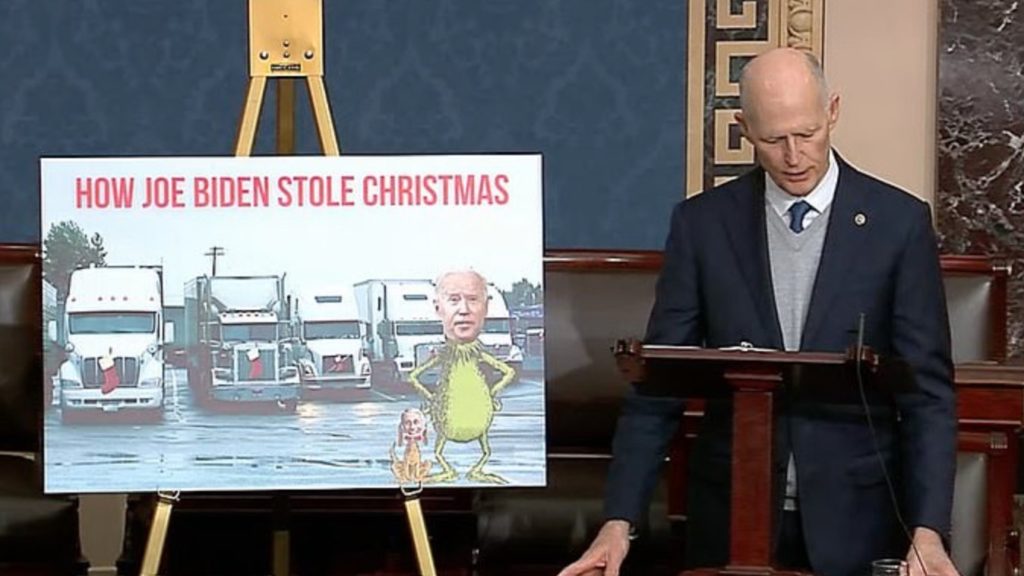
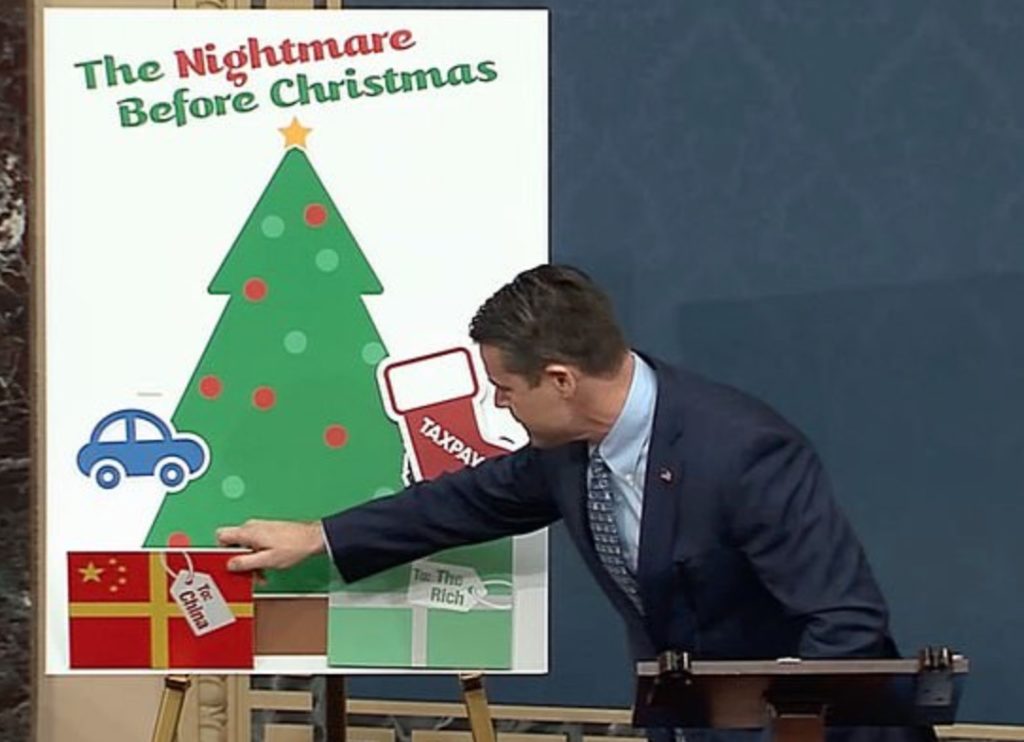
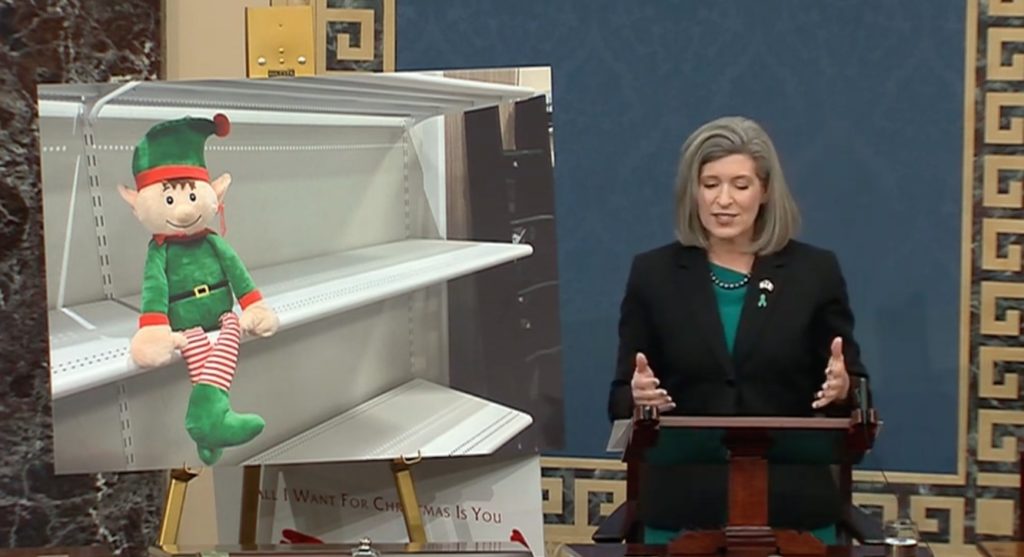
Republican senators took to the floor of the Senate on Dec. 9 with posters filled with Christmas-themed puns about President Joe Biden and his role in soaring inflation.

“Paying a ho-ho-whole lot more for a ho-ho-whole lot less,’ was a phrase coined by Sen. Joni Ernst, as she called the president “Bare Shelves Biden.”

Senators mocked Biden as the Grinch who created inflation and supply chain issues.

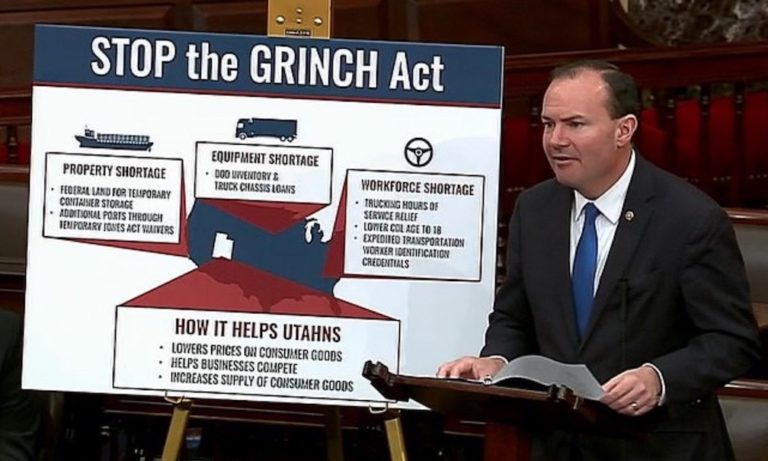
Sen. Mike Lee of Utah may have stolen the show with his “Stop the Grinch Act,” bill. Stop the Grinch Act is an acronym for “Surpassing Temporary Obstructions at Ports and Guaranteeing Resources to Increase the Nation’s Commercial Health Act,” or STOPGRINCH.

“When the Grinch stole Christmas it was a relatively simple operation that took a relatively simple solution. Unfortunately, cold, unfeeling regulations and entrenched bureaucracies do not have undersized hearts which could grow three sizes. Protectionist laws and labor shortages do not warm to holiday cheer,” he said.

“When COVID-19 began, e-commerce sales hit an unprecedented rate causing our already troubled supply chain to be further mired with dire challenges including truck driver shortages, outdated port technology, lack of container storage capacity, port labor difficulties, and scarce freight equipment,” Lee said.

“In fact, as situations become more dire with the supply chain crisis, inflation, and shortages across the country, our own regulations do much to delay and disrupt solutions when we need them most.

“Americans are feeling the pain of skyrocketing prices, shipping delays, and empty shelves as our laws and bureaucracies fail to respond to shipping backlogs and labor shortages. The system just is not working, and President Biden’s press-release policies have not fixed it. 

“Like so many problems during his presidency, President Biden is not touching them with a thirty-nine-and-a-half-foot pole.

“And the holidays are here. This problem needed solutions months ago. But there is still hope. My STOP the GRINCH act can help us fix the supply chain crisis and save Christmas,” he said.

His bill suspends restrictions on ports, ships, and trucks, and temporarily lowers the commercial drivers license age to 18 for interstate travel and waives for one year the hours-of-service requirements for transporting containers to and from ports. 

The text of the bill is at this link.

The bill incentivizes more ships to be able to freely move cargo between American ports by waiving the Jones Act. And it allows federal land to be used to temporarily store cargo containers, which would help break the logjams in ports.

“Finally, my bill would help ease the lack of freight equipment, specifically truck chassis, by allowing excess Department of Defense equipment to be used to help move cargo,” Lee said. “We can end this nightmare before Christmas. We can stop the Grinch, save our holidays, and secure our economy. My STOP the GRINCH act is the start to a happy holiday and a prosperous new year.”

Because of Lee’s direct attack on Biden, it’s certain the bill will be buried in committee, as the Senate and House are controlled by Democrats, but its introduction offered some levity to Republicans, temporarily at least, even if inflation continues to surge.

Governor’s budget gives school bond debt relief to property taxpayers, but will school districts just build and bond for more?

By DAVID BOYLE

Gov. Mike Dunleavy released his 2023 budget with few changes in K-12 education funding. The education industry and its special interest cohorts may declare that Dunleavy is “flat funding” education, and that is correct, in part. Legislators may reply that the Base Student Allocation has been flat-funded since 2016. And they would also be correct, in part.

Here’s the rest of the story: If the Base Student Allocation has been flat-funded for the past 5 years, why has K-12 funding increased by nearly $43 million over the same period? 

The funding for K-12 education consists of many factors, just one of which is the BSA. Some call this funding formula “the student multiplier effect,” which maximizes funding for a school district.  

For example, the Anchorage School District final budget for 2020-21 showed 42,862 students. Once this number is put through the funding formula, the total number of students grows to 75,066.  So, even though the BSA is flat-funded, the number of students in the calculation grows by 75 percent, which neutralizes the flat funding argument. 

Dunleavy also reinstated the state’s school bond debt reimbursement program which has been put on hold by the governor and Legislature until 2025.

The reimbursement he proposes would apply to those bonds passed before 2014, and the appropriation asked for by the governor is $79 million. This is great news for the education/architecture/construction complex.  

Under this reimbursement program, the State would pay 100 percent of a school’s old bond debt, prior to 2014, which will incentivize new school bonds on local election ballots. 

With the old school bond reimbursement program, a school district could build Taj Mahal-like buildings and the State would have to foot a majority of the bill. 

When the debt was issued in the past, there were various levels the State had committed to reimburse — 90%, 80%, 70%, 60% — based on statute. There is currently a moratorium on the reimbursement of new debt.

That was like the state paying 80 percent of your mortgage, allowing you to build a much more expensive house because it’s “free.”  The State has very little cost control over a new school project.

This reimbursement proposal may be a political calculation because of the upcoming election year, with the promise now at 100 percent for those old bonds.

The school bond debt reimbursement is tagged for 18 local governments, including Anchorage, where there is now 7.8 million square feet of heated space for its 42,000 students. More accurately, there are fewer than 40,000 students who are actually in those facilities, due to homeschooling or charter schools that are not counted in the overall square footage.

The last time Anchorage had student enrollment that was this low was three decades ago, when the district was 1.8 million square feet less than it is today. Building has been aggressive through the decades.

Yet already the Anchorage School District is planning bond packages for April’s ballot. The total is $111 million over the next two years, which more than consumes the $79 million the State would be giving in property tax relief. That $111 million is part of a six-year capital plan the school board approved earlier this month. Voters will see this on the ballot, and property taxpayers will be responsible for 100 percent of the bond.

Despite the increase in funding over the last five years, only 40 percent of Alaska students are proficient in reading at grade level. It gets even worse for math — only 32 percent of all Alaska students are proficient at grade level.

Breaking: Miss Alaska Emma Broyles is the 100th Miss America

Emma Broyles, an Anchorage resident and Arizona State University pre-med student, has won the title of Miss America.

As a 15-year-old in 2017, Emma started competing in her hometown of Anchorage, winning Miss Anchorage’s Outstanding Teen in the first-ever competition she entered.

Broyles took a break from competitions and began college in Arizona, where she has studied biomedical sciences and voice performance in the honors college. Her career goal is to become a doctor specializing in dermatology.

Earlier this week, she won in the preliminaries for her social impact pitch about the power of Special Olympics.

The 100th Miss America Pageant was held at Mohegan Sun Arena at a casino in Uncasville, Connecticut on Thursday evening.

Broyles is the first Alaska woman to win the competition, and she was crowned Miss America 2022. The 2021 competition was canceled due to Covid-19.

The Miss America Pageant is a college scholarship program. The annual competition is open to women from the United States between the ages of 17 and 25. It began in 1921 as a bathing suit contest but has evolved into a competition more focused on the whole person, including accomplishments.

Broyles won the centennial crown and a $100,000 college scholarship.

Gov. Mike Dunleavy was among the first to congratulate her from Alaska, writing, “Congratulations to Miss Alaska Emma Broyles who has been crowned Miss America in the competition’s 100th annual event! Your home state is proud of you, Emma! This is the first time Alaska has won the title — what an accomplishment.”

Senate candidate Kelly Tshibaka also sent a tweet within minutes, writing, “Congratulations Miss Alaska, Emma Broyles, on winning Miss America in its 100th year of competition! We have so much potential in our State, it’s great to see Alaska leading the nation.”

Sen. Dan Sullivan wrote, “A big congrats to Emma Broyles, of Anchorage, the first Alaskan ever named #MissAmerica! Emma is studying biomedicine at @ASU, and her charity in the competition is @SpecialOlympics, an awesome organization near & dear to my whole family. Way to go, Emma! We’re so proud of you!”

The pageant final night has in the past been on ABC on primetime network TV, but this year was available via live-streaming only on NBC’s Peacock service.

Bronson appoints domestic violence unit in prosecutor’s office, Monica Elkinton to lead

15

Anchorage Mayor Dave Bronson on Thursday announced the creation of a specialized Domestic Violence Unit of the Municipal Prosecutor’s Office, specifically targeting domestic violence in Anchorage. He named prosecutor Monica Elkinton as deputy municipal prosecutor in charge of the unit, made up of five long-time prosecutors, four administrative support staff, and two Anchorage Police Department officers.

The Municipal Prosecutor’s Office handles almost all the misdemeanor criminal charges in the boundaries of the Municipality of Anchorage, which is over 10,000 cases per year. Domestic Violence cases (such as assault, criminal mischief/destruction of property, and other crimes) consist of roughly half of the crimes prosecuted by the office.  The Domestic Violence Unit specifically focuses on crimes involving intimate partner violence, child abuse and neglect, as well as animal abuse and neglect cases that can be a precursor to domestic violence against partners or household members.

The MOA also prosecutes a unique crime called “Family Violence,” which consists of committing a domestic violence assault in the presence of a child, an act which has been shown to have long-term trauma consequences on children’s brain development. Each of the specially-trained prosecutors handle caseloads of 300-500 cases at once. The APD officers stationed in the domestic violence unit are charged with enforcing bail and sentence conditions, which prohibit abusers from contacting their victims after arrest.

In addition to Elkinton, Mayor Bronson appointed Travers Gee, another deputy municipal prosecutor in charge of general trial cases at the Prosecutor’s Office. Both will serve under Municipal Prosecutor Sarah Stanley.  

Elkinton, Gee, and Stanley are all long-term employees of the Municipality and have served under several administrations.

Click below to watch Deputy Municipal Prosecutor Monica Elkinton discuss the new specialized unit.

Municipality of Anchorage Domestic Violence Unit

Don Young continues quest on pot reform, asks Biden to drop cannabis from Schedule 1

37

Congressman Don Young and Congressman Dave Joyce (R-OH), sent a letter to President Joe Biden and Vice President Kamala Harris, urging them to remove cannabis as a Schedule I substance and to engage in legislative efforts to reform federal cannabis policies. Young and Joyce are co-chairs of the Cannabis Caucus.

Under current law, cannabis is classified as Schedule I substance alongside significantly more dangerous substances such as heroin and LSD, and above morphine, methadone, and cocaine in the Schedule II category. This classification prevents cannabis from being accepted for medical use, causing research restrictions and preventing patients, including veterans, from accessing it, the two congressman wrote.

Earlier this month, Young, Joyce (R-OH), Barbara Lee (D-CA), and Earl Blumenauer (D-OR) sent a letter to Department of Veterans Affairs Secretary Denis McDonough, urging him to swiftly implement proposals to allow veterans to access medical cannabis.

On Nov. 16, Young introduced the States Reform Act with Congresswoman Nancy Mace (R-SC), Congressman Tom McClintock (R-CA), Congressman Peter Meijer (R-MI), and Congressman Brian Mast (R-FL). The legislation, if it passes, would protect state-legal cannabis policies by ending federal marijuana prohibition.

In May, Young helped Congressman Joyce introduce the Common Sense Cannabis Reform for Veterans, Small Businesses and Medical Professionals Act. The bill would end federal marijuana prohibition by removing cannabis from the Controlled Substances Act.

In April, Young introduced the Gun Rights and Marijuana (GRAM) Act, legislation to secure the Second Amendment rights of Americans living in jurisdictions with legal adult-use and medicinal marijuana.