Saturday, October 17, 2026
Home Blog Page 98

National Security Upgrade: U.S. Signs Agreement with Finland to Increase Production of Crucial U.S. Coast Guard Icebreakers 

11

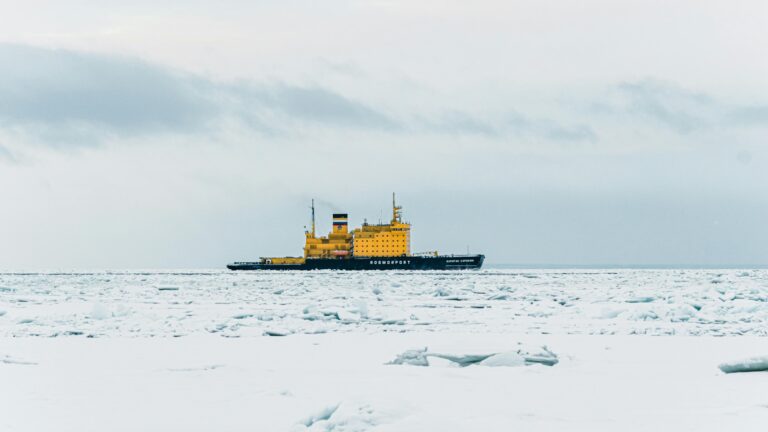
With increased Russian and Chinese presence in the Arctic, U.S. national security relies on the Coast Guard’s ability to patrol our arctic waters. Ships with icebreaking capabilities – known as “icebreakers” – enable the Coast Guard to conduct arctic missions, monitor foreign activity, and ensure the Navy’s access to our Arctic assets. Despite the great importance of these ships, the U.S. only owns two icebreakers, one of which is broken.  

The Storis commissioned in Juneau

On Aug. 10 of this year, the icebreaker Storis was commissioned in Juneau. Senator Dan Sullivan fought hard to include nearly $25 billion in historic Coast Guard investments in the Trump’s Big Beautiful Bill. That package included $300 million for shoreside infrastructure to homeport the Storis in Juneau, Alaska. Senator Sullivan stated at the commissioning ceremony: “This ship is an investment in real capability, real people, and a real presence in the region that defines the next chapter of global security, commerce, and energy.   

While the commissioning of the Storis is great news, the grim reality of America’s insufficient presence in the Arctic overshadows the celebration.  According to a press release from Aug 10 this year: “Russia has 55 icebreakers and is in the process of building more. By 2025, China, which has no sovereignty over any Arctic waters, is set to surpass the United States’ icebreaker fleet. The Alaska congressional delegation has long since recognized this as a competitive disadvantage in the Arctic and advocated for additional resources to bolster the USCG icebreaker fleet.” 

Finland joins U.S. in icebreaker production effort

On Oct 10, Sullivan’s office sent out a press release announcing a new agreement between the U.S. and Finland. According to the press release: “This partnership reinforces the trilateral Icebreaker Collaboration Effort (ICE) Pact between Finland, the United States, and Canada, allowing all three nations to significantly accelerate icebreaker development and production through shared expertise and resources in support of America’s Arctic security.” Although the ICE Pact was signed Nov. 14, 2024, it has done little to increase U.S. Coast Guard presence in the Arctic. Senator Sullivan is optimistic that the new U.S.-Finland agreement as well as the extensive funding provided by the Big Beautiful Bill will lead to real results that enhance our national security. 

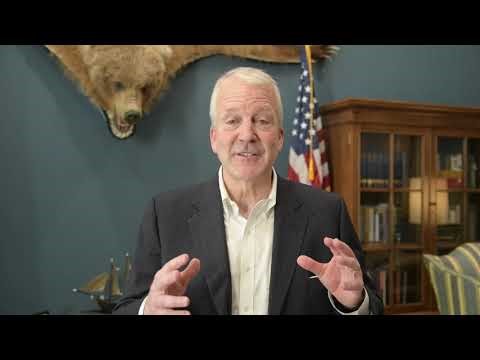
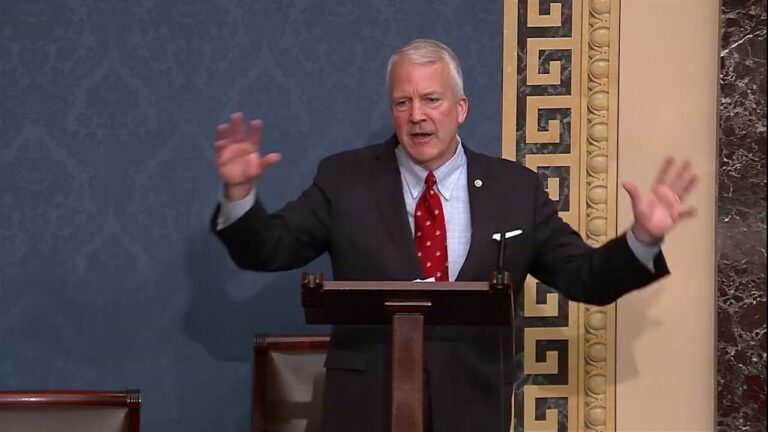
Sen. Dan Sullivan (Alaska) speaks on historic US-Finland icebreaker announcement – October 10, 2025 

Potential concerns

Despite the national security advantages this agreement brings, some may wonder: Will more icebreakers increase military tensions in the region? Will breaking more ice allow foreign non-icebreaking ships easier access to Arctic waters? Will accelerated ice-breaking impact climate change?

For those concerned about climate impact, a study by the National Snow and Ice Data Center shows that icebreakers have minimal impact on accelerating open waters. Icebreakers break thin or floating ice, which does not significantly contribute to sea levels.

Regarding potential military tensions, the increased presence of American icebreakers in the Arctic is intended to counteract the large Russian and Chinese presence in the area. While Russia and China may exercise their “right to transit passage” afforded by the UN Convention on the Law of the Seas, America must assert its control of the region. The intent is to use the icebreakers to enhance national security, not to put it at risk.

October 18, 1867: Russian Flag Comes Down, U.S. Flag Goes Up

7

Happy Alaska Day, MRAKers! Today commemorates the official transfer ceremony solidifying America’s purchase of the Alaskan territories from the Russian Empire. On October 18, 1867, U.S. Army troops raised the American flag on Castle Hill in Sitka and lowered the Russian flag.  

This formal transfer occurred nearly half a year after Seward signed the Alaska Purchase on March 30, 1867. The U.S. purchased Alaska from the Russian Empire for $7.2 million or 2 cents an acre (equivalent to $158 million or 44 cents an acre today). 

The Alaska State Legislature adopted Oct 18 or “Alaska Day” as a state holiday in 1917. In 2021, Governor Dunleavy issued an Executive Proclamation reinforcing the observance of this holiday. 

In celebration, Sitka hosts an annual Alaska Day Festival chock full of music, traditional dances, sales, cook-offs, auctions, races, variety shows and other fun activities. The theme for the 2025 Alaska Day Festival is “Mushers & Medicine: The Serum Run.” Activities began last Saturday, Oct 11, and culminates today with the fantastic Alaska Day Parade followed by the flag-raising reenactment ceremony this afternoon. On Friday night, Sitka hosted its long-loved Alaska Day Ball with music by Fort Wainwright’s 9th Army Band. Participants could either rent traditional 1860s dresses or wear their favorite formal outfits. 

Alaska Day offers Alaskans an opportunity to unite and celebrate our great state and the freedoms we enjoy as part of the United States of America. 

Alaska CHARR Stuns Kenai Non-Profit with Fundraising Effort 

6

The Alaska Cabaret Hotel and Restaurant Retailers Association (CHARR) hosted their 54th annual conference and Charity Auction Dinner in Kenai, Alaska Wednesday night, Oct. 15. The event raised just over $70,000 for Freedom House, a Soldotna faith-based recovery center for men and women struggling with drug and alcohol addiction. The live auction event featured a range of vacation and recreational packages, several of which were donated back to the charity for multiple rounds of bidding on the same package.     

“This has to be one of the most incredible demonstrations of generosity and selfless support for a community in need that I have ever witnessed,” said Paul Thomas, Chairman of CHARR’s board. “CHARR has always been a very giving organization, but I’ve never witnessed anything quite like this. I am proud of what our organization was able to do.”  

CHARR, one of the longest serving trade associations in Alaska, has approximately 640 members consisting of hotels, restaurants and bars throughout Alaska. It has local chapters in major communities around the state and rotates its annual membership meetings around Alaska. This year’s conference was based in Soldotna, but Wednesday’s banquet was at the Challenger Learning Center in Kenai.   

Jennifer Waller, the founder of Freedom House, was speechless. “Words cannot begin to express our gratitude. We are 100% dependent on private donations to support our work and the lives that this donation will impact and perhaps save is truly God’s work.”  

During the auction, Waller presented a slideshow detailing almost $1m of renovation work for both a men’s and women’s shelter, entirely achieved by local donations of money and labor. Personal stories were shared by former participants of the Freedom House program. 

Alex Gimarc: APOC Complaint Against Mayoral Candidate Bill Popp 

6

By ALEX GIMARC

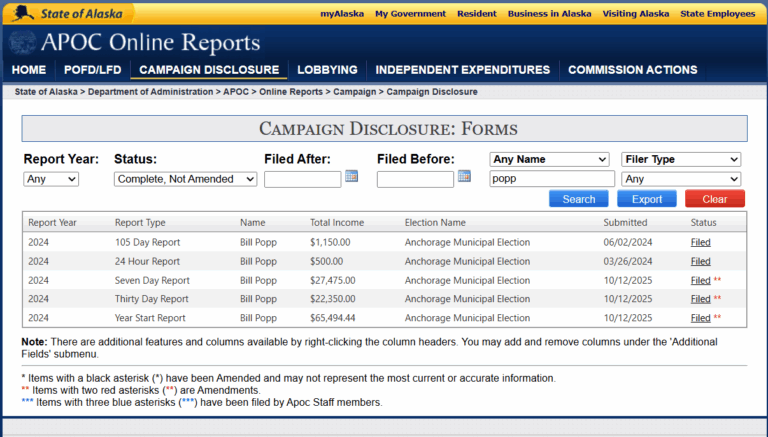
Earlier this year, I filed an APOC complaint against Mayor Suzanne LaFrance, which was served to LaFrance on Sept. 24. I have now filed a second campaign finance reporting complaint based on the 2024 Mayoral election campaign. This one was based on mayoral candidate Bill Popp. APOC accepted the complaint and served notice to Mr. Popp on Oct 8. Complaint 25-24-CD is not yet available on APOC’s web site, though all his campaign finance reports are available for public viewing. Mr. Popp has until Oct 23 to respond. 

Analysis of his reports identified at least 31 non-compliance instances. Most of them fail to discreetly disclose each contractor or subcontractor engaged in creating a product. Essentially, he bundled payments which hides spending details from Anchorage voters.  

Popp used two local media companies for his campaign advertising. He appears to have bundled four payments for at least 14 discrete services. If APOC’s investigation finds more than 14, the count of violations will grow. APOC dealt with several digital advertising cases recently.  

One example of a violation is documented in the Thirty Day Report, Feb 2024, where he bundled $7,000 of expenditures for Alpha Media and CTV. A second example is Popp bundled $18,000 of media purchases for TV and radio into four lump sums. State law requires each media placement to be reported discreetly. There are another 13 possible violations here. 

One oddity in his reporting is that the 105 Day Report appears to be adequate and compliant. Other reports, not so much.  

All told, we believe that there are at least 31 potential violations. At $50/day for 530 days, this would suggest a possible fine of over $800,000 for the campaign. 

In closing, we are back to the notion that nobody is above the law.  We are about to find out if Mr. Popp and his campaign are above the law or required to comply just like every other candidate running for office here in Alaska.  We are going to find out how well APOC enforces violations of state law.  While I hope for the best, I am ready for anything.  

Alex Gimarc lives in Anchorage since retiring from the military in 1997. His interests include science and technology, environment, energy, economics, military affairs, fishing and disabilities policies. His weekly column “Interesting Items” is a summary of news stories with substantive Alaska-themed topics. He was a small business owner and Information Technology professional. 

Trump Awards Charlie Kirk the Medal of Freedom; Governor Dunleavy Encourages TPUSA-UAA Students 

20

Yesterday, on what would have been Charlie Kirk’s 32nd birthday, leaders at both the national and state level took the time to honor Kirk’s legacy and encourage the next generation of conservatives.  

Tuesday morning, President Trump returned to the U.S. from Israel after celebrating the long-awaited ceasefire agreement finally achieved between Israel and Hamas. Trump said, “I was going to call Erika and say, ‘Erika, could you maybe move [the ceremony] to Friday?’ I didn’t have the courage to call. But you know why I didn’t call? Because I heard today was Charlie’s birthday.”  

Instead of rescheduling, Trump rushed to the ceremony where he announced: “This afternoon it is my privilege to posthumously award Charles James Kirk our nation’s highest civilian honor, the Presidential Medal of Freedom.”  

The Presidential Medal of Freedom was created by President Harry S. Truman in 1945. In 1963, President John F. Kennedy issued Executive Order 11085 which allows the President to recognize “any person who has made an especially meritorious contribution to (1) the security or national interests of the United States, or (2) world peace, or (3) cultural or other significant public or private endeavors.” 

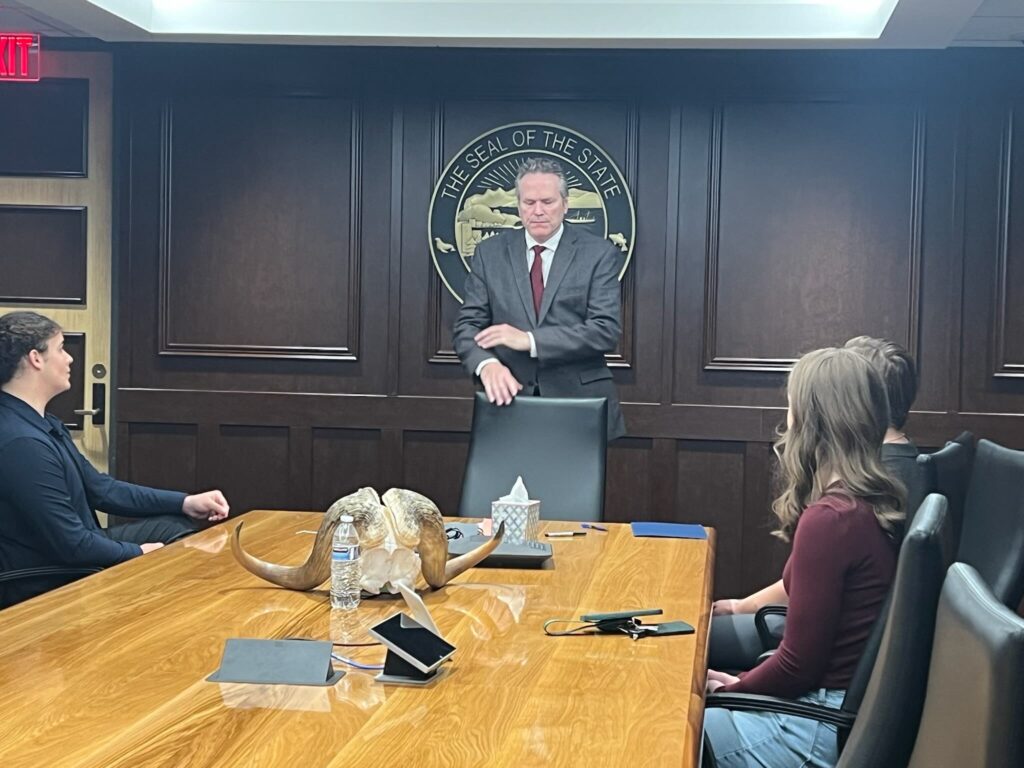
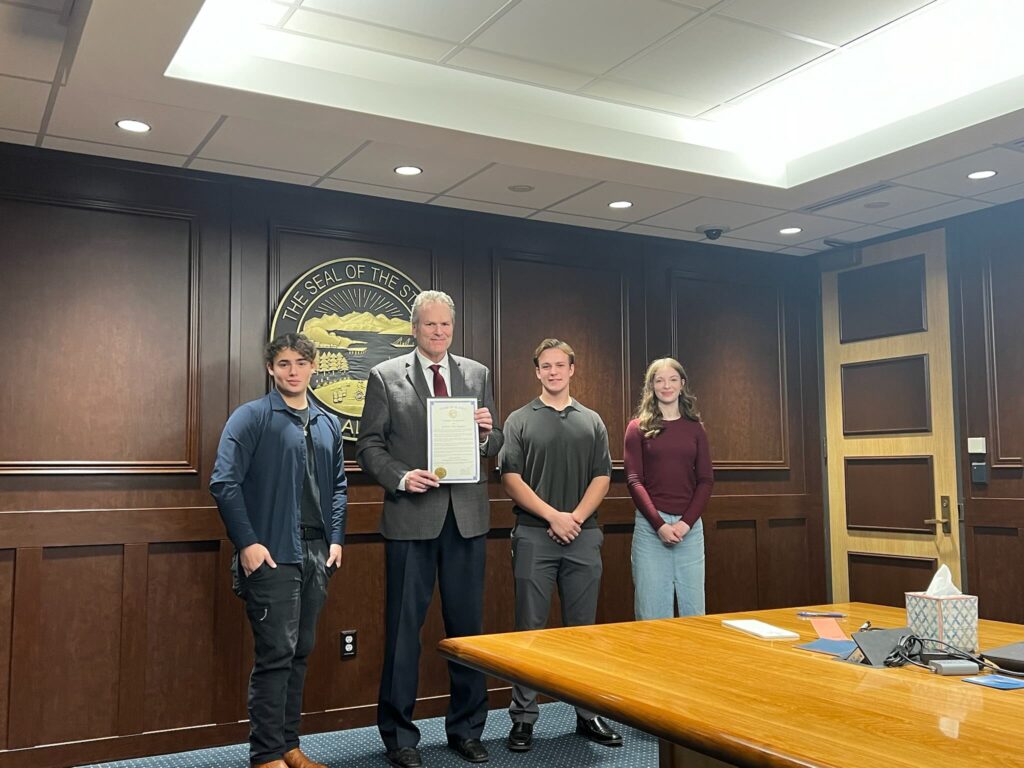
Back in Alaska, Governor Dunleavy held a special meeting at his office with TPUSA-UAA President Jack Thompson and chapter members Charlotte Bockelman and Asa Utic. The Governor presented the students with his proclamation recognizing Charlie Kirk’s birthday as “Charlie Kirk Day.” He also encouraged the students to debate with others and share their philosophy and beliefs, even though it may be uncomfortable or daunting in today’s highly polarized society. He also spoke on America’s foundational principles and how young conservatives can continue what this country stands for. When the students told the governor they are still looking for a professor to sponsor their TPUSA chapter, Dunleavy suggested maybe he could become an adjunct and sponsor them. 

Jack Thompson reflected on Dunleavy’s message: “He talked about the challenges we will face, the resistance we will meet, and how to keep our composure when others lose theirs… He told us to stay magnanimous when met with self-obsession, to lead with conviction, and to never back down from what we know is right… As our chapter grows, I want us to keep that message close: that leadership is not about titles or applause but about showing up for our state and country when it matters most.”

After meeting with the governor, the students went to E Street Theater to watch the President grant the Medal of Freedom to Charlie Kirk.   

Juneau Officer Will Not Face Criminal Charges Despite Use of Force that Violated Police Department Standards 

13

At 7:32 p.m. on July 30, 2025, Juneau police officers arrested 47-year-old Marisa Didrickson for throwing water in the face of a 52-year-old black man and insulting him with racial slurs. According to Juneau Police Department (JPD)’s information release, Didrickson told bystander Christopher Williams, Jr. to “take care of him,” nodding to the 52-year-old man she had assaulted.  

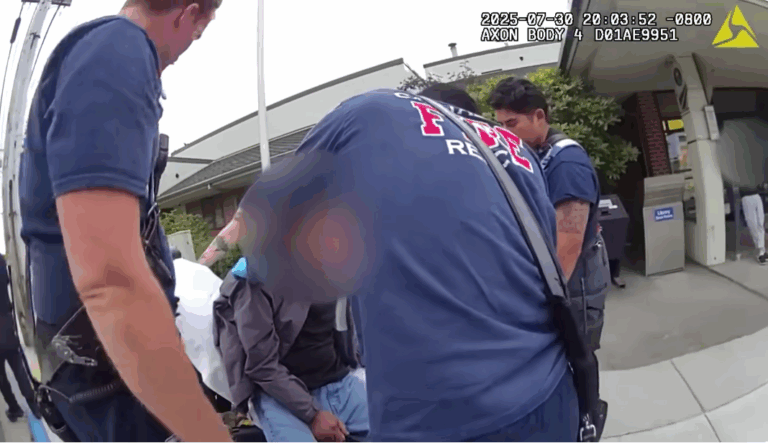
Officer LeBlanc’s body camera footage showed the following interaction: Officer Brandon LeBlanc pushed Williams down the sidewalk, saying “go before you go to jail too.” Williams then turned around and said, “Don’t do that.” LeBlanc then told Williams he was going to jail, too, and attempted to arrest him, repeatedly ordering him to put his hands behind his back. Williams resisted arrest, repeatedly saying, “I was walking.” LeBlanc warned, “You are about to get slammed” and, after Williams continued to resist, Officer LeBlanc took him to the ground, snidely remarking, “walking now huh? What’d I tell you?” Williams lost consciousness when his head hit the concrete, and later he was medevacked to Seattle. 

Public outcry ensued after a witness posted a video of Officer LeBlanc’s use of force. Juneau residents gathered in protest of police violence on August 2. Williams plans to sue the Juneau Police Department.  

Officer LeBlanc was immediately put on administrative leave while the department investigated the issue. On Aug. 25, JPD released LeBlanc’s body camera footage from the event and publicly announced its disapproval of LeBlanc’s actions. LeBlanc resigned the day before the footage was released. 

JPD Chief of Police Derek Bos stated:“What happened on July 30 was not consistent with department policy, values or the conduct we expect from our officers.” 

On Sept 29, Police Chief Derek Bos released a memorandum detailing the department’s increased effort to better train officers in de-escalation techniques and to avoid the use of force. According to Bos: “To summarize, JPD has spent a significant amount of time in the last two months looking at ourselves in the “mirror”. As with most introspective processes, the dominant question is “Do I like what I see?” … We would be remiss to believe there is no room for growth, for there is; however, as we reflect, it is clear that JPD continues to set the standard for policing.” 

LeBlanc’s case was sent to the Office of Special Prosecutions (OSP) for review. According to a press release by Alaska’s Department of Law on Oct. 10: “After a review of the evidence in the case, including the independent investigation conducted by the Alaska State Troopers’ Alaska Bureau of Investigation, and an analysis of the applicable law, OSP determined it would not criminally charge Officer LeBlanc for the incident.” 

Despite public outcry and JPD’s denouncement of LeBlanc’s actions, Officer LeBlanc will not be held accountable in criminal court. 

Alaska’s Permanent Fund: The Great Debate Part II

8

The People of Alaska vs. The Legislature 

Part II: Follow the Money 

The Alaska Permanent Fund generates enormous wealth and no shortage of political temptation. To understand the stakes, Alaskans must follow the money. 

The Permanent Fund is Alaska’s sovereign wealth fund, born from oil and mineral royalties. It has three basic parts: the principal, or corpus; the Earnings Reserve Account (ERA), which holds all investment income; and the Constitutional Budget Reserve Fund.  

The Fund and its core principal. 

The corpus is constitutionally secure and shielded from legislative appropriation. By law, it must be inflation-proofed and dedicated to income-producing investments. It can only be used or spent by consent of the people through constitutional amendment. 

Historically, oil was its primary source of income. Article IX, Section 15 of our constitution requires direct deposit into the corpus of at least twenty-five percent of all mineral (oil) lease rentals, royalties, federal oil and gas revenue sharing and other bonuses. However, excess income from the Fund beyond what is needed to fund the annual budget has also helped grow the corpus.  The legislature can transfer funds from its investment account (ERA, see below) to the corpus for inflation protection, but never the other way around.   

Tracking and reporting this flow of money is relatively simple. What is hard is keeping track of politicians and their endless deceptions surrounding the budget process. 

The Earnings Reserve Account (ERA)—the legislature’s main piggy bank.  

The ERA, created by statute (AS 37.13.145(a)), is the Permanent Fund’s flexible spending account.  It receives and holds both “realized” (converted to cash) and unrealized earnings and serves three statutory purposes: 

  1. Paying the Permanent Fund Dividend (AS 37.13.145(b)) 
  1. Inflation-proofing the principal (AS 37.13.145(c)) 
  1. Funding general government operations. 

Historically, Alaska’s budget has relied on oil. Today, it depends heavily on investment income from the Fund. Because the ERA is not in the constitution, it exists only by law, meaning legislators can change or eliminate it.  

The legislature can appropriate ERA funds for any lawful purpose, provided withdrawals stay within the Percent of Market Value (POMV) cap — a formula designed to limit spending. Within that limit, however, the legislature exercises broad discretion. This is why the ERA is described as the primary revenue source for our state budget. 

While the structure offers flexibility, it also invites risk. The legislature can amend or bypass spending limits through ordinary statute. In short, the ERA is spendable, and the only  real barriers are political will and public backlash.  

The Constitutional Budget Reserve (CBR) — The harder piggy bank 

If the ERA is easy money, the CBR is the opposite: cash under lock and key. Created in 1990 by another constitutional amendment (Article IX, Section 17), the CBR was designed to restrain lawmakers during boom years. It set aside surplus revenues from oil tax or royalty settlements to cushion the state against downturns, helping to avoid drastic cuts or sudden tax hikes when prices fell. 

Withdrawals from the CBR are deliberately difficult. They require both a fiscal emergency (a revenue shortfall) and a three-quarters vote in each legislative chamber. This high threshold routinely caused budget negotiations to hinge on compromise, usually in the form of trading votes for constituent wish-lists and spending concessions. Ironically, this safeguard encouraged larger budgets rather than smaller ones, but it created bi-partisan accountability.  

Framing new controversies by understanding the old ones.  

The Governor Bill Walker years of 2014-2018 were tumultuous. While the stock market boom under Trump (2016-2020) caused Fund income to spike, inflation proofing and the traditional PFD program were severely compromised.  Alaskans will never forget Governor Walker’s veto in 2016 of a portion of their PFD, ending a 30-year statutory-based precedent, and culminating in the Alaska Supreme Court’s ruling in 2017 that PFD payments would henceforth be subject to legislative appropriation and the governor’s veto power.    

During this same period, legislators expanded Medicaid and raided the CBR repeatedly — over $10 billion between 2015 and 2019 — draining it from $16 billion to about $2.9 billion today. Fund managers, charged with preserving liquidity for emergencies, had to invest in low-yield securities that could be sold quickly.  

The investment focus shifted in July 2025, when outgoing Revenue Commissioner Adam Crum authorized a $50 million private equity investment in DigitalBridge — the CBR’s first foray into higher-risk securities. Crum argued the CBR had been untouched since 2015 and that higher returns served the public interest. 

Critics in the legislature, including Senate President Gary Stevens and House Speaker Bryce Edgmon, condemned the move, calling it a dangerous precedent that undermined the CBR’s purpose as an emergency fund.  

Incoming Commissioner Janelle Earls raised procedural concerns, prompting Governor Mike Dunleavy to order a third-party review. Big spenders derided the move as limiting their access to money, about 2% of the CBR, while fiscal hawks praised the move as prudent. 

Looking ahead 

The certainty that lawmakers would spend every available dime, and then borrow more, prompted the people of Alaska to create the Permanent Fund in 1976. Even after it was formed, legislative insistence that the new Fund would serve as a “rainy day account” persisted for years. The wisdom of those who fought for our Fund is self-evident.    

 Alaska’s fiscal tug-of-war can be viewed through many prisms: future sustainability; the ethics of taxation; growing the public vs. the private sector; bigger government vs a more limited government. But one thing is clear: The Permanent Fund is—unquestionably—of the people, by the people, and for the people. We own it.  The concept of citizen sovereignty, as shareholders deserving of direct distribution, is rare in the world. It falls to the people of Alaska to cherish and protect this legacy.       

Check out MRAK’s The Great Debate Part I on inflation-proofing the Permanent Fund. Keep a look out for Part III, coming soon!

ARTIST Act Passes, Ensuring Protection of Native Alaskan Ivory Art 

20

The U.S. Senate passed Senator Dan Sullivan’s Alaska’s Right to Ivory Sales and Tradition (ARTIST) Act on October 8, 2025. The act serves to rectify the damage done to Native American businesses by certain states’ overly broad ban on ivory. These states meant to prohibit African elephant ivory, which is illegal in all of America. However, the laws are written in a way that also bans the buying and selling of marine animal ivory.  

Native Alaskans have a long tradition of crafting and selling beautiful artwork and jewelry made from marine animal ivory. According to Nagruk Harcharek, president and CEO of Voice of the Arctic Iñupiat: “This is an important cultural milestone for the North Slope Iñupiat, who have utilized walrus ivory from our traditional subsistence hunting activities as tools, arts, and crafts. Our communities have relied on this natural resource for thousands of years, and we are pleased that this legislative effort seeks to protect our cultural heritage for generations to come.” These ivory masterpieces are sold throughout Alaska, and many tourists buy them as mementos of their once-in-a-lifetime trip to the Last Frontier.  

Sen. Sullivan’s bill ensures that these Native Alaskan treasures can be sold anywhere in the United States. Section 2, Paragraph 4 states: “No State shall prohibit the importation, sale, offer for sale, transfer, trade, barter, possession, or possession with the intent to sell, transfer, trade, or barter of marine mammal ivory or marine mammal bone or baleen incorporated under this title by an Indian, Aleut, or Eskimo, into an authentic Alaska Native article of handicrafts and clothing.’’ 

The bill passed unanimously. Ben Mallott, president of the Alaska Federation of Natives, stated: “The passing of this legislation marks a significant step forward in recognizing and respecting the cultural heritage and livelihoods of Alaska Native artisans.” Director of the Eskimo Walrus Commission, Vera Metcalf added: “The Eskimo Walrus Commission (EWC) strongly supports this bill and thanks Senator Sullivan and his staff for working with us on it… Our use of ivory gives full expression to our traditional relationship with the Pacific walrus and our way-of-life. EWC thanks Congress for passing this bill to ensure the cultural and economic well-being of Alaska Native communities thrive.” 

Alaskans 4 Personal Freedom Conference’s 8 Experts Share the Latest News in Medicine, Farming, AI, and More 

10

Editor’s Note: This story was updated on 10/17/2025 to reflect the fact that State Senator Shelley Hughes is also running as a candidate for Governor.

Alaskans 4 Personal Freedom (AK4PF) held its “Break Free with Knowledge” conference this past Saturday, Oct 11. The conference featured a panel of experts who delivered presentations on topics ranging from bias in medical journalism to America’s farming crisis to AI’s impact on children. After presentations, AK4PF hosted a robust Q&A session. 

The event was well attended, filling half of the Wendy Williamson auditorium. Among those in attendance were candidates for Governor Bernadette Wilson, Nancy Dahlstrom, and Shelley Hughes. State Reps. Jamie Allard and Kevin McCabe also attended.

If you missed the conference, you can still watch the recorded presentations, which will be posted to AK4PF’s website within the next couple of weeks. You can read the presenters’ bios here. This article provides a compilation of key points and quotes by each speaker: 

Dr. Ilona Farr: “Updates in Medicine 2025” 

According to Dr. Farr: “Bureaucrats control your health.” How? By shaping policies that place insurance company interest above patients’ interests. For example, Dr. Farr pointed to Dunleavy’s eliminating of the 80th percentile rule in 2023—a move that favors insurance agencies, lowers average income for family medicine physicians, and forces two-thirds of patients to pay out-of-pocket for medical care. Another example is bureaucrat control over Ivermectin. Dr. Farr’s personal experience and knowledge of scientific studies lead her to conclude that Ivermectin is 50-70% effective against cancer. She prescribes Ivermectin in combination with Mebendazole to her cancer patients and has seen firsthand an incredible rate of recovery among these patients. However, media continues to paint Ivermectin as ineffective and U.S. law prohibits overseas shipments of Ivermectin. 

Mary Holland covered a wide range of medical issues affecting our children. First, Holland exposed a possible profit-driven agenda that has intentionally increased the rate of chronic disease in American children. 54% of American children today have a chronic illness (whereas in 1988, it was only 12%). Holland blames this immense increase on pharmaceutical companies taking advantage of the lucrative health market. Second, Holland addressed the recent announcement by the Trump administration regarding Tylenol and Autism. She stated, “Autism is a complicated illness. It is likely caused by multiple environmental agents, not one factor. Possible factors include vaccines, poisons in our food and air, microplastics, radiation from 5G technology, and geoengineering.” She finished her presentation with a startling revelation regarding modern vaccines: “There is not a single vaccine on the federally recommended schedule that has been tested against an inert placebo.” Instead, these vaccines are being tested against older versions of the vaccines or completely different vaccines. This raises significant concerns as to the efficacy of modern vaccines. 

Dr. Ryan Cole: “Be Your Own Best Doctor” 

According to Dr. Cole: “Medicine and society have normalized the abnormal… We live in an era of wealth and hell-ness instead of health and wellness.” In fact, some medical schools no longer require medical professionals to take the Hippocratic Oath in which medical professionals swear “to do no harm.” With limited trustworthiness among today’s doctors, Dr. Cole recommends ways you can “be you own best doctor.” One important way is to make sure you get plenty of good light. Good sources of light are more important for your body than you may realize. According to Dr. Cole, human cells communicate through light waves, not only through biochemical reactions. This means we need healthy light (such as sunlight or high-quality light therapy lamps) for our cells to work properly. Because sunlight affects cellular communication, it helps manage obesity and supports mitochondrial function. Dr. Cole ended his presentation with a quote from Thomas Jefferson: “Those who expect to be both ignorant and free expect what never was and never will be.” 

Dr. Pierre Kory: “The War on Ivermectin” 

Dr. Kory stated: “We live in a world where they control the info-sphere.” Today’s medical journals are largely controlled by Big Pharma, who seeks the highest profit instead of scientific integrity. Dr. Kory highlighted the “Disinformation Playbook,” which was used 50 years ago by tobacco companies to convince consumers that tobacco is healthy or at least not damaging to health. This playbook is still being used today by profit-driven scoundrels that manipulate studies and media coverage to promote their products. For example, an Oxford study was conducted showing positive results for Ivermectin treating Covid. However, the actual report was published saying the study had negative results because of a “probability of clinical meaningfulness” factor that mathematically manipulated the results to be negative. Ketamine is another drug consistently stigmatized. However, Dr. Kory claims the drug is miscategorized and in small doses produces enormously positive results for patients with severe brain disfunction. 

Dr. Meryl Nass: “The Attack on Farming, Food, and our Health” 

Our farms and ranches are under attack in the U.S., claims Dr. Meryl Nass. For the last 5 years, the median farmer’s income was negative. The median American farmer loses $1,000-2,000 annually, forcing many farming families to rely on a second income. Since 2017, the U.S. has lost an average of 63 farms per day. With a high number of imports from Mexico (where farm workers earn an average of $2 an hour), U.S. farmers (who pay an average of $18 an hour) cannot stay competitive in the market. In 2022, the U.S. government introduced the Crop Insurance Program which cost taxpayers $17 billion ($50 from every American). But only 13% of farmers received crop insurance because many small farm owners did not qualify for government-supplied crop insurance and could not afford private crop insurance. Dr. Nass also talked about the crisis occurring among American ranchers. In 1970, ranchers received 70% of the profit from the sale of their meat. Today, ranchers only receive 30% after meatpackers and retail stores take their cut. Who is behind these attacks? According to Dr. Nass: “Globalist want our food system to fail.” She argues that globalists want to radically reinvent the food system in an effort to combat climate change.  

Visit Save Our Food and Farms to see the 50 ways our farmers and food are under attack. 

Dr. James Lindsay: “The Stakeholder Economy and its Threat to American Prosperity.” 

Dr. Lindsay explained capitalism in a unique way: “Capitalism or Free Enterprise is nothing more than people solving other people’s problems without having to care about other people’s problems.” For example, a man can solve his own problem of feeding his family by creating 500 hammers and selling them. He is now solving 500 people’s problem of needing a hammer, but his initial motivation was to solve his own problem. Capitalism works because it appeals to the human tendency to be self-interested. However, Dr. Lindsay argued that our current American economy is being transitioned from a free market system to a system similar to the Nazi shareholder economy of the 1940s. The Nazis designed a system where free enterprise could exist, but only when it first served the best interests of the people. But who decides what is in the best interest of the people? The Nazi government, of course. Business owners were free, in a sense, to operate in the market and keep profits, but only after they contributed their fair share of money to the Nazi programs that claimed to seek the “greater good.” In this framework, production primarily serves the government rather than the individual’s self-interest. 

Michael Ashley: “Outsourced Minds: AI’s Hidden Cost to Our Kids” 

Reading good books helps kids develop empathy by putting readers in different characters’ shoes. Good writing ability helps kids learn how to process their thoughts and feelings externally, which has immense benefits on mental health. Michael Ashley’s message to kids is that using AI to cheat robs you of important soft skills you need to be a successful person both in the workplace and in your private life. Not only does AI tempt kids to take the easy way out, but according to Ashley, technological development is leading to brain chips. In fact, brain chips are already on the way. Elon Musk has patented the word “telepathy” and is developing a brain chip through his company Neuralink that allows people to control technology with only their brain. The new tech could “allow telepathic communication between individuals with Neuralink implants.” If this technology is allowed to run loose, what will society look like in 30 years? Ashley insists, “we need to tell our young people that it is ok to take the stairs. It is time to stop taking the easy way out.” 

Leslie Hiner, J.D.: “The Federal Tax Credit Scholarship Program and School Choice Options”   

According to NAEP scores, Alaskan children’s math and literacy skills are at an all-time low. According to the NAEP report, only 30% of Alaskan 4th graders and 22% of Alaskan 8th graders “performed at or above the NAEP Proficient level.” While the data certainly paints a dim picture, Alaska’s state government and the federal government are trying to boost Alaskan academic success through the Correspondence School Allotment Program and the Federal Tax Credit Program. Alaska’s Correspondence School Allotment Program is the first and only program of its nature in the U.S. The program reimburses families up to $4,500 per student for students enrolled in private schools. Trump also seeks education reform with his Big Beautiful Bill, part of which created the Federal Tax Credit program to help encourage donations to educational non-profits. Individuals can donate to a scholarship granting organization that supports a school of their choice – public, private, or religious-based – and receive the money back as a tax credit (up to $1,700 yearly). During the Q&A, Hiner was asked if the AK state constitution (which bans the use of public funds for religious education) contradicts the Federal Tax Credit program. She answered: “No. When [individuals] receive the money, the money becomes [their] money and no longer public funds.” This means individuals can donate to support religious-based education and receive up to $1,700 back in federal tax returns. 

Split-the-Pot Helps Out Hope Center 

During the conference, AK4PF also conducted a split-the-pot lottery fundraiser for the Downtown Soup Kitchen Hope Center. Hope Center helps homeless women gain life skills and get up on their own feet. They provide a safe place for homeless women where they can receive three meals a day, laundry and shower services, case management, and spiritual care. These women can choose to partake in Hope Center’s Feed My Hope Bakery Program, Feed Me Hope Culinary Program, or help out with the Feed Me Hope Food Truck. Delicious chocolate chip cookies made by Feed Me Hope were given out to attendees at the conference. The fundraiser raised $1,800, half of which went to Hope Center, and half went to one winner with the lucky ticket. 

Natalie Spaulding, a 2025 Hillsdale College graduate, recently joined the Must Read Alaska team.