Tuesday, December 23, 2025
Home Blog Page 63

Craig City Council shelves ‘Indian Country’ ordinance after legal concerns raised

A proposed ordinance that would have declared all land within the city limits of Craig as “Indian Country” was indefinitely postponed Thursday evening after brief discussion and strong legal caution from the city’s attorney.

The ordinance, which had been proposed by the Craig Tribal Association, aimed to incorporate the federal definition of “Indian Country” into the city’s municipal code, an unprecedented move for any city in Alaska. The proposal stated it would “remove ambiguity” and “foster cooperative governance” with tribal entities while encouraging memoranda of understanding on shared services like law enforcement and infrastructure.

However, city council members, citing legal advice from their Juneau-based attorney, concluded that the designation was not within municipal authority. Under federal law, only the federal government can designate land as “Indian Country,” a term that carries significant legal weight in areas of jurisdiction, governance, and law enforcement.

A handful of Alaska Native attendees sitting in the back of the room quietly left the council chambers immediately after the vote.

After consulting with the city attorney, it was clear there is no legal precedent for a municipality to declare lands ‘Indian Country,’ said City Administrator Brian Templin in a memo to the council. They couldn’t find any examples of similar ordinances anywhere in Alaska.

The ordinance referenced federal law, specifically 18 U.S.C. § 1151, which defines “Indian Country” in terms of reservations, dependent communities, and allotments. It also cited the Alaska Native Claims Settlement Act and referenced recent expansions of tribal authority under the Violence Against Women Act Reauthorization of 2022. The Craig Tribal Association argued the ordinance would allow for cooperative governance and access to federal funding streams that could benefit all residents of Craig.

But the city attorney raised sharp concerns, noting that federal courts, including the US Supreme Court in the 1998 Alaska v. Native Village of Venetie decision, have made clear that ANCSA lands are not “Indian Country,” except for specific allotments.

The attorney questioned whether a municipality has the legal standing to unilaterally change the legal status of land in this way, particularly given Craig’s status as a first-class city under Alaska law.

The council also expressed worry about the unknown implications of such a declaration, particularly regarding law enforcement jurisdiction and the application of state and federal law.

Council members acknowledged the desire for closer cooperation with the Craig Tribal Association and left the door open for future discussions, but appeared to draw a firm line on using a designation reserved for federal authority.

The city’s attorney further asked the Tribal Association for examples of federal court rulings or legal opinions supporting a municipality’s authority to declare lands “Indian Country.” In response, the CTA stated it could not offer legal opinions but reiterated its goal of enhancing cooperation and accessing federal resources through tribal channels.

Craig, a community of about 1,200 residents on Prince of Wales Island, operates under a strong mayor system of governance and is one of Alaska’s 19 first-class cities, granting it certain legislative powers but not sovereignty.

With the ordinance now off the table, the city council said it would continue seeking productive ways to work with the Craig Tribal Association while ensuring any agreements remain within legal boundaries.

The indefinite postponement effectively ends the current push to label Craig as “Indian Country,” though discussions about cooperative governance are expected to continue.
NPR, PBS defunded in final House vote. Trump signature is next

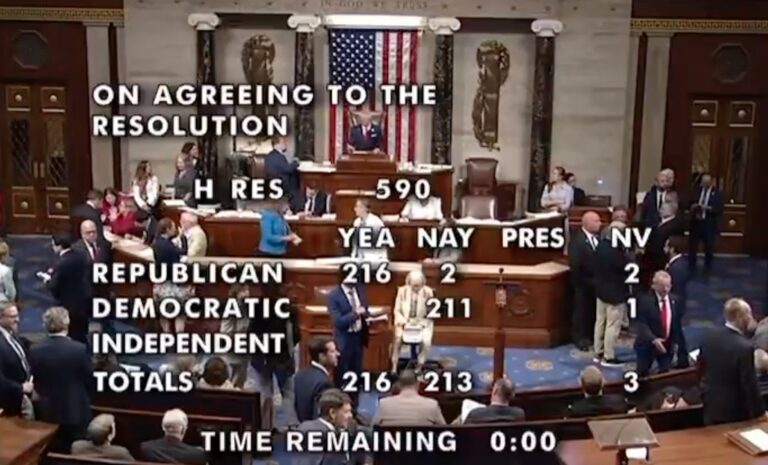
In a narrow vote just after midnight, the US House of Representatives passed a $9 billion rescissions package, reversing previously approved spending and sending it to President Donald Trump for his signature. The bill passed 216-213 at 12:04 am., following earlier Senate approval by a 51-48 margin.

The legislation is the first rescissions package to clear both chambers of Congress in nearly 50 years. It includes a $1 billion cut to the Corporation for Public Broadcasting, which supports PBS and NPR, and cancels various other unspent funds, including allocations for foreign aid.

Republican lawmakers framed the bill as part of the Department of Government Efficiency targeted cuts, necessary to rollback massive government waste. Democrats and Alaska Sen. Lisa Murkowski, criticized the cuts.

President Trump is expected to sign it quickly.

The national debt stands at over $37 trillion, making the $9 billion rescission a mere rounding error. To compare, the Supplemental Nutrition Assistance Program (SNAP) budget was approximately $100.3 billion in Fiscal Year 2024.

Murkowski on the war path over public broadcasting cuts

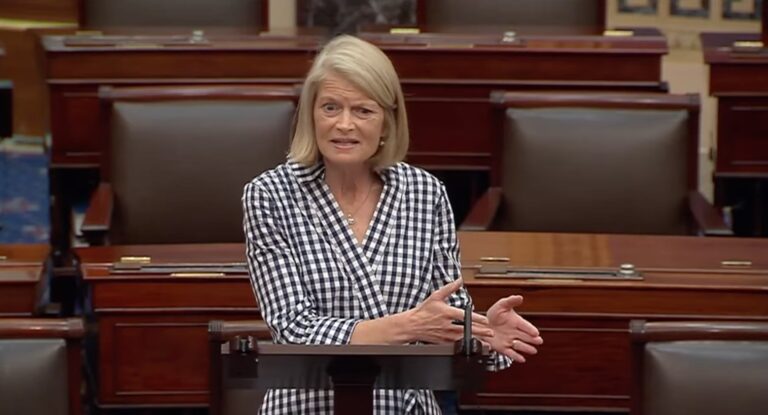
After the Senate passed the historic $9 billion Trump Rescissions Act without her support early Thursday morning, US Sen.Lisa Murkowski is once again voicing her opposition — this time with a published statement that has a narrow focus on the cuts to Corporation for Public Broadcasting, which is the parent funder of NPR and PBS.

The Alaska Republican had previously criticized the sweeping package before the vote, citing concerns about various foreign aid cuts and her concern about a lack of transparency, as well as public broadcasting.

But in her latest remarks issued after the wee-hours passage of the rescissions act, Murkowski’s emphasis landed squarely on the threat to public broadcasting, a government-subsidized institution that has reliably supported her throughout her long political career, and to whom she has returned the favor.

“I voted against approving this rescissions package for three key reasons,” Murkowski said in a lengthy statement released Thursday. The senator noted concerns about vague budget impacts and executive overreach, but devoted the bulk of her public comments to the risks facing NPR and local radio stations.

“My colleagues are targeting NPR but will wind up hurting – and, over time, closing down – local radio stations that provide essential news, alerts, and educational programming in Alaska and across the country,” Murkowski said, referring to a 7.3 magnitude earthquake and tsunami warning in southwestern Alaska as an example of public broadcasting’s role.

She did not acknowledge that most people in the 21st century get emergency messages from official agencies directly on their phones and that commercial radio stations also broadcast them. Even vagrants living on the streets have smart phones in this era, and alerts are issued without an intermediary radio signal.

Alaska has about 27 public broadcasting radio stations. That’s one for every 27,000 Alaskans. To compare, Florida has 24 public broadcasting radio stations, or one for every one million Floridians.

The rescissions package, backed by the Trump White House and Republican leadership, claws back unspent federal funds from a variety of programs, including foreign aid initiatives, clean technology subsidies, and taxpayer dollars earmarked for public broadcasting. The bill passed 51-48 without the need for Vice President JD Vance to cast a tie-breaking vote.

Murkowski’s latest statement reveals a narrowing political focus. Though she previously raised alarm about cuts to international health programs, her post-vote comments failed to mention foreign aid, instead doubling down on defending public broadcasting, an issue of outsized importance to the senator’s political brand in Alaska.

During the vote, Murkowski unsuccessfully attempted to add an amendment to protect the Corporation for Public Broadcasting. “Disappointingly, it failed,” she said, while she threw shade on her two Alaska congressional colleagues, Sen. Dan Sullivan and Congressman Nick Begich.

She may have spent all her political capital opposing her Republican team in the Senate.

Supporters of the rescissions package, which is part of the Department of Government Efficiency efforts to trim spending, argue it represents long-overdue fiscal discipline, targeting wasteful spending and reducing federal deficits.

With her third Senate term up for reelection in 2028, Murkowski’s outspoken defense of public broadcasting reiterates her willingness to break with her party at any time. She has hinted to the media several times that she may end her relationship with the Republican Party altogether.

Michael Tavoliero: Alaska’s real education crisis is a broken system, not a broken budget

By MICHAEL TAVOLIERO

Taking Back Alaska Series

Alaska’s education system is in crisis. But this is not merely a crisis of funding or staffing. It is a crisis of structure, accountability, and purpose. The Anchorage School District’s recent warnings about layoffs, federal grant freezes, and unstable budgeting reflect a deeper failure that cannot be solved with temporary appropriations or political theatrics.

We need structural reform rooted in the very framework our state constitution provides. The framers of Alaska’s Constitution envisioned a model of efficient, locally accountable governance that minimizes administrative duplication and consolidates public services under general-purpose governments. That vision has been abandoned.

The status quo is unsustainable and self-destruction. The Anchorage School District (ASD) operates with a budget exceeding $770 million and employs over 6,000 staff. Yet fewer than 30% of students are proficient in core subjects like math and English. This is not due to lack of funding. It is due to misalignment between spending and student outcomes. Centralized bureaucracy, rigid employment structures, and a compliance-driven culture have created a system that protects itself at the expense of the students it serves.

Meanwhile, the Department of Education and Early Development (DEED) enforces one-size-fits-all mandates across a state with unmatched geographic, cultural, and economic diversity. Rural districts suffer the most, burdened by inflexible policies and high costs with few results.

A constitutional alternative led by parent-centered reform focuses on students’ futures, not the preservation of outdated bureaucracies or centralized control that burden families and educators alike. It is time to return to the constitutional blueprint laid out in Article X of the Alaska Constitution. That blueprint did not mandate permanent school districts. In fact, it envisioned their gradual absorption into boroughs to streamline governance. The goal was not to dismantle education, but to make it more responsive, more accountable, and more equitable.

I propose abolishing DEED and dissolving Alaska’s current network of school districts. In their place, we should institute Education Savings Accounts (ESAs), enabling parents to direct public funds to the education services that best meet their children’s needs. This includes public, private, religious, charter, vocational, and online programs.

The Supreme Court’s recent decisions in Espinoza v. Montana Department of Revenue and Carson v. Makinaffirm that states offering educational funding cannot discriminate against religious options. With ESAs, Alaska can honor constitutional public-purpose funding (Article IX, Section 6), while unleashing innovation and flexibility desperately needed in a state as complex as ours.

Borough governments, not DEED, would retain a minimal administrative role—overseeing budgeting and ensuring transparency, while parents, teachers, and communities regain control over education delivery.

No matter how you peel this onion, the real crisis in Alaska is cranialrectalinversion; a chronic case of heads buried so far in antiquated policies and structural stagnation that clear vision is no longer possible. It’s like a twisted retelling of Sisyphus meets Groundhog Day: the state keeps pushing the same bloated, underperforming education system up the hill, expecting different results, only to watch it roll back down in the form of dismal student outcomes, teacher burnout, and bureaucratic bloat. The lesson? No matter how noble the intent, doing the same thing over and over while ignoring constitutional solutions isn’t reform. It’s delusion dressed in a policy memo.

Superintendent Jharrett Bryantt’s warning letter portrays Alaska’s education funding issues because of external forces and legislative unpredictability. Yet it conveniently ignores the internal stagnation plaguing our education system. For decades, districts like ASD have clung to obsolete policies and procedural and administrative gut that prevent adaptation, innovation, and student-centered reform. Layer upon layer of outdated mandates, inflexible staffing formulas, and centralized procurement chains create systems so rigid they crumble under even minor fiscal pressure.

If public education truly operated in the interest of students, reform would have come long ago. Instead, leadership continues to double down on defunct structures, seeking more money to sustain inefficiency rather than reimagining how education is better delivered. Families are not just victims of budget cuts. They are victims of an education bureaucracy unwilling to evolve.

Moreover, Superintendent Bryantt’s letter makes no mention of one of the most consequential shifts in national education policy currently being proposed, namely, the dismantling of the U.S. Department of Education and redirecting its funds through block grants directly to the states. President Donald Trump and others have advocated this model as a way to reduce federal overreach and empower state and local education systems. For Alaska, this would mean increased flexibility, reduced bureaucracy, and more locally responsive education funding. The omission of this potential policy shift in the superintendent’s letter is telling and symptomatic of a leadership class more concerned with preserving the status quo than exploring bold alternatives.

In the spirit of open dialogue, we welcome and address the concerns of those who may question this approach, recognizing that thoughtful critique strengthens meaningful reform.

Objection 1: This is just privatization by another name.

No. It is parental empowerment. ESAs don’t replace public education; they fund students directly, allowing them to access the best education possible, whether in a public or private setting. Public schools that deliver value will still thrive—but now they must compete for students based on performance, not political protection.

Objection 2: This removes accountability.

In fact, it enhances accountability. Who is more accountable than parents overseeing their child’s education? Under the current system, unelected bureaucrats and remote administrators answer to no one. ESAs realign authority to those who care the most: families.

Objection 3: It disadvantages rural students.

The opposite is true. Under ESAs, rural families can access digital learning, satellite programs, tutors, and vocational training tailored to their community’s needs, not a one-size-fits-all model crafted by government functionaries.

Objection 4: It undermines unions and educators.

It changes their role. Teachers become free agents who can start microschools, teach independently, or join schools that align with their values. Great educators will have more opportunities, not less.

A New Educational Compact

It’s time to end the cycle of bureaucratic self-preservation. We can no longer protect a system that produces underperformance, wastes resources, and erodes community trust. Let’s replace it with a model that places students at the center, parents in control, and teachers in empowered roles.

Anchorage and Alaska have a choice: continue with structural dysfunction or embrace a bold realignment with our constitutional foundations. The moment demands leadership. Let’s build the education system our children deserve.

Stablecoins get stability as Congressman Begich, Congress deliver historic crypto breakthrough

In a historic vote, the US House of Representatives on Thursday passed sweeping cryptocurrency reform bills with broad bipartisan support, sending one of them to the president’s desk for signature. The bills set the stage for the first comprehensive regulation of digital assets in American history.

Among the most vocal and influential supporters was Alaska Congressman Nick Begich, who has quickly built a reputation as one of the foremost cryptocurrency experts in Congress.

The House voted 308-122 to approve the Senate-passed GENIUS Act — short for Generating Essential National Infrastructure for Universal Stability. The legislation creates the first-ever federal regulatory framework for so-called stablecoins, a form of cryptocurrency that is pegged to the US dollar or other traditional assets to minimize volatility. The bill now heads to President Donald Trump’s desk for signature.

Begich, a key figure in crafting and championing the legislation, praised the passage as a “historic step” that will cement America’s role as a global leader in digital finance.

“The GENIUS Act represents a critical turning point for cryptocurrency and digital assets,” Begich said in a statement. “By establishing a comprehensive, transparent, and secure regulatory framework for stablecoin issuers, the bill provides the guardrails necessary to unleash innovation while protecting consumers and enhancing our national security.”

Begich emphasized that clear rules would prevent America’s technological rivals from gaining the upper hand while encouraging domestic innovation in financial infrastructure.

“The GENIUS Act balances the need for innovation with smart oversight, preventing bad actors from exploiting gaps in the system while empowering responsible actors to develop innovative financial infrastructure.”

With millions of Americans investing in digital assets, including indirect exposure through retirement accounts and state investments such as the Alaska Permanent Fund, the legislation aims to bring stability and clarity to a rapidly evolving financial sector.

In a second major vote, the House also approved the CLARITY Act, a broader market structure bill that creates new classifications and oversight mechanisms for the wider digital asset marketplace. The bill passed 294-134, with 78 Democrats crossing the aisle to support it, signaling significant bipartisan momentum behind crypto regulation.

Begich was a sponsor of the CLARITY Act and instrumental in its development, further cementing his status as one of the most active and knowledgeable lawmakers on cryptocurrency issues.

While Minority Leader Hakeem Jeffries voted against the market structure bill, many rank-and-file Democrats joined Republicans in favor, defying vocal opposition from extremist Democrat Rep. Maxine Waters of California, who argued the bills pose a threat to financial stability and could enable corruption by President Trump.

“Today’s overwhelming bipartisan support for both the GENIUS and CLARITY Acts sends a clear message: the U.S. is serious about leading the global digital economy,” Begich said.

Both bills represent a dramatic shift in Washington’s approach to cryptocurrency, transforming digital assets from a regulatory gray area to a formally recognized part of the financial system. The CLARITY Act now heads to the Senate, while the GENIUS Act is expected to be signed into law in the coming days.

Begich, seen as a rising policy leader on digital assets, has indicated that his focus will now turn to implementation and further refining the regulatory framework to ensure continued American leadership in the sector.

Sen. Dan Sullivan heads into 2026 cycle with impressive $4 million campaign account

US Sen. Dan Sullivan’s reelection campaign is gathering significant financial momentum ahead of Alaska’s 2026 Senate race. According to his latest Federal Election Commission report, Sullivan now holds more than $3.9 million in cash on hand after raising $2,202,863 since January. His second-quarter fundraising haul totaled $1.4 million, positioning him well for what appears to be a low-threat election cycle.

Sullivan, a two-term Republican senator, is seeking his third six-year term in 2026.

His last race, in 2020, saw him win decisively with 52.8% of the vote against Democrat-backed independent Al Gross, who garnered 40.1%, and Alaskan Independence Party candidate John Wayne Howe, who pulled in 4.7%. The election occurred before ranked-choice voting was implemented in Alaska, but Sullivan’s victory exceeded 50%, meaning he would have won outright in the first round of counting regardless of the system. His final margin of victory, 12.7%, surpassed many of the pretend-neutral pre-election polls, which had suggested a closer contest.

With just over a year before the primary filing deadline, the Democratic Party has yet to produce a serious challenger. Three prominent election forecasters — Cook Political Report, Inside Elections, and Sabato’s Crystal Ball — currently rate the 2026 Alaska Senate race as “Solid Republican.” Another outlet, Race to the WH, assigns Sullivan a 74% chance of defeating a generic Democratic opponent.

Behind the scenes, Senate Minority Leader Chuck Schumer is reportedly urging former US Rep. Mary Peltola to enter the race. Peltola has not declared any intentions publicly, but her recent campaign filings indicate she continues to raise money while out of office. Must Read Alaska recently reported on Peltola’s FEC disclosures, highlighting her national fundraising efforts and the fact that she sold out her donors by hawking their donor information to a political company based in Nebraska.

Sullivan’s growing campaign war chest and the absence of a clear Democratic challenger underscore his strong standing going into 2026, in a state that has leaned Republican in recent cycles.

Border crossings collapse to all-time low as drug seizures climb

By BETHANY BLANKLEY | THE CENTER SQUARE

Illegal border crossings dropped to their lowest level in recorded U.S. history in June.

Nationwide, 25,228 illegal border crossers were apprehended, the lowest monthly total in history, according to newly published US. Customs and Border Protection data.

The greatest number apprehended were nationwide at land, sea and air ports of entry totaling 10,089, followed by 9,306 at the southwest border and 5,833 at the northern border, according to the data.

By comparison, under the Biden administration, there were 204,932 illegal border crossers reported in June 2024, 211,457 in June 2023 and 247,523 in June 2022, the highest numbers ever recorded for the month of June in U.S. history.

June apprehension data dropped from roughly 29,000, where it held consistent in May, April and March. These monthly totals dropped significantly after President Donald Trump entered office, down from 142,751 in October at the beginning of the fiscal year under the Biden administration.

As was the case every month and every year under the Biden and Trump administrations, the majority of illegal entries last month were of single adults, followed by individuals claiming to be in a family unit and unaccompanied minors.

Under the Biden administration, a record number of unaccompanied minors were smuggled and trafficked to the U.S. In fiscal 2022, nearly 153,000 unaccompanied minor illegal border crossers were reported, followed by 137,992 in fiscal 2023 and 110,672 in fiscal 2024. This fiscal year, 27,467 have been reported to date, according to CBP data.

Under new CBP Chief Rodney Scott, CBP is publishing additional information about Border Patrol apprehension data. It’s broken down by monthly totals reported nationwide, at the southwest and northern borders, “at entry” and “at large.” It excludes Office of Field Operations data.

CBP explains that Border Patrol apprehensions at entry “refers to an alien who has entered the United States without admission and has not yet reached his/her destination, regardless of the amount of time since entry.” Border Patrol apprehensions at large “refers to an alien who has illegally entered the United States, has already reached their destination, and is encountered or who was legally admitted and has since overstayed their permitted time, illegally remaining in the U.S.”

The data shows a 90% drop in Border Patrol apprehensions from June 2024 to June 2025. Border Patrol agents apprehended 87,606 illegal foreign nationals nationwide in June 2024. Among them, 1,800 were apprehended at large and 85,806 at entry. By June 2025, Border Patrol agents apprehended 8,024 nationwide, reporting 2,541 at large and 5,483 at entry, according to the data.

While illegal entries were down, drug seizures were up because more Border Patrol agents were in the field looking for drug traffickers. Total seizures of fentanyl, cocaine, methamphetamine, heroin, and marijuana increased by 13% nationwide compared to May, “reflecting continued pressure on cartel-driven smuggling routes,” CBP said.

The greatest increase of seizures was of meth, up by 102% from seizures in May. Heroin seizures increased by 19%, cocaine seizures increased by 9% and fentanyl seizures increased by 3% over the month.

Photo album: Alaska Republicans revive summer tradition with spirited picnic at Kincaid Park

After about a six-year hiatus, the smell of barbecue and the sound of political chatter returned to Kincaid Park on Wednesday, as the Alaska Republican Party revived its long-dormant summer picnic tradition.

With picture-perfect Anchorage skies — bright blue with puffs of white clouds — the GOP’s comeback event drew a lively crowd of around 300 party faithful to the Kincaid Chalet. Under the leadership of Alaska Republican Party Chairwoman Carmela Warfield, the party brought back what used to be a marquee summer social event for conservatives across the state — a social gathering that lost its steam during the Covid years starting in 2020, and was not revived under the former chairmanship of Ann Brown, who was noticeably absent on Wednesday.

Gov. Mike Dunleavy headlined the evening, delivering rousing remarks to supporters who enjoyed grilled fare, camaraderie, and a fresh sense of energy heading into the next political cycle. Dunleavy mingled freely with attendees, posing for photos and chatting about everything from the state budget to the summer fishing runs.

“Our Summer Picnic was more than just a gathering, it was a celebration of the incredible teamwork and volunteer spirit that powers our movement, said Party Chairwoman Warfield. “The Alaska Republican Party is built on the dedication of grassroots conservatives who give their time, energy, treasure, and heart to defend our values. This picnic was our chance to say thank you, reconnect, and strengthen the bonds that will carry us to victory in 2026. Thank you to Governor Dunleavy for co-hosting with me, and giving our keynote. Thank you to Congressman Nick Begich and Senator Dan Sullivan for the generous sponsorships and support, and thank you to all of our table sponsors, and volunteers that worked the grills, served food, decorated and in so many ways, made it an amazing event. It was a beautiful day and wonderful to be together.”

Warfield said the event reminded her of a quote from Ronald Reagan: “So many challenges ahead of us, but together we can change the world. And I hope we remember this time together, remember the good feeling and the shared commitment in this room….We’ll have our battles ahead of us, but they’re good battles and they’re worth fighting for.”

“This is what a healthy party looks like,” said Rick Green, who served as the emcee for the festivities, keeping the program moving with enthusiasm and humor. A face-painting booth for kids and a bouncy house provided something for the next generation; they were sponsored by Sen. Dan Sullivan and Congressman Nick Begich, both of whom were at work and unable to attend.

Booths lined the chalet, where grassroots groups shared petitions, campaign signs, and stickers. The Repeal Now campaign, aiming to gather enough signatures to put ranked-choice voting repeal on the 2026 ballot, was among the most popular tables, with volunteers collecting signatures to give voters another chance at returning to normal voting in Alaska.

Gubernatorial candidates Bernadette Wilson, Edna DeVries, and Matthew Heilala mingled with the crowd.

Bernadette Wilson, candidate for governor, listens to the concerns of Carl Kancir, who attended the GOP picnic.

Not present at the event were Lt. Gov. Nancy Dahlstrom (who was out of state due to a death in the family) and Click Bishop, who are both announced candidates for governor. Also not attending was presumed gubernatorial candidate Adam Crum, who is the commissioner of Revenue for the Dunleavy Administration. Attorney General Treg Taylor, who is expected to announce for governor, did attend later in the evening.

The picnic attracted a broad swath of Republican district leaders from Anchorage and the Mat-Su Valley signaling a renewed sense of party unity.

Gov. Dunleavy, in his remarks, noted that after the primary in 2026, Republicans need to rally behind the top vote getter — and he was emphatic about that.

The picnic used to be such a well-known event that it was even covered by two reporters from the Anchorage Daily News back in 2016. Here’s the spin that they wrote:

More photos from this year’s ARP Summer Picnic:

Alaska GOP Chairwoman Carmela Warfield and friends at the 2025 ARP picnic.
From left to right (although not politically) Republican National Committeeman Brian Hove, Anchorage Republican Women’s Club President Judy Eledge, Alaska GOP Chairwoman Carmela Warfield, Republican National Committeewoman Cynthia Henry, and District 24 Donald Handeland, Regional Representative for ARP Region 3 (Eagle River & East Anchorage) & candidate for Assembly.
Kevin Fineman works the grill at the ARP Summer Picnic.
Forrest Wolfe made brisket, pulled pork & burnt ends — more than 30 pounds worth! The picnic featured 300+ hamburgers, 300+ hotdogs, a dozen watermelons, Motley Moo ice cream and more.

Alaska woman sentenced for meth-related death

Michael Rodgers had a history of heart conditions. Lawana Barker knew that when she provided him with the methamphetamine that killed him in 2023. He was 62.

On July 10, Superior Court Judge Lance Joanis sentenced 61-year-old Barker for the death of Rodgers. She will serve eight years with four years suspended, followed by seven years of probation. Barker has been convicted of criminally negligent homicide, possession of a controlled substance, and theft. She stole $500 from Rodger’s wallet after finding him dead.

The case highlights the rising death toll fueled by the drug. 

bulletin published by the Department of Health’s epidemiology section showed that Alaska experienced a 25 percent annual increase in methamphetamine-involved overdose deaths between 2017 and 2023.

“During this period, METH was involved in roughly half of all unintentional and undetermined overdose deaths annually, suggesting METH use has been a consistent and persistent risk factor over time,” the bulletin states. 

Data from the Department of Health shows that Anchorage had the highest methamphetamine-involved overdose rate, followed by the Interior public health region. Notably, most overdoses included at least one other substance, typically opioids, such as fentanyl.

Barker, who lives in Nikiski, met Rodgers just a few days before his death. She claimed that Rodgers asked her to procure the methamphetamine and teach him how to smoke. 

According to Alaska State Troopers, the drugs were purchased at a house where they responded to a report in January of a different deceased man. The overdose victim in that case was a 71-year-old man named Jack Lyons Sr.

Barker has a track record stretching across multiple states, with several arrests and convictions, along with a drug warrant in Idaho. KDLL reported that she wrote an apology letter to Rodgers’ family after an autopsy revealed methamphetamine in his body.

Amid a growing drug problem, Alaska law enforcement has stepped up efforts to crack down on distributors. Earlier this month, investigators with the Fairbanks Area Narcotics Team arrested 60-year-old Frances Ann Haas following a sting operation involving methamphetamine that an informant acquired from Haas at the Banks Alehouse, where she worked at the time. 

A key part of Barker’s case is that she has been convicted of homicide. In the past, prosecutors treated these incidents as accidents. The shift toward treating overdose-induced deaths as homicide suggests a more aggressive approach toward cracking down on drug users at all levels.