Monday, December 22, 2025
Home Blog Page 43

Alexander Dolitsky: When we were allies

May 9 was World War II Victory Day in Europe, and one of the decisive factors leading to the victory of the world’s peace-seeking nations was the effective cooperation of the countries of the anti-Hitler coalition.

Today, after the passage of 80 years, it is vital once again to recall this unique episode, when the Allied countries, despite sharply divergent governing structures and ideologies, managed to reach agreement on a shared global imperative — to present a unified front against the powers that promulgated fascism and militarism.

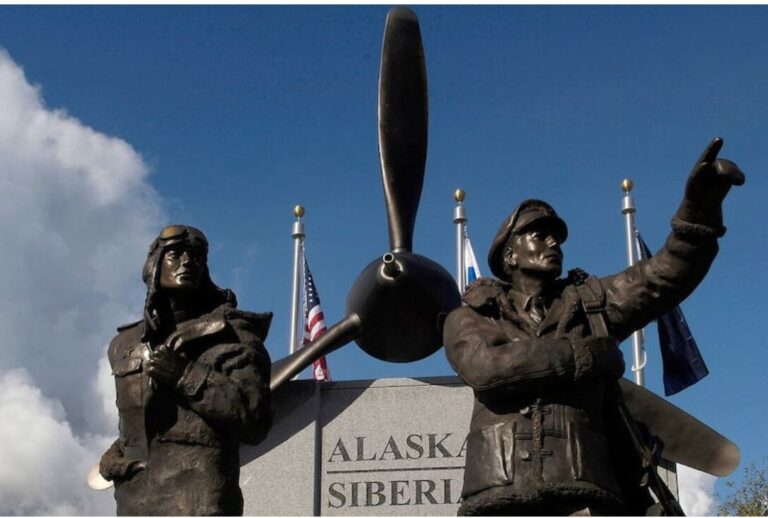
A great example of the war cooperation between two great nations is the wartime Lend-Lease Agreement between the United States and the Soviet Union, signed in Washington, D.C., on June 11, 1942, that allowed the two countries to provide mutual assistance in fighting a war against aggression. One of the unique examples of such cooperation was the establishment of the Alaska–Siberia Air Route (ALSIB), on which approximately 8,000 combat and transport aircraft were delivered from the United States of America to the Soviet–German warfronts between September 1942 and October 1945.

Soviet and American pilots flew the Alaska–Siberia Air Route to deliver combat planes halfway around the world, traversing more than 12 time zones, from Great Falls, Montana, to the Russian warfronts. Much of the route lay over remote and roadless wilderness where pilots made their way in stages from the safety of one hastily built airfield to the next.

Alaska served as the exchange location for transferring the planes to the Soviet Union. United States Army Air Corps pilots from the 7th Ferrying Group and Women Airforce Service Pilots (WASPs) flew combat planes from their points of manufacture in the U.S. to Great Falls, Montana, where male pilots of the 7th Ferrying Group flew them across Canada to Ladd Army Airfield, now Fort Wainwright, near Fairbanks, Alaska. From there, pilots of the USSR’s Air Force flew the planes over western Alaska and across Siberia to the warfronts.

Due to severe weather conditions, mechanical problems, and other adverse circumstances, 133 of these airplanes crashed in North America and 44 went down in Siberia along the Alaska–Siberia Air Route. During their time of service, 38 WASPs died and many more were wounded in the line of duty in the United States while delivering planes to Great Falls.

In the process of transferring aircraft in Alaska, Soviets and Americans get acquainted, and many became sincere friends, carrying on in friendship for the rest of their lives what had begun as a purely strategic alliance. The friendship and cooperation between the two nations during this period of history is now little remembered in the wake of 45 years of ill will fostered during the Cold War (1946 to 1991), and recent resurging tensions between Russia and the United States. Yet, in many ways, our two countries continue to rediscover the benefits of cooperation, as the rebuilding of economic and social bridges continues. Today, therefore, it is important to remind Alaskans and other peace-seeking citizens of the U.S. Lend-Lease Program and Soviet-American wartime cooperation of the 1940s.

Beyond the achievement of victory in World War II, the Alaska–Siberia Lend-Lease Program established a tradition of cooperation across the Bering Strait that continues to this day in the form of various intergovernmental agreements, including the Shared Beringian Heritage Program of the U.S. National Park Service, and numerous ongoing people-to-people cultural and economic exchanges.

At the present time, both in Russia and the United States, much research has been conducted and many documentary films, books, scholarly works, and popular articles have been released that shed light on the U.S. Lend-Lease Program, including the unique Alaska–Siberia Air ferry route, which was unprecedented in world history prior to World War II and has not been duplicated since.

Undoubtedly, the program played a vital part in the defeat of Nazi Germany and its Axis powers. The architects of the hallmark Lend-Lease Agreement and Protocols and conceived the ALSIB route, deserve modern-day accolades, as do the American and Russian veterans who risked their lives to ensure the Lend-Lease deliveries were completed.

In a letter dated March 22, 2001, to Alaska U.S. Sens. Ted Stevens and Frank Murkowski in support of the construction of the WWII Alaska-Siberia Lend-Lease Memorial in Fairbanks, Stanley B. Gwizdak, Jr., then acting chairman of the Interior Veterans’ Coalition of Alaska, wrote:

“It is important, I believe, for the Russian and American people to recall and to celebrate a common heroic effort in combating a treacherous enemy during a daunting and terrible time when the outcome of that war was very much in doubt for both of us. This was not just the effort of Armies, Navies and Air Forces, but also the entire mobilization of both nations industrially, politically and spiritually. Our group still has those who remember this war….”

The heroism and cooperation of American and Soviet pilots who flew Lend-Lease combat aircraft from the United States to the Soviet Union during World War II, and of all who participated in this endeavor, will always be remembered.

At this turbulent time, humanity is waiting for next “ALSIB-like” war cooperation and unity among peace-seeking nations, standing together against brutal aggressors and terrorist organizations. Indeed, we can use another “ALSIB” as a global alliance against terrorism and regional conflicts!

Alexander Dolitsky was born and raised in Kiev in the former Soviet Union. He received an M.A. in history from Kiev Pedagogical Institute, Ukraine in 1976; an M.A. in anthropology and archaeology from Brown University in 1983; and enrolled in the Ph.D. program in anthropology at Bryn Mawr College from 1983 to 1985, where he was also lecturer in the Russian Center. In the USSR, he was a social studies teacher for three years and an archaeologist for five years for the Ukrainian Academy of Sciences. In 1978, he settled in the United States. Dolitsky visited Alaska for the first time in 1981, while conducting field research for graduate school at Brown. He then settled first in Sitka in 1985 and then in Juneau in 1986. From 1985 to 1987, he was U.S. Forest Service archaeologist and social scientist. He was an Adjunct Assistant Professor of Russian Studies at the University of Alaska Southeast from 1985 to 1999; Social Studies Instructor at the Alyeska Central School, Alaska Department of Education and Yukon-Koyukuk School District from 1988 to 2006; and Director of the Alaska-Siberia Research Center from 1990 to 2022. From 2006 to 2010, Alexander Dolitsky served as a Delegate of the Russian Federation in the United States for the Russian Compatriots program. He has done 30 field studies in various areas of the former Soviet Union (including Siberia), Central Asia, South America, Eastern Europe and the United States (including Alaska). Dolitsky was a lecturer on the World Discoverer, Spirit of Oceanus, and Clipper Odyssey vessels in the Arctic and Sub-Arctic regions. He was a Project Manager for the WWII Alaska-Siberia Lend Lease Memorial, which was erected in Fairbanks in 2006. Dolitsky has published extensively in the fields of anthropology, history, archaeology and ethnography. His more recent publications include Fairy Tales and Myths of the Bering Strait Chukchi, Ancient Tales of Kamchatka, Tales and Legends of the Yupik Eskimos of Siberia, Old Russia in Modern America: Living Traditions of the Russian Old Believers in Alaska, Allies in Wartime: The Alaska-Siberia Airway During World War II, Spirit of the Siberian Tiger: Folktales of the Russian Far East, Living Wisdom of the Russian Far East: Tales and Legends from Chukotka and Alaska, and Pipeline to Russia: The Alaska-Siberia Air Route in World War II.

Anchorage mayor fails to order downtown cleanup ahead of Trump visit

52

As Anchorage prepares for a high-profile meeting between President Donald Trump and Russian President Vladimir Putin on Friday at Joint Base Elmendorf-Richardson, the Mayor’s Office is making no visible moves to clear downtown streets of the vagrants, public inebriates, and encampments that have plagued the city’s core.

On Wednesday, Municipal Manager Becky Pearson sent a note to all city employees addressing preparations for the visit, but notably she omitted any mention of a cleanup effort to present Anchorage in its best light for the national and international media expected to descend on the city.

“We know that Joint Base Elmendorf Richardson (JBER) is the likely location for a Friday visit… We are collaborating closely with JBER, the Governor’s office, the Anchorage School District, UAA and others,” the memo said, before thanking municipal staff for “significant extra time” spent on the effort.

The message reassured employees that most activity would be wrapped up by Friday evening, with no anticipated disruptions to city services, schools, or transportation. It also directed all media inquiries to the Mayor’s Office.

Conspicuously absent from the internal communication was any directive to spruce up downtown streets, where panhandlers, public intoxication, and homeless encampments have become entrenched.

In years past, large-scale events or visits from dignitaries have prompted visible cleanups and enforcement sweeps, but those efforts appear absent this week.

With world media focusing its lenses on Anchorage, some residents question whether the city is missing a chance to improve its image.

Here’s what the Must Read Alaska photo crew saw early Wednesday morning:

Midtown vagrant camps
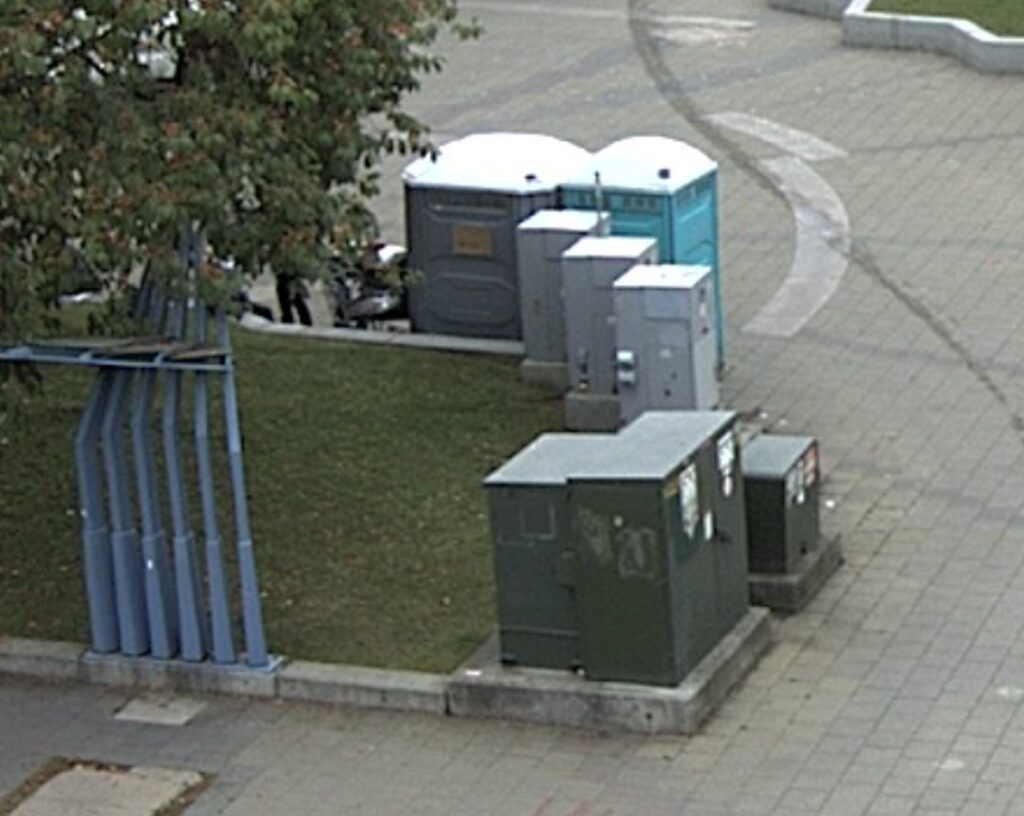
In Town Square Park, vagrants and their stolen shopping carts have moved to the other side of the toilets. Borealis Broadband camera.

Police on hunt for man who smashed stained glass windows on historic Catholic cathedral in Anchorage

33

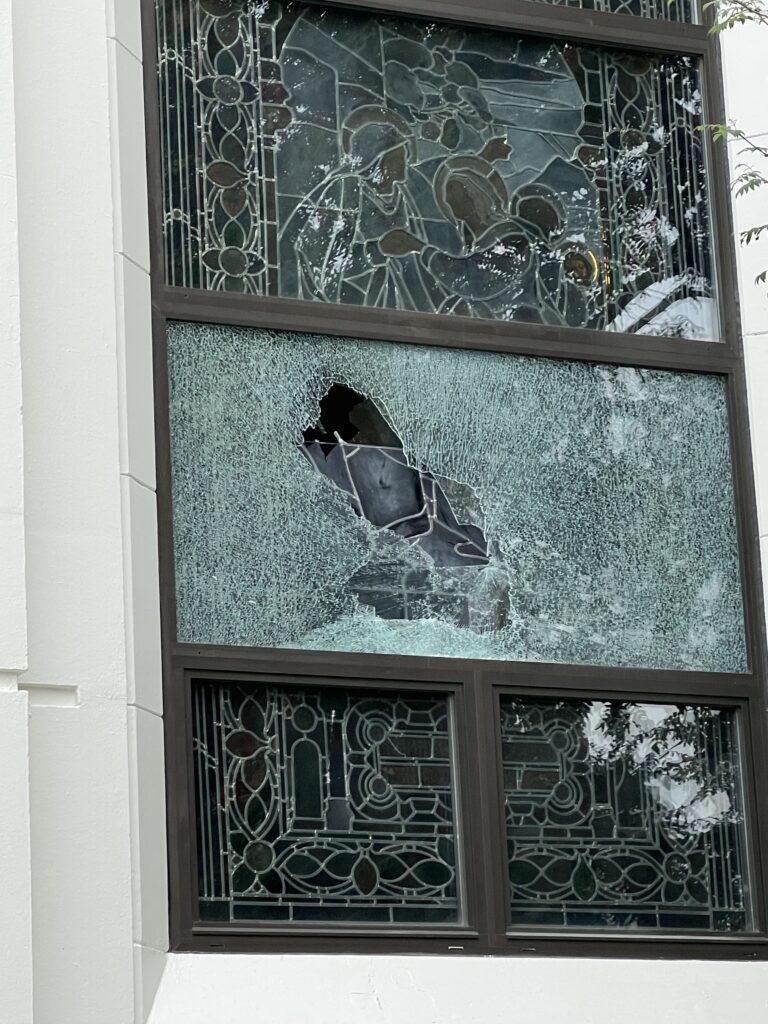
Anchorage police are searching for a man caught on camera after vandals smashed windows — including historic stained glass — at Holy Family Cathedral late Tuesday night.

Surveillance footage shows the suspect walking near the downtown church shortly before 1 am on Wednesday. He gathered bricks from a planter outside Covenant House, located across the street, before hurling them through the cathedral’s windows.

The attack left shattered glass across the church grounds and damaged sections of stained glass that have been part of the landmark Catholic cathedral for years.

Must Read Alaska has obtained images from security cameras in hopes the public can help identify the suspect. In the footage, he is seen wearing a dark hoodie with a Nike logo, dark pants, and carrying a backpack.

Anyone with information is urged to contact the Anchorage Police Department at (907) 786-8900 or submit tips anonymously through Crime Stoppers at (907) 561-STOP.

Holy Family Cathedral, a central place of worship for Anchorage’s Catholic community, has endured past incidents of vandalism, but parish members say this attack is especially painful because of the damage to its irreplaceable stained glass.

Church-goers downtown report that they are routinely interrupted during services by deranged street vagrants coming inside the sanctuary and yelling or otherwise causing disturbances, and that priests have been attacked routinely by street people in downtown Anchorage.

Former Soldotna High School teacher, ex-union president found guilty on 28 felony counts of sexual abuse and exploitation of a minor

A Kenai jury has found 37-year-old Nathaniel E. Erfurth guilty of 24 counts of Sexual Abuse of a Minor in the Second Degree and four counts of Unlawful Exploitation of a Minor in the First Degree.

Erfurth, a former Soldotna High School teacher, now faces a presumptive sentencing range of five to 15 years for each conviction. The jury further found that his sexual abuse of a minor offenses were the “most serious” within the statutory range, opening the possibility for enhanced sentencing.

According to prosecutors, Erfurth developed a parental-type relationship with the victim while she was a student, then used his position of authority and trust to initiate sexual penetration and solicit lewd photographs and videos. The pair communicated via the encrypted messaging app Signal, where Erfurth requested explicit material from the victim.

The Kenai District Attorney’s Office prosecuted the case, with District Attorney Daniel Strigle leading the effort alongside paralegals Julie Craig and Crystal Locke, and law office assistants Patrick Pilatti and Aaron Barba. Alaska State Troopers led the investigation, with Investigator Samuel Webber as the primary investigator.

The trial lasted nearly a month. Prosecutors credited the former student’s testimony and the jury’s time and attention in securing the convictions.

Must Read Alaska has reported on the case since Erfurth’s March 2023 arrest. At the time, he was serving as president of the Kenai Peninsula Education Association, the local teachers’ union. Following his arrest on initial charges of sexual abuse of a minor, the KPEA quickly elected a new president.

In pretrial motions, Erfurth challenged elements of the state’s evidence, including digital communications and investigative methods, but the court allowed key materials to be presented to the jury.

Erfurth’s arrest sent shockwaves through the Kenai education community, as he had been a prominent figure both in the classroom and in organized labor for educators.

Sentencing will be scheduled in the coming weeks.

Pro-Trump rally, anti-Trump protest set in Anchorage as Trump visit nears

Anchorage is bracing for two days of high-profile demonstrations this week, as political groups take to the streets ahead of and during President Donald Trump’s visit to Alaska.

On Thursday, anti-Trump organizations, led by the Outside-based 50501 group, along with Stand Up Alaska, Alaska Forward, and Alaska March On, will rally along the Seward Highway at the Midtown Mall from 4:30 to 5:30 pm. The event is billed as “Alaska Stands with Ukraine,” described by organizers as a peaceful protest in solidarity with the Eastern European nation.

The 50501 group, a prominent anti-Trump organization, has been publicly praised by US Sen. Lisa Murkowski. Earlier this year, she told public broadcasting listeners: “I think that type of engagement is important and people shouldn’t feel discouraged because, ‘well, I haven’t seen anything change since the last week that I went to go protest.’ Keep the engagement up.” Murkowski has in recent months encouraged Alaskans to protest Trump directly.

The next day, pro-Trump Alaskans plan to claim the same Midtown Mall location. A “President Trump Rally” will be held on Friday, Aug. 15, from 11 am to 1 pm, at the same corner. Supporters are being urged to bring Trump signs, American flags, and “Alaska Republican pride” to show the former president that “Alaska stands strong with him and with our conservative values.” Organizers say they want Midtown Anchorage “filled with a sea of red, white, and blue.”

Meanwhile, another large-scale anti-Trump demonstration is being organized for Friday at the Delaney Park Strip, near the Martin Luther King Jr. Memorial. That protest is expected to draw one of the largest turnouts Anchorage has seen against Trump.

With rival demonstrations planned back-to-back — and on the same day as Trump’s Alaska events — Anchorage can expect a politically charged weekend that will spotlight the patriotic Alaskans and the ones who hate Trump and everything he does.

Appeals courts uphold ban on trans surgeries on minors

Two federal appeals courts have upheld state bans on “sex-change” procedures for minors, finding that such laws do not violate parents’ constitutional rights.

On Tuesday, the full Eighth Circuit Court of Appeals, in an 8-2 decision, reversed a lower court injunction that had blocked enforcement of Arkansas’ ban on gender transition procedures for those under 18. The ruling allows the state to enforce the law, which prohibits puberty blockers, cross-sex hormones, and surgical interventions for minors. The court held that it does not discriminate based on sex or transgender status, relying heavily on the U.S. Supreme Court’s recent ruling on Tennessee’s comparable law, United States v. Skrmetti.

The opinion, authored by Judge Duane Benton, noted: “This court finds no such right in this Nation’s history and tradition” when discussing whether parents have a constitutional right to obtain medical treatment that the state deems inappropriate.

The decision comes just after the Tenth Circuit Court of Appeals upheld a similar ban in Oklahoma on Aug. 6. In both cases, the courts rejected arguments that the laws unlawfully interfere with parental authority over children’s medical care.

The Eighth Circuit’s ruling is important in that it overturned a 2023 district court decision that had blocked Arkansas’ law on constitutional grounds. With two appellate courts now siding with the states, the issue could be on track for consideration by the US Supreme Court, especially as other states’ laws face ongoing challenges in lower courts.

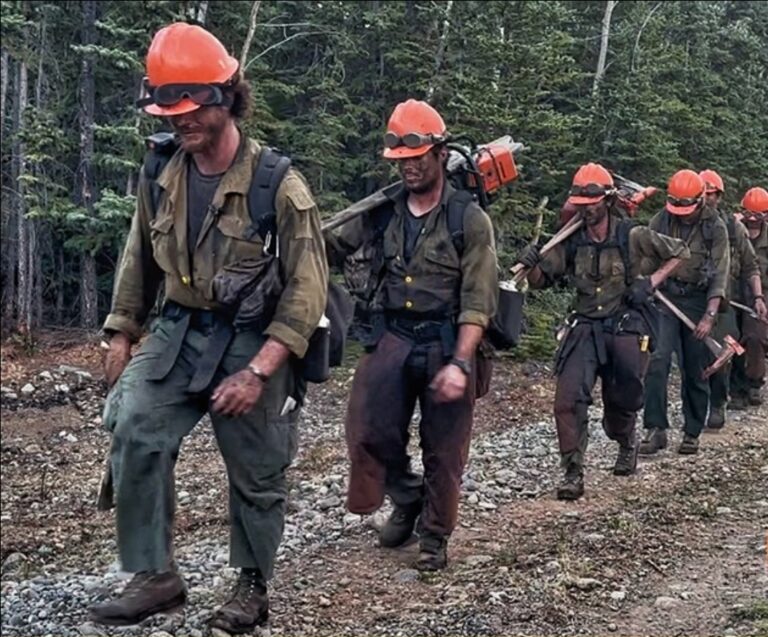
Alaska fire season fizzles, some crews sent south

Fire season in Alaska is winding down, bringing cooler nights, shorter days, and a noticeable decrease in wildfire activity across the state. On Tuesday, the Alaska Interagency Coordination Center lowered the Alaska Preparedness Level from 2 to 1, the lowest designation, due to reduced fire danger and resource demand. Preparedness levels range from 1 to 5, with 5 representing the most severe conditions.

So far in the 2025 fire season, Alaska has recorded 420 wildfires that have burned roughly 995,000 acres statewide. Of the 168 fires still active, 11 have been declared “out” in the past two days.

The slowdown is largely due to abundant recent rainfall, which has dampened fuels and eased wildfire conditions. Shorter daylight hours, cooler temperatures, and stronger overnight moisture recovery are expected to keep the trend going. Overnight lows dipped into the 30s in the Interior this week, with Salcha recording temperatures in the high 20s.

While Alaska’s fire threat has eased, the national fire season is going strong. The National Preparedness Level is currently at 4, prompting Alaska’s wildland fire agencies to send some crews to assist firefighting efforts in the Lower 48. Officials say they will maintain sufficient crews and aircraft in-state to handle any new incidents, especially in eastern Alaska, where dry conditions persist.

The Alaska Division of Forestry and Fire Protection said burn permits remain required for any open burning on state, private, and municipal lands through the end of August. This includes burning brush piles, using burn barrels, agricultural burning, and lawn maintenance burns. Permits and information on local restrictions are available at dnr.alaska.gov/burn.

Times of London interviews Alaska Democrat senator who claims ‘Alaskans do not like Trump’

In a Times Radio interview, Alaska State Sen. Bill Wielechowski, an Anchorage Democrat, painted a picture for the audience of an Alaska that bears little resemblance to the one that is revealed in recent election results.

He told the British audience that “Alaskans do not like Trump” — a statement the interviewer did not question, even though Donald Trump won Alaska in November by 54.5% of the vote, avoiding the ranked-choice runoff entirely. Kamala Harris received 41.4% of the vote, meaning Trump won by an over 13% margin. He outperformed his national election results of 49.9% by over 5.5% in Alaska.

Asked about the “Stand Up Alaska” protest planned for the summit, Wielechowski said he expects a large protest and he described the state as “politically… a purple state” with a “Republican leaning” but “a little more Democratic in recent years.” He pointed to the bipartisan state legislature and claimed, “the one thing we all agree on… is that we do not support the Russian aggression in Ukraine.”

He predicted the demonstration would be “large by Alaska standards,” citing anger over Russia’s invasion and over “a lot of things [Trump] has done,” including alleged losses of health care for “tens of thousands” of Alaskans and the removal of “hundreds of millions of dollars in renewable energy projects.” None of these claims were challenged by the interviewer, who threw the senator softball questions. Wielechowski wore his IBEW union-label golf shirt.

The Times also allowed Wielechowski to venture into what some listeners might consider the absurd: When asked if he thought Putin might try to take Alaska back, the senator replied that Alaskans are “well-armed” and would “fight aggression” — as though hunting rifles might go up against a Russian MiG firing missiles.

Not mentioned in the broadcast was the fact that Democrats make up only a small fraction of Alaska’s registered voters, and Wielechowski’s political views represent a clear minority in the state. Only 12% of registered Alaska voters are members of the Alaska Democratic Party. Yet, in the Times of London’s telling, Wielechowski was the voice of Alaska.

The full Times Radio interview can be heard here.

Alaskans can expect more of this as the global media focuses on Alaska in advance of Friday’s summit between Trump and Putin, which is expected to be at JBER. Alaskans can expect this type of spin to continue at warp speed this week.

Historic Trump-Putin meeting will be at JBER: Report

According to CNN, American officials scrambling to secure a venue for Friday’s summit between President Donald Trump and Russian President Vladimir Putin quickly ran into a distinctly Alaskan problem: summer tourism season.

With hotels, conference centers, and other suitable venues packed with visitors, options both available and capable of hosting two world leaders were scarce.

When word spread among prominent Alaskans that Trump and Putin were headed north, a few began reaching out to the president’s allies with an unconventional offer: their homes. It remains unclear whether those suggestions ever reached White House staff.

White House advance teams reportedly contacted sites in Juneau, Anchorage, and Fairbanks, but summit organizers soon concluded that only Anchorage could meet the logistical and security requirements.

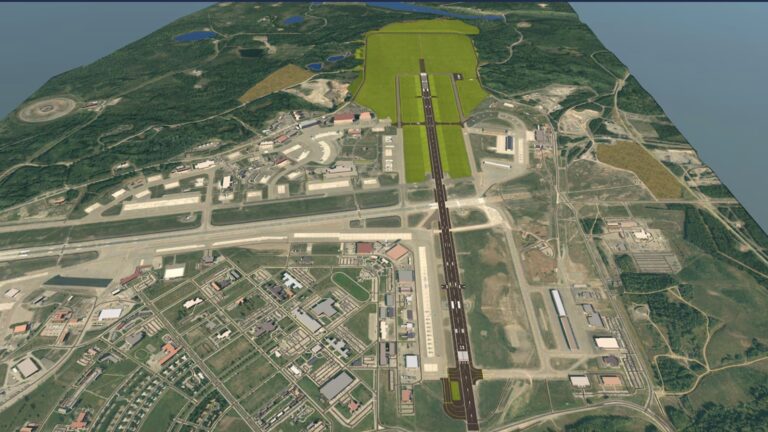
Ultimately, Joint Base Elmendorf-Richardson, on the city’s northern edge, emerged as the sole viable location, CNN reported. The choice, however, came with optics the White House had hoped to avoid — hosting the Russian leader on a US military base.

This is the first meeting between a US and Russian president in more than four years. US and Russian officials are still finalizing details, with both sides working quickly to prepare for the high-profile encounter. Secretary of State Marco Rubio and Russian Foreign Minister Sergey Lavrov spoke Tuesday to discuss “certain aspects of preparation,” according to Russia’s foreign ministry.

Traditionally, such high-stakes meetings takes months of preparation and haggling over venues and agendas. But this is Trump style: He said he wants to have more of a “feel out” session without expectations. The White House on Tuesday called it a “listening session.”

“The president feels like, ‘Look, I’ve got to look at this guy across the table. I need to see him face to face. I need to hear him one-on-one. I need to make an assessment by looking at him,’” Rubio told radio host Sid Rosenberg, noting that Trump’s five phone calls with Putin this year weren’t enough to gauge the Russian leader’s intentions.

A Temporary Flight Restriction was declared for Anchorage area on Friday, which will greatly impact the movement of smaller non-commercial planes. That story is below: