Every day, more truth emerges concerning Covid-19 and “vaccines.” For years there have been debates and arguments whether or not the Covid-19 mRNA jab is a vaccine by definition. The truth is finally coming out.
While the debate raged, the CDC changed the definition of vaccines to include treatments like the Covid-19 shots. This caused further outrage.
An “AP fact checker” wrote in 2022 that to claim it wasn’t a vaccine was “missing context.” Yes, CDC had changed its definition and yes, it was after the development of the Covid-19 jab. But it did not “alter the overall definition” and was done to prevent “misinterpretations.” The changes were just accomplished to “reflect evolution of the vaccine research and technology.”
The AP fact checker stated that the CDC has changed the definition of vaccine over the years and the latest change had nothing to do with problems with the coronavirus vaccines”.”
“The CDC has altered the language in the definition of vaccination on its website, including after the development of COVID-19 vaccines, but the changes were made to prevent potential misinterpretations, and did not alter the overall definition, according to the agency. Experts confirmed to The Associated Press that the changes reflect the evolution of vaccine research and technology. The AP was able to verify through web archives that the language on a CDC page titled “Immunization Basics,” has changed in these ways over time. But this does not mean that the agency altered it because of problems with the coronavirus vaccines,” AP wrote.
That was in February of 2022.
Those who have argued the Covid-19 shot is not actually a vaccine received good news this week from the Ninth Circuit Court of Appeals.
TheNinth Circuit Court ruled the Covid-19 jab does not meet the definition of a vaccine under “traditional medical definitions.”
The case came out of a lawsuit filed by the Health Freedom Defense Fund and other plaintiffs against the Los Angeles United School District and its vaccine policy that required all employees to get the Covid-19 shots by a certain date.
The plaintiffs stated the shot requirement “infringed upon their fundamental right to refuse medical treatment” citing mRNA shots don’t prevent transmission of Covid-19—they only mitigate symptoms.
The court, which covers nine states and two territories to include Alaska, agreed with the plaintiffs and stated this “crucial distinction undermines the foundational premise of the vaccine mandates enforced by various governmental and educational institutions.” Judge Collins went on to say forcing people to get something for their alleged health benefits infringes on “the fundamental right to refuse such treatments.”
Although the Los Angeles school district dropped its Covid vaccine mandate for school staff last year, the lawsuit over workers’ rights may proceed, the 9th District Court ruled on Friday.
Perhaps there is finally some justice that will occur for those who exercised their individual rights during this mass fear campaign. Perhaps they will get their jobs back and not have to take any more of these “vaccines” that violate their rights.
How many federal employees lost their jobs for refusing this so-called “vaccine”? How many military members lost their jobs? How many health care employees lost their jobs? How many private-sector employees lost their jobs?
As Mark Twain once said, “It is easier to fool people than to convince them they’ve been fooled.”
It’s more than a matter of semantics. It’s about individual freedom to decide about medical treatment.
Linda Boyle, RN, MSN, DM, was formerly the chief nurse for the 3rd Medical Group, JBER, and was the interim director of the Alaska VA. Most recently, she served as Director for Central Alabama VA Healthcare System. She is the director of the Alaska Covid Alliance.
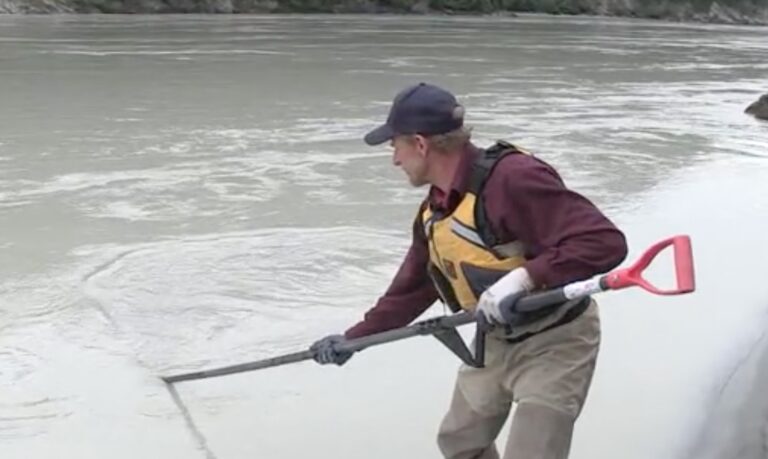
The Alaska Dept. of Fish and Game will open the Copper River personal use dipnet fishery at the Chitina Subdistrict on June 13 for 72 hours, starting at 6 p.m. Thursday and ending at 6 p.m. on June 16, a reduction of 96 hours from the earlier tentative schedule.
The annual limit for salmon from the famous personal use fishery for Alaskans is 25 salmon for the head of household, and an additional 10 salmon for each dependent of the person who has the permit. Only one king (chinook) salmon may be kept and no steelhead may be kept.
All Alaska residents qualify for this personal use fishery and must have a Chitina Personal Use Salmon Fishery permit and a resident Alaska sport fishing license when dipnetting. Both dip net permits and fishing licenses can be obtained at the online ADF&G store. A $15 fee is charged for the Chitina Personal Use Salmon Fishery Permit, and the fee supports the sanitation services at the fishery and trail maintenance from O’Brien Creek to Haley Creek.
The Chitina Subdistrict personal use dipnet salmon fishery is managed under direction of the Copper River Personal Use Dip Net Salmon Fishery Management Plan, which establishes the general season from June 7 through September 30 and directs the department to establish fishing periods within that period based on Miles Lake sonar counts.
During May 27 – June 2, there were 46,991 salmon counted past the Miles Lake sonar, while the preseason projection for this period was 111,918 salmon. This is a deficit of 64,927 salmon.
Copper River sockeye salmon migratory timing and the previous three-year average harvest and participation rates indicate sufficient numbers of salmon available to allow 72 hours of fishing time during the week of June 10 – 16, a reduction of 96 hours from the preseason schedule, the department explained.
Other dip net openings are anticipated as the season goes along, and those wishing to fish this fishery can check the schedule at this link.
Fish and GameJ urges dipnetters to respect rights of private landowners in the area and familiarize themselves with the land ownership in the area before fishing. For information on access across private lands contact Chitina Native Corporationat (907) 823-2223 or Ahtna, Inc. at (907) 822-3476.
Additionally, the department urges users to adhere to signs and detours constructed along the O’Brien Creek to Haley Creek section of Copper River Highway Right of Way. The detours were constructed to avoid disturbing recently identified cultural sites within and along the right of way. Any violation or disturbance to protected cultural sites will result in immediate closure of this access road. For more information visit the Alaska Department of Transportation Copper River Public Access page describing the changes to the access route.
Information regarding the fishery can be found at the ADF&G web site. This site provides information regarding the Upper Copper River fisheries including: fishery descriptions and summaries, maps of the subdistricts, a list of vendors that issue permits, and links to the sonar numbers and fishing schedule emergency orders.
The current fishing schedule is announced on the Chitina Fishery information line at (907) 822-5224. Please contact the information phone line prior to planning your trip to Chitina to ensure that the fishery will be open when you arrive. If you have any questions regarding the Chitina Subdistrict personal use dipnet salmon fishery, please contact the ADF&G office in Glennallen at (907) 822-3309.
A new poll found that former President Donald Trump’s conviction on 34 felonies in New York hasn’t dented his support with voters.
Forty percent of voters said Trump’s criminal conviction of 34 felonies does not impact their vote this November, according to a new Emerson College Polling national survey. Another 33% said it makes them less likely to support Trump and 27% said it would make them more likely to back Trump.
“Trump’s support in our polling remained the same before and after his conviction,” Spencer Kimball, executive director of Emerson College Polling, said. “A majority of Democrats say it makes them less likely to support Trump (51%) and a majority of Republicans (55%) say it makes them more likely to support Trump. A plurality of independents say it makes no impact (41%), while 38% are less likely to vote for Trump and 21% more likely.”
The poll found Trump had a narrow lead over President Joe Biden, with 46% of voters behind Trump and 45% backing Biden in the 2024 presidential election. Nine percent were undecided.
A jury convicted Trump, 77, of 34 counts of falsifying business records to cover up hush money payments to an adult film actress. The judge in that case has scheduled sentencing for July 11, four days before the 2024 Republican National Convention in Milwaukee, Wisconsin, where Republicans are set to select Trump as the 2024 nominee.
Under New York state law, falsifying business records in the first degree is a Class E felony, punishable by a maximum of four years in prison per count.
Voters won’t have a say at sentencing, but if they did, 40% said Trump should get prison time, 25% think he should pay a fine, and 15% think he should get probation. Twenty percent were unsure, according to the Emerson survey.
What was the secret of New England republicanism? In short, the answer is, the faith of the people of New England, from which all their institutions were formed.
In Genesis 22:18 God promises Abraham that “in your seed all the nations shall be blessed,” and in Galatians 3:28 the apostle says, “there is neither Jew nor Greek, nor male nor female nor bond nor free, but ye are all one in Jesus Christ.” Both the Old and New Testament demonstrate that in God’s eyes all mankind is equal.
The Hebrews were a special people because they were the bearers of this gospel, that the Babylonians no less than the Hebrews were dear to God. In its secular version, this principle could be rewritten, “all men are created equal.” This principle was advanced in New England government 150 years before Thomas Jefferson wrote the Declaration of Independence and before John Locke was born.
The Catholic Church had carried this teaching forward from its founding. Saint Augustine, Pope Saint Gregory the Great, Saint Thomas Aquinas all advanced the idea that all men are created equal. The priests reformed rulers. We can find in old European archives plenty of evidence of scolding and threatening priests, reminding monarchs that they are servants of the people, not wolves. By the late Middle Ages the church forced the European monarchs to abolish slavery and softened the conduct of rulers.
Renewed zeal drove the reformers to purify the religion of Christendom, not only in the practice of their religion, but in every aspect of their lives, their social and political lives included. The protestant sects that dissented from the Church of England were such as these reformers, and the early settlers of New England came from those sects.
Their pastors observed in the Bible that the only form of government that God ever ordained was a republican form of government, administered by judges under law. Only with reluctance and after a stern warning did God allow the Hebrews to abandon that form and anoint their first king, Saul. That God preferred republican government made sense to these protestants, because if all are equal, as the Bible maintains, then no government but government of and by equals was preferred by God. This became the basis of the organization of their churches. Equal elders ruled the congregations and the pastors and ministers were chosen by them. This also became the basis of their political organizations.
As a result, from their earliest settlement, the people of New England ruled their churches and in government they ruled themselves as coequals. They made their own laws that they lived under. Town halls were built where coequal citizens could debate all political questions. They elected their officers of government, whom they deemed to be servants of the public, just as pastors and ministers were servants of their congregations.
Because they perceived from their studies of the Bible, that only by each reading the Bible could each hope for salvation and learn how to live a pious life, the instruction of the young was a religious duty. Education, therefore, grew out from New England households and was administered by parents, concerned that their young become literate at the earliest possible age. Families working together, not government, established schoolhouses. By the time of the American Revolution, New England boasted of the highest literacy rate in the world. The incidental result of this was elevated public intelligence and in New England, the highest incidence of newspapers in the world.
The principle of natural equality by which they organized their way of life and mode of governing themselves, also structured how they organized themselves for war and law enforcement. They did not form standing armies or professional police forces, the latter of which is a relatively new kind of law enforcement in the United States. The people of New England depended on themselves. War and law enforcement was a community affair, conducted by citizens who regularly trained in militia companies and kept their own arms.
Town halls, schoolhouses, mustering grounds and churches were the essential props of New England self-government. Their republicanism was impossible without their faith. Their faith inculcated the principle that was the bedrock of their social and political lives, the principle of natural equality, that all had a right to life and liberty.
Their faith also inculcated the virtue of charity. This virtue, peculiar to Christianity, prevented the rise of unjust factions, which had always been the bane of prior republics. All other prior republics had been small, and all had been destroyed from within by one unjust faction achieving a majority then oppressing their fellow citizens. But charity encouraged kindness and justice and discouraged haughtiness and vengeance and injustice. While the New England communities were small, charity steadied them, preserved justice and public tranquility. Charity also obviated the need for “safety nets” managed by government. Communities took care of each other and their own.
Virginia was the largest and most influential colony southward of the New England colonies. George Washington, Patrick Henry, Thomas Jefferson among other famous Virginians of the revolutionary period all are on record acknowledging New England republicanism, expressing their admiration for it, and attempting to reform their state on the New England model. Many statesmen southward requested assistance from John Adams of Massachusetts, the acknowledged savant of republicanism, in writing their constitutions and learning how to model their states after the New England states.
New England influenced the future political development of the United States in another way, by sending her offspring to new territories, who brought their way of life and institutions with them. At their foundation, many territories and new states reproduced the institutions found in New England.
Finally, in 1787 the Federal Convention drafted the Constitution under which we live today. That constitution was modeled after the constitution John Adams wrote for the state of Massachusetts in 1780. Both constitutions were written for a free people and required them to depend on themselves for their livelihoods and to govern themselves.
After ratification, the size of the federal government remained slight for more than one hundred and fifty years, yet the country was ambitious, energetic and strong because the people were accustomed to rely on their own virtue to rise in life, rising on the basis of merit, not preferment.
New England republicanism had thus become American republicanism.
The Eaglexit Board would like to thank Forrest Nabors for his support and efforts. This is the first of a four-part series. Please consider joining the cause and keeping up on our progress at Eaglexit.com.
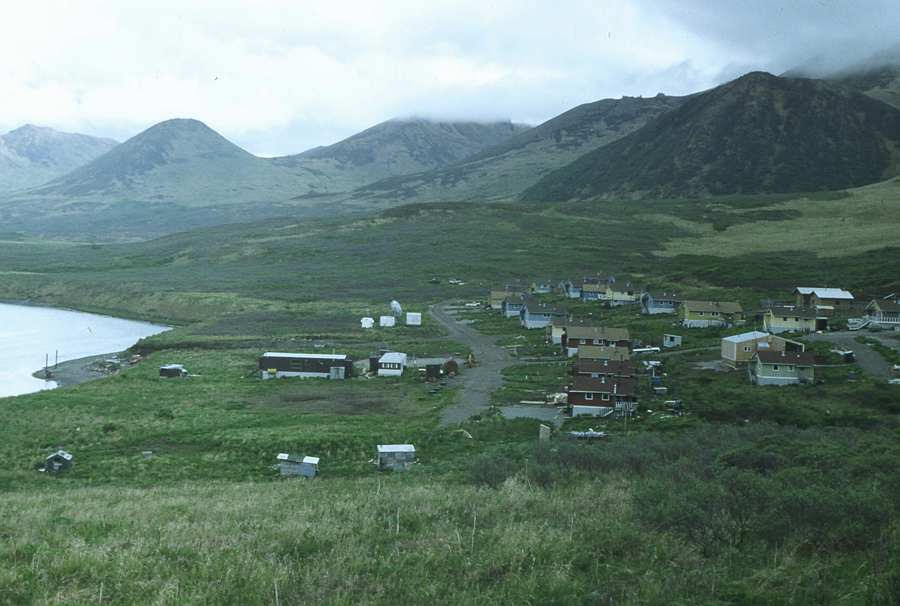
In 1983, I was a participant in the archaeological expedition at Karluk Village, located approximately 75 air miles southwest ofthe City of Kodiak on Kodiak Island. Surrounded by picturesque low-lying mountains and wet tundra, the mouth of the Karluk River and the Karluk Lagoon have been a homeland to the Alutiiq people for more than 5,000 years.
A deeply stratified prehistoric archaeological site on the bank of the lagoon sitsin close vicinity to the contemporary Alutiiq village and to the significantly aged Russian Orthodox Church on the top of hill overlooking the lagoon.
At the time, I was a PhD candidate at Bryn Mawr College, Pennsylvania. There were several trained and experienced archaeologists in the group, including Rick Knecht, Kevin Philbrook Smith, Glenn Sheen — then all PhD candidates at Bryn Mawr College — and severalenthusiastic volunteers. The expedition leader was the late Dr. Richard Jordan of Bryn Mawr. None of us had extensive experience or expertise in this geographic area under investigation, but we had some theoretical background.
Between the contemporary village and archaeological site was a small wooden hut occupied by Lawrence Ponamoryoff, an Alutiiq in his early 60s. Lawrence and his wife resided in Los Angeles during the winter season. But in the summer, Lawrence would escape from California and find a sanctuary in Karluk. He was connected spiritually and physically to his native land. Lawrence had a basic secondary school education, but his intelligence and wisdom were second to none. He thoroughly knew his Native land—he was an integral part of it. Lawrence kept repeating, “I am invigorating here when the salmonberries begin to ripen, and the red salmon are just about to swim up the river to spawn.”
Karluk Village in 1983.
Remnants of the rectangular prehistoric dwellings were the main archaeological features that we excavated. Richard Jordan was convinced that these dwellings were above-ground Russian houses of the Russian American period in Alaska (1741 to 1867). Rick Knecht and I argued with Richard Jordan that those structures were, most likely, native barabaras, but with no success. Aleutian barabaras were the traditional homes of the Aleut and Alutiiq people of the Aleutian Islands. These communal dwellings were partially underground, like pit-houses.
In one of the intense arguments, Richard Jordan declared, “I am going to eat my shorts to prove that these are Russian dwellings.”Rick Knecht, with some degree of cautiousness, responded to Jordan’s declaration, “You better wash your shorts, before you eat them. These are not Russian dwellings.” Richard Jordan was our key professor at Bryn Mawr; I was impressed by Rick Knecht’s courageous response.
In my free time from digging, I enjoyed Lawrence’s company in his wooden hut. Lawrence was always a gracious host, treating me with a delicious smoked salmon and fish soup. I especially enjoyed his mysterious native stories. One day, I shared with Lawrence our intense arguments with Professor Jordan and our inability to persuade him to adopt a proper interpretation of archaeological and ethnohistoric data.
Lawrence listened attentively to my troubling concerns, then paused for a short moment and said: “I will tell you a story that I heard from my grandpa, the wise man.” I nodded my head in anticipation of the engaging story.
“One day a Bear and Ground Squirrel, ‘Tsik Tsik’ for ground squirrel in our native language, had an argument over the color of grass. The Bear argued that grass is green, and Ground Squirrel argued that grass is blue. They argued and argued, but neither could prevail. They decided to ask an old and wise Owl to resolve their dispute.
They approached Owl and asked, “Bird of Wisdom, tell us whether the grass is green or blue? Squirrel insists that it is blue, but I know for fact that it is green, not blue,” insisted the Bear.
Owl slowly turned his head to the right then to the left and answered, “It is a blue color.”
Ground Squirrel happily hopped to his underground home, bragging, “I won, I won against a big Bear, the grass is blue!”
The Bear was puzzled by Owl’s answer, “Why have you said that the grass is blue?You are perfectly aware that the grass is Green!” roared the Bear angrily.
“Yes, indeed, the grass is green,” responded Owl. “But you wasted your time and efforts in trying to convince a stupid squirrel about something that is so obvious to all of us. You cannot rationalize someone who is brainwashed, irrationally stubborn and believe in the squirrel’s narrow-minded stupidity. Bear, go home,” Owl continued, “Believe in yourself, believe in your righteousness and always stand up for the factual truth and justice.”
“That is all. And that’s the way I heard it,” concluded Lawrence.
The heated arguments between Professor Jordan and all crews of the Karluk expedition continued daily and brought a lot of stress to all of us. For me, the expedition in Karluk ended after three weeks and I moved to the Kenai Peninsula to excavate an archaeological site in the vicinity of the Russian River under the auspices of the Chugach National Forest. I also had a chance to visit the Russian Old Believers community of Nikolaevsk Village near Anchor Point, Kenai.
Today, there are so many moral parallels between Lawrence’s insightful story of the “Bear and Squirrel Argument” and the socio-political environment in our country. And, yet it is so unbearable to tolerate an extreme leftist’s beliefs, destroying our democratic Republic with its remarkable corruption, moral distortion and indoctrination of American youth, namely: White Privilege Doctrine, Critical Race Theory, Systemic Racism, delusional transgender identity, neo-Marxism, violent anti-Semitic pro-Palestinian protests and rhetoric, and all other progressive nonsense.
I wonder, what learning and moral story the wise Alutiiq Lawrence could have for the humanity today?
Alexander B. Dolitsky was born and raised in Kiev in the former Soviet Union. He received an M.A. in history from Kiev Pedagogical Institute, Ukraine, in 1976; an M.A. in anthropology and archaeology from Brown University in 1983; and was enroled in the Ph.D. program in Anthropology at Bryn Mawr College from 1983 to 1985, where he was also a lecturer in the Russian Center. In the U.S.S.R., he was a social studies teacher for three years, and an archaeologist for five years for the Ukranian Academy of Sciences. In 1978, he settled in the United States. Dolitsky visited Alaska for the first time in 1981, while conducting field research for graduate school at Brown. He lived first in Sitka in 1985 and then settled in Juneau in 1986. From 1985 to 1987, he was a U.S. Forest Service archaeologist and social scientist. He was an Adjunct Assistant Professor of Russian Studies at the University of Alaska Southeast from 1985 to 1999; Social Studies Instructor at the Alyeska Central School, Alaska Department of Education from 1988 to 2006; and has been the Director of the Alaska-Siberia Research Center (see www.aksrc.homestead.com) from 1990 to present. He has conducted about 30 field studies in various areas of the former Soviet Union (including Siberia), Central Asia, South America, Eastern Europe and the United States (including Alaska). Dolitsky has been a lecturer on the World Discoverer, Spirit of Oceanus, andClipper Odyssey vessels in the Arctic and sub-Arctic regions. He was the Project Manager for the WWII Alaska-Siberia Lend Lease Memorial, which was erected in Fairbanks in 2006. He has published extensively in the fields of anthropology, history, archaeology, and ethnography. His more recent publications include Fairy Tales and Myths of the Bering Strait Chukchi, Ancient Tales of Kamchatka; Tales and Legends of the Yupik Eskimos of Siberia; Old Russia in Modern America: Russian Old Believers in Alaska; Allies in Wartime: The Alaska-Siberia Airway During WWII; Spirit of the Siberian Tiger: Folktales of the Russian Far East; Living Wisdom of the Far North: Tales and Legends from Chukotka and Alaska; Pipeline to Russia; The Alaska-Siberia Air Route in WWII; and Old Russia in Modern America: Living Traditions of the Russian Old Believers; Ancient Tales of Chukotka, and Ancient Tales of Kamchatka.
My last column in Must Read Alaska resulted in a number of comments to which I am compelled to respond. In my attempt to disprove that Alaska is warming 2 to 4 times faster than the rest of the planet, I did not mention anything about the warming we know about and that most people accept.
I remind critics that we had a Little Ice Age that peaked out around 1750 A.D. Yes, our growing season has become extended over my 80 years in Alaska. But with that, things still feel about the same as they have my entire life. It can still frost some time during that extended growing season.
Somebody mentioned glaciers, implying that the absence or diminishment of some glaciers is proof of global warming. If you look up Glacier Bay on the internet and do some digging around you will find that in 1680 there was glacier advancingupon the eventual location of Glacier Bay, but there was no fjord at that time. By 1750, the glacier had extended to the ocean waters and the newly formed Glacier Bay was a fjord. By 1880 the glacier had already receded back 45 miles from the end of the bay.
I am going to suggest that most of the glaciers that have greatly receded or disappeared in Alaska were possibly formed as a result of the Little Ice Age. If Alaska is not warming at an alarming rate, does that suggest that there has not been extra warming from increasing levels of greenhouse gases?
I call attention to “Infrared Forcing by Greenhouse Gases,” a paper by by W. A. van Wijngaarden1 and W. Happer published in 2019. The last sentence of the abstract states: “Doubling the current concentrations of CO2, N2O or CH4 only increases the forcings by a few per cent.”
Here is an excerpt from the conclusion of the paper: “The two goals of this review were: (1) to rigorously review the basic physics of thermal radiation transfer in the cloud-free atmosphere of the Earth; and (2) to present quantitative information about the relative forcing powers of the naturally-occurring, greenhouse-gas molecules, H2O, CO2, O3, N2O and CH4.”
All this tells us that doubling the concentration of CO2 in the atmosphere would result in very little increase in temperature on earth from the “greenhouse effect”. The warming we experience may just be the recovery from the Little Ice Age.
If this is true, then we need to rethink our approach to energy development in Alaska. We need to return to science for our guidance. Developing alternate and renewable energy resources in Alaska is still a viable idea as all the remote communities which have large diesel fuel cost need energy sources that serve their needs, affordably. We need to rework the current definition of “sustainable” to infer a fuel source that will be readily available and not one with no CO2 molecules.
Robert Seitz is a professional electrical engineer and lifelong Alaskan.
The National Park Service on Friday asked a federal judge to dismiss a lawsuit challenging its NPS Cashless policy.
The motion comes after three people filed a lawsuit in March against the National Park Service for refusing to accept cash for park entrance fees. They alleged the NPS Cashless program violates federal law.
Attorneys for the federal government said the suit should be tossed because the plaintiffs have not been harmed by the policy and do not have standing to sue.
“Plaintiffs fail to allege that they personally lack access to non-cash payment methods and thus have not plausibly alleged that they have been harmed by the challenged policy as is necessary to establish their standing to sue,” U.S. Department of Justice attorneys wrote. “Second, Plaintiffs have failed to state a claim on which relief can be granted because the statute on which they rely to characterize the alleged cashless program as unlawful does not require the Park Service to accept cash for the services it provides.” The federal attorneys hit that point repeatedly in the motion.
“None allege that they lacked access to credit or debit cards, or other non-cash methods of payment, and were thus unable to use those forms of payment to satisfy the entrance fee,” according to the motion. “Their contention instead appears to be that they were unable to pay by their preferred method, cash, and ‘chose not to’ pay by other available methods based on principle, namely, their alleged belief that it was ‘their lawful right to pay in cash.’ “
And later: “To the extent they were unable to access a national park on the few occasions referenced in the Complaint, that lack of access was self-inflicted based on their refusal to pay the entrance fee other than in cash. Accordingly, they were harmed not by the alleged cashless entry program but by personal choice.”
The plaintiffs’ suit argued that NPS Cashless can’t stand.
“NPS’s violation of federal law cannot be overlooked in favor of any purported benefit NPS Cashless could hope to achieve, such as reducing logistics of handling cash collected,” the plaintiffs’ attorney, Ray Flores II, wrote in the complaint. “Moreover, there is an increased cost to the NPS in going cashless, such as additional processing fees that will be borne by NPS and by visitors who ultimately fund the Federal Government through taxes, in addition to personal surcharges and bank fees visitors may incur under NPS Cashless policy.”
Flores said Friday the government’s motion to dismiss was lacking.
“The Motion to Dismiss is astonishingly short and contains many inaccuracies that will be addressed in our opposition that is due June 20,” he told The Center Square.
NPS said it stopped accepting cash at some parks to be a better steward of that money.
“Reducing cash collections allows the National Park Service to be better stewards of the fees collected from visitors,” according to its website. “Cashless options reduce transaction times at busy entrance stations and decrease the risk of theft. Moving to a cashless system improves accountability and consistency, reduces chances of errors, and maximizes the funding available for critical projects and visitor services.”
The NPS website also notes alternatives.
“Each park that has completed the transition to cashless fee collection has an alternative option for visitors who are not able to pay with a credit or debit card. The specific arrangements vary by park, and park staff onsite will be able to assist,” according to NPS. “Most parks that have converted to cashless fee collection have had an overwhelmingly positive experience.”
In a 2023 news release, NPS explained why Death Valley National Park was going cashless. It said that Death Valley collected $22,000 in cash in 2022. Processing that cash cost the park $40,000, according to the release.
“Cash handling costs include an armored car contract to transport cash and park rangers’ time counting money and processing paperwork,” according to the release. “The transition to cashless payments will allow the NPS to redirect the $40,000 previously spent processing cash to directly benefit park visitors.”
According to NPS, of the more than 400 national parks in the National Park System, 108 charge an entrance fee.
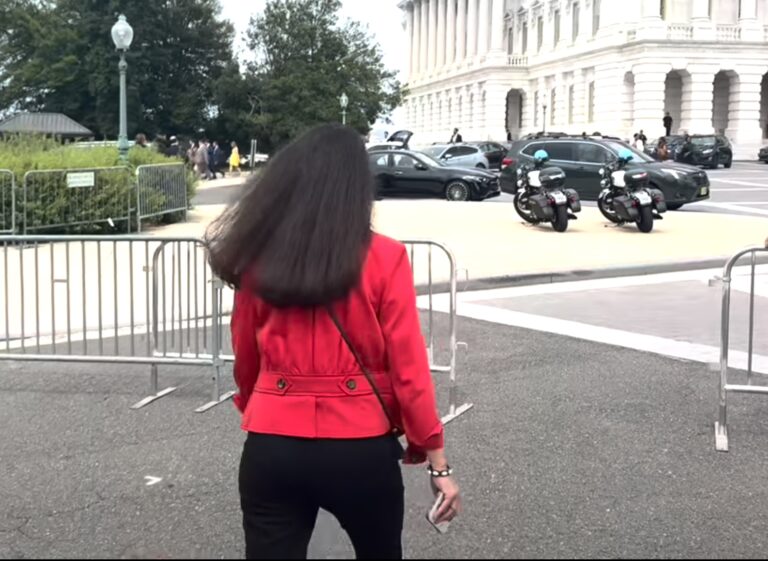
Alaska Rep. Mary Peltola walked away from a reporter when asked if she agrees with the verdict in former President Donald Trump’s trial in New York, where he was convicted of 34 felonies in regards to money he allegedly paid a woman to not talk about their relationship.
“Congresswoman Peltola, do you agree with the Trump trial verdict?” she was asked.
“I got to go,” she said as she walked away and ignored the follow-up questions.
“Peltola has enthusiastically endorsed Biden, enabled his war on Alaska’s way of life and now refuses to stand up for Alaskans outraged by this politically motivated prosecution,” National Republican Congressional Committee Spokesperson Ben Petersen said.
Peltola evidently finds that her endorsement of President Joe Biden is a unifying topic for Alaska. She said he is one of the sharpest people she has met in Washington, D.C.
In this episode of the Must Read Alaska Show, host John Quick sits down with Trent and Trevor, the dynamic duo behind Walden Bros, a custom clothing business in Alaska. Walden Bros specializes in creating unique hats, shirts, and hoodies for both individuals and businesses, catering to orders of all sizes.
John and the Waldens delves into their journey, discussing what inspired them to start Walden Bros, the valuable lessons they’ve learned along the way, and the memorable moment when U.S. Sen. Dan Sullivan visited their shop on K-Beach Road in Soldotna.
They also talk about the challenges posed by inflation and how it has impacted their business of customized clothing. Tune in for an insightful conversation about entrepreneurship, creativity, and resilience in Alaska’s vibrant business landscape.