Thursday, July 30, 2026
Home Blog Page 288

Begich gets committee assignments that benefit Alaska

9

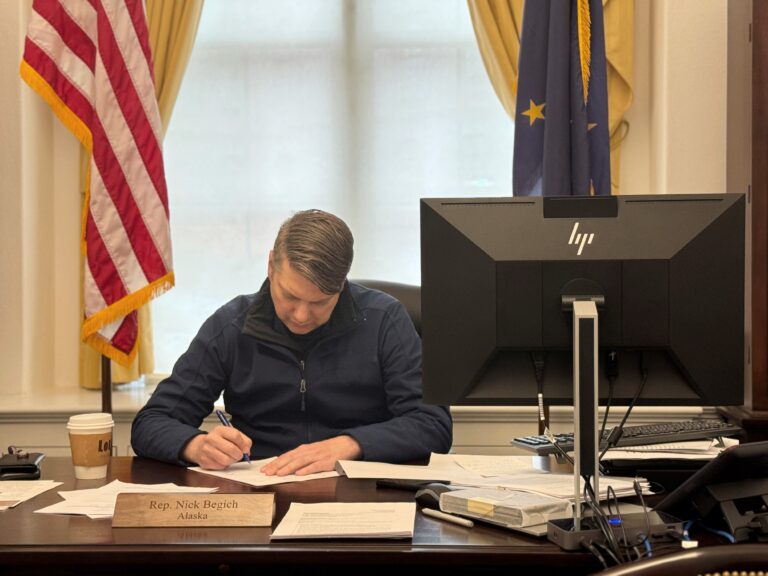
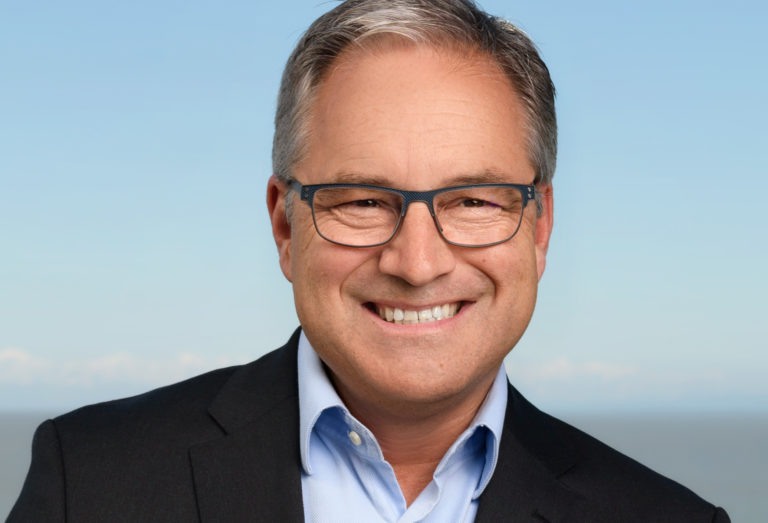
Congressman-elect Nick Begich III has received his first committee assignments for the upcoming two-year session of Congress. NBIII will serve on the House Natural Resources Committee, chaired by Congressman Bruce Westerman, who not only endorsed Begich for Congress but visited Alaska to raise votes for Begich this past summer.

The House Natural Resources Committee considers legislation about American energy production, mineral lands, mining, fisheries, wildlife, public lands, oceans, Native Americans, irrigation, and reclamation.

Begich will also be on the House Transportation and Infrastructure Committee, chaired by Congressman Sam Graves. The committee has jurisdiction over all modes of transportation – from aviation system, to highways, bridges, transit, rail transportation, pipelines, and maritime and waterborne transportation. The committee also has jurisdiction over wastewater infrastructure, emergency preparedness and response programs, public buildings, federal real estate management, federal economic development agencies, and the U.S. Coast Guard.

“With Trump in the White House and majorities in the House and Senate, Alaska is in a position to make progress on policy that will reopen our state to responsible development,” Begich said. “I’m thrilled to be joining the House Committees on Natural Resources and Transportation and Infrastructure – both of which are key to ensuring continued opportunity for the people of Alaska. As we work to develop critical minerals at home and procure new sources of domestic energy, America First will require an Alaska-focus, a perspective I will gladly champion on these committees.”

Getting assigned a seat on these two committees is an especially competitive process. Begich has been working with steering committee members in Washington, D.C. over the past five weeks, making the case about the importance of these committees to Alaska.

Don Young chaired both of these committees at different times during his 49-year tenure. Young passed ANWR provisions out of the House 13 times, but it took a Senate and a president to finally get it over the line.

The window in 2025 is another opportunity for Alaska — with the House, Senate, and presidency all in Republican control. It’s a window that might not have opened for Alaska if Rep. Mary Peltola had remained in office, especially with what is now a narrow Republican majority: Republicans have 220 House members, while 215 seats are held by Democrats.


Here we go: Repeal of ranked-choice voting II

Phil Izon, one of the leaders in the 2024 attempt to repeal Alaska’s ranked-choice voting and jungle primary system, doesn’t think Nov. 5th’s defeat of Ballot Measure 2 is the final answer. The ballot measure only lost by 743 votes, and that was with a small group of Alaskans up against $15 million in Outside dark money trying to keep ranked-choice voting.

Today Izon filed a new application with the Division of Elections to get another petition circulating, which would lead to Alaskans being given yet another chance to repeal the voting method that has been promoted by Outside dark money and Alaska Democrats.

Izon turned in 214 signatures on his petition application today. The wording that he is asking approval for is nearly exactly what voters voted on this year, which should make it easier for the Division of Elections to approve.

But this time, the key phrase is “remove.”

Izon and others have relayed to Must Read Alaska that many Alaskans were confused by the language of Ballot Measure 2 this year. They thought when they voted “No” that they were voting against ranked-choice voting, when in fact they were voting to retain it.

Now, the wording says:

“AN INITIATIVE TO: REMOVE THE RANKED CHOICE VOTING SYSTEM: AN ACT REMOVING THE RANKED-CHOICE GENERAL ELECTION; RESTORING THE PRIMARY AND GENERAL ELECTION SYSTEMS USED PRIOR TO THE ADOPTION OF THE RANKED CHOICE VOTING INITIATIVE IN 2020 (19AKBE).”

“This act would Remove Ranked-Choice General Election. This act would restore one person, one vote by removing
the rank choice voting system and replacing it with the Primary and General Election Process used before the rank choice voting initiative was adopted in 2020. Primary voters would vote for their preferred party candidate, and one
candidate from each registered political party would appear on the general ballot. The candidate with the most votes
wins the Primary Election. The candidate with the most votes wins the General Election. This initiative also restores
voter choice in the nomination of the Lieutenant Governor for each party, reaffirming Alaska’s commitment to its two constitutional offices.”

The wording submitted by Izon is not the final wording. That will be up to the Division of Elections, as it was last time. This time, however, if confusing language is used in the ballot initiative, Izon is willing to challenge it, something he didn’t do last time.

Izon says that the past two years have been an education. There are people all over the state who are ready to try again and will gather the signatures needed. They’ve been through the learning curve together and believe it will be easier to get the required signatures from all across the state. The group will need to get signatures equal to 7% of the total district vote in the last general election from each of 30 of the 40 Alaska House districts.

If people are interested in being a petition gatherer or host an event, or volunteer, Izon has set up a website at www.907Honest.com. While he is not ready to take donations he is looking for volunteers who will help gather signatures once the petition booklets are issued.

The Division of Elections has 60 days to approve the new petition and issue petition books to the 907Honest group, a small grassroots group that is fighting Outside dark money that is taking over Alaska’s elections.

Update: Another group has filed a petition application with the Division of Elections, with the same goal in mind. Read about it at this link:

Dunleavy asks Trump to undo Biden’s four years of damage to Alaska’s economy

In a letter to President Donald Trump and his transition team, Alaska Gov. Mike Dunleavy pulled no punches about how devastating the past four years have been for Alaska. And he asked Trump to, on his first day in office, issue an executive order to help restore Alaska’s economy, starting with the Ambler Access Road to the state’s mining district, and reopening the 1002 Area of the Arctic National Wildlife Refuge for energy development.

“In your first term, you led in realizing A1aska’s potential like no other President in history. Alaska’s untapped energy and mineral resources stand ready to contribute to America’s economic revival and national security,” Dunleavy said.

“Over the last four years, under the Biden Administration, Alaska has been targeted by no less than 60 White House executive orders and agency actions, undermining the State’s authority over its land and people, cutting off access to public lands, foreclosing future energy and mineral development for our Nation, and destroying economic opportunity.
Your election will hail in a new era of optimism and opportunity, and Alaska stands ready and is eager to work with you to repair this damage wrought by the previous administration, and to set both Alaska and America on a course to prosperity,” Dunleavy wrote. “In order to move quickly, I ask that you issue an Alaska-specific Executive Order on your first day in office, setting in motion critical agency actions that would restore opportunity to Alaska that your Administration set forth.:

Dunleavy specified:
Reversing Biden’s resource lockdown on Alaska and reinstating Trump’s previous administration’s actions, opening ANWR and the Ambler Mining District.

Ending the Biden “Deep State” overreach by reversing agency actions that lock up Alaska lands and resources.

Restoring Alaska’s authority over wildlife, lands, and waters, and completing the transfer of statehood lands promised in 1959 for the benefit of the people of our State and the Nation.

Dunleavy also said he expects more 11th-hour punishment of Alaska by the Biden Administration that will need to be undone by Trump when he takes office on Jan. 20.

In addition to the reversal of these actions listed above, we anticipate the Biden Administration in the closing days of their tenure, between now and January 20, 2025, will Dunleavy will flag those for the incoming president’s consideration.

The specific executive orders that Dunleavy requested include these items to reverse Biden’s Alaska resource lockdown:

  • Reissue TRUMP ANWR Leases, Initiate Exploration, and Hold Lease Sale
  • Reissue TRUMP National Petroleum Reserve Plan, Reverse Biden Reserve Lock-Up Rule
  • Reissue TRUMP Ambler Mining Road Permits to Open Alaska Critical Mineral Storehouse
  • Reissue TRUMP Tongass Roads Rule to Allow Mineral, Timber, and Community Access
  • Restore TRUMP Wetlands Policies and Allow Alaska to Develop One Percent
    End Biden’s Deep State Agency Alaska Overreach
  • Reverse Over 60 Biden Agency Actions Targeting the Lock-Up of Alaska Lands
  • Reverse Biden Endangered Species Act and Marine Mammal Protection Act Weaponized
    Actions Used to Lock-Up Oil & Gas and Mineral Resources in the Name of Climate Change
  • Reverse Biden Agency Actions Dividing Alaskans over Fish, Wildlife and State authority
    Counter Biden’s Attack on Alaskan Management of Alaska’s Assets
  • Restore Alaska’s Primary Authority Over Fish & Wildlife Guaranteed by Law
  • Restore Full Primacy for States Under the Clean Water Act Guaranteed by Law
  • Revoke Obsolete Public Land Orders so Alaska May Finally Receive its Statehood Lands
  • End Agency Stonewalling and Recognize Alaska’s Ownership of its Submerged Lands

Read the full Dunleavy report to the Trump transition team at this link.

40% of students are behind grade level in one or more subjects: Report

By BRENDAN CLAREY | THE CENTER SQUARE

According to a federal survey of school leaders, 40% of students in the nation’s public schools were behind grade level in one or more subjects at the beginning of the school year. 

The National Center for Education Statistics announced its findings this week that the percentage of students school leaders estimated to be behind where they should be was down 7% from the 2022-23 school year but still 8% higher than before the pandemic. 

School leaders told the federal education statistics agency in October that over a third of students were behind entering the 2024-25 school year. NCES data shows students are farther behind than before state and local governments closed schools during the Covid-19 outbreak.

Before the pandemic, school leaders estimated that 32% of students were behind grade level in at least one area. In 2021-22, it rose to 45%, and in the 2022-23 school year, it reached 47%.

The data shows school leaders were more likely to say students from low-income families and in schools where the population was 76% or more students of color were behind, with 52% of students estimated to be behind where they should be.

School leaders located in cities and at schools with fewer than 300 students reported that 48% of students were lagging academically. 

The data follows with broader student academic achievement data and other metrics that show the effects of the pandemic closures were not equitable to minority students, who suffered more significant declines in academic achievement. 

The survey also found that students were more likely to be estimated to be behind in specific subject areas studied. 

“Ninety-eight percent of public schools reported that at least some students were behind grade level in mathematics and English or language arts,” the NCES said in its findings. 

School leaders said 76% of students were behind in the sciences, and 55% were behind in social studies. 

This story initially published at Chalkboard News, a K-12 news site that, like The Center Square, is also published by Franklin News Foundation.

China’s ban on critical mineral exports to U.S. shows why America must fortify itself

29

By GREGORY WISCHER, MORGAN BAZILIAN, JAHARA MATISEK

Last week, China imposed export bans on antimony, gallium, and germanium—all of which are listed on China’s dual-use export control list. Other minerals on the list and, thus, at risk of future bans include aluminum, magnesium, and zinc, among others. Beyond their economic importance, many of these minerals have military applications. For example, tungsten superalloys are used in military turbines and armor-piercing munitions, while bismuth is used in ammunition and alloys for defense.

With many minerals, the U.S. government can increase domestic mining, processing, and recycling to help mitigate future supply cutoffs from China. Of course, building and expanding domestic capacity will take time, significant capital, and appropriate government policies, but it can be done.

However, for some minerals—such as bismuth and tungsten—the United States simply lacks the mineral reserves, scrap, and substitutes to fill supply gaps from a Chinese export ban. For instance, China supplied over 60 percent of America’s bismuth consumption from 2019 to 2022, and the United States has not produced bismuth since 1997. The U.S. National Defense Stockpile also has no inventory of bismuth.

For such minerals, the U.S. government—in addition to seeking to boost domestic production—should both increase inventories in the National Defense Stockpile and sign right-of-first refusal (ROFR) offtake agreements with existing overseas mineral producers. Such steps will help buttress the United States against future export bans.

With stockpiling, the U.S. government should acquire minerals from domestic producers when possible but prioritize acquiring supply wherever it is available including from China. For instance, with both bismuth and tungsten, China is far and away the world’s largest producer: it produces 80 percent of the world’s bismuth and 81 percent of its tungsten.

The second policy is signing ROFR offtake agreements with existing overseas mineral producers for their uncontracted production. In ROFR agreements, the U.S. government would have the first right—but not the obligation—to purchase a certain volume of mineral production before it is offered to other buyers.

To secure ROFR offtake agreements, the U.S. government could invest in overseas mineral projects or expansions. Already, the U.S. government has invested (through an intermediary) in two overseas mineral projects: a nickel-cobalt mine in Brazil and a rare earth processing project in South Africa.

While ROFR offtake agreements are common with prospective mineral producers, the timeline for commissioning new production is lengthy and often jeopardized by technical (e.g., ramp-up issues) and jurisdictional (e.g., regulations) risks. Moreover, ROFR offtake agreements for future mineral production cannot supply minerals if China imposes export bans with immediate effect. Having ROFR offtake agreements for existing production could immediately help fill supply gaps caused by adversarial export bans.

The U.S. government should prioritize signing ROFR offtake agreements with firms operating in allied and partner countries, such as Australia, Canada, Japan, and South Korea. The U.S. government should also prioritize inking agreements in countries least likely to face disruptions from a possible U.S.-China conflict in the western Pacific.

For example, Australia and Austria produce about the same volume of tungsten, yet because shipping across the Atlantic Ocean would be more secure than shipping across the Pacific Ocean in a U.S.-China conflict, the U.S. government should first prioritize agreements for tungsten with Austria over Australia. In other cases, avoiding the western Pacific is not possible. For instance, Japan and South Korea are highly exposed to a U.S.-China conflict over Taiwan, but they are the only major bismuth producers that are U.S. allies.

Demonstrating tungsten’s importance for the U.S. military, U.S. tungsten imports spiked during World War I, World War II, and the Korean War, and U.S. imports would likely spike again in a potential conflict against China. The U.S. government would be well-served in pre-emptively securing these imports and similarly important war minerals through ROFR offtake agreements.

Controlling the overseas supply of these military minerals can have direct combat implications, too. The Tungsten Institute writes, “Before World War II was started, Germany had bought up virtually the entire world supply of off-grade tungsten ore.” This tungsten proved critical in Germany’s nearly successful North Africa campaign: German tanks used armor-piercing munitions with tungsten carbide cores with dangerous effects against British tanks.

China’s recent mineral export ban is yet another wake-up call for the U.S. government to reduce America’s reliance on China for critical minerals. For many minerals, the United States can indeed rely on domestic resources to offset future mineral cutoffs from China, but for other minerals, it cannot—it must depend on foreign actors. In such cases, the U.S. government should preemptively stockpile and sign ROFR offtake agreements with overseas mineral producers. These proactive steps will help fortify the United States against future mineral export bans.

Gregory Wischer is a fellow at the Payne Institute for Public Policy at the Colorado School of Mines.

Morgan Bazilian is the director of the Payne Institute for Public Policy at the Colorado School of Mines.

Lt Col Jahara “Franky” Matisek is a military professor in the National Security Affairs department at the U.S. Naval War College and fellow at the Payne Institute for Public Policy. The views expressed in this article are his own.

This article was originally published by RealClearDefense and made available via RealClearWire.

Video: Rep.-elect Nick Begich III on NewsNation has advice about spending holidays with Democrats

22

Alaska’s Rep.-elect Nick Begich III appeared on a panel made up of some of the newest members of Congress. It was pointed out by a moderator that Begich comes from a family of political figures, including his grandfather, who served in Congress for Alaska. Begich was quick to point out that the ones the moderator named are all Democrats (he is Republican.)

“What does Thanksgiving look like?” asked a baffled Mychael Schnell, congressional reporter for The Hill.

Begich isn’t the only Alaskan who has a family with mixed political opinions or alliances. Many Alaskans will be spending time over Christmas with members who vehemently disagree with them on policy and direction for the state and the nation. Begich gets it — with a family of partisan Democrats, some who even worked against him in his election for Congress.

Watch NBIII’s answer to the question at minute 29:14.

Justice Department charges Anchorage-linked person with cybercrimes

10

The U.S. Department of Justice last week announced a sweeping crackdown on distributed denial-of-service (DDoS)-for-hire services, seizing 27 domains tied to illegal cyberattack platforms and filing criminal charges against two alleged operators — one of them from Anchorage, and the other from Brazil. The move marks an escalation in the fight against cybercrime, targeting services that have facilitated millions of attacks on victims worldwide.

The seized websites, commonly referred to as “booter” services, enabled paying customers to launch DDoS attacks that overwhelm targeted systems with excessive internet traffic, rendering them inoperable.

Victims included schools, government agencies, gaming platforms, and private individuals. Law enforcement described the services as a major threat to internet stability, often disrupting essential services and causing significant financial and reputational harm.

The Justice Department did not say what kind of attacks were initiated by the Alaska-associated suspect.

Two individuals have been charged in connection with operating booter services:

  • Ricardo Cesar Colli (aka “TotemanGames”), 22, of Brazil, was charged in Los Angeles with running a service known as Securityhide.net. Colli faces conspiracy and computer fraud charges under the Computer Fraud and Abuse Act.
  • A defendant whose name remains under seal, was charged in Anchorage but has not been rounded up, as of Dec. 11. U.S. prosecutors are coordinating with international partners to secure the individual’s arrest and extradition, the DOJ said.

Both cases were developed through investigations led by the FBI’s Los Angeles and Anchorage field offices.

Booter services, often marketed as “stressers” for legitimate network testing, have long been a cover for illegal activities. Investigators revealed that communications between site administrators and customers made it clear these services were being used to attack third parties, not the customers’ own systems.

The seized domains collectively facilitated millions of DDoS attacks targeting organizations and individuals globally. The operation comes ahead of the holiday season, a period notorious for spikes in cyberattacks.

“DDoS attacks are a potent cyber weapon with the proven potential to disrupt critical information systems and infrastructure,” said Kenneth DeChellis, Special Agent in Charge of DCIS Cyber Field Office.

Operation PowerOFF builds on the Justice Department’s success in recent years, including the seizure of over 75 booter domains and prosecution of nine defendants in similar cases. This latest action targets all known booter sites, with ongoing investigations into their operators and customers.

House Oversight Committee probes Selective Service after it posted Trump-Nazi message on social media

47

House Committee on Oversight and Accountability Chairman James Comer has opened an investigation into the U.S. Selective Service System, after the agency posted a message on X/Twitter that implied that under Donald Trump’s Administration, the draft would be mandatory, as it was under Nazi Germany.

The Selective Service is not denying that it posted the comparison of Trump to Nazi Germany on Nov. 6, immediately following Trump’s historic win, but after the agency was called out on it, it quickly took the message down.

Screenshot

In a letter to Acting Director of the Selective Service System Joel Spangenberg, Chairman Comer requested all documents and communications related to the agency’s internal investigation into the matter. He also called for Spangenberg to personally brief the committee on the incident.

“The Committee on Oversight and Accountability is investigating the Selective Service System’s promotion of a social media post stating individuals are ‘stupid’ if ‘they still believe military service will be voluntary,’ and to ‘[r]emember Germany 1936’ mere days after Americans elected President Donald Trump to be the 47th President of the United States,” Comer wrote. “The Committee is deeply disturbed that an independent federal agency, tasked with registering and maintaining a system of individuals potentially subject to military conscription if authorized by the President and Congress, would re-post a wholly unsubstantiated, false, and contemptible claim.”

Account-holders on X reported that the post was live for more than an hour. The Selective Service has since said it has launched an investigation to determine what happened and to prevent it from occurring in the future.

“Although the Selective Service should continue to investigate this matter and ensure that this not happen again, the individual at fault for reposting such an inappropriate and disturbing message on an Agency X account should be terminated,” Comer said. “In addition, to assist the Committee in investigating this matter, we request a briefing from the Selective Service with Committee staff. Please make arrangements to schedule a briefing with Committee staff on this matter as soon as possible, but no later than December 26, 2024.”

Trump says he has never even considered mandatory conscription.

The Selective Service states on its website: “While there is currently no draft, registration with the Selective Service System is the most publicly visible program during peacetime that ensures operational readiness in a fair and equitable manner. If authorized by the President and Congress, our Agency would rapidly provide personnel to the Department of Defense while at the same time providing an Alternative Service Program for conscientious objectors. Federal Law requires nearly all male U.S. citizens and male immigrants, 18 through 25, register with Selective Service.”

Read the letter to Acting Director Spangenberg here.

Senate to vote on Social Security reforms impacting Alaska government retirees more than any others

Democrats in Congress don’t want Republicans to be able to take credit or hogtie Social Security reforms that address inequities felt by some public employee pensioners. Thus Senate Majority Leader Chuck Schumer is saying there may be a vote as early as this week on the Social Security Fairness Act. The vote would take place before the Senate goes into Republican control in January, and the Senate will recess soon for the holidays, which gets them out of Washington Dec. 21-31.

The legislation would repeal two Social Security provisions: the Windfall Elimination Provision and the Government Pension Offset, which reduce Social Security benefits for millions of individuals who earned defined benefits pensions through public service jobs, particularly those in systems in which they did not pay directly into Social Security, such as many in Alaska who worked for the state or for school districts.

The cost to taxpayers is not insignificant. The Congressional Budget Office estimated the bill would cost nearly $190 billion over a decade. It also projected in a letter to Sen. Chuck Grassley last month that Social Security’s trust funds could “be exhausted roughly half a year earlier than it would be under current law” if the bill is passed into law.

Both Rep. Mary Peltola and Sen. Lisa Murkowski are co-sponsors of the legislation in their respective legislative bodies. If passed, it will bring hundreds of millions of dollars to the Alaska economy and encourage Alaska seniors to stay in state, as their benefits will somewhat offset higher costs of living. But the entire program is unfunded and adds to the $36 trillion national debt.

The bill is especially relevant for Alaska retirees who were part of the state’s old Public Employees’ Retirement System (PERS) and Teachers’ Retirement System (TRS).

Many of these retirees have seen their Social Security benefits significantly reduced due to current structure of Social Security. Under the WEP, individuals who worked in both Social Security-covered and non-covered employment often receive less than their full Social Security benefits. Similarly, the GPO affects survivors’ benefits, reducing spousal or widow’s benefits for retirees with a government pension.

Due to such a large state government workforce, Alaska has the highest percentage of WEP-affected beneficiaries of any state. Nearly 12% of all beneficiaries and 15% of all retired workers are impacted by the WEP.

If passed, the Social Security Fairness Act would eliminate these reductions, allowing public servants to collect both their earned pensions and full Social Security benefits.

Lawmakers supporting the bill say the existing provisions as punitive and outdated, penalizing workers who have contributed significantly to their communities.

If the Senate approves the bill, it will head to President Joe Biden for his signature.