Federal workers at the Centers for Disease Control and Prevention and Department of Transportation have been informed they must remove any and all of the dozens of woke gender-signaling pronouns and other irrelevant information from their signature lines by 5 p.m. Friday, to be in compliance with President Donald Trump’s executive orders that reverse the gender ideology obsession of the former Biden Administration.
“Pronouns and any other information not permitted in the policy must be removed from CDC/ATSDR employee signatures by 5 p.m. ET on Friday,” the CDC memo stated.
One of Trump’s earliest executive orders was to state that it is the policy of the United States that there are two biological sexes — male and female.
Of course, those workers who don’t want to remove their woke pronouns can also quit. The president is offering federal workers eight months of severance pay if they will leave voluntarily.
At the Department of Transportation, a very specific memo from DOT Secretary Sean Duffy was issued, which said he had authorized a series of actions advancing Trump’s agenda to rescind woke policies, roll back burdensome and costly regulations, restore economic growth, and ensure agency policies align with the Administration’s priorities.
“These actions deliver on the President’s commitment to rescind harmful policies enacted under the Biden-Harris Administration and reaffirm USDOT’s focus on safety, efficiency, economic prosperity, and regulatory reform,” the statement said. It continued:
“The Secretary signed the ‘Woke Rescission’ Memorandum, directing Secretarial Officers and Heads of Operating Administrations to identify and eliminate all Biden-era programs, policies, activities, rules, and orders that promote climate change activism, Diversity, Equity, and Inclusion (DEI) initiatives, racial equity, gender identity policies, environmental justice, and other partisan objectives. This action aligns with several of President Trump’s executive orders, including Order 14148 Initial Rescissions of Harmful Executive Orders and Actions and Order 14151 Ending Radical and Wasteful Government DEI Programs and Preferencing.”
Duffy signed an order ensuring that all USDOT policies, grants, loans, and actions are based on sound economic principles, positive cost-benefit analyses, and pro-economic growth priorities. This order aligns USDOT operations with the President’s agenda to support economic development and strengthen American families by focusing on real, measurable benefits rather than ideological considerations.
Duffy also approved submission of a Notice of Proposed Rulemaking to rescind the Biden-Harris Administration’s rule requiring state transportation departments to measure and establish declining targets for carbon dioxide emissions on federally supported highways.
“This rule had been rescinded during the first Trump Administration, only to be reinstated by the Biden Administration and later two federal judges ruled USDOT lacked authority to issue the rule. The rescission reflects the Administration’s commitment to unleashing American energy and eliminating unlawful regulatory burdens,” the department said.
“These actions mark a significant shift in USDOT’s approach to regulation, economic policy, and government oversight. By eliminating harmful and restrictive regulations and prioritizing economic growth, DOT is fully aligned with President Trump’s mission to return to merit-based opportunities, restore efficiency, and ensure economic prosperity for the American people,” it continued.
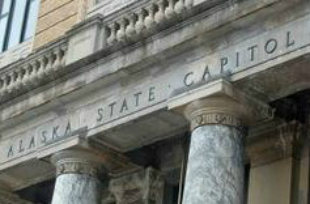
The State Officers Compensation Commission has approved a system of automatic salary adjustments for Alaska State political officials, a formula that will allow their salaries to ease higher with inflation.
The three-member commission has been debating the new system for several years, with the aim of removing salaries of politically sensitive positions from the political pressures that have kept them far lower than the rate of inflation.
In 2009 and 2011, salary increases for legislators, department heads, the governor, and the lieutenant governor became law as they were not rejected by the Legislature after being proposed by the commission.
However, 2014 recommendations for executive salaries were rejected. In 2016, a policy allowing deputy commissioners to retain higher salaries when promoted became law. No salary changes were recommended in 2020.
In 2021 and 2022, the commission met multiple times, issuing reports that found salaries had not kept pace with inflation. In 2023, the panel recommended salary increases for the governor, lieutenant governor, department heads, and legislators, which became law. The commission met again on Nov. 14, 2024, to propose new preliminary recommendations:
Increase the salaries of the governor, Lieutenant Governor, department heads and legislators every two years (to coincide with the statutory meeting requirements of the commission). These increases should be tied to the CPI.
The CPI increases will be calculated off the current base pay.
To keep up with inflation, an $84,000 salary in 2015 would need to be $111,851.98 today, according to the Consumer Price Index Inflation Calculator.
Currently, the governor makes $176,000 a year, and commissioners earn around $168,000 per year. Legislators earn $84,000. The new system will tie their earnings to the Anchorage Consumer Price Index.
The commission’s recommendations will become law unless the Alaska Legislature rejects the decision. The new system would be in place following the 2026 election.
Read the entire final proposal by the Alaska State Officers Compensation Commission at this link.
The U.S. Department of Education sent a “Dear Colleague” letter to all K-12 schools and institutions of higher education in the country, advising educators and administrators that the department’s Office for Civil Rights will enforce the Trump Administration’s 2020 Title IX Rule.
Trump overturned the Biden Administration’s rules that allowed boys and men to take over female athletics in public schools and universities. A trend over the past few years has seen men who say they are women competing in women’s divisions and winning trophies.
The letter comes after 15 Republican attorneys general successfully challenged the Biden Administration’s 2024 Title IX rewrite, which the United States District Court for the Eastern District of Kentucky ruled was unlawful and, therefore, unenforceable in schools, colleges, and universities nationwide. The lawsuit was brought by Alabama, Florida, Georgia, Idaho, Indiana, Kentucky, Louisiana, Mississippi, Montana, Ohio, South Carolina, Tennessee, Texas, Virginia and West Virginia.
The Department of Education will return to enforcing Title IX protections on the basis of biological sex in schools and on campuses.Returning to the 2020 Title IX Rule also ends a serious threat to campus free speech and ensures much stronger due process protections for students during Title IX proceedings, the department said.
“The Biden Administration’s failed attempt to rewrite Title IX was an unlawful abuse of regulatory power and an egregious slight to women and girls. Under the Trump Administration, the Education Department will champion equal opportunity for all Americans, including women and girls, by protecting their right to safe and separate facilities and activities in schools, colleges, and universities,” said Acting Assistant Secretary for Civil Rights Craig Trainor.
Rep. Jamie Allard of Eagle River has a house bill that would do the same thing in Alaska. HB 40 is her second attempt to get lawmakers to protect girls and women in sports. Last year, her bill passed the House but died in the Democrat-controlled Senate. She said she will continue to try to get the protections explicitly written into Alaska law.
“I appreciate the clarity coming from the U.S. Department of Administration and President Trump, but we know that executive orders and interpretations of law can be undone by the next administration. That is why it is so important to put this into law in very specific terms in Alaska, so that Alaska’s girl athletes will not have to compete unfairly against boys in competitions where boys have clear physiological advantages,” she said. “I hope my colleagues will allow HB 40 to be heard and that they will pass it this year.”
That may be a long-shot. Both the House and Senate are controlled by Democrats this year due to a number of Republicans joining them to put the entire Legislature in the hands of a party that has disrespected women and the intent of Title IX by Congress.
Resources pertaining to the Title IX Rule, now applicable again through Trump’s orders, can be read here.
Republican Texas Sen. Ted Cruz said Thursday on Fox News that the Democrats are now “terrified” and “freaking out” after they failed to land a “single blow” during Kash Patel’s confirmation hearing for FBI director.
Patel had his confirmation hearing Thursday and, in an appearance on “Hannity,” Cruz said Democrats are afraid. Cruz said he believes Patel will restore integrity to the Department of Justice and the FBI.
“The Democrats are terrified. That’s exactly what Kash Patel will do. Not weaponize it against Democrats but bring the FBI back to its core mission of stopping bad guys and enforcing the law regardless of party,” Cruz said. “And they’re freaking out. But here’s the good news, Sean. They didn’t score a single blow today. Kash Patel will be confirmed as the next director of the FBI.”
Cruz said that the Democrats’ conduct during the hearing reminded him of a line from Shakespeare’s Macbeth.
“It was a tale told by an idiot, full of sound and fury, and signifying nothing,” Cruz said. “I think the Democrats, they tried to put on a circus. They screamed. They yelled. They stomped their little feet. They beat the table. But at the end of the day, what is really striking is none of them made a serious argument that Kash Patel is not qualified.”
Cruz also detailed Patel’s extensive background, saying he has nearly two decades of experience in various high-stakes law enforcement and national security roles.
“He spent nearly two decades working in law enforcement. He’s been a federal public defender. He’s been a federal prosecutor. He’s worked in the National Security Division of the Department of Justice,” Cruz added. “He’s been a senior national security staffer on Capitol Hill. He’s worked in the national security apparatus in the White House. And he’s been the chief of staff at the Department of Defense. His experience is extensive.”
The real fear among Democrats, Cruz said, stems from Patel’s potential to fulfill a key promise of President Donald Trump.
“What they are afraid of is that Kash Patel will do exactly what Donald Trump promised. It’s striking. If you look at what President Trump campaigned on across the country, one of the core promises Donald Trump made to this nation is that he would end the politicization and the weaponization of the Department of Justice and the FBI,” Cruz said.
During the confirmation hearing, Patel flipped one of the scripts of the Democrats. This, after he responded to Democratic Illinois Sen. Dick Durbin’s criticism of Trump’s Executive Order that pardoned about 1,500 individuals involved in the Jan. 6 Capitol riot. Patel, in response, highlighted how former President Joe Biden pardoned his relatives and also pardoned violent offenders.
President Donald Trump may have some information that others don’t have regarding control tower issues on the night of the devastating mid-air collision between an American Airlines commuter jet and a military helicopter near Ronald Reagan Washington National Airport. The White House attributed the incident to systemic failures at the Federal Aviation Administration, including hiring policies enacted during the Obama and Biden Administrations. Trump has directed an immediate assessment of all hiring decisions by the agency.
The statement specifically criticized changes in FAA hiring practices that prioritized diversity, equity, and inclusion (DEI) initiatives over merit-based selection.
Must Read Alaska wrote about those policies one year ago. The FAA was recruiting people who were deaf, blind, had epilepsy, and those with severe mental illness.
Regarding the collision, Trump said, “This shocking event follows problematic and likely illegal decisions during the Obama and Biden Administrations that minimized merit and competence in the Federal Aviation Administration (FAA). The Obama Administration implemented a biographical questionnaire at the FAA to shift the hiring focus away from objective aptitude. During my first term, my Administration raised standards to achieve the highest standards of safety and excellence. But the Biden Administration egregiously rejected merit-based hiring, requiring all executive departments and agencies to implement dangerous ‘diversity equity and inclusion’ tactics, and specifically recruiting individuals with ‘severe intellectual’ disabilities in the FAA.”
The statement reiterated that on the second day of the new Trump Administration, an executive order was issued to reinstate merit-based hiring in all federal agencies, including the FAA, prioritizing safety and competence in aviation oversight. The Trump Administration emphasized that this latest tragedy highlights the urgent need to ensure aviation safety remains uncompromised.
As part of the response to the incident, the White House announced that the Secretary of Transportation and the FAA Administrator have been directed to conduct a comprehensive review of all hiring decisions and safety protocols from the previous four years. The review will assess any deterioration in hiring standards and aviation safety procedures under the Biden Administration. Furthermore, the directive calls for the removal of any individuals who do not meet the qualification standards necessary to uphold rigorous aviation safety measures.
“Consistent with the Presidential Memorandum of January 21, 2025 (Keeping Americans Safe in Aviation), the Secretary and the Administrator shall take all actions necessary to reverse concerning safety and personnel trends during the prior four years,” the statement continued. “We must instill an unwavering commitment to aviation safety and ensure that all Americans fly with peace of mind.”
The National Transportation Safety Board (NTSB) and FAA officials launched an official investigation into the cause of the collision.
More updates are expected as investigations continue.
Promises made, promises kept: President Donald Trump announced Thursday the United States will a 25% tariff on goods imported from Mexico and Canada starting as early as Saturday, and tariffs on certain goods from China.
He said he would decide Thursday evening whether tariffs on Mexico and Canada would extend to oil imports.
Tariffs on goods from the two countries is something he promised to do in November, saying the tariffs would be in place immediately at the start of his administration until the tide of illegal immigration is stopped.
More than 15 million illegal aliens – most of them military-age males – have come through the open border since Joe Biden became president and relaxed border policies in 2021. The number of illegal immigrant men of fighting age now inside U.S. borders outnumbers the enlisted men in the U.S. military.
The fentanyl crisis, according to one congressional study, cost the United States a record of nearly $1.5 trillion in 2020, up 37% from 2017. It has only gotten worse under the Biden open-border policy. Much of the fentanyl is coming through Mexico from China.
“Mexico and Canada have never been good to us on trade. They’ve treated us very unfairly on trade, and we will be able to make that up very quickly because we don’t need the products that they have,” he said.
However, the U.S. imports over 5 million barrels a day of oil from Mexico and Canada combined (4.6 million Canada, 563,000 Mexico). U.S. domestic oil production is about 13.5 million barrels per day.
The U.S. also imports agricultural products, such as wheat and other grains. Some 2.4 million metric tons of wheat were imported from Canada during the decade from 2014 to 2023, according to the U.S. Department of Agriculture.
Additionally, Trump stated that China would face tariffs on chemicals used to produce fentanyl. He said the tariffs would be in addition to existing import taxes on Chinese goods, including an already announced 10% tariff.
The federal government spent over $66 billion on illegal immigrants in 2023 alone, not including what states, counties, and cities spent that year, or the pass-through funds given to nonprofit organizations like Catholic Charities that are working with illegal immigrants.
Steven Camarota, director of research at the Center for Immigration Studies, spoke before a congressional committee one year ago and said:
“The current surge of illegal immigration is unprecedented. Some 2.7 million inadmissible aliens have been released into the country by the administration since January 2021. There have also been 1.5 million ‘got-aways’ — individuals observed entering illegally but not stopped. Visa overstays also seem to have hit a record in FY 2022.
“We preliminarily estimate that the illegal immigrant population grew to 12.8 million by October of 2023, up 2.6 million since January 2021, when the president [Biden]took office. This is the net increase in the illegal population based on monthly Census Bureau data, not the number of new arrivals.”
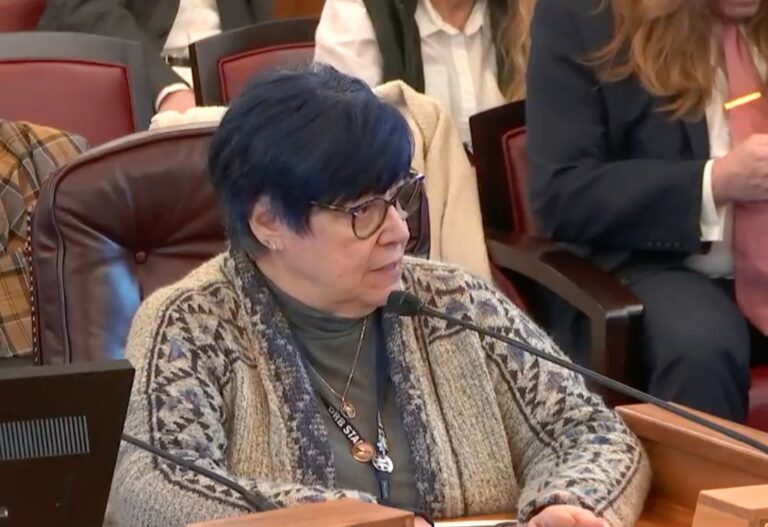
The Alaska Legislature’s House Finance Committee held a hearing Wednesday to assess the funding status of the Public Employees’ Retirement System (PERS) and the Teachers’ Retirement System (TRS).
In particular, the portions of those systems that guarantee life-long payments to retirees and their designated survivors, called defined benefits, have a past-due debt, guaranteed to them by the Alaska Constitution and by contract law, of about $7.1 billion. That unfunded liability is of interest to lawmakers, fiscal conservatives, and everyday Alaskans who may, through future taxes, have to support every public employment retiree for 30 years or more in their retirement years.
The return to defined benefits for government workers is a priority for the Democrats who control both the House and Senate this session, although the bill at play is being sponsored by cross-over Republican Sen. Cathy Giessel.
You can view the House Finance Committee discussion at this link.
In years when those trust funds, as managed by the Alaska Treasury, earn better than 7.25% that state debt amount is reduced, but the converse is also true.
While municipalities, school districts, and independent government agencies share portions of that liability, the deep pocket is the State of Alaska. Lawmakers discussed long-term financial commitments, funding challenges, and policy considerations surrounding state employee retirement systems. Committee members raised questions about Alaska’s unique financial landscape.
One key point of discussion was how Alaska compares to other states in terms of taxation and economic structure.
A few other states have even larger past-due public employee retirement liabilities (meaning the 2025 discounted value of future payments owed to those who have retired or will one day retire) but the Alaska defined benefits plans have been closed to new employees for almost 20 years, and that may be unique to Alaska. New legislators are especially surprised that an obligation closed to new entrants that long ago could today amount to almost 10% percent of the Permanent Fund corpus.
It’s possible that had the state not closed these plans 19 years ago, the past-due amount could be 30% or more of the Permanent Fund corpus. (Alaskans can thank Sen. Bert Stedman and the late Sen. Lyda Green that the liability is no larger than it is.) The defined contribution plans, which replaced the defined benefits plans, accumulate no unpaid liabilities, and that was the chief reason the Alaska Legislature made that change nearly 20 years ago.
Notably, Alaska and New Hampshire are the only two states without a state sales tax or a state income tax. However, unlike New Hampshire, which has long relied on a lean government, Alaska faces economic challenges due to the huge size of state and municipal government and the dramatic decline in oil production.
Back when Alaska first faced the prospect of North Slope production one day falling off, there was a wide-spread belief that by today Alaska would have a thriving barley farming and dairy industry, a plastics industry, a forest products industry even larger than existed back then, water exports to California and Arizona, a rail connection to the rest of North America, and a variety of basic industry as can be found in other states. None of that has occurred; the only diversification of the economy is the growth of the nonprofit sector, which transfers money from U.S. taxpayers to perform various functions, some useful, some not.
The hearing also revisited the 2014 decision to allocate $3 billion from state funds to PERS and TRS trust funds, a move that benefited over 100 employers in the state.
State Dependence and Municipal Funding
One issue underlying the discussion was the extent to which Alaska’s municipalities depend on the state government for essential services, including K-12 education and law enforcement. Many towns and villages assess no property tax.
Because of this reliance on state revenues for local services, retirement costs for municipal employees ultimately fall to the state’s General Fund. Lawmakers noted that some hiring and employment decisions made by local governments create financial obligations that the state must address.
The hearing highlighted concerns about public employers making decisions that affect the overall PERS and TRS systems. One example sometimes discussed in committees is the sale of a large municipal utility to the private sector while retaining PERS liabilities, which may have increased the sale price but also contributed to the state’s unfunded pension obligations. The discussion underscored the challenges of ensuring fiscal accountability when retirement liabilities are shifted to the state level.
The Impact of Federal Legislation
A major recent development that was not widely addressed during the hearing was Congress’ approval of H.R. 82, the Social Security Fairness Act.
This legislation eliminates the reduction in Social Security benefits that previously affected many Alaska public employees. One Alaskan who testified noted that after 19 years of state employment, his Social Security benefits were reduced by two- thirds.
However, with the passage of H.R. 82, those reductions will be restored (retro-active to the beginning of 2024), providing a significant benefit to defined contribution plan members. With these Social Security protections in place, some fiscal conservatives believe that discussions about reintroducing a defined benefit program may no longer be necessary. Alaska’s defined contribution retirement plan is demonstrably generous compared to Alaska private-sector plans, and the restoration of full Social Security benefits further strengthens public employees’ retirement security. Thanks in no small part to our delegation to Congress, Social Security now becomes a full defined benefit plan for public employees.
Unfunded liabilities and fiscal prudence
The hearing also revisited the 2014 decision to allocate $3 billion from state funds to PERS and TRS trust funds, a move that benefited over 100 employers.
Some committee members have apparent concerns that such a long-standing financial burden remains unresolved, particularly given the decline in oil production and the lack of significant economic diversification in Alaska. Some questioned whether such financial interventions should continue in the future, given the state’s uncertain revenue outlook. As of this writing there are bills in the Alaska Senate which would restart the defined benefits plans for PERS and TRS, but as of now there are no such bills in the House.
Must Read Alaska’s fiscally conservative readers expect Sen. Bert Stedman will attempt to explain to his colleagues why a return to these expensive and still unfunded plans is a risky idea for Alaska.
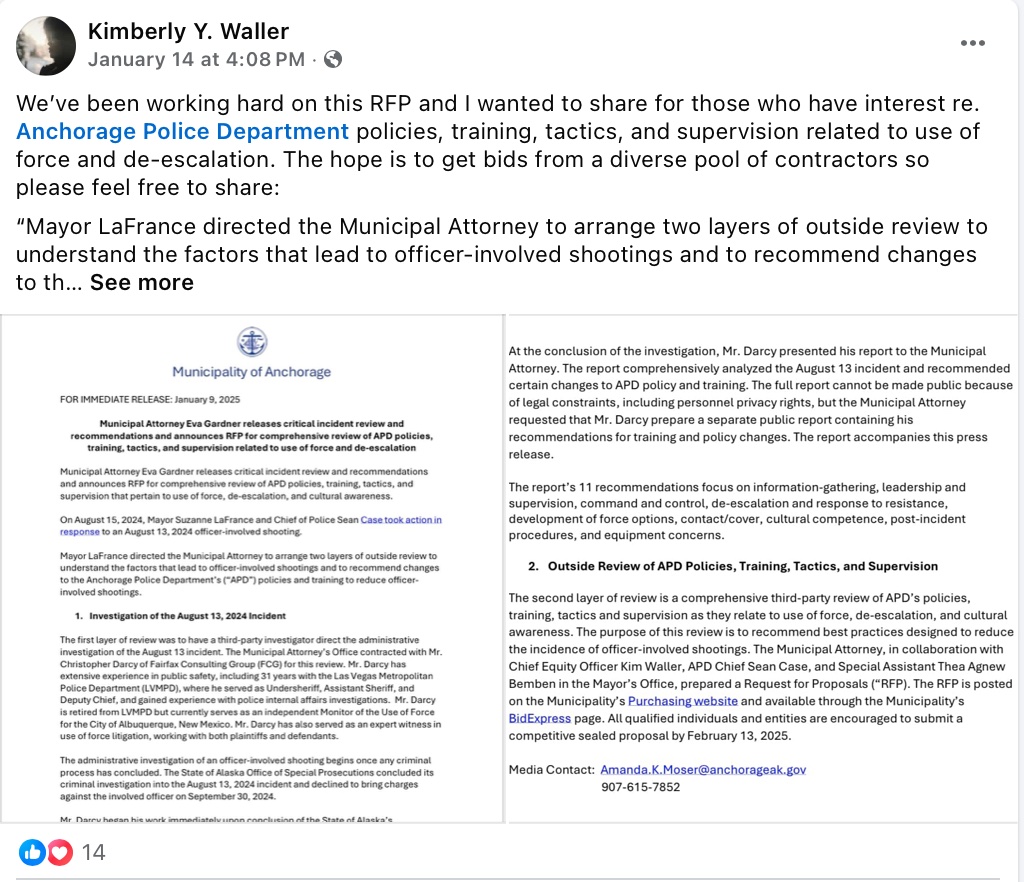
Kimberly Waller, the Anchorage chief equity officer for Mayor Suzanne LaFrance, complained long and hard on Facebook this past week about President Donald Trump’s executive order that ends discriminatory hiring practices across the federal government, practices known as DEI, for “diversity, equity, inclusion.”
In a Facebook message, she said Trump’s executive does not have the force of law and she will not resign.
Must Read Alaska pointed out that Waller was using her personal Facebook page to conduct city business, to promote partisan candidates and causes, and to encourage people to shop at certain stores, such as Party City, which had a going-out-of-business sale that she thought to share with her followers.
Waller has a projected annual salary of $165,006.40 for the position that was created by the Anchorage Assembly. The first chief equity officer, hired in 2021, made $115,000 per year, but left shortly, and posted a cartoon on social media showing KKK members firing him.
Waller’s predecessor Junior Aumavae, appointed by Republican Mayor Dave Bronson, made $127,000 a year.
Since the position was created by the Assembly in 2021, it has seen a more than 43% increase in salary — in four years.
On city time, Waller has busily posted all manner of political, government, and personal material on her personal Facebook page, such as these examples:
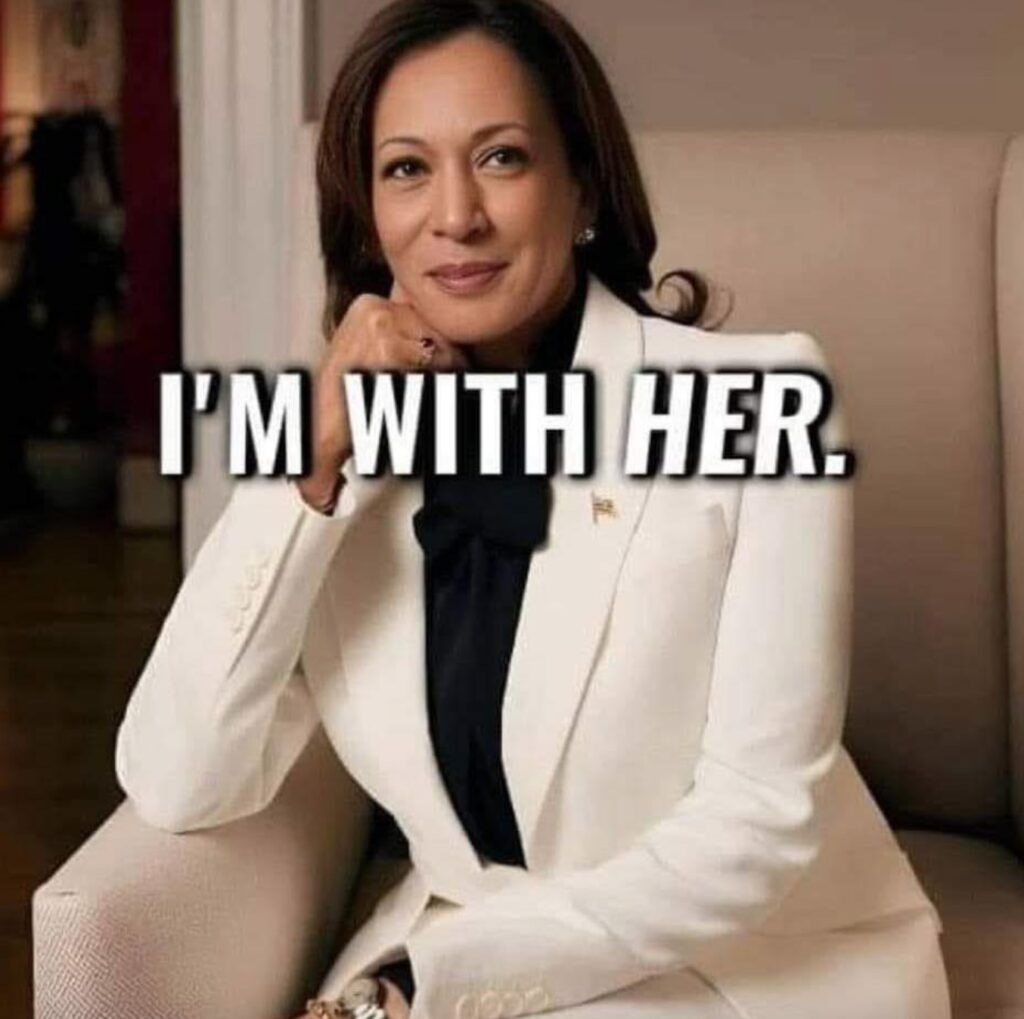
Kimberly Waller posted her support for Kamala Harris for president.Waller uses her same Facebook page for city business.Kim Waller posted about shopping at Party City during work hours, and promoted city contracts and candidates on her Facebook page, while being paid by taxpayers.
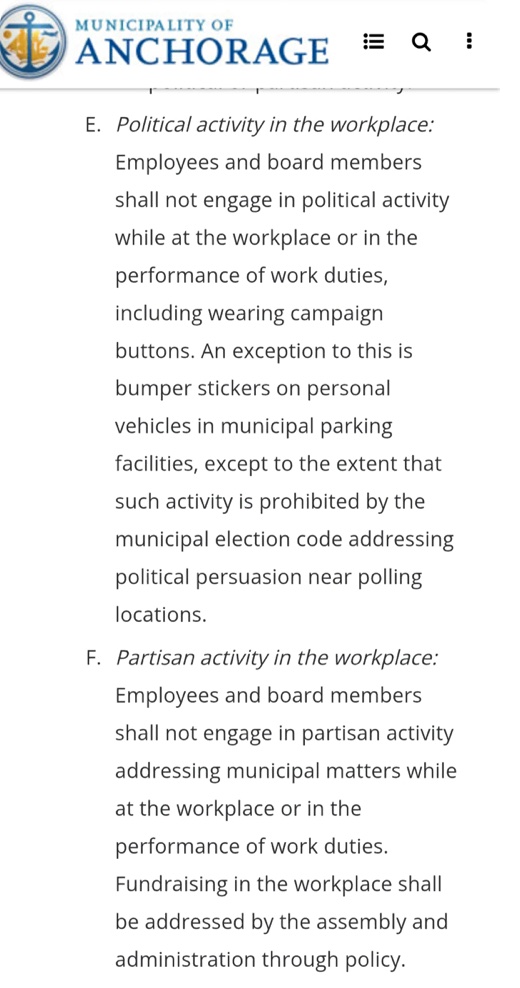
A city employee using their personal social media accounts in an official capacity, while mixing in messages about political campaigns, is a violation of the city’s ethics code. Doing all that during working hours is even more egregious.
What’s more, she wrote extensively in her official capacity about her job as chief diversity officer and her opposition to Trump.
Apparently Waller got the message.
Today, Waller’s Facebook page content, once filled with multiple violations of city code, is all-but disappeared. She left two items on it — a memorial to a deceased friend and a photo of a family member. All the messages about how to do business with the Municipality of Anchorage, her promotions of candidates such as Kamala Harris, and her official statement about Donald Trump are gone.
It’s likely there will be no consequence for Waller, who is a Democrat and who sees herself as a protected class.
For posterity’s sake, her Facebook remarks about Trump before she took them down follow:
“I am writing this in response to the below Executive Order coming out of Washington this week and in response to the influx of calls to my office and personal phone. Thank you to the many people, organizations and Anchorage residents who have reached out this week as we digest the flurry of EO’s pushed out by the new administration. These orders have dealt a blow to so many communities and people whom I care deeply about, and that hurts. To put it plainly, we are in troubled times but we will hold each other up.
“I hope to give some clarity here. For starters, an Executive Order is not a law. The new administration sent home everyone working on any initiatives around equity and asked for 60-day plans for their termination. The White House has effectively ended affirmative action and at a federal level, incentivized anyone who knows of that work happening at a federal level to report that work, pending some serious repercussions.
“While these orders haven’t yet been put into effect at the state or local level, I was informed by Municipal Attorneys that we need to be prepared. And we are.
“What’s disheartening to me is that this EO states that we are doing things we’re simply not doing. In my office, and at the Municipality of Anchorage, no one is being hired, promoted or given any rewards based upon the color of their skin. Hard work is hard work, no matter what race or gender. We do not discriminate based on race, sex or class. We do not play into identity politics nor do we engage in any form of race baiting or hate. It is painful to have to type this but I can assure, I would never spend my time or talents engaging in that sort of bafoonery. It is not who I am, it is not how I was raised and it certainly does not reflect my values.
“What we are doing is connecting with communities and organizations who feel they have no voice in local government. We are assuring that those within our diverse Municipality have language access and are able access the services we offer in their respective languages. We are thoughtfully considering the privilege we hold, as the distributor of enormous resources, when making decisions that affect children, families and marginalized communities.
“We are and will continue to show up and care for those who are experiencing hate, discrimination, bullying and violence based upon their identities. We are continuing our efforts to educate municipal workers on tribes and tribal relationships, which are extremely vital. We are working with APD to not only make sure they receive what they need to do the tough work, but to make sure our immigrant and refugee communities feel safe. And we are doing, so much more.
“My concern is that those who follow the president believe what he says – because he says so, they will believe that these efforts are illegal, divisive and hateful. That people like myself and offices like mine are pushing people out and being discriminatory. We know that perception is reality. Affirmative Action and the laws that came to be were put in place because real (not imagined – real) discrimination and persecution has happened over time and corrective measures had to be put into place as a means of protection. That is our history and that cannot be erased. We can only work to correct so that all can have a shred of a shot at the American Dream.
“My office will continue to work within the parameters of what has been set before us and we will do so, fearlessly. This is the work that brought forth civil rights, voting rights, rights for women, veterans, the elderly, Title IX, rights for the LGBTQ community, for indigenous people, Americans with disabilities and so much more. For me, there is no greater work.
“There is no executive order that will make us stop caring about our neighbors and fellow Americans. There is no law that will stop us from uplifting the voices of the voiceless, to assure that everyone has fairness and dignity in their lifetime. There is no level of threat that will make us so fearful that we will walk away. I’ve assured Municipal lawyers I will not resign. If you know me you know I do not say things I don’t mean.
“Please feel free to reach out to my office should you have any further questions. We will be going through some changes. We have the support of a Mayor, an Assembly (majority) and local government employees who care deeply about the health, personal safety and well being of not only those within the Municipality of Anchorage, but across our nation.”
Unfortunately, Waller is not being fully transparent about her official activities. She is working on enacting discriminatory practices in hiring and contracts.
Led by Iowa and Kansas, 20 state attorneys general sent a letter to Costco demanding that the company fully repeal its discriminatory diversity, equity, and inclusion (“DEI”) practices. These are practices that promote quota hiring to ensure that various categories of humans are represented in the workforce, including hiring by race and sexual preference, rather than by qualifications. Costco does not practice race-neutral hiring, in violation of federal law.
The letter to Ron Vachris, president and chief executive officer of Costco, follows President Donald Trump’s executive order encouraging “the Private Sector to End Illegal DEI discrimination and Preferences.”
All of the signatories are from Republican-run states of Iowa, Kansas, Alabama, Arkansas, Georgia, Idaho, Kentucky, Kansas, Louisiana, Missouri, Montana, Nebraska, North Dakota, Ohio, Oklahoma, South Carolina, South Dakota, Tennessee, Texas, and Virginia.
Despite the U.S. Supreme Court repeatedly warning against the use of race-based preferences and sexual preference classifications, the board of directors of Costco voted this month to retain its support for its DEI practices and policies, even while other companies are quickly abandoning these unlawful acts after being called out by members of the public. A shareholder effort to end the practice was quashed by the board.
“Discriminatory DEI policies are unethical, unlawful, and fundamentally un-American,” commented Texas Attorney General Ken Paxton one of the signers of the letter. “The fact that Costco continues to defend such practices is reprehensible. DEI programs consistently promote divisive and discriminatory ideology as opposed to ensuring that all individuals are treated equally and with respect, and that’s why I’m calling on Costco to end their woke policies immediately.”
Race-neutral practices, on the other hand, honor the founding ideals of this country, the group’s letter said.
“Pena-Rodriguez v. Colorado held that “It must become the heritage of our Nation to rise above racial classifications that are so inconsistent with our commitment to the equal dignity of all persons.”
As Supreme Court Justice Clarence Thomas wrote in Harvard, DEI is inconsistent with the “principles so clearly enunciated in the Declaration of Independence and the Constitution of the United States: that all men are created equal, are equal citizens, and must be treated equally before the law.” Costco should not have policies that discriminate in hiring based on race or gender,” the attorneys wrote.
The letter concluded by asking Costco to inform the coalition within 30 days if its DEI policies have been repealed.