To combat the growing opioid crisis, President Donald Trump expanded a national emergency declaration to include the influx of illicit drugs and human trafficking through the northern and southern borders.
The administration has imposed new tariffs on Canadian, Mexican, and Chinese imports, in response to what it calls insufficient action by the Canadian government to stem the flow of fentanyl and other dangerous narcotics into the United States.
The Trump Administration cited the devastating effects on American communities, public health systems, and law enforcement agencies. Trump said that drug trafficking organizations operating in Canada and Mexico, in coordination with transnational cartels, have facilitated the smuggling of fentanyl, methamphetamine, and other narcotics into the U.S. through clandestine routes, exacerbating the country’s opioid epidemic.
In a statement issued by the White House, President Trump emphasized the urgency of the crisis: “A Nation without borders is not a nation at all. I will not stand by and allow our sovereignty to be eroded, our laws to be trampled, our citizens to be endangered, or our borders to be disrespected anymore.”
Canadian officials have failed to dedicate adequate resources to counteract drug trafficking and money laundering operations linked to fentanyl production, particularly in British Columbia, which is adjacent to Southeast Alaska. In communities of Haines and Skagway, where Alaskans drive to Whitehorse, Yukon to get food and supplies, the tariffs will have an impact on everything from household goods to building supplies unavailable elsewhere.
New duties of 10% will be placed on all imports from China along with 25% on imports from Mexico and Canada, with the exception of oil, gas, and electricity, which are set at 10%.
Mexico and Canada responded with tariffs of their own. Canada’s outgoing Prime Minister Justin Trudeau said he will put a 25% tariff on up to $155 billion in U.S. imports. Mexican President Claudia Sheinbaum called allegations that the Mexican government has entanglements with criminal cartels “slander” and directed her officials to come up with retaliatory tariffs.
Reports from Canada’s Financial Transactions and Reports Analysis Centre highlight a rising trend in domestic fentanyl production and its growing international distribution.
While much of the public debate has centered on the U.S.-Mexico border, the administration has pointed to mounting evidence that Mexican cartels are establishing fentanyl synthesis labs within Canada, further fueling the crisis. Recent seizures by U.S. Customs and Border Protection indicate that, although less fentanyl enters from Canada compared to Mexico, even small amounts of the highly potent drug can have devastating effects. The White House cited data showing that the fentanyl trafficked across the northern border last year had the potential to kill 9.5 million Americans.
To ensure compliance from Canada and Mexico, Trump has invoked the National Emergencies Act and the International Emergency Economic Powers Act to implement strict economic measures. Among them:
A 25% tariff on all Canadian and Mexican imports, with exceptions outlined in federal guidelines.
A 10% tariff on Canadian and Mexican energy resources, as defined in Executive Order 14156.
Tariffs will take effect Tuesday, Feb. 4, 2025, applying to all goods entering the U.S., with specific exemptions for shipments already in transit before Feb. 1
The rates of duty established by his order are in addition to any other duties, fees, exactions, or charges applicable to such imported articles.
“Should Canada retaliate against the United States in response to this action through import duties on United States exports to Canada or similar measures, the President may increase or expand in scope the duties imposed under this order to ensure the efficacy of this action,” the statement from the White House said.
The imposition of tariffs on Canadian imports marks an escalation in trade tensions between the two nations. Canada is the United States’ second-largest trading partner, and these measures could have profound economic consequences on both sides of the border. Experts predict retaliatory tariffs from Canada, further straining diplomatic relations.
Critics argue that the administration’s approach could disrupt key industries, including automotive, agriculture, and energy sectors, potentially driving up consumer prices. Meanwhile, supporters of the policy view it as a necessary step to force Canada to take stronger action against illicit drug trafficking.
With this sweeping directive, the Trump Administration has made it clear that it considers cross-border drug trafficking from Canada and Mexico a national security threat.
As the February 4 deadline approaches, the administration has signaled its readiness to impose further penalties should Canada fail to demonstrate tangible progress in addressing the issue.
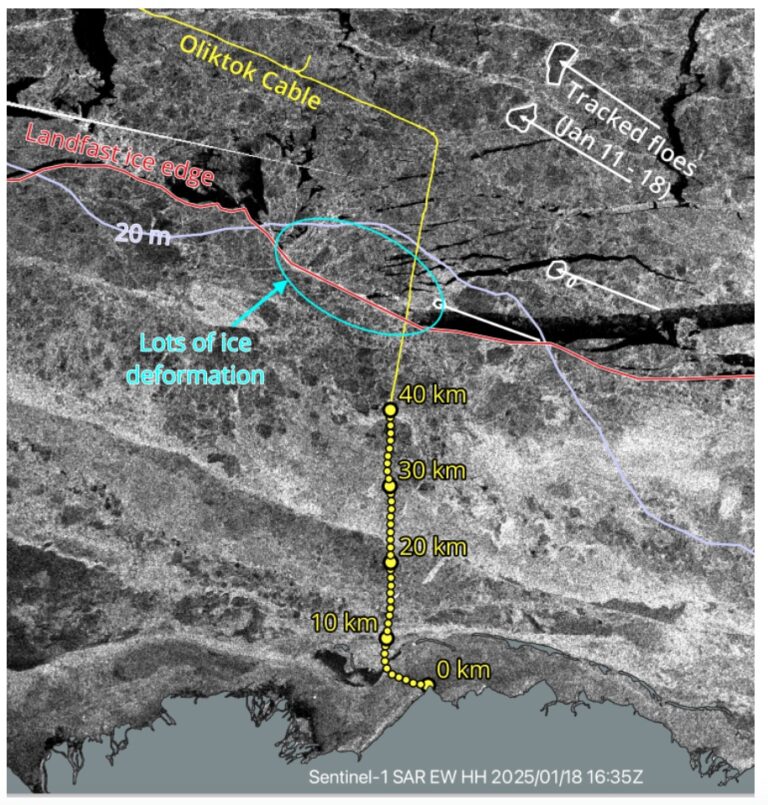
Quintillion Global, which suffered a serious break in its fiber optic cable in the Beaufort Sea on Jan. 18, says it believes the break is about 32-37 miles north of Oliktok Point.
The break has left much of the coastal Arctic communities without Internet access, although many people have turned to the Starlink satellite service as the breaks continue.
Oliktok Point is near where the U.S. Air Force has its Long Range Radar Site, DEW station POW-2 or NWS station A-19 and a gravel air strip owned by the Air Force.
“Since detecting the network outage on January 18, Quintillion’s team has been working around the clock to evaluate the subsea fiber cut and restore critical services. Collaborating with scientific, academic, and technical experts, Quintillion has concluded that an ice scour caused the severing of the cable approximately 32-37 miles north of Oliktok Point. Based on imaging and analysis by sea ice experts, there is clear evidence of fast ice and sea ice activity in the fault area. Quintillion is continuing our examination of the area and is working with commercial and government entities to possibly deploy remote operating vehicles with high-resolution cameras for additional forensic information,” the company wrote on its website.
As a short-term solution for its customers spread out across the Arctic coastline, Quintillion is proposing to use satellites with a hybrid of over-land fiber solutions, including linking Deadhorse and Utqiavik by land, which could possibly be completed this spring, if federal funds can be secured.
“Quintillion has aggressively moved forward with local partners to restore critical services in the near-term. While the installation process will likely take several weeks, Quintillion’s objective is to restore a significant level of service by linking our fiber between Nome and Utqiagvik with a network at the satellite ground station in Nome for additional transport capacity. This hybrid solution will provide back-up services until the fiber in the Beaufort Sea is fully repaired,” the company said.
The area where the break has occurred is not expected to be clear of sea ice until late August. The company is looking for help from the Federal Emergency Management Agency to pay for a temporary solution.
“Quintillion is also working with a variety of stakeholders urging the federal government to award a Federal Emergency Management Agency (FEMA) grant to expedite service restoration. The goal is to have FEMA funds released within the next few weeks and to begin a winter build of an interconnected terrestrial route from Utqiagvik to Deadhorse, which would effectively bypass the area of fault on the subsea network. This project, with proper support and acceleration by federal agencies, could be completed this spring. However, there is moderate probability of success, based on challenges beyond Quintillion’s control, including the permitting process being slowed by federal government rules/regulations.”
The company said it has initiated longer-term efforts to repair the subsea cable.
“Our technical team is mobilizing repair and installation vessels and formulating plans for a subsea fix, depending on additional information from our forensic investigation. As we observe significant changes in ice movement and behavior in the Beaufort Sea due to climate change, Quintillion will develop plans to reroute the Oliktok landing to work around an increasingly volatile area. Stakeholder input and coordination will be crucial,” the notice said.
“Quintillion fully understands and appreciates the urgency of the situation, given the importance of high-speed internet to so many on the North Slope and in Northwest Alaska. Our team is working tirelessly on immediate, short-term, and longer-term solutions, and we are committed to a full restoration of services as quickly as possible. While there is much beyond Quintillion’s control and in the hands of the federal government and nature, we will not stop working until the job is complete. We appreciate the ongoing support and assistance from our community partners and Alaska’s elected officials, and we will continue to provide updates as developments occur,” CEO Mac McHale said.
TRY THIS DELICIOUS ALASKA BARLEY-MUSHROOM-COUSCOUS RECIPE
By BRENDA JOSEPHSON
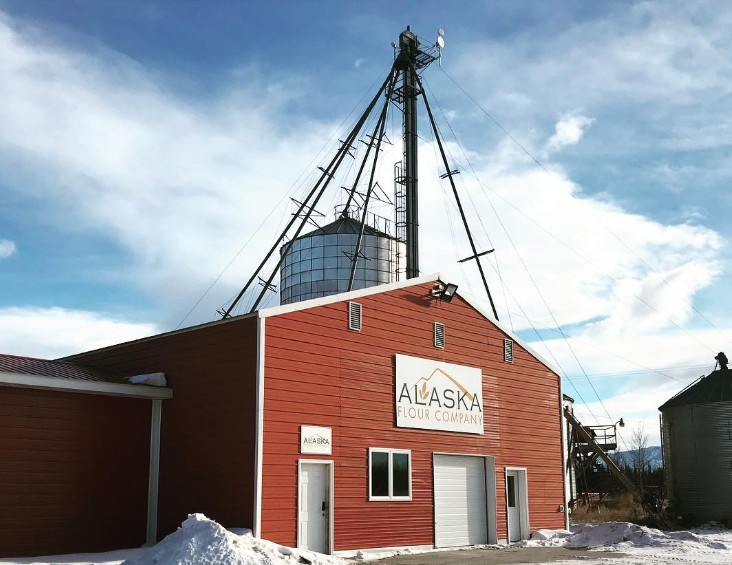
Alaska-grown, harvested, processed, and packed, America’s northernmost commercial flour mill and bakery is contributing to Alaska’s food security with a variety of products created from “the world’s most nutritious hulless barley.”
Flour, grits, couscous, cornbread, risotto, stew mixes, pancakes, brownies, rolls, buns, pizza, and countless other barley products are grown, milled, and prepared by Alaska Flour Company.
Bryce and Jan Wrigley, along with their family, moved to Delta Junction in 1983 with the goal of increasing Alaskans’ access to healthy, sustainably produced food. Since then, they have worked tirelessly to fulfill their vision, and now they are able to offer these locally grown products for your table.
The Wrigley family’s dream was able to come to fruition in part due to the State of Alaska’s Delta Barley Project. The project made available large parcels of land with agricultural rights and loans to fund startup costs. However, in order to achieve sustainability, the farmers had to overcome a variety of challenges, including a barley market collapse, logistical issues, and the high operating costs associated with farming in Interior Alaska.
The establishment of the Delta Barley Project took place in the 1970s, during a period of abundant oil revenue for the State of Alaska. Gov. Jay Hammond promoted the farming project because he understood the importance of building a renewable resource base to support Alaska after oil depletion. The initiative chose small grains and barley as target crops because of their demonstrated capacity to survive in Alaska’s colder temperatures and shorter growing season.
Watch this vintage video from 1982 on the Delta Barley Project:
Delta barley farmers rely on seed from the Alaska Plant Materials Center. Sunshine Hulless barley was developed at the University of Alaska Fairbanks for human consumption. It is a short-season crop that is cold-weather tolerant and is a superfood with a low glycemic index, high in beta-glucan soluble and insoluble fiber, and the most fiber of any grain. UAF conducts ongoing research to improve the barley for Alaska’s farmers in Delta Junction.
Bryce Wrigley sees himself as a temporary steward of the land on his farm in Delta Junction. He promotes healthy soils by practicing regenerative agricultural practices such as no-till farming, cover crop planting, and biodiversity enhancement. The family started practicing no-till methods on the fields in 2010.
Since making the change, he has experienced more consistent crop yields. He said, “I fell in love with the ability of no-till to retain moisture in the field.”
He explained that the crops rely on spring rains to germinate. Prior to switching to no-till, they had inconsistent germination, with green grain mixed in with ripe grain. The uneven growth was caused by insufficient moisture throughout the tilled fields, resulting in some seeds not receiving enough water to germinate. The no-till method provides balanced moisture retention while improving soil health.
The farm’s 1,700 acres are divided into three rotations: 500 acres of barley, 500 acres of hay, and 500 acres fallow, with the remaining 200 acres preserved with trees as windbreaks. The regenerative practices have resulted in improved soil conditions.
“After seven years, I can see that there is a cover crop advantage. In Alaska, there is not enough time to plant during the fall germination period. So, we plant a cover crop the next year when the field is lying fallow. We feed the soil with the cover crop, leave it unharvested, and then plant on top of it the following year. As humus builds and the top layer deepens, the soil becomes darker,” he said.
Bryce views his stewardship of the land as a commitment to not only raise barley responsibly and sustainably but also to “do everything we can to increase sustainability.” He says he’s excited about the gains in soil health that are occurring, but “the more I learn, the more questions I have.”
Learn more about the regenerative agriculture practices Delta Junction farmers are using at these links:
The Wrigleys’ vision to help address Alaska’s food security was realized in 2011, when Alaska Flour Company was founded. In addition to helping to meet our region’s nutritional needs, the commercial flour mill is opening up new markets for Delta barley farmers’ grain.
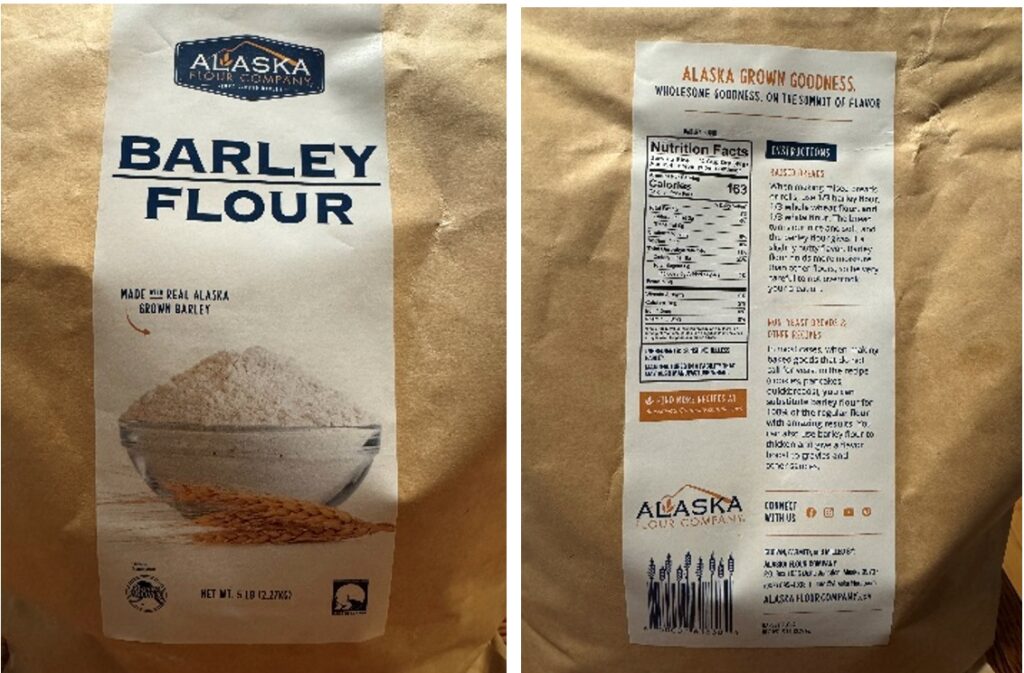
Alaska Flour Company barley flour
In addition to stone-ground flour, Bryce’s son, Milo Wrigley, has been working hard in the mill to develop a complete barley product line for the retail market, including hot barley breakfast cereal, barley grits, pancake mixes, cornbread, cakes, muffins, barley risotto, couscous, stew mixes, muffins, cakes, brownies, and more.
Alaska Flour Company has expanded its line of products to include meal kits.
Alaska Flour Company’s products are available at retail locations statewide and can also be purchased online at their website. Be sure to check out their recipes and tips.
In 2023, the company’s product line was expanded to include baked items. The idea arose after talking with restaurateurs who said they were having difficulty getting personnel to completely staff their kitchens. In response to this need, they established a bakery in their Delta Junction facility to supply pre-baked and frozen products directly to restaurants.
Alaska Flour Company hamburger buns
Their product line now includes hamburger buns, dinner rolls, sub rolls, sandwich bagels, brownies, cornbread, cookies, cookie dough, and pizzas for the restaurant industry. The company has a proactive approach and is always willing to work with customers to develop new items to meet their needs.
To achieve food security in Alaska, we need people who are willing to do things differently and take risks. The Alaska Flour Company exemplifies how one family’s desire to provide healthy, sustainably produced food in our region has evolved into a business that offers a complete line of locally grown barley products and baked goods.
Learn more about Alaska Flour Company, at this link Alaska Flour Company Video Linkand visit their website at https://alaskaflour.com/ for a list of their barley offerings and the locations of retailers that carry their products.
In-state food producers face unique challenges due to our region’s climate, production costs, and logistics. As we seek to increase our statewide ability to meet our sustenance needs, we can all contribute by supporting producers and retailers who sell Alaskan-grown products. This will help create capacity to deliver more items at lower costs.
Support Alaska’s food security by buying local when possible and checking for Alaska Grown and Alaska Made labels on products in your stores.
Try this scrumptious recipe using Alaska Flour Company’s barley couscous. It is full-flavored and high in nutrients to satiate your hunger and fuel your body.
Alaska Barley Couscous and Mushroom Salad
Ingredients:
1 cup of barley couscous
2 1/2 cups of chicken stock (or substitute vegetable stock or bone broth)
4 ounces of mushrooms sliced
2 tablespoons butter
1 shallot (or substitute a small onion) finely diced
1 clove of garlic minced
1 1/2 ounces of red wine (or substitute white wine or chicken stock)
1 cup of cherry tomatoes washed and cut in half
1 cup of spinach (or substitute kale) washed and torn into bite-size pieces
1 lemon juiced
2 tablespoons of olive oil
1/2 teaspoon salt (more or less to taste)
1/2 teaspoon pepper (more or less to taste)
1 to 2 green onions for garnish (optional)
Makes 4 servings
Preparation:
Start by gathering and preparing the cherry tomatoes, spinach, juice of the lemon, and olive oil. Wash and tear the spinach into bite-sized pieces, cut the cherry tomatoes in half, juice the lemon, and have the olive oil available. Place the spinach and cherry tomatoes in a large bowl and set aside until the couscous and mushrooms are ready to add to the salad ingredients.
Place the chicken stock and barley couscous into a small saucepot over high heat and bring to a boil. Once it is boiling, stir and reduce to a simmer. Place a cover on the pot and let simmer for 8 to 10 minutes, stirring occasionally to prevent sticking to the bottom. Then remove it from heat, remove the cover, and stir. Let it sit while you prepare the other ingredients.
While the couscous is simmering, melt the butter in a saute pan over medium-high heat and add the sliced mushrooms. Cook the mushrooms until they start to caramelize. When the mushrooms start to brown, add the wine and stir to deglaze the pan. Continue to cook the mushrooms until the wine evaporates. Then add the diced shallot and 1/4 teaspoon of salt and pepper; cook until the shallots start to become translucent. Reduce the heat to medium and add the garlic. Cook for one to two minutes, stirring constantly to ensure the garlic does not scorch.
Then stir the prepared couscous with a fork to fluff. Add the couscous to the mushrooms, onions, and garlic, stirring to mix together. Allow the couscous to blend with the mushrooms under medium heat for a minute or two, then turn off the heat.
Mushroom and barley couscous
At this point, you have a delicious mushroom couscous dish that can be enjoyed on its own or as a side dish, perfectly complementing a variety of fish and game meals. Or you can elevate the dish by continuing to add the fresh salad ingredients.
To continue to make the barley couscous and mushroom salad, add the warm mushroom couscous mixture to the spinach and cherry tomatoes and mix together. Finally, add the lemon juice and olive oil and mix all ingredients. Taste and add salt and pepper if desired. Garnish with sliced green onions.
Serve immediately for a warm couscous salad. If you prefer a chilled salad, refrigerate it for an hour before serving. This dish holds up well in the refrigerator and is a tasty leftover to enjoy the next day.
Brenda Josephson is a Haines resident. She holds degrees in Culinary Arts and Food Business Leadership from the Culinary Institute of America, Hyde Park, New York. She enjoys spending time fishing, foraging, and savoring Alaska’s abundance of natural and wild foods with her family.
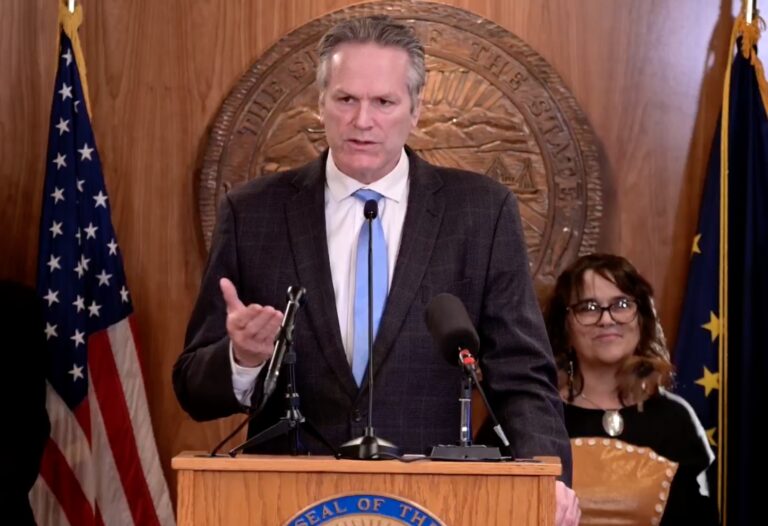
This week, Gov. Mike Dunleavy provided legislation, HB76 and SB82, to improve Alaska’s education system with accountability for results. He believes that good policy should be implemented before money is thrown at perceived problems.
So, what are the returns on our investment in K-12 education?
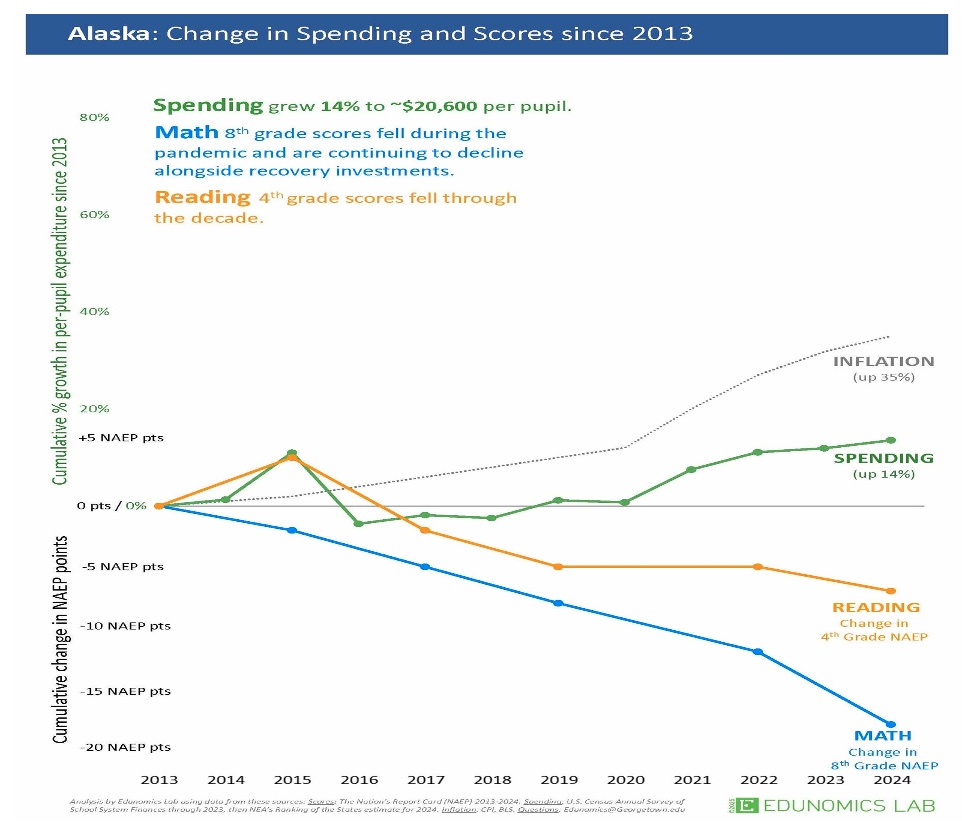
Here is a graph that shows the relationship between inflation, Alaska funding, and NAEP 4th grade reading and math scores since 2013:
There appears to be an inverse relationship between spending and student achievement. We can do better, and we need to do better for our kids.
Let’s look at this omnibus K12 education bill. Note the accountability requirements.
The legislation increases education opportunities for parents with open enrollment and increased charter school growth.
Here are the major fiscal policy changes, some of which are changes to the K12 funding formula, making them future funding as well.
Changes to the Correspondence (home school) program:
Increase funding for correspondence (home school) students from 90% to 100% of the student count (increase of $43M). This ensures that home school students are given full equity.
For those correspondence students identified as “special needs” and those who enroll in CTE (vocational education), they will also receive that funding. This provides equity for home school students and places them on an equal basis with their brick & mortar students.
Increases the CTE factor from 1.015 to 1.04 in the K12 funding formula (increase of $31M). This requires the districts to provide plans and reports to the Department, thereby ensuring accountability for the funding.
Changes to the funding of transportation. Because of the increase in the cost of providing student transportation, the state will increase funding by 20% at a cost of $14.5 million. Much of the increased cost is due to energy and increased bus driver wages resulting from the Covid “pandemic.”
The governor proposes to increase funding for nine residential schools by $4 million.
School bond debt reimbursement program is extended to 2030.
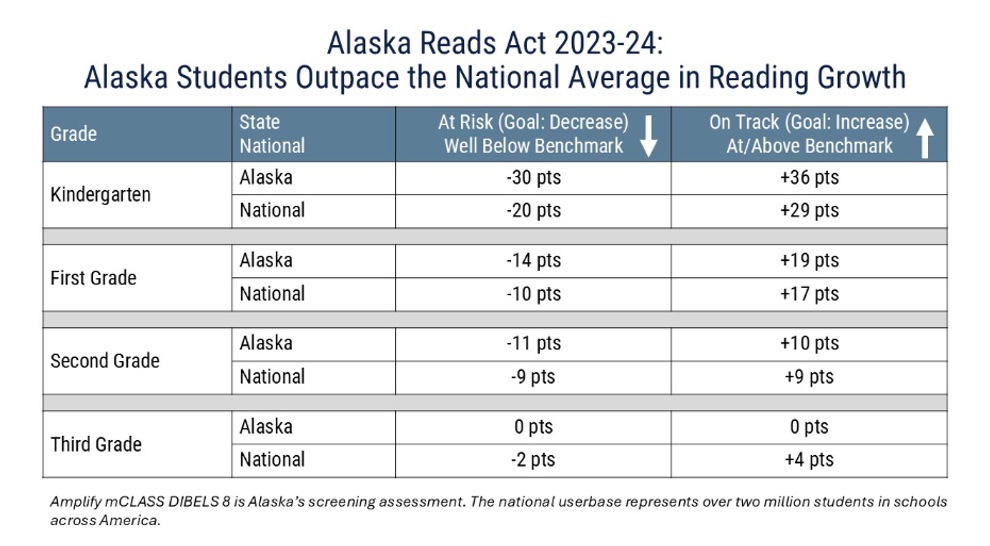
Gov. Dunleavy also expands the Alaska Reads Act from K-3 to K-6 and increases funding to $21.9 million. The Act has already shown promising improvement in the K-3 students as shown in this chart:
Many in the education industry have complained that the current funding is not adequate to teach our kids how to read. That begs the question, what are the kids being taught if not reading?
Dunleavy’s bill also increases educational opportunities for all Alaska children by providing open enrollment regardless of zip code. This empowers parents by allowing them to enroll their child in any school within the state-charter, neighborhood public, or correspondence school. The only limitation is the school’s capacity.
So, an Anchorage parent could enroll their child in a MatSu neighborhood school, charter school, or correspondence school. The only hitch is that the parent would have to provide transportation. But districts are also required to establish a student transportation plan as part of this policy.
To provide transparency on school capacities, districts are required to publish on their websites student enrollment data to include school capacity, vacancies for each grade, the number of applications, acceptances, denials, and the reasons for denial.
Better yet, school districts are required to accept students throughout the year as capacity allows. This is extremely important to military families, as not all relocations occur during the summer
Dunleavy wants to expand public charter schools so parents on the waiting lists can get their child to those schools. Unfortunately, the school districts have a stranglehold on the authorizing (startup) of charter schools.
Many of the best schools are our public charter schools but we don’t have enough to support the demand.
The governor wants to fix that problem and help more parents get to the best public schools in the state. Who can oppose that?
The Governor’s legislation proposes to allow the State Board of Education to authorize charter schools anywhere in the state. Additionally, it would allow the University, local municipalities, and any state agency to authorize charter schools.
Surely, school districts will oppose this part of the bill because they do not want to lose their monopolies over even the charter schools. The local districts would be required to operate these charter schools.
Senate President Gary Stevens of Kodiak agrees with the education monopoly, “As I said earlier this week, removing an elected school board’s local control and giving it to an unelected state board to establish charter schools is a no-go.”
The best local control are the parents, not a so-called “elected school board” that bows to the wishes of the teachers’ unions. The finest example is the president of the Anchorage School Board, who was the former president of the Anchorage teachers’ union.
Finally, to improve teacher retention and recruiting, Dunleavy has proposed a teacher bonus program that would provide payments of between $5,000 and $15,000 per year to teachers, depending on the remoteness of the district. These bonuses would be restricted to full-time teachers occupying a position requiring teaching on a regular basis. It is targeted at classroom teachers.
Alaska must do something different to improve the current K-12 system. We are not getting a return on our significant investment of resources.
The battle lines are drawn. We have the “status-quoers” who want to keep throwing more and more money at a system that is failing many children.
Senate President Stevens said that tying educational outcomes to funding needs will not turn this crisis around, “but only exacerbate it.”
And then we have the “reformers” who want to change the system by providing more educational opportunities for all Alaska children.
“We must recognize parental rights so parents may choose the best education path for their child. Focusing on the successful education of all students by meeting their unique needs is the number one priority,” said Sen. Mike Cronk of Tok/Interior.
It seems that the “status quoers” are focused on the institution while “reformers” are focused on parents and students.
Just like an older vehicle, one must make a decision: Should I keep throwing money at the junker and hope it runs for another nine months? Or should I invest my hard-earned money in a new vehicle that will last for many years, thus a greater return on my investment?
In a bid to address perceived State of Alaska employment vacancy and retention issues, the House Democrat-led majority has introduced House Bill 78, a pension reform measure they claim is a middle ground between past defined benefit retirement plans and the current defined contribution system.
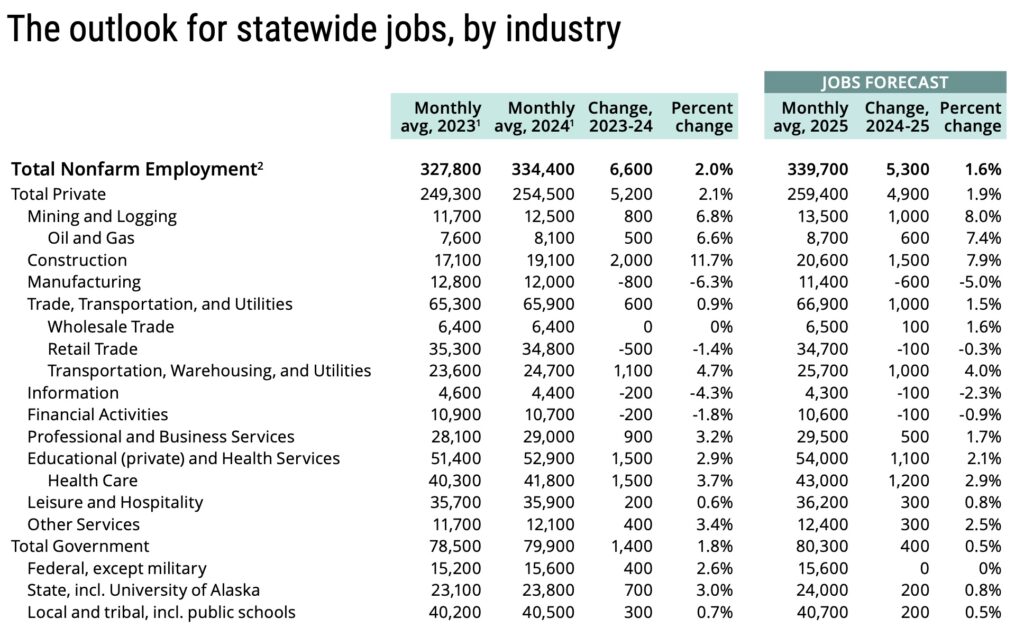
In reality, the State of Alaska added 700 people to its roster last year and is projected to be staffed by 24,000 workers in 2025. It remains one of the biggest employers in the state.
Yet the perception of needing a lavish pension plan, as was used in the 1970s to attract workers to Alaska, persists despite the evidence it’s not needed.
The House Finance Committee bill proposes a risk-sharing retirement model where responsibility is distributed among employers, employees, and retirees. This marks a departure from traditional defined benefit plans—where the employer bears most of the financial risk—and the existing defined contribution plan, which places the burden largely on employees.
The House Finance Committee is co-chaired by Democrats Neal Foster, Andy Josephson, and shape-shifting Cal Schrage, who claims to be an independent.
“It is time to act. Firefighters, law enforcement officers, teachers, and other state employees have been calling out for a change to our broken retirement system for years,” said House Speaker Bryce Edgmon, formerly a Democrat but now independent as a matter of political convenience, which allows him to switch back and forth between political alliances. “This bill presents an opportunity to finally have an honest discussion in the legislature, and with the public, that has been stifled for too long. With House Bill 78, Alaska has a real opportunity to make our state a competitive employer again.” (*Italics by Must Read Alaska)
Screenshot from Alaska Economic Trends January 2025 edition, Alaska Department of Labor and Workforce Development.
House Majority Leader Chuck Kopp, a Republican who has joined forces with the Democrats to create a Democrat-controlled majority, said, “HB 78 will be considered with an eye toward a safer, more attractive, and orderly state that provides stability to businesses and families when making decisions to invest in Alaska.”
Representative Neal Foster, the Democrat co-chair of the House Finance Committee, explained, “HB 78 is about responsible retirement security that will not burden future generations of Alaska with unreasonable debt, and will make sure our workforce has reason to stay in Alaska.”
Are public employee defined benefit pension plans sustainable?
While HB 78 proponents say this bill will strike a balance, critics argue that any return to elements of a defined benefits system could create long-term financial liabilities for the state.
Defined benefit pensions, where employees are guaranteed a specific retirement income, have led to significant underfunded pension obligations in all the states where it has been used in the past.
In Alaska, the $7 billion still owed to the previous pension plan, dissolved in 2006, amounts to $9,524 per Alaskan owed to the pensioners still drawing from it.
The issue of growing unfunded obligations stems from a combination of factors, including longer life expectancies, inaccurate actuarial projections, and economic downturns that shrink investment returns. When these systems fall short, taxpayers will have to cover the gap.
Economists say the State of Alaska is uniquely at risk in these employer-guarantied pension schemes because the Alaska Constitution guarantees existing public employee pensions must be paid, as a much higher commitment than the need to plow roads, pay a Permanent Fund dividend, or even fund the University of Alaska. Article XII, Section 7 says public employee retirement benefits are contractual and cannot be diminished or impaired.
Now that the buying power of the Alaska Permanent Fund has failed to grow for some time and the Permanent Fund dividend has been skimmed off in order to increased state spending, public employee unions have the remaining Permanent Fund balance in their sights.
While the corpus of the Permanent Fund is protected in many ways, HB 78 does not protect it because of the Constitutional provision that says any retirement benefits must be paid.
HB 78 also does not acknowledge the congressionally passed Social Security Fairness Act, which was signed into law earlier this year. Alaska public employees benefit from this new law more than those of any other state. State and municipal employees, and retirees, in Alaska, including teachers and firefighters now have the entire Social Security entitlement for the first time since 1977. Therefore Social Security becomes for them a fully funded defined benefit retirement system, a very progressive one at that, in addition to the PERS and TRS defined contribution retirement systems.
PERS and TRS defined contribution systems are 401(k)-type plans that are more generous than most offered by private sector employers in Alaska. Supporters of the defined contribution systems, now almost 20 years old, point out that it has much more portability than defined benefit pensions.
Alaska moved away from defined-benefit pensions in 2006 due to the escalating costs of funding retirement obligations and price shocks not foreseen by actuaries of earlier years.
Defined contribution plans shifted more of the responsibility to employees, but also have contributions from the state. Yet they reduce the state’s financial exposure.
HB 78 is complex, as are all public pension systems. The bill is 52 pages of jargon, equations, and moving parts. No one would be ready to fully explain it upon a first reading.
However, one of the main flaws of the the bill is that it suffers from what’s known as adverse selection. It allows people to pick and choose how much the employer — the State of Alaska and local taxpayers — will be on the hook.
Also, the bill does not address problems unique to Alaska, such as the state taking on the majority of the responsibilities of the employer for municipalities and school districts that are not supported by property taxes. Those employers make decisions costly to the system and those costs are shifted to the State treasury and the Permanent Fund Earnings Reserve Account.
Public sector pension obligations are a growing issue across the United States, with several states grappling with severe pension funding crises, even though all states have discontinued these costly programs. Illinois, California, and New Jersey serve as cautionary tales, where massive unfunded liabilities have strained state budgets, forcing cuts to essential services and leading to tax increases to cover pension shortfalls.
Any sustainable retirement system must carefully balance benefits with fiscal responsibility. While HB 78 aims to mitigate risk through a shared model, fiscal conservatives warn that any system that shifts responsibility back to the employer could create financial obligations for future generations. If investment projections fall short or demographic trends change, taxpayers could once again be on the hook for shortfalls, undermining the bill’s goal of long-term sustainability.
HB 78’s destiny is uncertain as already there is another bill on the Senate side to bring back defined benefits at a time when billions of dollars are still owed to retired workers who were part of the old pension plan.
The bills in the House and the Senate would benefit elected officials at many levels, including legislators and staffers, and of course the executive branch at all levels.
There’s a general sense in Juneau that the House and Senate majorities have the numbers to enact a defined benefit retirement bill for public employees this session. The Department of Administration, which houses Retirement & Benefits, has been told to remain neutral on this financially critical matter. Since state finances are already so overdrawn and bleak, it’s likely that Gov. Mike Dunleavy will veto anything that brings additional financial uncertainty and budget stress.
In less than two weeks, the social club that the federal government had become during the Biden Administration is being quickly dissolved.
President Donald Trump and DOGE (Department of Government Efficiency) are undoing the official identity politics that are fragmenting the country, and his agencies are taking down the woke propaganda machine the government had become on its vast network of websites.
The dismantling of the federal forays into woke culture have happened so fast that it’s difficult to track them all, but that in itself illustrates the magnitude of how far things had gone off the rails during the Biden era, how much America had lost, and how hard the Trump Administration will have to work to put the ever-oozing government back in its container.
At the Department of State, the page that once advised precautions for “LGBTQI+ travelers” now just refers to them as LGB — Lesbian, Gay, Bisexual. No more transgender, queer or other alphabet identities. That’s due to the president’s executive order that says it is official policy that there are two sexes in America — male and female — not some salad mix of gender identities that must be catered to. How you choose to express your personality as a man or a woman is a matter of personal preference.
At the Department of Defense on Friday, a memo from Secretary Pete Hegseth says the “identity months” are dead.
The Hegseth memo says: “Our unity and purpose are instrumental to meeting the Department’s warfighting mission. Efforts to divide the force – to put one group ahead of another – erode camaraderie and threaten mission execution.
“Going forward, DoD Components and Military Departments will not use official resources, to include man-hours, to host celebrations or events related to cultural awareness months, including National African American/Black History Month, Women’s History Month, Asian American and Pacific Islander Heritage Month, Pride Month, National Hispanic Heritage Month, National Disability Employment Awareness Month, and National American Indian Heritage Month.”
Hegseth, whose appointment at the head of the Defense Department was opposed by Sen. Lisa Murkowski, noted that service members and civilians are free to attend these events in an unofficial capacity outside of duty hours.
“Installations, units, and offices are encouraged to celebrate the valor and success of military heroes of all races, genders, and backgrounds as we restore our warrior culture and ethos. We are proud of our warriors and their history, but we will focus on the character of their service instead of their immutable characteristics,” Hegseth said.
Hegseth’s directives were echoed over at the Quantico education campus of the Federal Bureau of Investigation, where a wall that has dozens of “core values” of the agency was painted over, according to a photograph obtained by the Washington Post:
A worker paints over a wall mural at the FBI training facility at Quantico.
The primary mission of the FBI includes protecting the United States from terrorist attacks, espionage, cyber crimes, public corruption, organized crime, violent crime, white-collar crime and upholding civil rights. However, the wall art of the training facility included messages to promote sustainability, equity, diversity, compassion, and emotional maturity, among other things, and none promoting patriotism, courage, bravery, civil rights, or even justice, for an agency that is a subset of the Department of Justice.
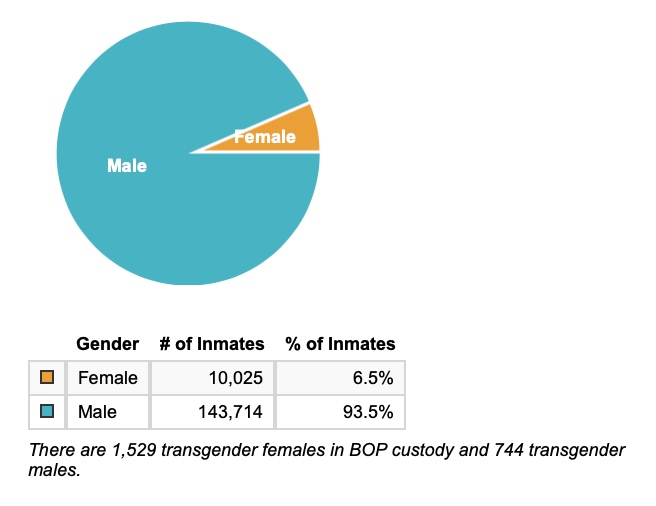
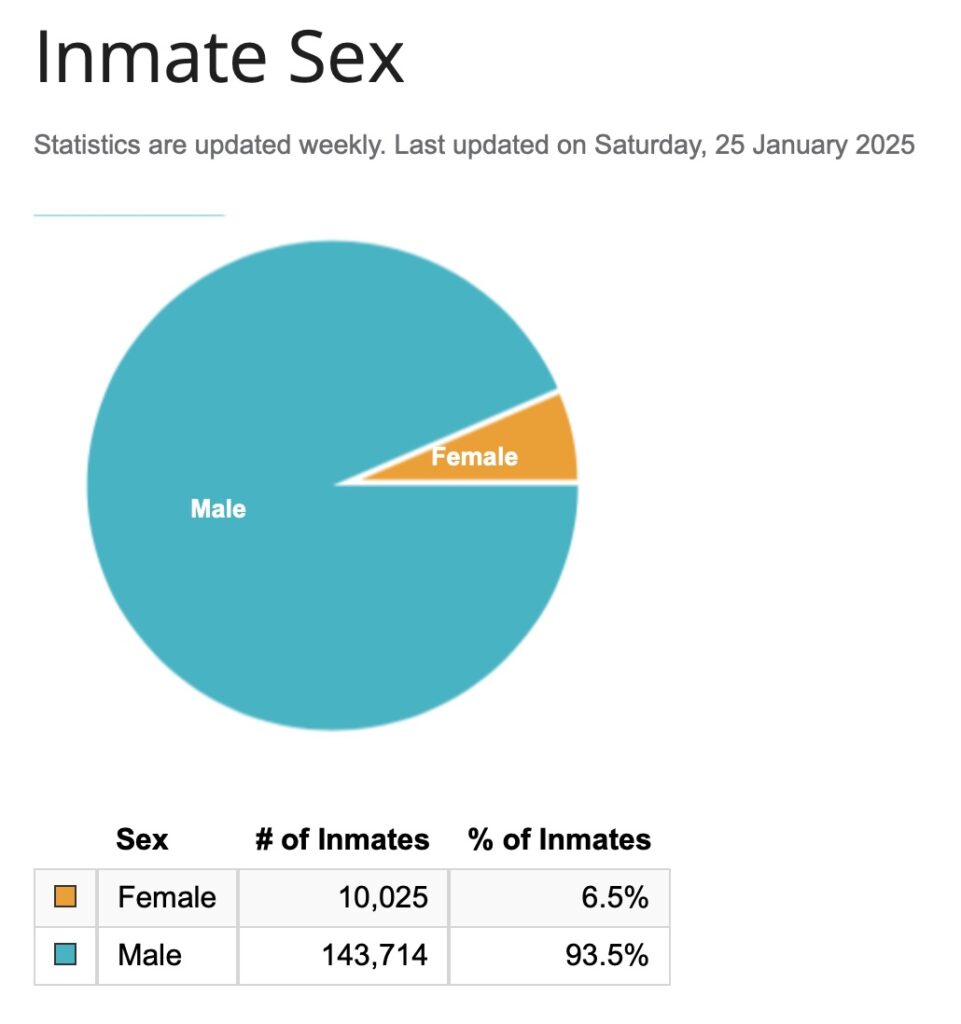
Archived statistics from Bureau of Prisons. The sentence at the bottom of the graphic has now been removed. See below.
The Bureau of Prisons, which previously reported on its website the number of transgender offenders in federal custody, now only shows male and female populations. Before Friday, it reported there are 1,529 transgender females (men living as women) in BOP custody and 744 transgender males (women living as men). Now, the graphic looks like this:
Screenshot of Bureau of Prisons statistics page.
At the Department of Interior, a web page is now devoted to “Interior Department Advances Restoration of Historic Names Honoring American Greatness,” and explains that the name of the Gulf of Mexico is now Gulf of America and that Denali is now Mount McKinley.
“The Department of the Interior remains committed to upholding all aspects of President Trump’s executive order, ensuring that the names we use reflect the values, sacrifices, and accomplishments that define our Nation,” the website says.
At the Department of Agriculture, the emphasis on climate change is gone and the agency has returned to explaining its core missions of agriculture, ranching, and forestry.
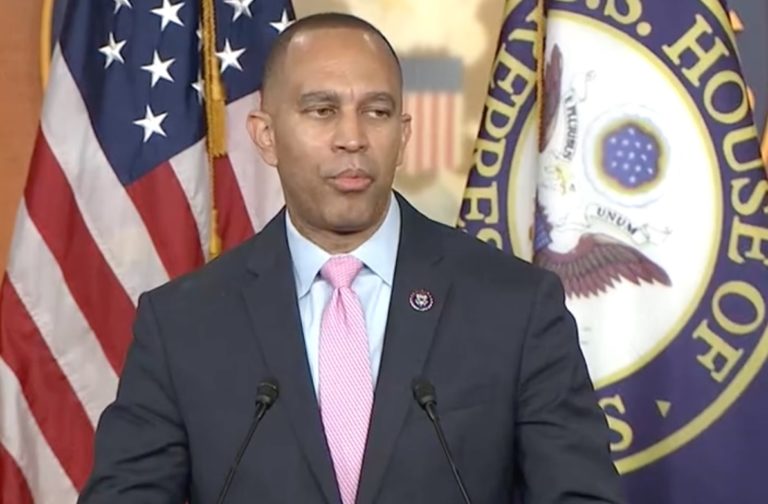
Rep. Hakeem Jeffries, leader of the Democrat minority in the U.S. House, said Democrats will take their fight to the streets over some of the executive orders and actions by President Donald Trump.
Jeffries told his troops [in a Democrat caucus meeting] to pursue all avenues of opposition — and take that fight to the streets, according to several Democrats who participated in the meeting, reported The Hill news organization.
After Jan. 6, 2020, when President Trump called for peaceful protest of the certification of the presidential election, he was charged by Speaker Nancy Pelosi’s Democrats in charge of the House with inciting an insurrection, and he was impeached, although he was not convicted by the Senate.
No one has called for Jeffries to be impeached, nor have they called for the impeachment of another Democrat, California Rep. Jared Huffman, who also said, “Leader Jeffries described it as a legal fight, a legislative fight and a street fight. And I couldn’t put it better.”
WATCH: House Minority Leader Hakeem Jeffries calls for violence as he says people must "fight" President Trump's agenda "in the streets." pic.twitter.com/ZEEkhtIGbZ
The “troops” Jeffries is rallying include users of the Reddit website’s discussion boards, who are now calling for armed violence in the streets.
We clipped a few of their comments responding to Jeffries’ call for street fighting, as they discuss forming militias and coordinated “armed intimidation”:
Reddit users organize for violence
Reddit is a notoriously leftist neighborhood on the internet, a site that is filled with over 100,000 “subreddit” topics and conversations that make it difficult for humans to monitor. Those who are speaking for conservative policy are quickly banned. Must Read Alaska was banned years ago.
Now, it’s become the home of a full-fledged movement to overthrow the Trump Administration, encouraged by the words of Reps. Jeffries and Huffman.
The violence being planned has been seen before on the left during the first Trump Administration, from former Attorney General Loretta Lynch to Rep. Maxine Waters.
The Trump White House and House Majority Whip Tom Emmer have called on Jeffries to apologize.
The White House statement called Jeffries’ actions “a sick call for violence. Will Minority Leader Jeffries apologize for this disgusting threat? Or will he double down on the same calls for violence that have plagued the country for years?”
Remember when Maxine Waters called Trump supporters domestic t*rr*rists and said Trump is dangerous?
Yet she's the one who has actually called for violence against Republicans.
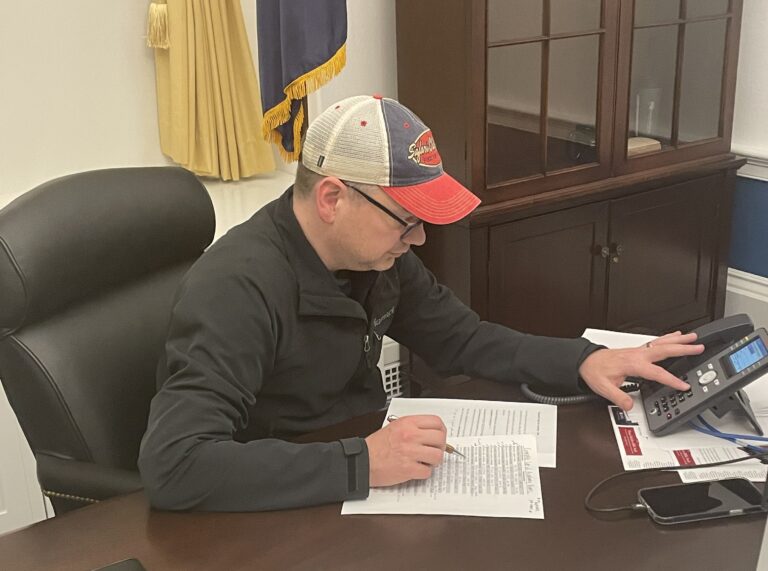
On Friday night in his Washington, D.C. office, Congressman Nick Begich III was still hard at work, even though the House is in recess.
It was 10 p.m. Eastern Time and Begich was calling all of the young Alaskans whom he had nominated to military academies.
These nominees had applied last year for the prestigious academies like West Point, but their applications had been left incomplete by former Rep. Mary Peltola, who lost her seat to Begich in November.
Begich, in office for just three weeks, didn’t want these exceptional Alaskans to wait another minute. He pored over all the applications to United States Naval Academy, Annapolis, Md; United States Military Academy, West Point, NY; United States Merchant Marine Academy at Kings Point, NY; and United States Air Force Academy, Colorado Springs, Colo.
The task was to nominate those applicants who meet the rigorous academic and physical requirements of each academy. The students must complete online applications and be nominated by at least one member of Congress. Both Sen. Lisa Murkowski and Sen. Dan Sullivan make nominations annually as well.
Receiving a nomination from a congressional member is the first step in the process of attending a service academy, but doesn’t guarantee admission. That’s up to the academies themselves, although all three members of Congress are guaranteed at least one appointment.
Begich called 46 young Alaskans high school seniors (and military members looking to transfer into the academies) on Friday night to let them know they had received his nomination.
Begich knows how transformational an academy nomination can be. In 1995, he was nominated to the U.S. Air Force Academy in Colorado Springs, and was also appointed.
The Alaska Legislature is again wrestling with increasing the funding of our K-12 education system. The mantra of “flat funding for decades” has been replaced by “inflation is causing the system to fail.”
The supporters of more funding — with no accountability for results — focus on a single funding factor, the Base Student Allocation, or BSA. They ignore the additional revenue streams that also fund our education system.
This misleads the Legislature and the public. In truth, the Legislative Finance Division says that funding for K-12 has increased by 34% since 2006.
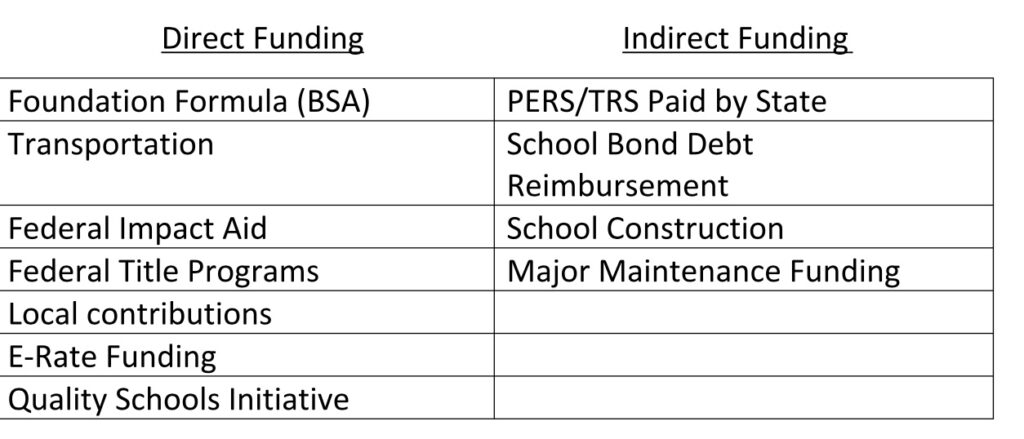
Here are the funding streams that pay for our K12 system:
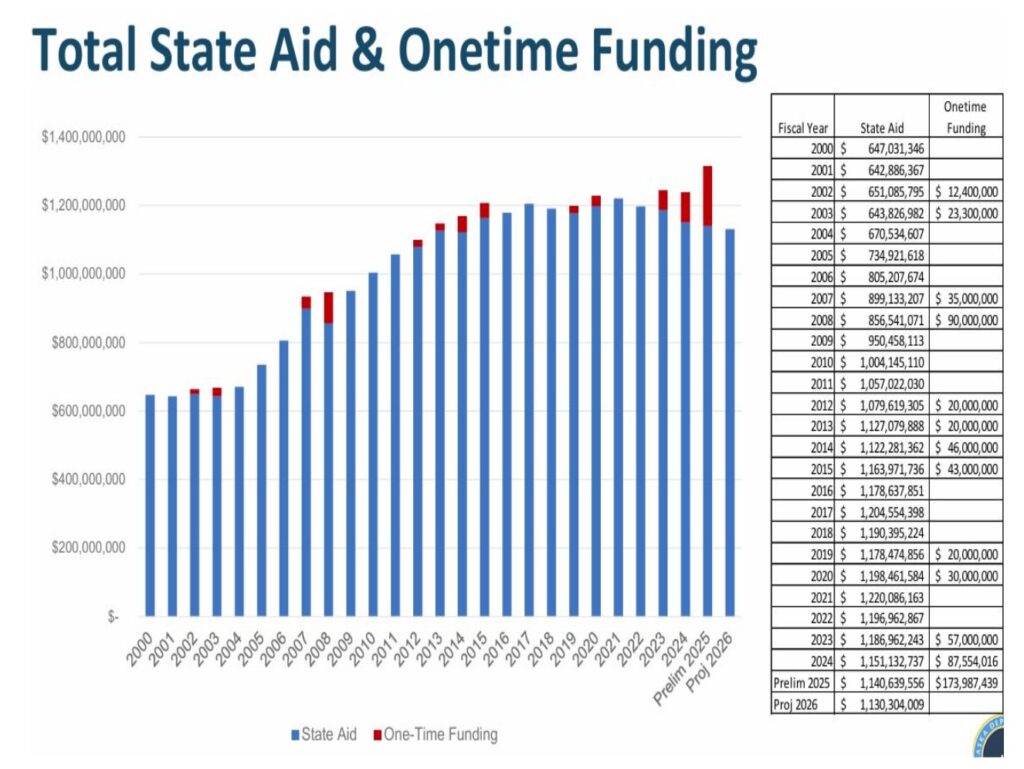
The FY24 State aid to school districts consisted of $1,151,132,737 (based on the Base Student Allocation funding formula). Pupil transportation for FY24 was nearly $71 million, which is in addition to the BSA formula. Note that for FY25 an additional $7.3 million was provided outside the transportation funding formula for a declining number of students.
In FY24 the federal government provided $88,768,627 in impact aid. This funding comes from nontaxable federal properties as an offset to local tax dollars.
In FY24 the Alaska Legislature provided one-time funding of $87,554,016 outside the BSA formula. Another added revenue stream comes from “minimum required local effort” which requires organized boroughs to kick in a “fair share” to pay for the local schools. For FY24 this totaled $300,641,017 from schools in organized boroughs and municipalities.
The E-Rate funding comes from federal funds that every cell and landline user pays for. This used to be called the Universal Services Fund. In FY23 the state received more than $100 Million in E-Rate funds. These funds go to most of the rural schools to pay for the internet and communications. Here is a listing of the schools that received these funds:
The Quality Schools Initiative provides an additional $16 per student count. In FY24 this totaled $4.1 million. The state received more than $257 million from the various federal title programs in FY23.
Here is a Department of Education graph showing total State aid and one-time funding through time:
During the Covid “pandemic,” the State of Alaska received an additional $579,826,453 in federal funding through various legislation. Some of this funding was limited in its use. The question is, “What did all this money do to improve student achievement?”
The education industry sees the writing on the wall: The number of students is seriously declining and because the state’s funding is based on that number it wants to inflate the funding to the maximum. State aid is projected to decrease another $36 million due to the decrease in student enrollment.
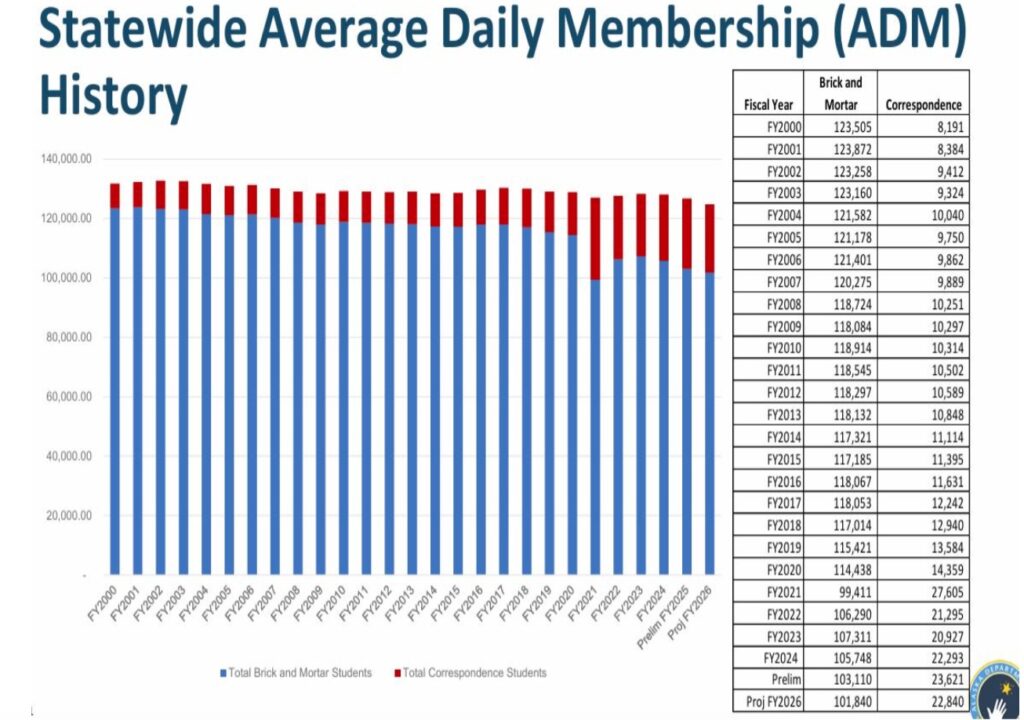
Since 2014 the number of brick-and-mortar students has decreased by 11,573. And the number of correspondence students during that same period has gone from 11,114 to 22,293.
This is an astounding increase of 11,179 students. Here is a graph from DEED showing the data from FY2000 through a projected student count for FY2026:
We need accountability for results rather than throwing money at the problem. Incentivizing current bad behavior will only result in the education industry returning to the legislature and asking for even more funding.
I say the Legislature needs to ensure the funds go to the classroom.
But what do you think? Are we spending enough? Or do we need to spend more without accountability for results?
You can provide your testimony on HB 69 by writing to [email protected]
David Boyle is the education writer at Must Read Alaska.