The U.S. Senate on Monday confirmed Chris Wright to lead the Department of Energy.
Wright, of Colorado, received 59 yes votes, including from both Alaska Sen. Lisa Murkowski and Sen. Dan Sullivan. Thirty-eight Democrats voted against Wright, while eight Democrats, including the two senators from Colorado, voted for him.
Wright is the head of Colorado-based Liberty Energy, a company that is in the oil fracking business. He replaces former Michigan governor Jennifer Granholm, who pushed President Joe Biden’s Green New Deal policies.
Wright has said he will help the Trump Administration in its effort to unleash American energy resources once again.
Sen. Sullivan congratulated Wright, who will also serve in the Trump National Energy Council.
“We’ll be working together to chart a path toward U.S. energy dominance and implement @POTUS‘s Day 1 EO: Unleashing Alaska’s Extraordinary Resource Potential,'” Sullivan said.
Sen. Murkowski released a positive statement about Wright: “Last night, I was proud to confirm Chris Wright to the role of Secretary of Energy. Secretary Wright’s enthusiasm to capitalize on Alaska’s vast untapped energy potential has been infectious from the beginning of this process.”
Congressman Nick Begich III also quickly posted his congratulations to Wright, calling him “a bold and innovative entrepreneur and leader. I look forward to working with Secretary Wright and his team as we unlock Alaska and usher in a new era of American energy dominance.”
Senate committees on Tuesday advanced, along party lines, the nominations of former Democratic Rep. Tulsi Gabbard as director of national intelligence and former Democrat Robert F. Kennedy Jr. as secretary of Department of Health and Human Services. Democrats on the committees voted against the former Democrats.
Fairbanks businessman John Binkley, whose Binkley Company bought the Anchorage Daily News in 2017, has been appointed by Gov. Mike Dunleavy to the Alaska Permanent Fund Corporation Board of Trustees.
Binkley is a lifelong Alaskan who served as a state senator, representative, and as a city councilman in Bethel. He also chaired the Alaska Railroad Corporation. A Republican, he ran for governor in 2006 but lost to Sarah Palin in the primary, although he came in quite ahead of incumbent Gov. Frank Murkowski.
“I’m honored to serve as a trustee of the Permanent Fund and appreciate the appointment from Governor Dunleavy. The Governor’s goals and mine are aligned in protecting and growing Alaska’s most important financial asset,” said Binkley in a statement released by the Governor’s Office.
He replaces the seat that is vacant after the resignation of Gabrielle Rubenstein, whose actions came under scrutiny after she was discovered to be meddling in the day-to-day operations of the Permanent Fund.
“I can’t think of any Alaskan more qualified to serve as a trustee than John Binkley,” said Dunleavy. “His blend of private and public sector experience is unrivaled, and he will immediately contribute to the preservation and growth of our permanent fund.”
Binkley will join the board at its next meeting Wednesday, February 12 in Juneau.
Using his position of authority over students, Goldenview Middle School Principal David Nogg wrote to parents Monday, leaning on them to push the Legislature for more Base Student Allocation (formula funding) cash for schools. He pressed them to lobby the Legislature. Or else he’ll have to fire 9 teachers and one vice principal.
And he said that proposed budget calls for a reduction of nine full time teachers at Goldenview. and one of the two assistant principals. Those reductions he appeared to blame on the Legislature, although they are the choice of the school district and principal.
Every year the same thing happens. The education establishment and unions ask for the base student allocation to be raised, and every year since 2014 it is not raised, but one-time funding is added into the education budget, which ends up at roughly an equivalent to a BSA increase.
The principal’s request came at the same time the Anchorage School Superintendent told parents he would block immigration agents from entering school property. Superintendent Jarrett Bryantt effectively declared Anchorage public schools to be sanctuary zones for illegal immigrants.
“I am reaching out to you today with an urgent and deeply concerning issue that will have a profound impact on the educational experience of our students at Goldenview Middle School. Due to the district’s ongoing budget deficit, the proposed budget includes significant cuts that will dramatically alter our ability to provide the high-quality education and well-rounded opportunities that our students deserve,” Nogg wrote.
“Specifically, the proposed budget calls for a reduction of nine full-time general education teachers at Goldenview—equivalent to an entire grade level’s worth of classroom educators. Additionally, despite serving 930 students, our school is also losing one of our two Assistant Principal positions. These reductions will lead to larger class sizes and fewer course offerings, limiting the choices and personalized instruction that are critical at the middle school level,” Nogg continued.
“Beyond the classroom, one of the most devastating impacts of the budget cuts is the complete elimination of all co-curricular activities for our students. This means no sports, no National Junior Honor Society, no performing arts, and no other extracurricular activities that play a vital role in shaping well-rounded, engaged, and successful students. I have always encouraged our students to become well-rounded ‘Renaissance kids,’ and these cuts will severely limit their ability to explore their interests, develop leadership skills, and stay connected to their school community,” he wrote.
Then Nogg gave parents their marching orders:
“These cuts will not only affect Goldenview but will touch every school across the district. It is critical that our community makes its voice heard. I urge you to contact your legislators in Juneau and advocate for our students. Let them know how these budget reductions will negatively impact your child’s education and overall school experience.”
He added contact information to aid parents in their lobbying efforts.
Goldenview Middle School has 668 students and 35 teachers for a student:teacher ratio of 19, according to the State of Alaska Department of Education.
According to the Anchorage School District’s dashboard, it has 780 students.
U.S. News says the school has 626 students.
Principal Nogg puts the figure at 930 students, which is 19% higher than what the school district says.
About 45% of the students at Goldenview are grade-level proficient in reading and about 29% are proficient in math. Gov. Mike Dunleavy and conservatives are hoping to improve those scores by requiring accountability for education, something that has been lacking in the districts across the state.
In January, Anchorage Superintendent Bryantt said that the district has a deficit exceeding $100 million and he said it was driven by “more than a decade of flat state funding and rising costs due to inflation.”
Bryantt said “deep cuts are unavoidable, and their effects will be felt throughout our community,” and said that the funding needed was equivalent to $1,963 per student more than the existing base student allocation of $5,930 per student.
Last year’s one-time increase was $700 per student, which he argued left a gap of $1,263.
Meanwhile, for a variety of factors including the bad management of education in Alaska’s biggest city, Anchorage publicly funded schools have lost nearly 13% of their student enrollment since 2010, with a current enrollment of about 42,700. The parents have chosen to take their children to other alternatives, including private schools, homeschooling, and to the MatSu Valley.
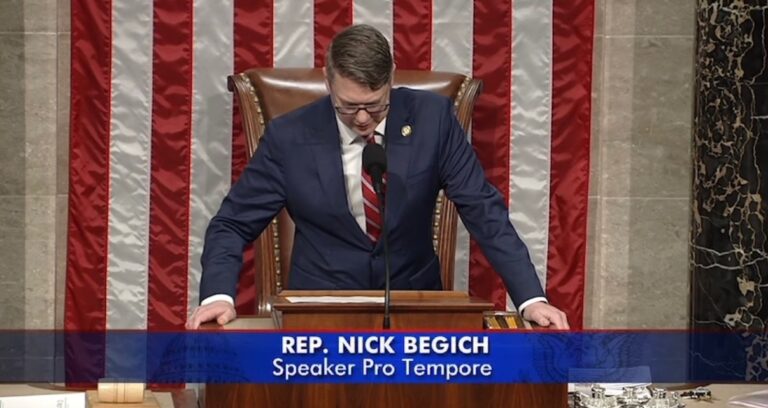
U.S. House of Representatives opened its regular session Tuesday with Alaska’s new Congressman Nick Begich III as Speaker Pro Tempore.
As a member of the House for just one month, the honor to take the gavel for the day was granted to Begich by House Speaker Mike Johnson.
Here’s the video of Begich opening up the floor session:
It was an auspicious day for Begich to be recognized. On Feb. 4, 1789 the first Electoral College of the United States chose George Washington as president and John Adams as vice president.
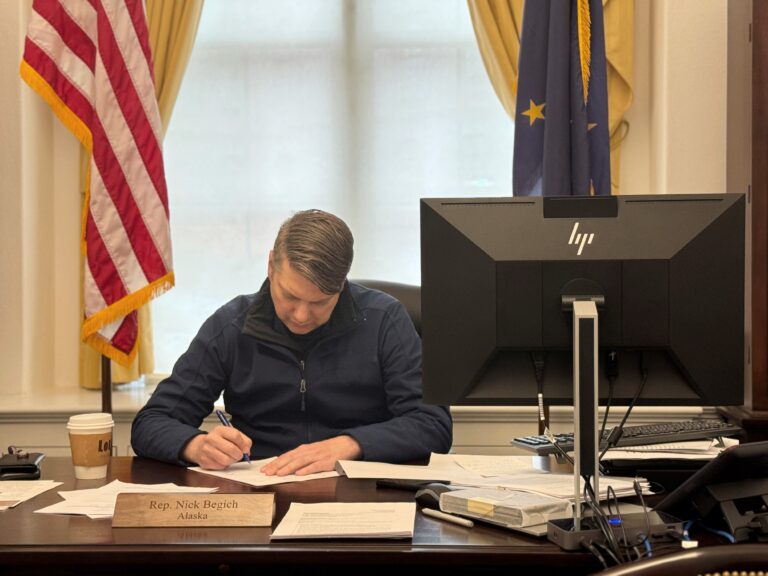
Begich’s work ethic in the House, since being sworn in on Jan. 3, has not gone unnoticed.
Begich has been awarded a big workload, as a member of three committees and eight subcommittees, and serving as the vice chair of a subcommittee. He’s known for working late in to the night studying issues and returning calls.
Also on Tuesday, the Presidential Prayer Team, a nonprofit based in Arizona, named Begich as the congressional lawmaker of the day to pray for. Read about the group and its prayer missionat this link.
“As we lift up the federal government of United States of America, each day we will highlight one elected or appointed federal official serving in office. Pray with us for each of them as they tackle their unique responsibilities and fulfill their oaths of office,” the group explains on the introduction to the congressional prayer list.
That makes three committees and eight subcommittees.
Hardworking Congressman Nick Begich has been assigned to twice as many subcommittees as former Rep. Mary Peltola had during her tenure in Washington, D.C. Peltola only served on two committees.
Begich serves on House Transportation and Infrastructure, House Natural Resources, and House Committee on Science, Space and Technology.
His latest assignments are three subcommittees on the innovation-friendly House Committee on Science, Space and Technology.
These assignments include oversight and policymaking duties for Alaska and Arctic research and technological policy and programs, his office explained.
Subcommittee on Oversight and Investigations On this committee, Congressman Begich will work to ensure transparency and accountability in federal science and technology programs. He will focus on responsible government spending, regulatory efficiency, and oversight of federal agencies that impact energy development, environmental policies, and technological advancements.
Subcommittee on Energy Congressman Begich said he will advocate for policies that promote American energy independence and resource development. With Alaska’s vast natural resources, he will push for investment in responsible energy production, including oil, natural gas, and renewable technologies.
Subcommittee on Environment Congressman Begich said he will work to advance policies that promote responsible resource production and long-term sustainability of Alaska’s vast natural resources.
“These subcommittee assignments put me in a strong position to fight for Alaska’s energy future, ensure effective oversight of federal programs, and promote common sense environmental policies that protect both our economy and our way of life. Alaskans deserve a voice that understands the importance of resource development and innovation, and I look forward to advancing policies that create jobs, strengthen our energy sector, and keep our nation competitive on the global stage,” said Congressman Begich.
Earlier, Begich announced he had been given subcommittee assignments on the Transportation and Infrastructure Committee, including:
Aviation Subcommittee Begich explained he will work on policies that affect air travel and aviation infrastructure, to ensure safe, efficient, and accessible air travel for Alaskans. He said he will advocate for investments to modernize air traffic control systems, increase aviation safety, and support rural air services.
Railroads, Pipelines, and Hazardous Materials Subcommittee Begich said he will focus on maintaining the integrity of critical infrastructure and ensuring the safe transportation of goods across the country. With Alaska’s growing energy and resource sectors, he will prioritize policies that support pipeline safety and promote energy security.
Coast Guard and Maritime Transportation Subcommittee Begich added that he will advocate for the continued strength of the U.S. Coast Guard, which is critical for safeguarding American waters, particularly in Alaska.
In addition, he is vice-chair of the House Natural Resources Subcommittee on Energy and Mineral Resources. He serves on the Natural Resources Subcommittee on Oversight and Investigations.
The Anchorage School District has made multiple claims it doesn’t have enough money and that it will have to close campuses and fire teachers without more state funds.
But it has enough money to set up a “resource page” to tell illegal immigrants in Anchorage how it plans to fight President Trump when it comes to illegal immigration.
Anchorage School Superintendent Jharrett Bryantt sent a note to parents on Monday, in which he said the district is reviewing presidential directives and executive orders regarding immigration. He wants parents to know that in Anchorage, “every school is a safe, welcoming, and supportive space for all students and families.”
And another thing: He won’t let immigration officials on campuses.
Presumably Bryantt means that even if an illegal immigrant Venezuelan gang member is hiding in a school building, federal immigration officials would not be allowed on campus.
Bryantt is essentially declaring Anchorage schools to be sanctuaries for illegal immigrants.
The school superintendent wrote that education is for every child and that ASD will not share information with anyone outside the student’s parents or legal guardian. In the recent past, the district has even kept gender identity information from the students’ own parents. Now, it’s a step further: Federal law enforcement has no right to Anchorage school campuses.
The federal Family Educational Rights and Privacy Act “protects your child’s privacy by prohibiting ASD from sharing student-specific information with anyone other than the student’s parents or legal guardians, except in specific situations such as when required by a judicial warrant or court order,” the district said in its note.
Therefore, the school district will block any immigration official from entering any school district property, he said, unless they “present a judicially signed warrant.”
But that’s not all. Any warrant will then be reviewed by ASD’s lawyers “to ensure it meets the necessary legal standards before any action is taken.”
Bryantt did not give any information about how much it will cost to make Anchorage schools into immigration sanctuaries.
The school district has also created an immigration resource webpage.
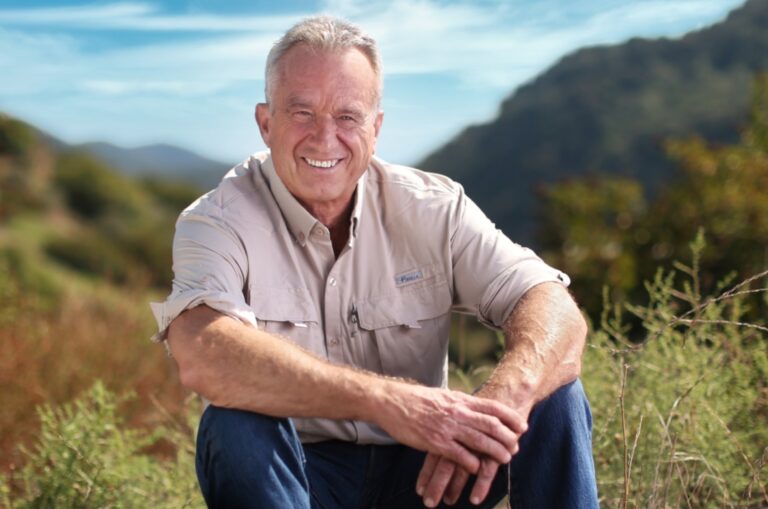
Last week, Robert F. Kennedy Jr. was grilled for two days by the Senate Finance Committee and the Senate Health, Education, Labor, and Pension Committee. The hearings held as part of his confirmation process for secretary of Health and Human Services were contentious at best.
I listened to much of the Finance committee’s interrogation. Sadly, little was asked about RFK Jr.’s desires to Make America Healthy Again. They focused more on vaccines, abortion, and his association with the Children’s Health Defense organization—viewed as anti-vax.
One of my favorite moments was when Senator Bernie Sanders held up a picture of a baby onesie that had printed on it ‘Unvaxxed, Unafraid.’” Sanders pushed RFK Jr. repeatedly and asking him if his “organization” would stop selling them. RFK Jr. told Sanders he had “no power over that organization” as he was no longer in charge of it.
The debate got even better. RFK Jr. asked Sanders how much money he had received from pharmaceutical companies. “Almost all the members of this panel, including yourself, are accepting millions of dollars from the pharmaceutical industry and protecting their interests,” Kennedy said.
Sanders immediately pushed back, “I ran for president like you. I got millions and millions of contributions. They did not come from the executives, not one nickel of PAC [political action committee] money from the pharmaceutical [companies]. They came from workers.”
Sen. Sanders is technically correct and even better at parsing. In the 2019-20 Congressional funding cycle, Sanders received more money from people employed in the field classified as “pharmaceuticals/health products” ($1.4 million) than any other member of Congress, according to Open Secrets. He also received roughly $400,000 from people employed in “pharmaceutical manufacturing.”
Sen. Elizabeth Warren also went on a rampage about vaccines. She asked RFK JR. to “commit” to not suing Big Pharma if he were confirmed. He responded, “You’re asking me to not sue drug companies, and I’m not gonna agree to that subject,” At that point, Sen. Warren continued harping, saying if confirmed, RFK Jr. could ‘bankrupt’ vaccine manufacturers.”
Just today, the committee Democrats are demanding more details on RFK Jr.’s involvement with vaccine lawsuits. They believe Kennedy should promise to recuse himself from any vaccine-related court decisions if confirmed as Health & Human Services Secretary.
It makes me wonder about some serious conflicts of interest. Just how much do our congressional members get from pharmaceutical companies?
Where is the truth?
Open Secrets, a nonpartisan nonprofit, and STAT, a media company started by Boston Globe Media, are two organizations that track and publish some of the most reliable numbers on this matter.
These two organizations identified that a majority of senators and representatives get campaign funding from pharmaceutical companies.
A 2020 STAT analysisshowed more than two-thirds of Congress received a check from these companies that year. More recent data from Open Secrets confirmed a large number of leaders in the U.S. Congress obtain significant contributions from either Big Pharma or health product companies, “ averaging $45,000 and $47,000 for Republicans and Democrats in the House of Representatives, respectively — and $50,000 and $69,000 for Republicans and Democrats in the Senate.”
In 2023-24, Democrats received about $26.4 million and Republicans received nearly $16.1 million from Big Pharma. Even more significant is that of the top 20 Republicans and top 20 Democrats who get the highest contributions, 39 belonged to committees with jurisdiction over health-related legislative matters.
Twenty-four of them were in senior positions, according to Olivier J. Wouters, assistant professor of health policy at the London School of Economics and Political Science.
During his confirmation hearing, Kennedy said he hopes to end the “chronic disease epidemic,” which is the crux of his Make America Healthy Again (MAHA) movement.
He has also sharply criticized the malignant influence of healthcare companies, which he believes has made America sicker.
“President Trump has asked me to end the chronic disease epidemic and Make America Healthy Again,” he said. “We have the highest chronic disease burden of any country in the world. This is an existential threat economically to our military, to our health, to our sense of well-being, and it is a priority for President Trump.”
Somehow all this has boiled down to a food fight. Little is being said about the huge need to reform our healthcare system and seriously look at why we are one of the sickest countries in the world.
Could it be we give more immunizations?
Could it be we have more harmful additives in our foods than any other western country?
Could it be all the processed foods that have led to an obesity crisis in our children and general population?
Could it be we have somehow decided not to talk honestly about our fellow countrymen (and women) who are making bad health choices?
Do we need to shine the light on America’s health crisis and give people the truth so they can make better decisions?
If RFK Jr. is not confirmed, we can go on fooling ourselves as to how great we are.
The time is now. Votes are being held in the committees starting Feb. 4. Let Sen. Lisa Murkowski know you are one of her constituents and let her know what you think.
Here are Senator Murkowski’s contacts:
510 L Street Suite 600 Anchorage, AK 99501 Phone: (907) 271-3735 Fax: (877) 857-0322
522 Hart Senate Office Building Washington, DC 20510 Phone: (202)-224-6665 Fax: (202)-224-5301
Call, write, email her so she knows what you think. We need RFK Jr. at the helm. We need to Make America Healthy Again.
Linda Boyle, RN, MSN, DM, was formerly the chief nurse for the 3rd Medical Group, JBER, and was the interim director of the Alaska VA. Most recently, she served as Director for Central Alabama VA Healthcare System. She is the director of the Alaska Covid Alliance/Alaskans 4 Personal Freedom.
She’s known at Anchorage City Hall as the “pre-eminent rice krispie envoy” in the administration of Mayor Suzanne LaFrance. Amanda Moser, who has served as LaFrance’s external affairs director since July 1, has a new role today: Special Projects in the Office of Management and Budget.
The mayor didn’t say exactly what the special projects would entail other than “help expand the office’s capacity to plan, support, and execute the Municipality’s work across priorities.” It appears from the sudden switch that something isn’t working well in OMB, something that requires Moser’s special touch. Or perhaps something isn’t working well in external relations.
Moser, who was communication director for former Gov. Bill Walker, also ran the Downtown Partnership briefly and was also briefly appointed deputy municipal clerk for Anchorage, where she briefly helped manage municipal elections and helped engineer the mail-in voting used in Anchorage.
Political commentator Jeff Landfield said this about Moser last July: “But appointing Amanda Moser as head of external affairs is a major misstep. She’s one of the most caustic and off-putting people in Alaska politics. It’s like making me chaplain.”
LaFrance, however, says Moser has a cult following due to her Rice Krispie diplomacy. Evidently Landfield isn’t one of the Krispie cult members.
Taking over in the communications function for LaFrance will be Berett Wilber, who lists herself as a she/her on her LinkedIn details. Wilber served as deputy press secretary for Gov. Walker during his last year in office, 2018 and is now “point of contact for communications and media relations going forward,” the mayor’s office announced.
Hours after Mexico met President Donald Trump’s terms for helping to secure the southern border, the 25% tariffs that were go go into effect on Canadian goods have been postponed after a few conversations were held with Prime Minister Justin Trudeau on Monday. Canada agreed to fight the fentanyl trade and crack down on organized crime in partnership with the United States.
“Canada has agreed to ensure we have a secure Northern Border, and to finally end the deadly scourge of drugs like Fentanyl that have been pouring into our Country, killing hundreds of thousands of Americans, while destroying their families and communities all across our Country,” Trump wrote on his Truth Social page.
“Canada will implement their $1.3 Billion Border plan, and as per Prime Minister Trudeau, will be, “reinforcing the Border with new choppers, technology and personnel, enhanced coordination with our American partners, and increased resources to stop the flow of fentanyl. Nearly 10,000 frontline personnel are, and will be, working on protecting the Border. In addition, Canada is making new commitments to appoint a Fentanyl Czar, we will list cartels as terrorists, ensure 24/7 eyes on the Border, launch a Canada-U.S. Joint Strike Force to combat organized crime, fentanyl and money laundering. I have also signed a new intelligence directive on organized crime and fentanyl, and we will be backing it with $200 million,” Trump wrote. “As President, it is my responsibility to ensure the safety of ALL Americans, and I am doing just that. I am very pleased with this initial outcome, and the Tariffs announced on Saturday will be paused for a 30 day period to see whether or not a final Economic deal with Canada can be structured. FAIRNESS FOR ALL!”