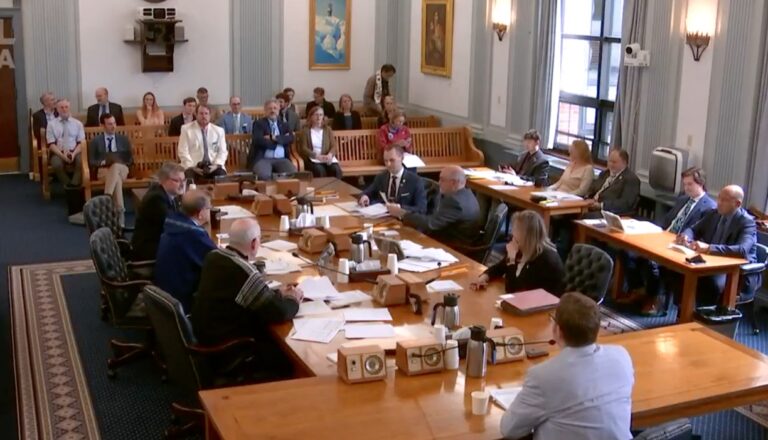
A new bill introduced in the Alaska Legislature by Sen. Elvi Gray-Jackson aims to codify certain “fundamental rights” for individuals facing discrimination based on a variety of characteristics, including race, gender, and housing status.
While Senate Bill 119 purports to protect vulnerable populations, its broad and ambiguous language threatens to create more legal confusion than solutions, inviting unintended consequences that could negatively impact businesses, public spaces, and law enforcement efforts. The bill strips away the rights of municipalities and boroughs to have orderly communities, but the bill would have no effect on tribal communities, which the state considers sovereign.
One of the aspects of SB 119 is its vagueness. The bill guarantees rights such as “reasonable privacy and autonomy,” “reasonable accommodation in the interest of family unity,” and the ability to “rest or seek shelter from the elements in a public space.”
While these sound compassionate, they lack clear definitions and could be interpreted in ways that overstep local control and burden municipalities and businesses alike. More than 66% of homeless in Alaska are either Natives or veterans, both of whom already have exclusive access to medical and human services set aside for them by the federal and state governments.
Read the bill at this legislative link.
For example, the provision allowing individuals to “occupy a legally parked vehicle or legally anchored, moored, or stored watercraft” raises significant concerns. Without restrictions, this could lead to unintended consequences such as people permanently living in public parking lots or on marina docks, creating public health and safety risks. Additionally, business owners might find themselves unable to prevent encampments in their own parking areas, leading to liability issues and sanitation challenges.
The bill’s sweeping protections could hinder law enforcement’s ability to address issues like vagrancy, public intoxication, and disorderly conduct.
The right to “seek shelter from the elements in a public space” is problematic. While ensuring humane treatment for the homeless is important, SB 119 effectively strips local governments of their ability to regulate encampments, leaving parks, sidewalks, and other public spaces vulnerable to overcrowding, disease, and deterioration.
Furthermore, the provision prohibiting “harassment, mistreatment, or fear of retribution from public servants” sounds reasonable in theory, but in practice, it could lead to frivolous lawsuits against police officers and city workers simply for enforcing existing municipal or state laws. The vague wording creates a legal minefield that could discourage authorities from taking necessary action to maintain public order.
- The bill guarantees medical and dental care for those who are experiencing homelessness. It also guarantees them gainful employment, the ability to get a voter ID, the right to clean, safe, and sanitary living conditions, the right to access to a toilet and shower, and other rights.
The bill allows individuals to bring civil lawsuits if they believe these “fundamental rights” have been violated. This provision opens the floodgates to costly litigation that could overwhelm local governments and business owners. Small businesses, already struggling with economic challenges that include increased minimum wage, could face lawsuits for denying drunken or drugged-up individuals access to their premises based on unclear interpretations of the bill’s language.
Provisions such as “access to a trash receptacle, toilet, and shower” imply new infrastructure obligations that could place an enormous financial burden on taxpayers. If these amenities are to be provided in all public spaces, who will bear the cost? Without an outlined funding mechanism, this bill creates more unfunded mandates.
While SB 119 seeks to address real social issues, its impracticality will raise concerns among those who have observed that homelessness is a serious issue that this bill will only exacerbate.
BLM opens 30-day comment on Alaska Long Trail
The Bureau of Land Management opened a 30-day public comment period on a draft feasibility study for designating the proposed Alaska Long Trail as a “national scenic trail.”
The public is invited to submit comments until April 14, through the Alaska Long National Scenic Trail Feasibility Study page on the BLM National NEPA Register.
The Alaska Long Trail is envisioned as a 500-mile route extending from Seward to Fairbanks, traversing diverse landscapes including wilderness forests, mountains, rivers, and valleys. The BLM prepared the study in response to congressional direction in the 2023 Consolidated Appropriations Act.
The purpose was to assess the feasibility, desirability, and suitability of designating the proposed routes associated with the Alaska Long Trail as a national scenic trail. This feasibility study is not a comprehensive plan, and doesn’t authorize implementation actions.
The proposal has garnered both support and controversy.
Advocates, such as the nonprofit organization Alaska Trails, say the trail would enhance outdoor recreation opportunities and boost tourism, potentially attracting more residents to the state. They believe that national scenic trail designation would be a significant investment in Alaska’s outdoor infrastructure.
However, concerns have been raised by many Alaskans. In the Mat-Su Borough, some say the federal designation could impose even more federal control of Alaska lands, potentially hindering local development and activities.
The Alaska Outdoor Council criticized the proposed route, because it may limit access for certain user groups and impact existing trails.
Representing thousands of Alaskans, the outdoor council says the first 130 miles already connects to the Iditarod National Historic Trail, while the next 320 miles parallel the Parks Highway, which has provided public access for decades. Designating this route as a National Scenic Trail would complicate access to state and private lands, requiring federal oversight that could restrict activities like hunting, fishing, and motorized travel.
“The majority of lands/waters along this +300 miles of the proposed Alaska Long Trail are state, private, or ANCSA Native Corporation. Establishing a NST on either side of the Parks Highway. This would dissect these easily accessed lands for 3/4 of Alaska’s population making management that much more cumbersome. Fifty years of public access along the Parks Highway has provided numerous opportunities for hunting, trapping, fishing, wood gathering, residential homes, resource development and year around outdoor recreation access to state and private lands off the highway corridor. Any amount of oversight by the U.S. Secretaries of the Interior and Agriculture would disrupt current use by a majority of urban Alaskans who regularly access state public lands and waters along the Alaska Long Trail proposed route,” the Alaska Outdoor Council says.
The AOC questions the the transparency of Alaska Trails, the nonprofit advocating for the project.
“The Alaska Trails NGO have been far from forthright in their publications and presentation as to what federal management of a National Trails System between Wasilla and Fairbanks would do to complicate the activities of many Alaskans who have accessed state public lands along the Parks Highway corridor since the completion of the Alaska Railroad in 1923,” the outdoor council says.
Instead, AOC suggests alternative routes, such as the historic Copper River Highway, which already has established rights-of-way and historical significance. The AOC has urged policymakers to consider trails that align with Alaskans’ needs rather than disrupting existing land use.
Only Congress has the authority to designate new national scenic trails. The BLM is actively seeking input from affected communities, the State of Alaska, private landowners, the public, and land management agencies to ensure a comprehensive evaluation. The final feasibility study will be submitted to Congress.
To participate in the public comment process visit the Alaska Long National Scenic Trail Feasibility Study page in the BLM National NEPA Register. To learn more about the study, review the Frequently Asked Questions about the proposed trail.
What are your thoughts about the Alaska Long Trail project? Put them in the comment section below.