It was just past 9:30 pm on Dec. 1, when Anchorage police were dispatched to Burlington Coat Factory at the Northway Mall.
A woman had reported that she was sexually assaulted by a man who was in the next changing stall in the store’s dressing room.
The woman was changing clothes when she noticed the man taking pictures of her from above the partition.
She left the stall to confront the man and discovered he had no pants on and was masturbating, according to the official report. He allegedly tried to grab her, but she yelled for help. He then retrieved his clothes, left the dressing room, and sexually assaulted the woman before running away.
The suspect is described as a short male in his 20s, between 5’3″ and 5’05” tall, with a “very pointy nose.” The victim described the skin on the suspect’s face as so white that he may have had makeup on.
If you have information regarding the suspect, contact Anchorage Detective Mueller at 907-786-2614 To remain anonymous you may contact Crime Stoppers at 907-561-STOP or online at www.anchoragecrimestoppers.com.
House Speaker Bryce Edgmon today took Sen. David Wilson to task for going public with an allegation that Edgmon had said to a group of legislators that as far as he was concerned, Wilson could “burn and hang.”
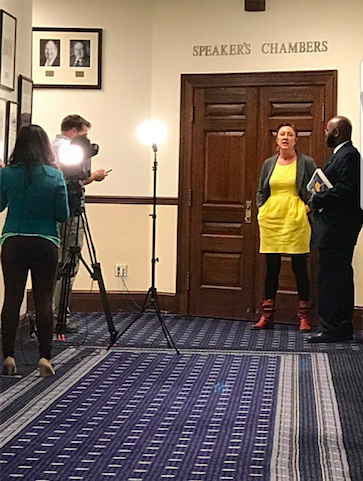
Wilson was under attack in June because an allegation was made about an incident in the hallway in front of the House Speaker’s Chambers.
“I did not, at any point, express a desire to let Senator Wilson ‘hang and burn’, which he claims originated from a conversation he had with Senate leadership. I find that term highly offensive and derogatory and I would never say that. I don’t begrudge Senator Wilson for wanting to clear his name and reputation, but the way he chose to conduct himself today was unfortunate,” Edgmon said in a statement.
Edgmon legitimized the original allegations made against Wilson by saying multiple witnesses saw him act inappropriately. Then he said Wilson was again inappropriate today:
“Senator Wilson crossed the line of appropriate behavior by using a press conference to chastise individuals who came forward as witnesses to an alleged incident of harassment. I believe this is a violation of the legislature’s harassment policy and warrants a serious investigation by the Senate,” said Speaker Edgmon.
“I feel compelled to set the record straight, I am constrained by confidentiality requirements regarding both personnel matters and discussions which take place during executive session. I cannot comment on the findings of the report, as it is not yet public, and this remains a confidential personnel matter. However, the statements about why I chose to allow this matter to rest this spring are unequivocally false. Executive sessions are confidential, and though Senator Wilson thought it appropriate to summarize my intentions during an executive session, I am not permitted to give a full explanation of context. I will say, it became apparent that I could not both pursue the matter through Legislative Council and respect the wishes of the staffer in question that the matter be kept private and not politicized,” said Speaker Edgmon.
EDGMON HASN’T ADDRESSED MISSING LETTER
Speaker Edgmon didn’t set the record straight about another festering matter. Rep. Dean Westlake has been accused of harassing a legislative aide, and she wrote a letter about the incidents to Edgmon and House Majority Leader Chris Tuck on March 13, at Tuck’s request.
The woman, Olivia, told Must Read Alaska she believes Tuck never delivered the letter to Edgmon in March. Edgmon has not addressed whether he knew of the letter or why Tuck chose to sit on it — if he did.
Although the incident now involves his own actions or inaction as the House leader, what he knew and when he knew it, or the chain of custody for the letter written by the legislative aide last March, Edgmon issued a statement yesterday declaring confidentiality and transparency going forward: “This is a confidential personnel issue and I am not able to comment on details of the incident or the complaint. The incident illustrates the need for concrete and clear reporting policies and mandatory sexual harassment training for every legislator and staff member. Unwanted sexual advances and other forms of harassment are unacceptable and hinder the work of the Alaska Legislature to do the people’s business. Any victim who comes forward must be respected and should know their concerns will be heard, investigated, and addressed with fairness and transparency. Our priority is to ensure a safe and respectful work environment where no one feels threatened. We strongly encourage anyone who has been subjected to sexual harassment, assault, or aggravation in or related to their place of work to come forward. We want them to feel confident that their personnel matters will remain confidential and private, and that the Legislature will listen and follow through.”
Joe Balash, the former chief of staff for Sen. Dan Sullivan and former Alaska Commissioner of Natural Resources under Gov. Sean Parnell, was handily confirmed today by the Senate in his new role as the Department of the Interior’s Assistant Secretary for Land and Minerals Management.
Balash crowded into his old office in Sen. Dan Sullivan’s Hart Building suites, joined by friends from Alaska that included Mark Hanley and Sen. Lisa Murkowski’s Chief of Staff Michael Pawlowski, as well as Julie Fate-Sullivan, the wife of Sen. Sullivan, and other well-wishers.
The small band of Alaskans watched the debate over Balash’s nomination, which took the better part of an hour, due to Sen. Maria Cantwell of Washington State using the time to object. And then came the roll-call vote, where Balash was confirmed with 61 yes votes, with 38 no votes.
Sen. Al Franken, who spoke for 45 minutes today about his own self-induced problems, did not vote.
There were plenty of congratulations and hands to shake when it was all done. It was a happy day for someone who has waited for months for a confirmation vote.
But then Balash did something even more important.
He headed home to his family and celebrated his oldest child’s 16th birthday. His wife baked an apple pie, and the family had dinner and precious time together. Sixteen years ago is when he became a father — a day when he was congratulated and shaking hands with many over the important moment when his daughter was born.
Balash is a native of North Pole, Alaska and has more than 19 years of experience in land and natural resource management.
As the Assistant Secretary for Land and Minerals Management, Balash oversees the Bureau of Land Management, Bureau of Ocean Energy Management, Bureau of Safety and Environmental Enforcement and the Office of Surface Mining Reclamation and Enforcement.
He heads the Department of the Interior’s management of all federal lands and waters, and their associated mineral and non-mineral resources, as well as the appropriate regulation of surface coal mining.
Rep. Colleen Sullivan-Leonard of Wasilla has publicly stated her support for Sen. David Wilson following his press conference held this morning regarding allegations of sexual harassment.
“I stand with Senator David Wilson today and respectfully request the video held by Legislative Council be released to the public to clear his good name. To hold back, or deflect from the truth is unacceptable as well as unethical and damaging to Senator Wilson’s reputation and integrity,” she said in a statement.
“I have known Senator Wilson through past local government service and in the private sector,” she wrote. “During the past seven years, I have not seen or heard any inappropriate action toward me, my staff, or my colleagues. I have found him to be professional, forthright and a gentleman. To presume someone to be guilty of sexual harassment based on allegations or rumor is unconscionable.
“I stand with Senator David Wilson and ask my colleagues to join me in demanding the truth be revealed and that those responsible in purporting unsubstantiated truths about him be held to the highest standard of conduct we expect from elected officials who hold leadership positions.” – Rep. Colleen Sullivan-Leonard
SENATE LEADERSHIP RESPONDS
The Senate Majority leadership issued the following statement today in response to Wasilla Sen. David Wilson’s request to publicly release a report investigating his alleged actions.
“The nonpartisan Legislative Affairs Agency concluded its investigation into alleged actions by Sen. David Wilson. The confidential report was released to Senate President Pete Kelly. However, the subject of the investigation, Sen. David Wilson, has requested public release.
“Per legal advice, the report may be released through an official committee action. Sen. Kelly has asked the Rules Committee Chairman to hold a hearing to discuss the report and consider release. Leadership is first working with legislative attorneys to determine the appropriate form of a release in order to protect individuals involved in the investigation.”
“Senate Leadership is unable to discuss the report contents until official release.”
The Rules Committee chairman is Sen. Kevin Meyer. Reached on vacation, Meyer said he would read the report when he returns and if the leadership gets the green light from attorneys, he will have a Rules Committee meeting sometimes next week.
“And we’ll make a decision from there,” Meyer said.
Renée Limoge Reeve is the new state director for Sen. Dan Sullivan, to be based in his Anchorage office.
Reeve has served as deputy director of the Alaska Support Industry Alliance, and was press secretary for former Alaska Lt. Governor Craig Campbell. She was also a senior research analyst for the National Republican Senatorial Committee. She replaces Paul “Otto” Feather, who was hired by the Mat-Su Borough earlier this year. She is a graduate of the University of Vermont.
The Alaska Support Industry Alliance may also lose its executive director within a few months. Rebecca Logan, who leads the Alliance, is a candidate for mayor of Anchorage in a race that pits her against Mayor Ethan Berkowitz.
SPEAKER EDGMON ACCUSED OF SAYING SEN. WILSON COULD ‘BURN AND HANG’
Sen. David Wilson asked for a public apology from KTVA reporter Liz Raines today, saying the video of his interaction with a legislative aide exonerates him of the accusation Raines made that she saw him place a telephone-camera between the aide’s legs in June.
KTVA reporter Liz Raines
Wilson also called for House Speaker Bryce Edgmon and House Rules Chair Gabrielle LeDoux to step down from their leadership positions because they put politics above the truth.
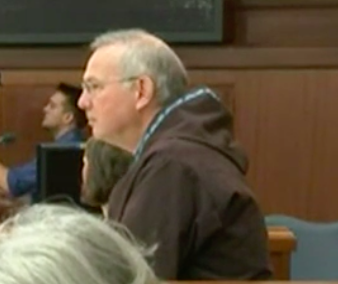
Wilson held his first-ever press conference today. Wilson said that he was informed by those in a private meeting with Edgmon that Edgmon was not about to help Wilson, even after Edgmon learned what was on the video. He said he had made multiple attempts to meet with Edgmon but was rebuffed.
Other senators had tried to broker a meeting as well, without luck. Edgmon was stonewalling.
“We are not going to do anything, we are going to watch Sen. Wilson burn and hang,” Wilson reported that Edgmon said, according to the accounts that got back to him.
HUMAN/CIVIL RIGHTS VIOLATION?
If Edgmon actually said that, it could be a human rights violation due to its historic lynching and racist overtones. People have been fired from their jobs for similar statements in and out of the workplace. Wilson did not hear him say that directly, and has not asked Edgmon about the statement because Edgmon has refused to meet with him.
Must Read Alaska checked with Google on the terms “burn hang black” and came up with pages of information about lynching.
Sen. David Wilson prepares for his first-ever press conference, which he held at the Anchorage Legislative Information Offices this morning.
During his first year in office, Wilson, the Republican senator from Wasilla, has often avoided the media, but today he faced a group of reporters and called for higher standards from the media.
“We rely on journalists to report the news with factual information and with integrity,” he said. He said that instead gossip and innuendo were being reported as facts.
“It didn’t happen,” he said of the rumors and reports of the incident that took place last June. Wilson said that the tape shows the phone was off and never was below his own waist during the encounter he had with her in the hallway in front of the Speaker’s chambers during special session in June.
He said he was holding a bundle of papers and had been talking with a cameraman about good places to eat in Juneau, when the aide to Speaker Bryce Edgmon told him to leave the area, because the House majority caucus was behind the closed doors nearby, discussing private matters.
House Speaker Bryce Edgmon
Wilson said that at the time he felt he had a right to stand in the hallway like everyone else there.
“I have worked hard. I was being told I don’t belong in a place. I felt I had a right to be in a place. I was questioning why I was being asked to move. Why I was being asked to move? Why don’t I belong in the hallway?” – Sen. David Wilson
Wilson said today that he has worked hard for the good of others all of his life, starting at age 14 when he worked as a “candy stripe” volunteer in a hospital.
“I’ve tried to live an honest life,” he said. But the facts about him were manipulated for political purposes by House leadership, he said, and “I cannot, and will not sit quietly by without saying something.”
Wilson said Senate President Pete Kelly has reviewed the report completed by the Legislative Affairs human resources director Skiff Lobaugh, and that Kelly had gone over the report with Wilson, although Wilson does not have a copy of it. He said it showed the allegations made against him by Raines and by Rep. Gabrielle LeDoux are false.
LeDoux stated to the media as fact that Sen. Wilson had, indeed, sexually harassed the aide. LeDoux has not retracted her statement.
Rep. Gabrielle LeDoux
“I am deeply ashamed of the Speaker of House and the Rules chair for continuing these allegations,” Wilson said. “Edgmon has failed in his leadership and allowed LeDoux to make false accusations about me. It is quite disturbing that the House leadership allows these accusations to be made without evidence. These allegations for political gain are unethical.”
When asked by a KTVA reporter if he was calling the legislative aide a liar, Wilson said no — the aide herself had never made an allegation on the record or filed a complaint.
“There were five eye witnesses,” Wilson said. “I am innocent and I want to be able to prove my innocence.”
To clear his name, Wilson has asked Sen. President Pete Kelly to release the Legislative Affairs report to the public, and is also asking the Legislative Council to release the video.
“The report clears me of any wrongdoing of any sexual harassment and goes in to very great detail,” he said. “I can guarantee you that the video shows my phone is off and it never leaves the waist side of my body. I never bent down, it does not go to the door and it does not go between anyone’s legs.”
“It’s my life and I am responsible for my actions and my life,” he said. “When allegations are being peddled against me, I have to be responsible and respond to those allegation. I cannot wait for someone else to step forward and do the right thing.”
“The time is always right to do the right thing,” he said, quoting Dr. Martin Luther King.
Senate Majority Leader Mitch McConnell named Sen. Lisa Murkowski as one of the eight Senate Republicans who will serve on the tax reform conference committee, which will work to hammer out differences between the House and Senate versions of the bill. Of the eight, most are from Western States: Orin Hatch of Utah, Mike Enzi of Wyoming, John Cornyn of Texas, and John Thune of South Dakota.
They are are joined on the conference committee by Eastern state senators Rob Portman of Ohio, Tim Scott of South Carolina and Pat Toomey of Pennsylvania.
Earlier this week, Congressman Don Young was named to the House side of the conference committee by Speaker Paul Ryan.
Other Republicans on the conference committee from the House are Devin Nunes of California, Peter Roskam of Illinois, Diane Black of Tennessee, Kristi Noem of South Dakota, Fred Upton of Michigan, John Shimkus of Illinois, Rob Bishop of Utah and House Ways and Means Chairman Rep. Kevin Brady, of Texas, who is the chair of the conference committee.
Only Alaska, Utah, South Dakota and Texas have conference committee members on both sides of the table.
In addition to reducing taxes for Americans at almost all income levels, the bill authorizes oil and gas drilling in the 1002 Area of the Arctic National Wildlife Refuge, a priority for Alaska’s delegation in Washington.
Murkowski shepherded that part of the legislation through her Senate Natural Resources Committee last month. Rep. Young serves on the House Natural Resources Committee and is past chair of the committee. With representation on both sides of the conference committee, Alaska is well positioned to protect the ANWR-opening language in the Senate version.
House Speaker Bryce Edgmon issued the following statement on Dec. 6 following allegations of sexual harassment in the Alaska Legislature:
“This is a confidential personnel issue and I am not able to comment on details of the incident or the complaint. The incident illustrates the need for concrete and clear reporting policies and mandatory sexual harassment training for every legislator and staff member,” said House Speaker Bryce Edgmon (D-Dillingham). “Unwanted sexual advances and other forms of harassment are unacceptable and hinder the work of the Alaska Legislature to do the people’s business. Any victim who comes forward must be respected and should know their concerns will be heard, investigated, and addressed with fairness and transparency. Our priority is to ensure a safe and respectful work environment where no one feels threatened. We strongly encourage anyone who has been subjected to sexual harassment, assault, or aggravation in or related to their place of work to come forward. We want them to feel confident that their personnel matters will remain confidential and private, and that the Legislature will listen and follow through.”
Six members of the Alaska House of Representatives and the Alaska State Senate have been appointed to a special subcommittee that will review the legislature’s harassment policies and make recommendations to the joint Alaska Legislative Council before the start of the Second Session of the 30th Alaska State Legislature in January.
In addition to a new policy on sexual and other forms of harassment, the Alaska Legislature is imposing required sexual harassment training for all lawmakers and staff. The training will be conducted by expert trainers with the Alaska Human Rights Commission during the first week of the legislative session that begins on January 16th. The training is mandatory for all members of the House and Senate and their staff.
Edgmon’s statement came following this Must Read Alaska story earlier in the day:
Sending the matter to a subcommittee is a predictable move, as legislators send all their work through committees. But suggesting that the Legislature needs a harassment policy, as mentioned by Edgmon in his statement, is a case of misdirection since there is already a harassment policy on the books.
In fact, Alaska statute covers harassment as a criminal matter:
AS 11.61.120. Harassment in the Second Degree.
(a) A person commits the crime of harassment in the second degree if, with intent to harass or annoy another person, that person
(1) insults, taunts, or challenges another person in a manner likely to provoke an immediate violent response;
(2) telephones another and fails to terminate the connection with intent to impair the ability of that person to place or receive telephone calls;
(3) makes repeated telephone calls at extremely inconvenient hours;
(4) makes an anonymous or obscene telephone call, an obscene electronic communication, or a telephone call or electronic communication that threatens physical injury or sexual contact; or
(5) subjects another person to offensive physical contact.
(6) publishes or distributes electronic or printed photographs, pictures, or films that show the genitals, anus, or female breast of the other person or show that person engaged in a sexual act.
(b) Harassment in the second degree is a class B misdemeanor.
It’s a matter of enforcement of the existing policy, and the actual existing laws on harassment.
Who is the chief enforcer on policy in the House? The Speaker of the House.
The subcommittee needs to determine what Edgmon knew and when he knew it. Will the subcommittee have the courage to bring the House Speaker in for questioning?
CONFIDENTIAL MATTER TO BE HANDLED WITH TRANSPARENCY
Edgmon describes the complaint as confidential, personnel-related, and says it will be “heard, investigated, and addressed with fairness and transparency.” However, the complainant has already gone public with her complaint and is no longer an employee of the Alaska Legislature. It is unclear how it can be handled confidentially and transparently, when the Speaker’s actions and the House Majority Leader’s actions or lack of action are a critical component of the incident.
As the incidents described in the legislative aide’s complaints occurred on city property and on private property in Juneau, the matter should be referred to law enforcement, not just a subcommittee of the Legislature.
SPEAKER BRYCE EDGMON IN THE MIDDLE — AND SILENT — AGAIN
Back in 1993, when Sen. George Jacko of Pedro Bay was censured by the Alaska Senate for harassment of female staffers, Bryce Edgmon was Jacko’s up-and-coming legislative aide, and he likely saw it all go down from his front-row seat.
Jacko harassed and allegedly stalked the aide of Sen. Suzanne Little in February of 1993. His world unraveled because he called the Juneau Police Department one night and said he needed police help getting into the hotel room of the aide, because “It has to do with state government … It’s kind of an urgent situation.”
Jacko banged on the door of the hotel room where the woman was living, and the legislator also tried to cajole the clerk into giving him the key. He reeked of alcohol, the clerk later pointed out when authorities opened a case.
The whole incident blew up into a scandal that got ugly with accusations back and forth between lawmakers, and with calls for Jacko’s resignation. There was a censure by the Senate. He eventually apologized, said he thought maybe he had a drinking problem, and disappeared for treatment in Seattle.
Except that particular woman wasn’t the only one. Other women came forward and said he had put undue pressure on them to date him. One turned over notes she had received from Jacko, which showed him offering to change his votes on a bill in exchange for a date. Another said he forcibly entered her house and would not leave. He tried to have a sexual relationship with a 17-year-old page, the Senate Ethics Committee found.
Jacko was married with three children.
His legislative career ended in 1994. But his aide, young Bryce Edgmon of Dillingham, filed quickly for Jacko’s seat, and although he lost that election, he eventually won a place in the House of Representatives in 2006, and he rose through the ranks by caucusing with Republicans until this year, when he rolled his colleagues and became Speaker of a Democrat-controlled body.
A woman named Olivia tells fellow Democrats last week that Rep. Dean Westlake sexually harassed her, grabbed her butt, and that nothing was done about it by legislative leaders whom she told in March, 2017.
FAST FORWARD TO BAD-BOY II
In March of 2017, an aide to Rep. Scott Kawasaki of Fairbanks wrote a letter to now-Speaker Edgmon and Majority Leader Chris Tuck, telling them of specific instances where Rep. Dean Westlake of Kotzebue had been harassing or sexually aggressive. The letter was released originally by KTVA news:
Dear Speaker Edgmon and Representative Tuck,
I am writing to address two separate instances of unwelcome physical contact from Representative Westlake, both of which happened at work-related functions.
The first occurred on January 16th at the Juneau-Douglas City Museum. While walking through a narrow hallway towards the back of the building, I walked by Rep. Westlake. He grabbed me and made a comment about my hair, saying that it “turned him on”. This incident was obviously unexpected and sudden, so I kept walking before I could think of a response.
The second happened this Saturday, March 11th, at the downtown art studio Canvas. We were in a dark, crowded room and I didn’t see him until he was right next to me. He grabbed my butt as he walked by. I pushed his shoulder, but not with enough force for him to move or probably even notice since he kept moving. A nearby staffer saw the incident.
I did not expect a second incident because I thought I had made it clear that I wouldn’t welcome it again. Although I hope that nothing similar does happen again, I want to be very clear that this kind of conduct is unwelcome. Hopefully Rep. Westlake and I can both move forward in a professional manner.
I am making both of you aware so that you can share this with Rep. Westlake privately so no one is embarrassed or damaged.
Let me know if you have further questions.
Thank you for your time.
Olivia
THE SILENT TREATMENT
In March, Speaker Edgmon took no action on the complaint, and neither did he take action in the following months. Finally, the matter was aired in public last week during a meeting of disgruntled Democrats who gathered in an Anchorage IBEW hall. The whole story was spilled.
The complainant, Olivia, said the party knew Westlake was a harasser when it put the full force of its campaign efforts into his candidacy against another Democrat, Ben Nageak of Barrow.
They knew because locals from District 40 had told them he was a bad egg, but the party was desperate to replace Nageak, who had caucused with the Republicans. Westlake was their best bet and they hired John-Henry Heckendorn to run the campaign. He is now the governor’s campaign manager and constant shadow, on staff in the Office of the Governor.
DEAN WESTLAKE, FROM HIS CAMPAIGN WEB SITE
WESTLAKE, EDGMON VOTED TO CENSURE REP. EASTMAN
During floor debates in May of 2017 over whether to censure a fellow lawmaker, David Eastman of Wasilla, Rep. Westlake joined others in condemning Eastman for saying that rural women used pregnancies to get a free trip to the city for abortions.
“It’s not about parties. It’s about your values. Is this the kind of representation the people of Alaska deserve? It’s not a minority thing. It’s not a majority thing. It’s a standards thing for the representatives of the state of Alaska.” – Rep. Dean Westlake, condemning Rep. David Eastman, May, 2017.
His fellow Democrat Rep. Ivy Spohnholz, who led the charge to censure Eastman, piled on:
“The time for tolerating and allowing racism and sexism to continue in our state is past. … If we don’t do something, that is tacit approval,” – Rep. Ivy Spohnholz, speaking about Rep. David Eastman, May, 2017
Speaker Edgmon also chimed in about Eastman’s statement, saying, “We gave Representative Eastman many opportunities to apologize and reconsider his conduct. Unfortunately he chose to repeat his unfounded claims, which have no basis in truth and malign the motives of some of our most vulnerable citizens. Regardless of your position on abortion, all Alaskans deserve our compassion and respect. Representative Eastman’s statements on the floor of the House and in interviews with the press have shown a blatant disregard for the truth. Today’s action to censure Representative Eastman sends a strong message that such offensive, insulting, and false statements are unacceptable for a sitting lawmaker.”
“It’s incumbent upon the Legislature to set the bar. This is the 21st century. We don’t make statements like that any more.” – House Speaker Bryce Edgmon, condemning Rep. David Eastman, May, 2017
But with specific allegations of harassment against Rep. Westlake surfacing in March and again in December, the Democrat-led House Majority leadership, with Edgmon setting the standard, has remained silent — for nine months and counting. We are wondering what became of that “bar” that Speaker Edgmon mentioned last May.